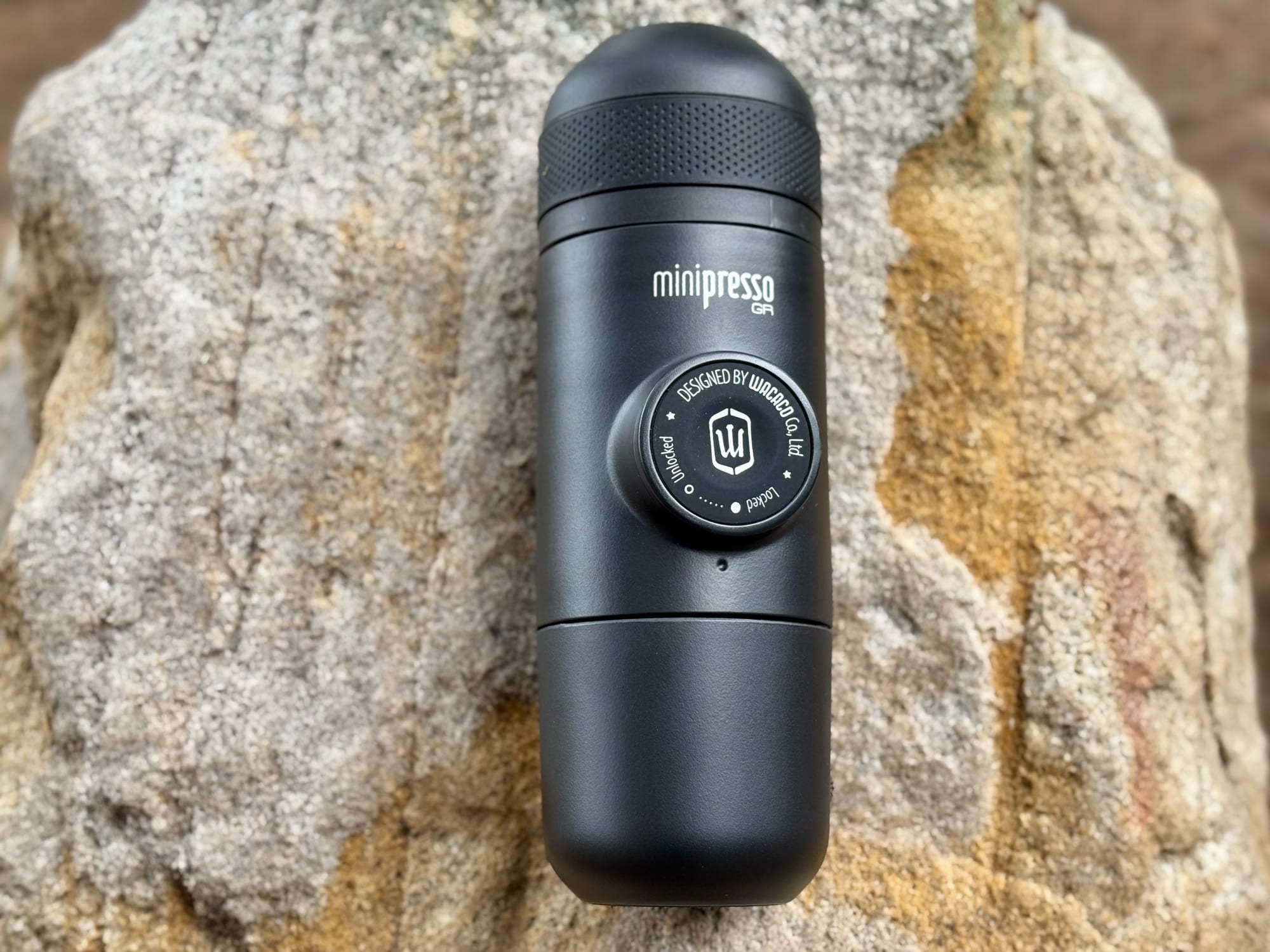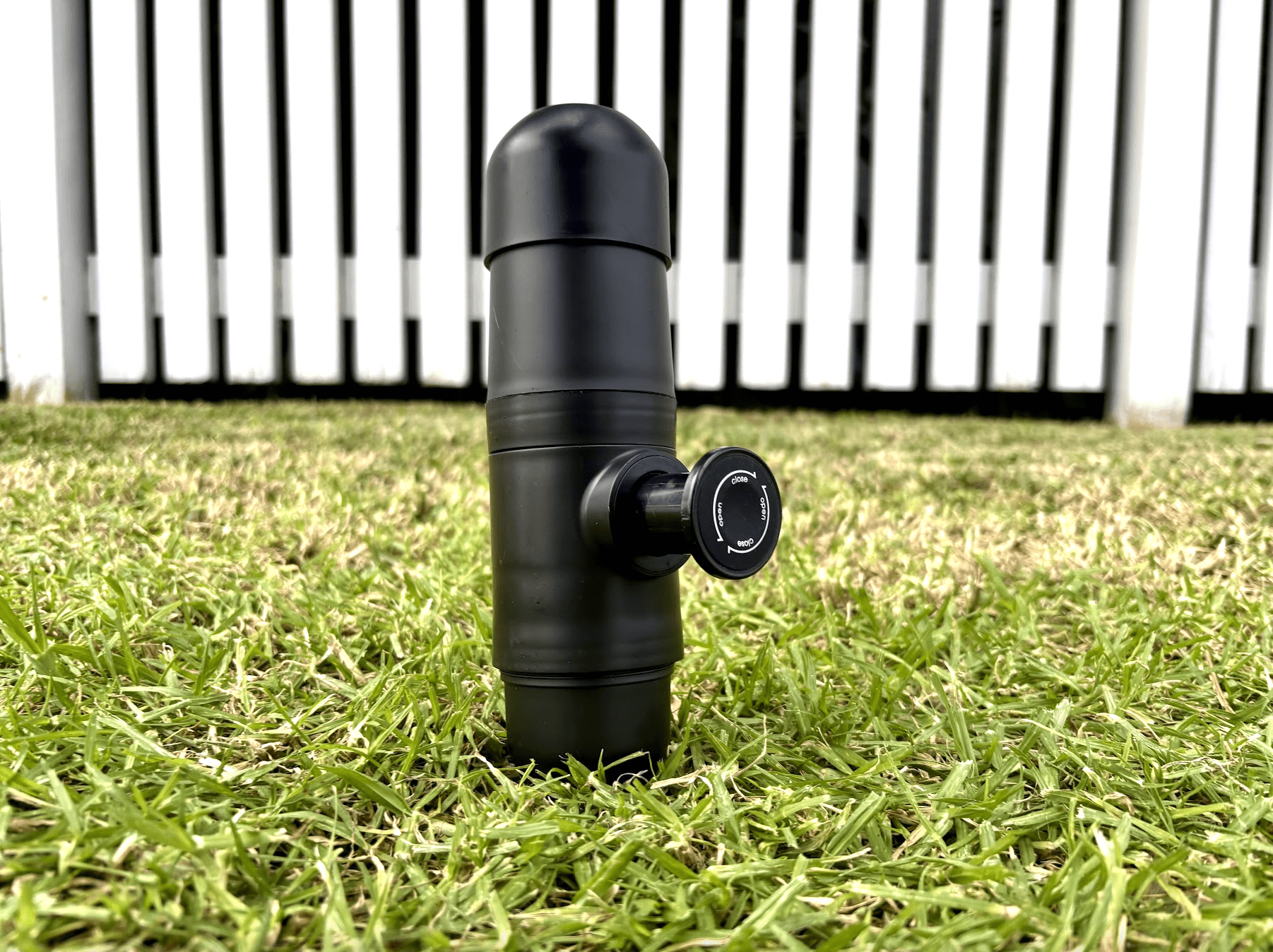
Making espresso at camp usually starts with something else: getting the stove out and boiling water. Hand-pumped espresso makers are small and clever, but they all need hot water from a kettle first.
Featured inBest Camping Coffee Maker of 2026
This portable electric espresso machine skips that step. It has a battery and a heating element inside, so you pour in cold water and it does the rest. I paid $80 for it and took it on our trip to the Snowy Mountains in September 2025.
What You’re Getting
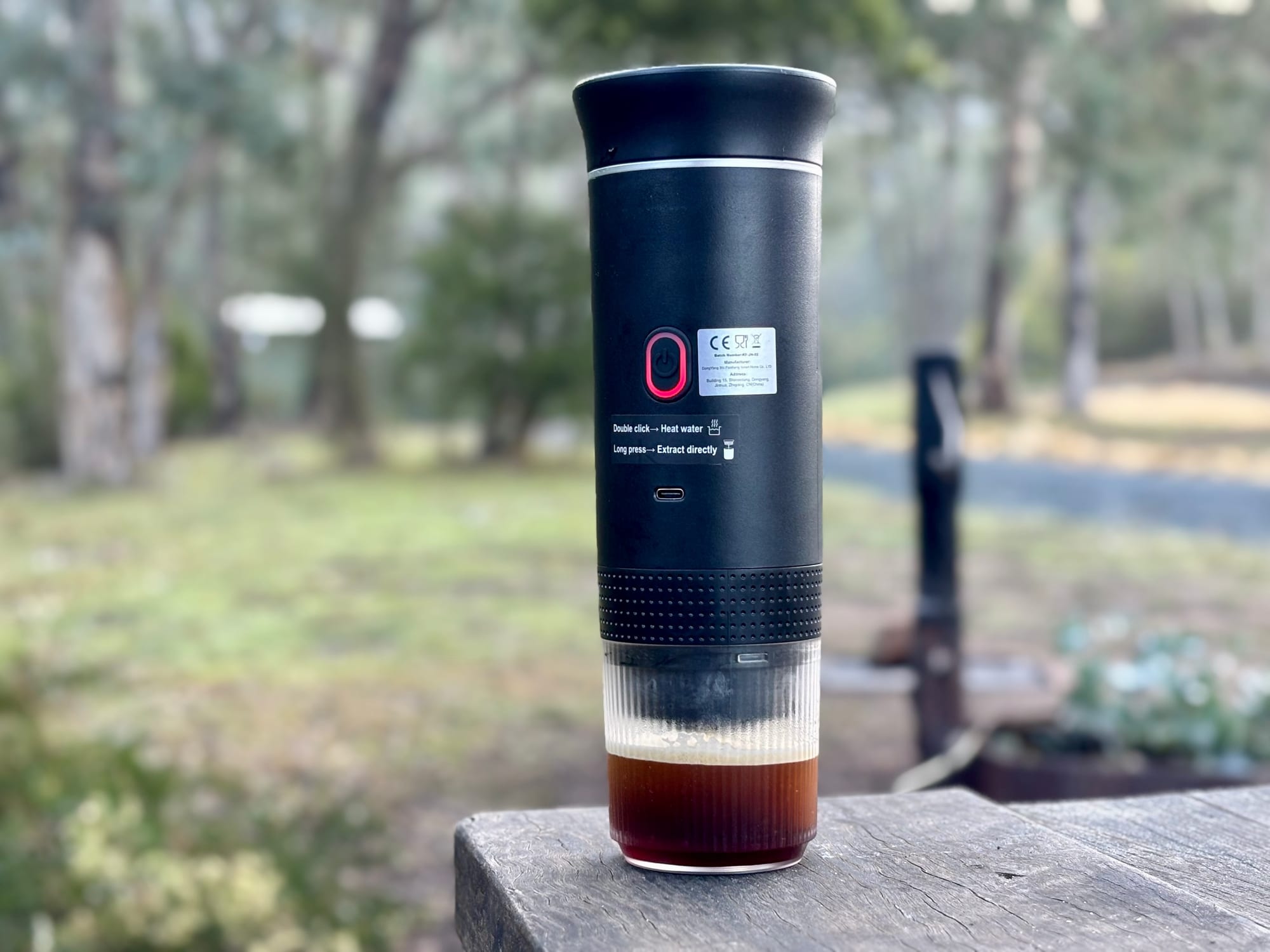
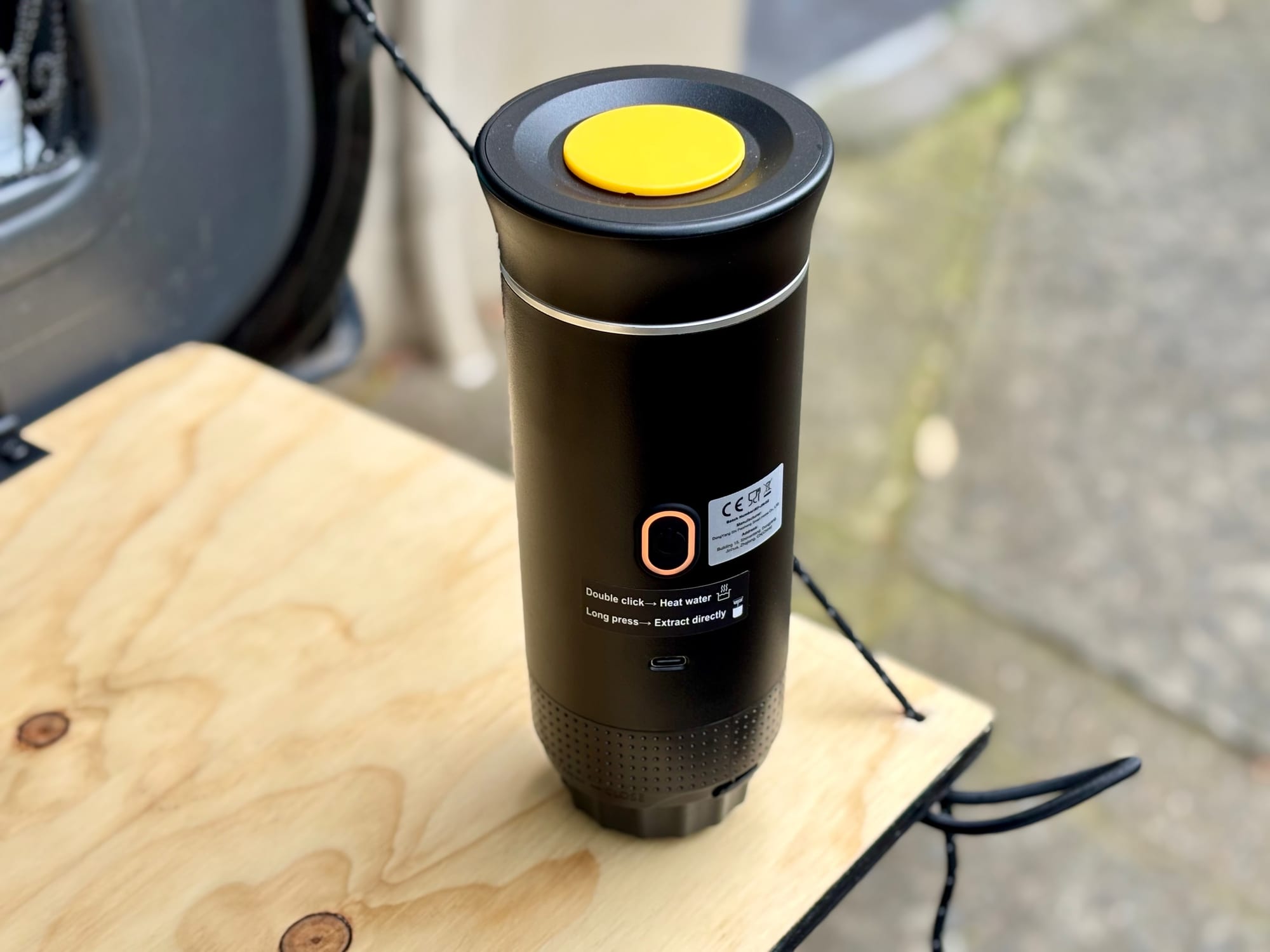
The machine is a black cylinder about the size of a drink bottle, with a yellow silicone lid on top and one button on the front. It has no brand name on it; the manual calls it the Portable Electric Espresso Machine, model KF-JN-02. In the box are the machine, a holder for capsules, a basket for ground coffee, a coffee scoop, a USB-C charging cable and the manual. A clear cup fits onto the base and catches the coffee.
The good
- Heats the water itself
- One button heats and brews
- Takes capsules or ground coffee
- Coffee tastes really nice
- USB-C charging, also from the car
- Brews into its own cup
The not-so-good
- Small shot: 60 ml of water at most
- A few minutes to heat cold water
- Build isn’t at Wacaco’s level
Quick Specs
| Spec | Details |
|---|---|
| Model | KF-JN-02 |
| Weight | 700 g |
| Coffee | Nespresso-style capsules or ground coffee |
| Water tank | 60 ml (marks at 30 and 60 ml) |
| Heating | Built in: a few minutes from cold |
| Pressure | 20 bar |
| Battery | 7,500 mAh3 to 5 cups per charge |
| Charging | USB-C12V/24V in the car |
Loading it
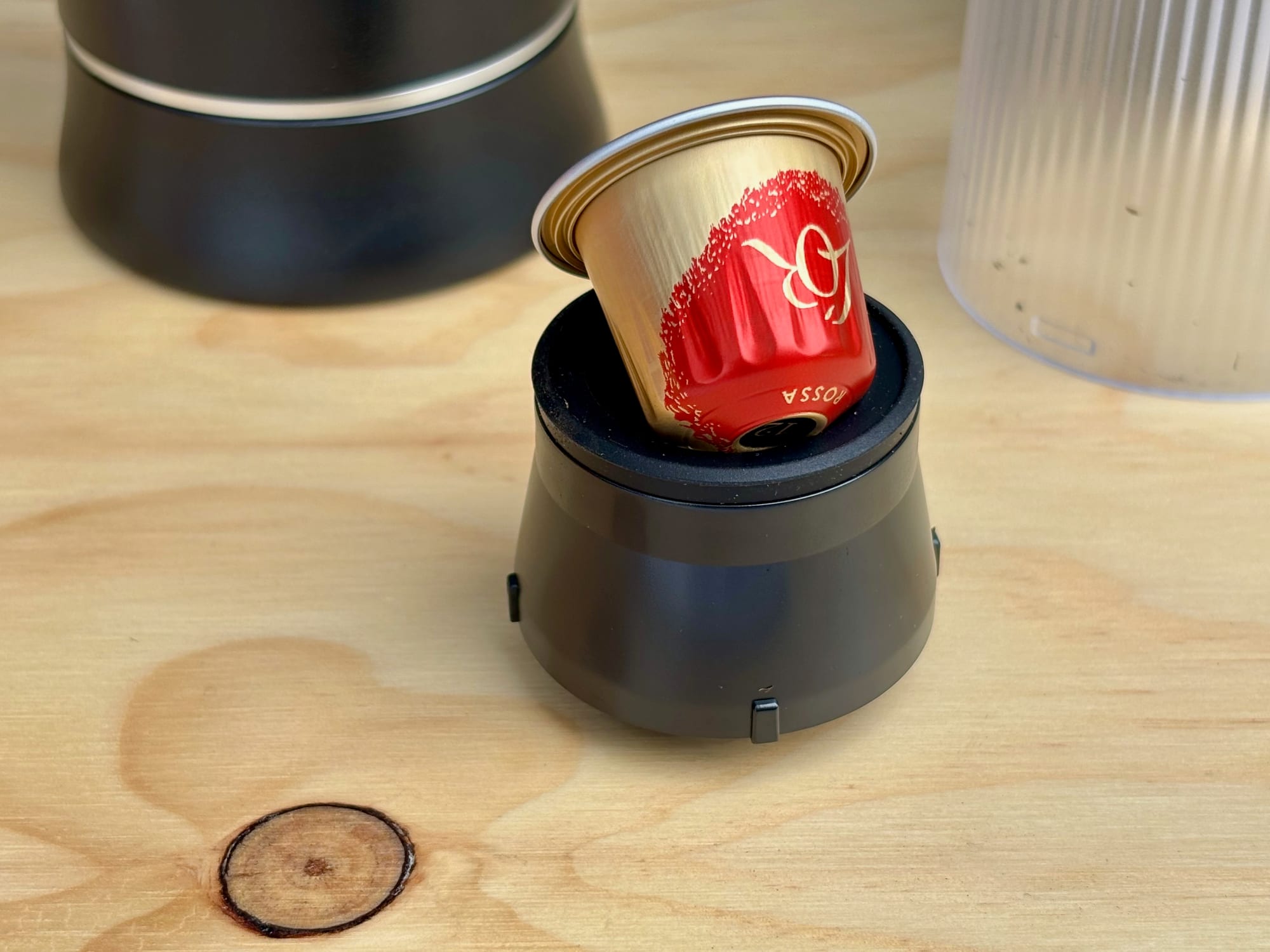
The coffee goes in at the bottom. Unscrew the base, drop a capsule into the holder and screw it back on. We used the Nespresso pods we have at home, and they work great. For ground coffee there’s a small basket that takes the place of the capsule: fill it with the scoop and level it off.
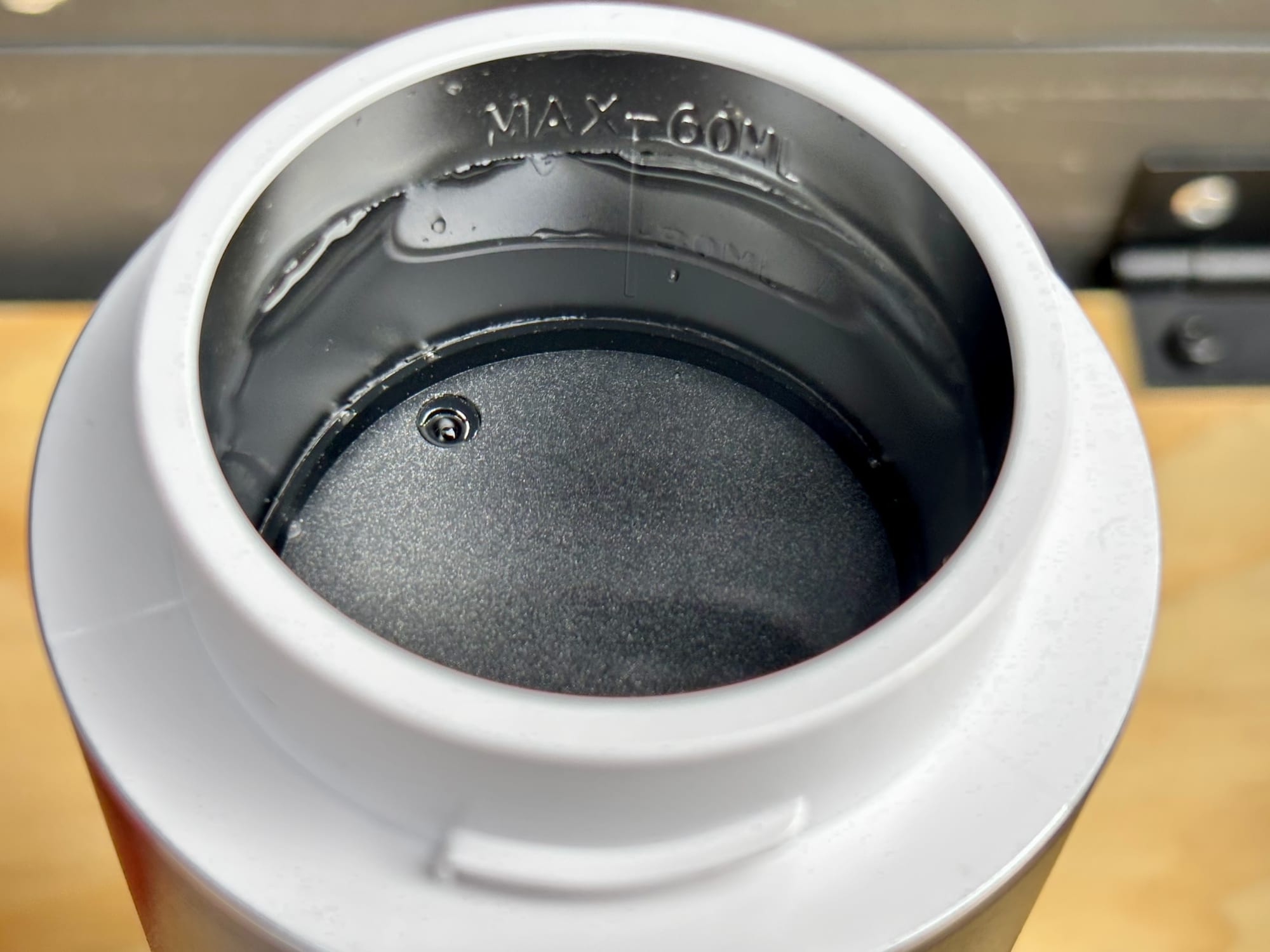
The water goes in at the top, under the yellow lid. Inside the tank are two marks, 30 ml and 60 ml, and 60 ml is the most it takes. So the amount of coffee isn’t massive: this is a machine for an espresso, not for a mug of coffee. If you like a long black, you top it up with hot water afterwards.
Heating and brewing
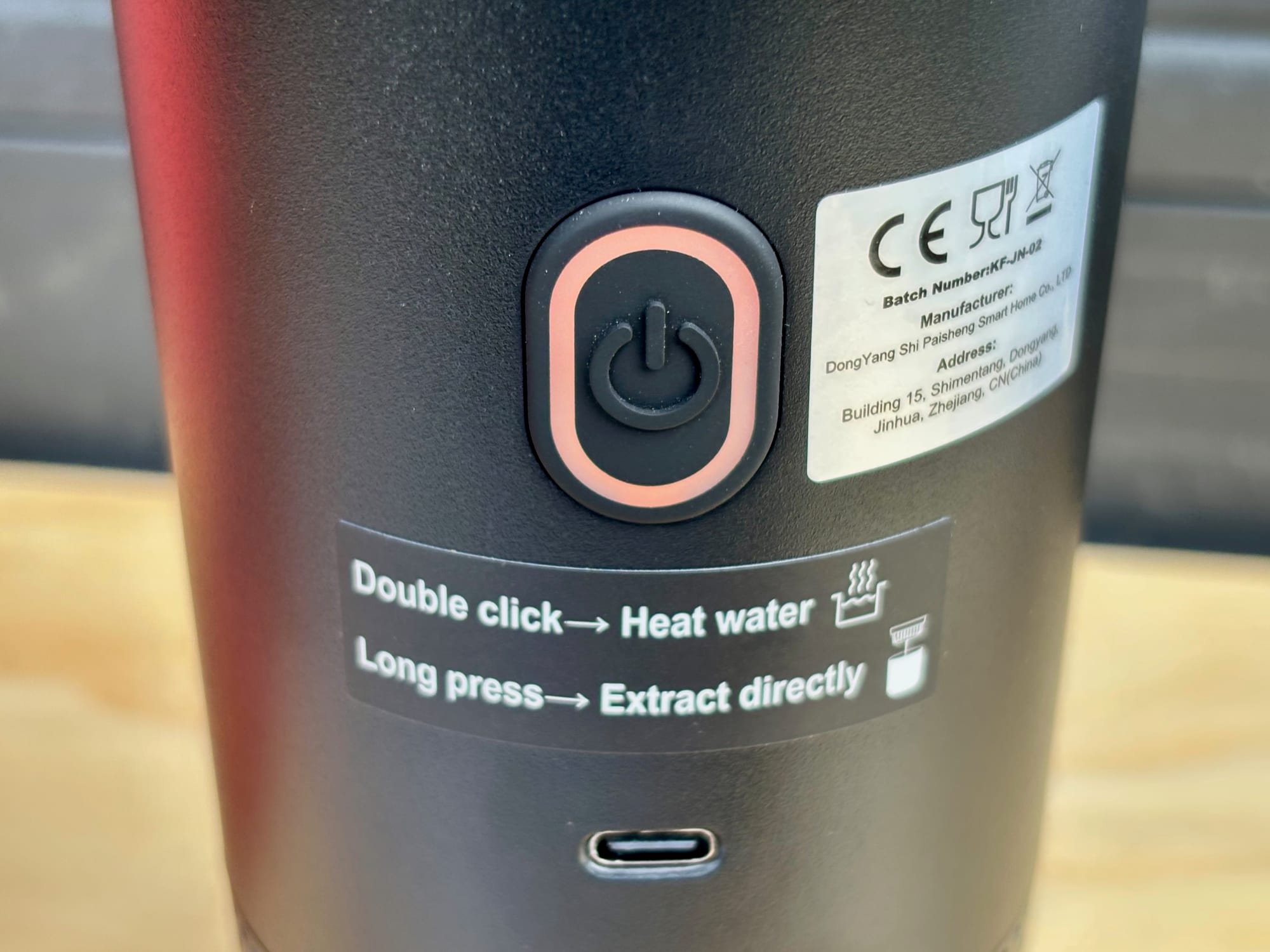
There’s one button, and a sticker under it tells you all you need to know. Double-click and the machine heats the water first, then brews. Long press and it brews straight away, which is for when you’ve poured in water that’s already hot. A ring of light around the button shows that it’s working.
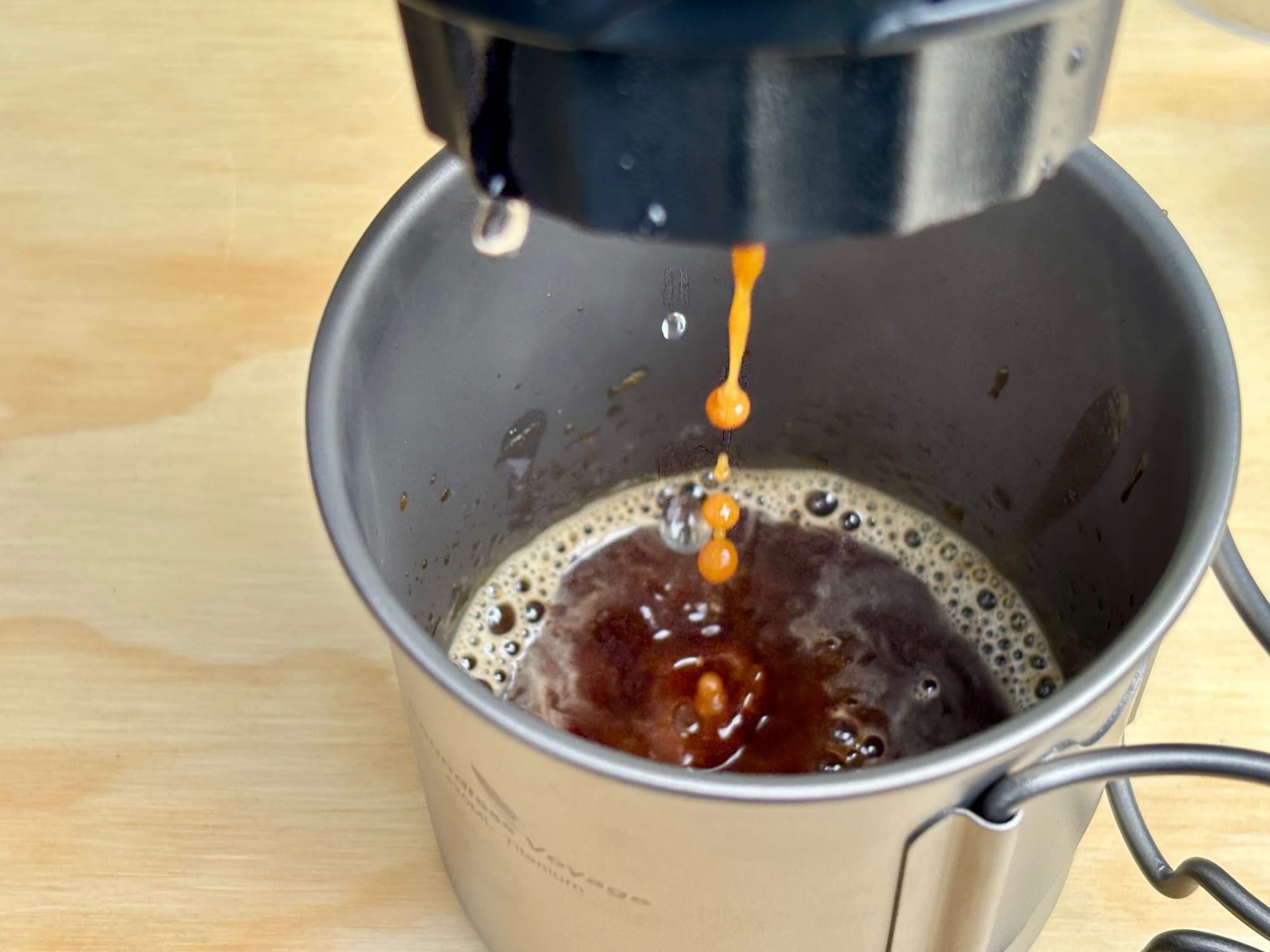
Heating cold water takes a few minutes. That’s the price of not needing a stove: you press the button, get on with packing up, and the coffee is there when you come back. Then the pump pushes the water through the coffee at up to 20 bar and the espresso runs out of the bottom.
The coffee
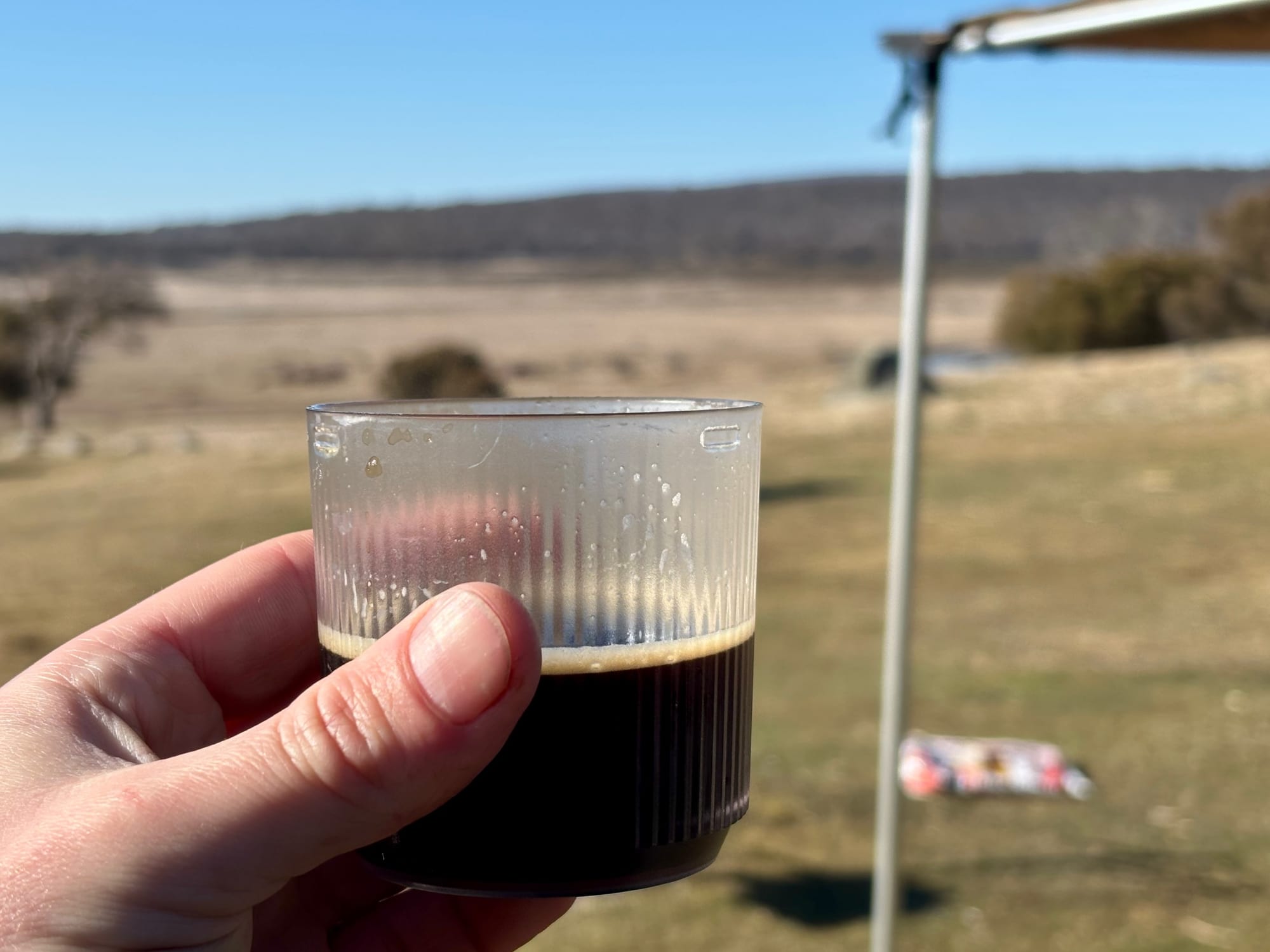
What comes out is a real espresso: dark, with a layer of crema on top, and it tastes really nice. The heating function is great. You can brew into the clear cup that clips under the machine, or take the cup off and hold the machine over your own mug. We’ve done both, into the clear cup and into a titanium mug.
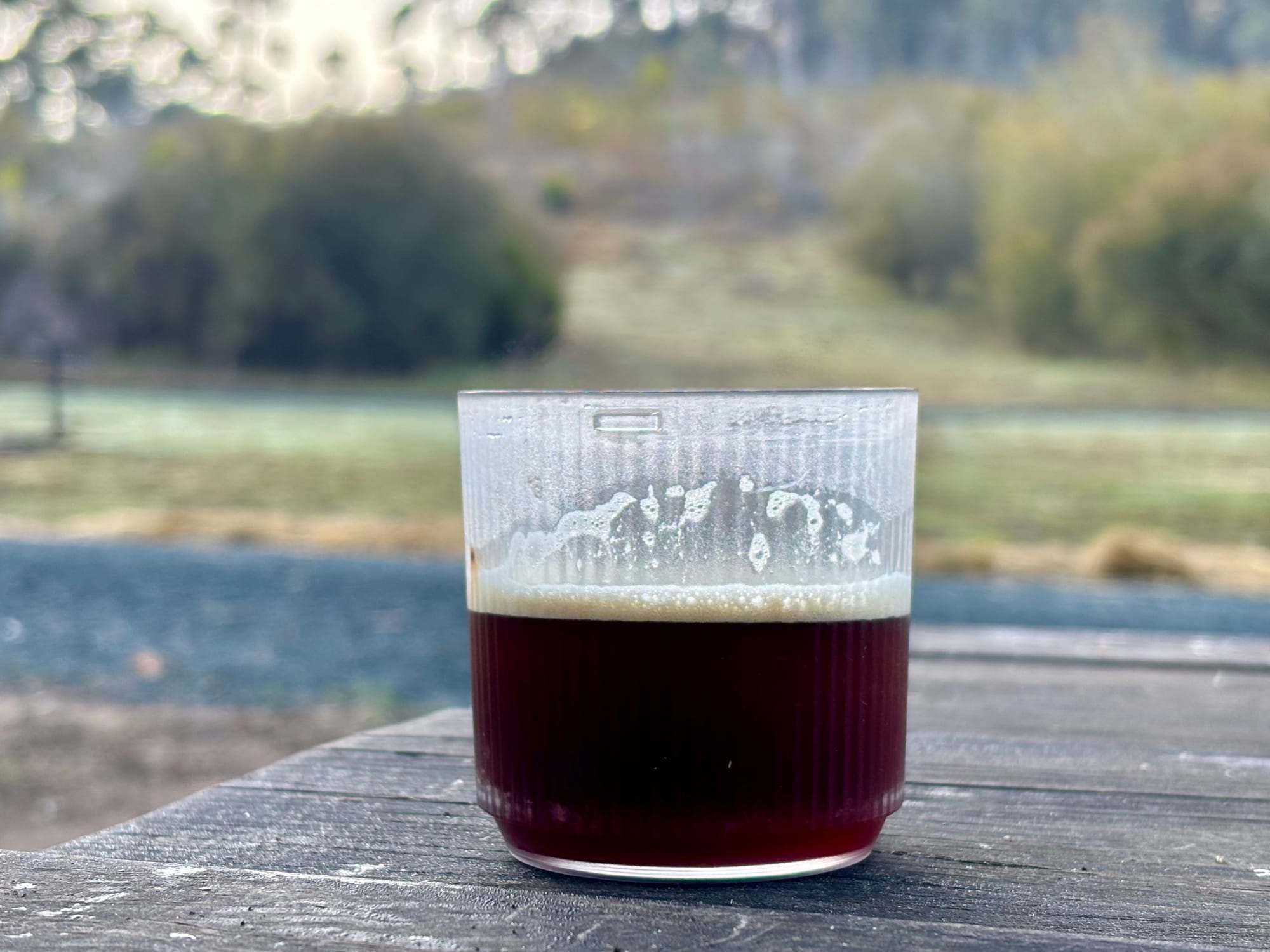
On a cold morning in the mountains, a hot espresso without lighting the stove is a small luxury.
Battery and charging
The battery is 7,500 mAh and charges through the USB-C port on the front. Heating water takes a lot of energy, so one charge is good for three to five cups when the machine does the heating. For two people who each want a coffee in the morning, that’s a day or two between charges.
It also charges from a 12V or 24V socket in the car, so on a road trip you can top it up while you drive. If you fill it with hot water from a kettle and use the long press, the battery only has to run the pump.
Size, weight and build
At about 700 g, this is the heaviest way to make coffee that we’ve tested, and it’s as tall as a drink bottle. It’s gear for the car or the 4WD drawers, not for a hiking pack. If weight matters, a hand-pumped maker like the Wacaco Minipresso NS2 is less than half the weight, but it needs hot water from a stove.
The build is where you notice that this isn’t a well-known brand. It works really well, but the build quality isn’t what you get from a Wacaco.
Conclusion: Portable Electric Espresso Machine
This portable electric espresso machine makes a real espresso with crema at camp, and it heats the water itself, so there’s no stove or kettle to get out. One button runs it, it takes capsules or ground coffee, and it charges over USB-C or from the car. It works really well and the coffee tastes really nice. The shots are small at 60 ml, the build quality isn’t at the level of a well-known brand like Wacaco, and at 700 g it stays with the car. For the $80 I paid, it’s a treat for coffee lovers who camp from a 4WD.
A self-heating espresso machine that takes capsules or ground coffee and recharges over USB-C.
It works really well and the coffee tastes really nice. Shots are small (60 ml), and the build quality isn’t at the level of a Wacaco.
- Coffee lovers
- 4WD tourers
- Car campers
Yes, if you want an espresso without getting the stove out. I paid $80. A hand-pumped espresso maker is lighter and cheaper, but you have to boil the water for it first.