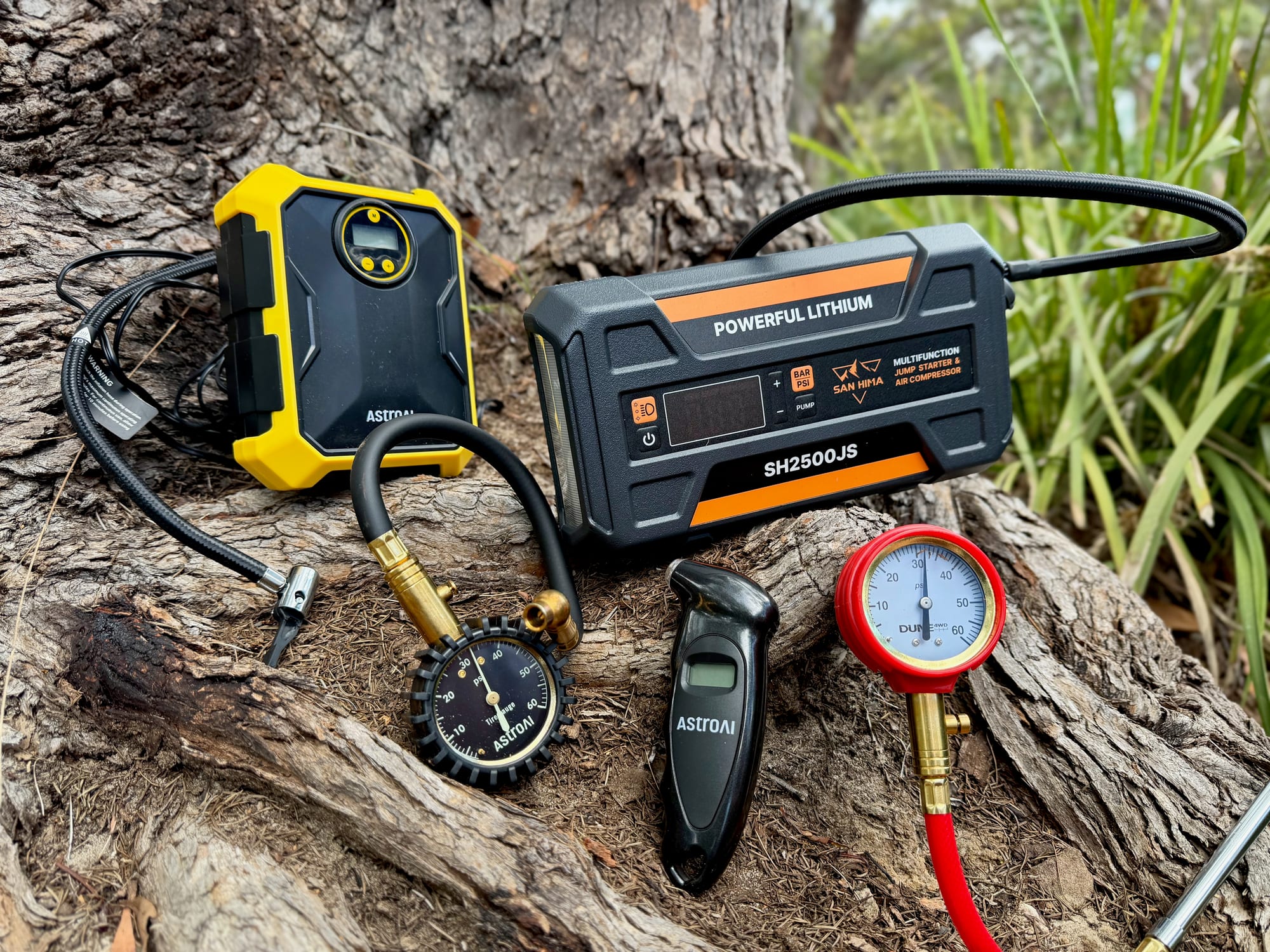
Airing down makes sand and corrugations a lot easier, but it means you need a way to get the air back in before you hit the bitumen. Tyre inflators come in very different sizes, from a compressor that clamps onto the battery to a cordless pump that fits in the door pocket, and they’re made for different jobs.
We’ve reviewed four. Here’s how they compare and which one suits what you do.
Quick picks: the best tyre inflators compared
| Product | Score | Power | Air flow | Auto stop | Check price |
|---|---|---|---|---|---|
Best for 4WDsXTM Air Compressor 160L 150PSI | 9.1 | 12V, battery clamps | 160 L/min | No | Check price at BCF |
Best budgetAstroAI 12V Car Tyre Inflator | 8.7 | 12V socket | 25 L/min | Yes | Check price at Amazon |
Fastest miniAstroAI Portable Air Compressor | 8.6 | 12V socket | 35 L/min | Yes | Check price at Amazon |
Best cordlessBosch EasyPump | 8.5 | Built-in battery, USB-C | 10 L/min | Yes | Check price at Amazon |


Best for 4WDs: XTM Air Compressor 160L 150PSI
The XTM scored 9.1, the highest of the four. It’s a 12V compressor that delivers up to 160 L/min and 150 PSI, with an alloy cylinder head, a cleanable air filter, a 60A inline fuse and thermal protection for hot days. The 8 m quick-release hose reaches all four wheels without moving the compressor, and it packs into a sturdy case.
It’s bulkier than the mini inflators, the gauge on the hose is only a guide, and it has to be clamped onto the battery. For touring and beach runs, where you air down and back up often, it’s the one to get. Read the full XTM Air Compressor review.
The good
- 160 L/min airflow
- 150 PSI ceiling
- 8 metre hose with gauge
- Cleanable air filter
- 60A fuse, thermal cut
The not-so-good
- Bulkier than minis
- Gauge is ballpark only
- Needs battery clamps
Bottom line: A strong 160 L/min compressor with an 8 m hose, a cleanable air filter and thermal protection that airs up quickly. It’s bulkier than a mini, the gauge is only a guide and it needs battery clamps.
Best budget: AstroAI 12V Car Tyre Inflator
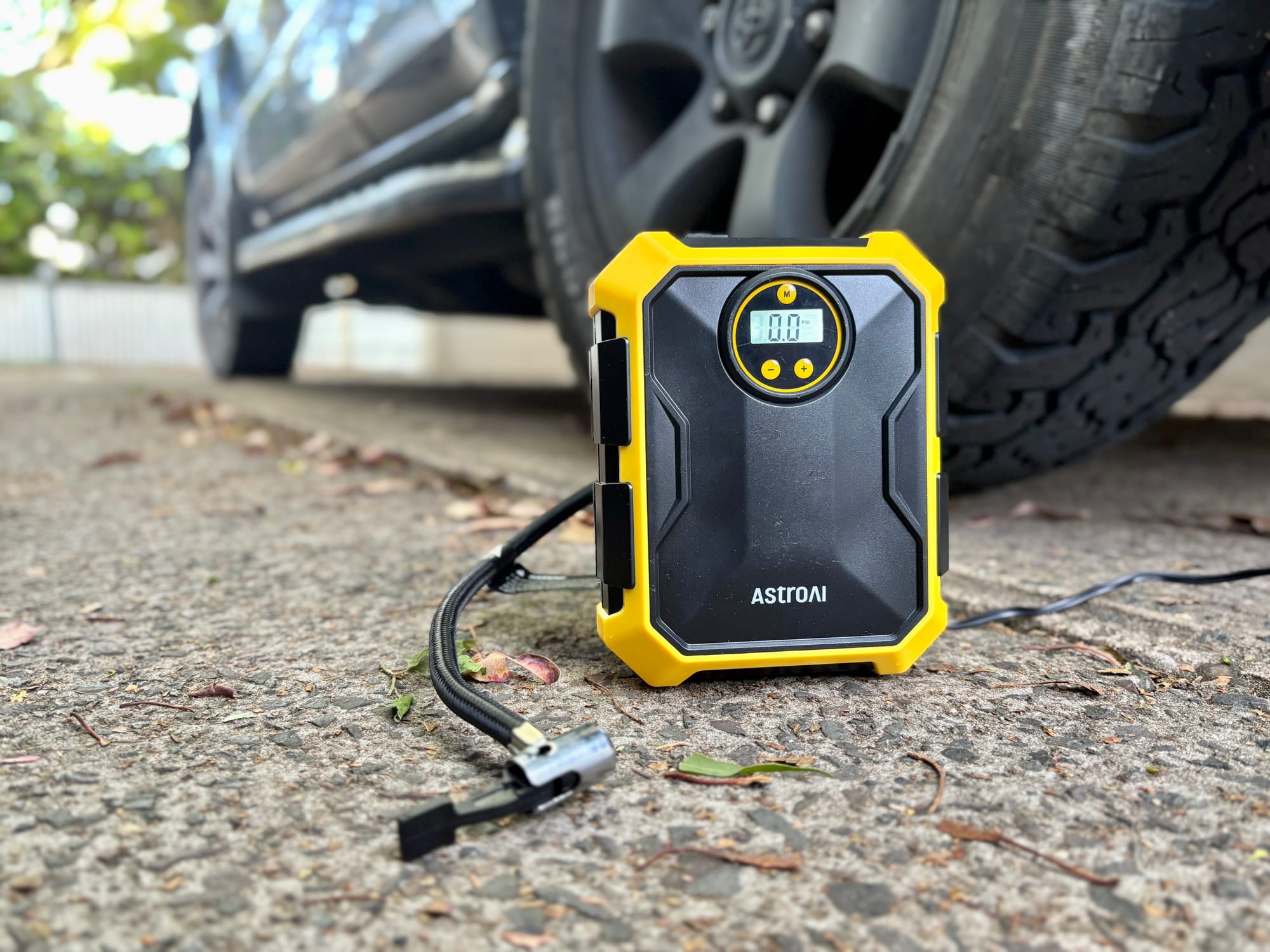
The AstroAI 12V Car Tyre Inflator cost $40 and plugs into the 12V socket. You set the pressure, switch it on and it stops by itself. On our 265/65R17 tyre it reached 36 PSI in about two minutes for a top-up. It has an LED light, the hose stores in the back, and it weighed 640 g on our scale.
It can run for 10 minutes at most before it needs a rest, and the hose is only 40 cm, so the pump sits at each wheel. As a top-up and emergency pump, it’s the best value here. Read the full AstroAI 12V Car Tyre Inflator review.
The good
- Stops by itself at the set pressure
- 4WD tyre to 36 PSI in about 2 min
- Plugs into the 12V socket
- Hose stores in the back
- LED light for use in the dark
- Good value at $40
The not-so-good
- 10 minutes of continuous use at most
- Short 40 cm hose
- Tied to the socket by a 3 m cord
Bottom line: A $40 inflator that plugs into the 12V socket, stops at your preset pressure and has an LED light, at 640 g. It topped up a 4WD tyre to 36 PSI in about two minutes. It runs for 10 minutes at most and the hose is only 40 cm.
Fastest mini: AstroAI Portable Air Compressor
This older AstroAI is a compact 12V inflator that plugs into the cigarette lighter socket. You set the PSI you want and it stops by itself when it gets there. It moves 35 L/min, goes up to 100 PSI, weighs 760 g and has an LED light and several nozzles. It cost $40.
It does one tyre at a time, needs a cooldown after long use, and the mostly plastic build feels a bit flimsy. The power cord is about 3 m, which is a stretch on a larger 4WD. With 35 L/min it’s the faster of the two AstroAI units. Read the full AstroAI Portable Air Compressor review.
The good
- Stops automatically at preset PSI
- 35 L/min inflation speed
- Comes with multiple nozzles
- Integrated LED light for night use
- Great value for the features
The not-so-good
- Single-tyre operation
- Needs cooldown after extended use
- Plastic build feels a bit flimsy
Bottom line: A compact tyre inflator that stops automatically at your preset pressure, with an LED light and several nozzles. It does one tyre at a time, needs a cooldown after long use and the plastic feels a bit flimsy.
Best cordless: Bosch EasyPump
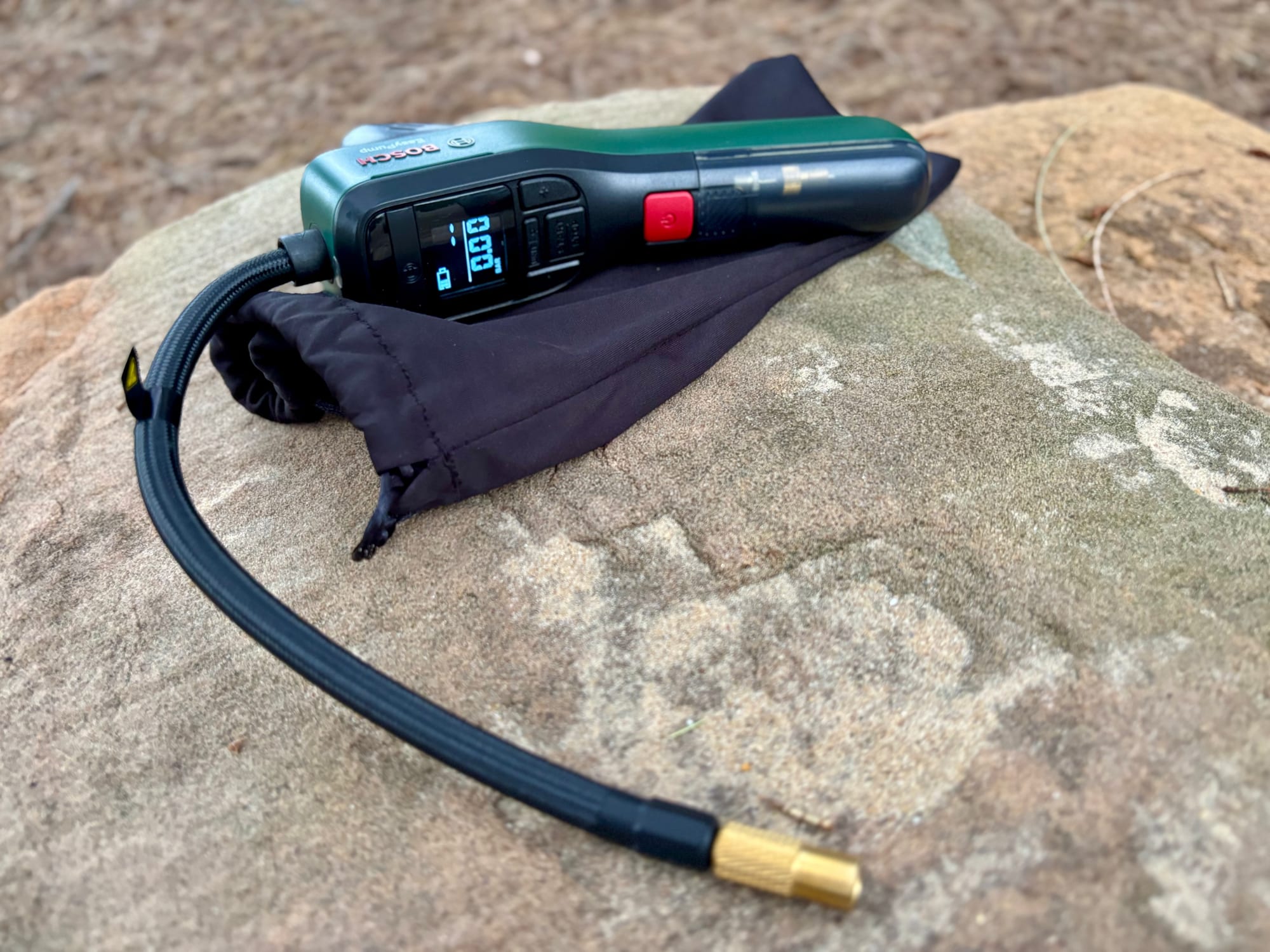
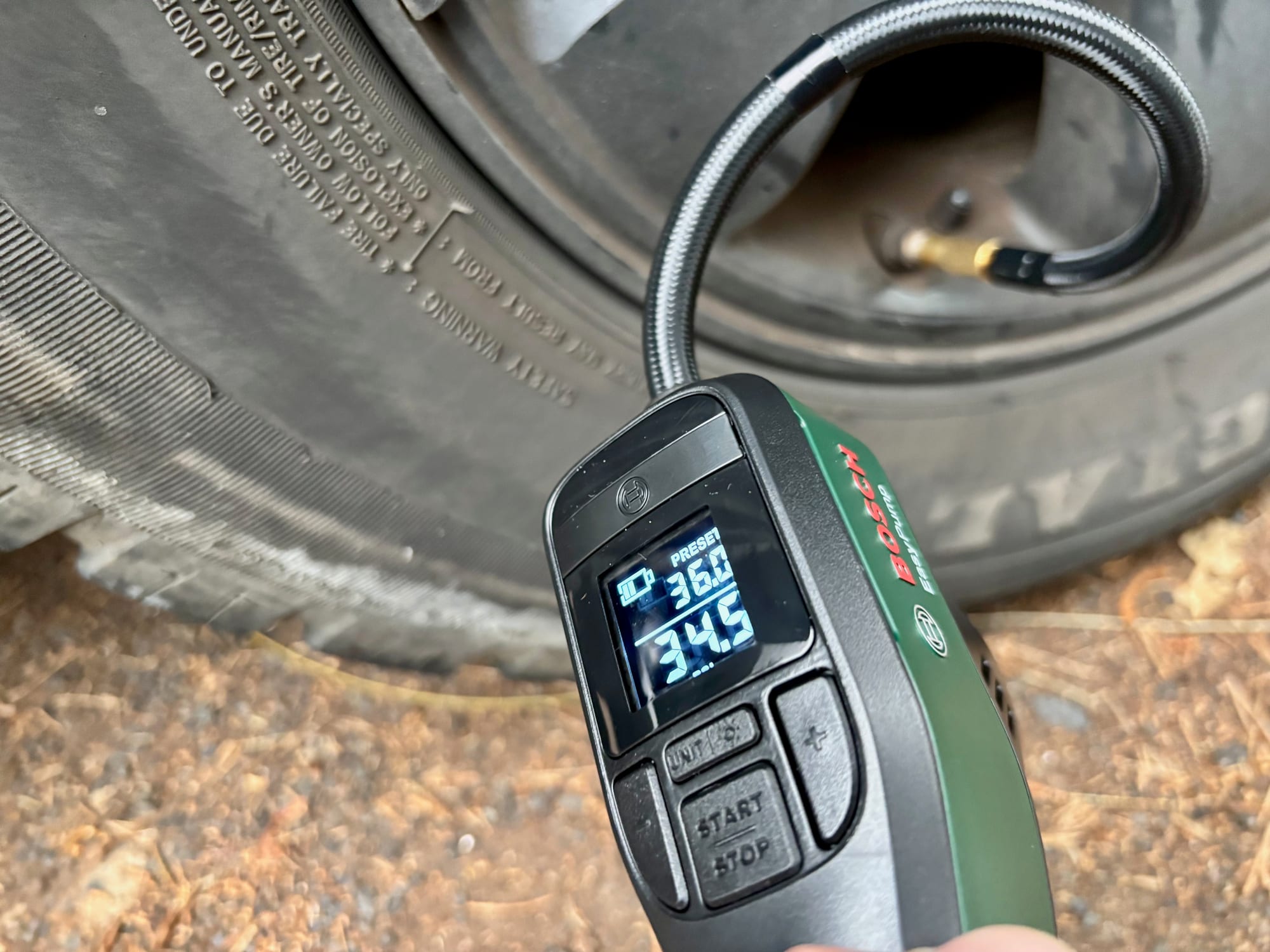
The Bosch EasyPump is the smallest here: a cordless pump with a built-in battery that charges over USB-C and weighed 293 g on our scale. The display shows the preset and the live pressure, it stops by itself at the pressure you set, and the adapters for bikes and balls store in the handle.
On 4WD tyres it’s slow: 30 to 35 PSI took about five and a half minutes on a 265/65R17. It cost $120. It’s for top-ups, bike tyres and balls, not for airing up after a track. Read the full Bosch EasyPump review.
The good
- Cordless, and charges over USB-C
- Stops by itself at the set pressure
- Display shows preset and live PSI
- Adapters store inside the handle
- Small and light: 293 g on our scale
- Brass connector and braided hose
The not-so-good
- Slow on 4WD tyres
- Not for airing up after a track
- Pricey at $120
Bottom line: A cordless, USB-C air pump with a clear display, preset pressure and autostop, at 293 g. It’s slow on 4WD tyres (about five and a half minutes from 30 to 35 PSI), so it’s for top-ups, bikes and balls, not for airing up after a track.
How to choose a tyre inflator
- What you use it for
If you air down for sand or tracks, you need a 12V compressor that clamps to the battery. For the odd top-up, a small 12V inflator is enough. A cordless pump is handiest for a few PSI, bikes and balls.
- Air flow
Litres per minute tells you how fast it fills. 160 L/min airs up a 4WD tyre quickly. 35 L/min is fine for car tyres. 10 L/min is top-up territory.
- Power
Battery clamps give the most power but mean opening the bonnet. A 12V socket is easier if the cord reaches all four wheels. A built-in battery needs no cables, but has to be charged.
- Hose and cord length
A long hose saves moving the compressor around the vehicle. With a short cord, check it reaches the rear wheels of your 4WD.
- Auto stop
Set the pressure and walk away. Without it you watch the gauge yourself.
- Gauge accuracy
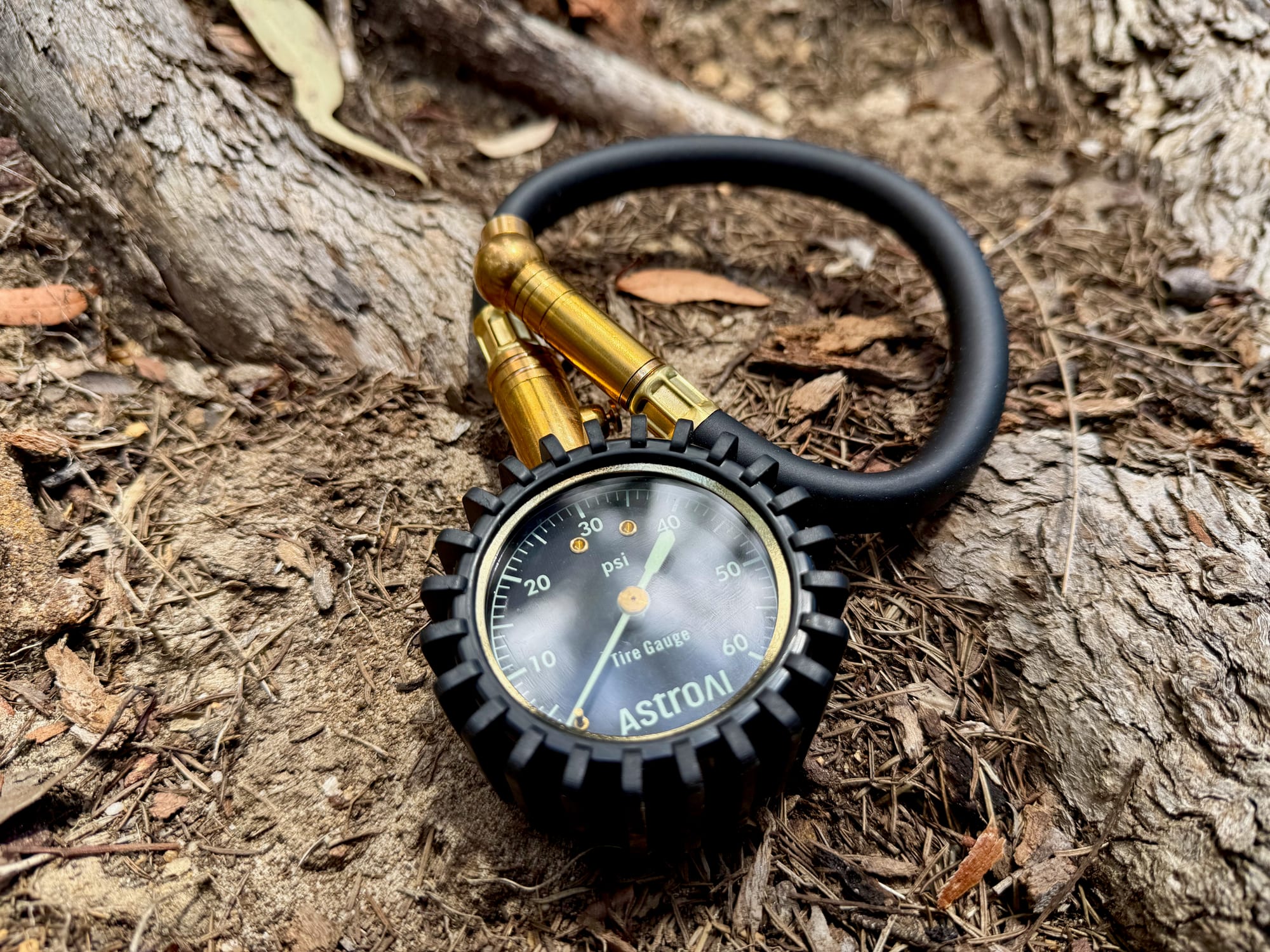
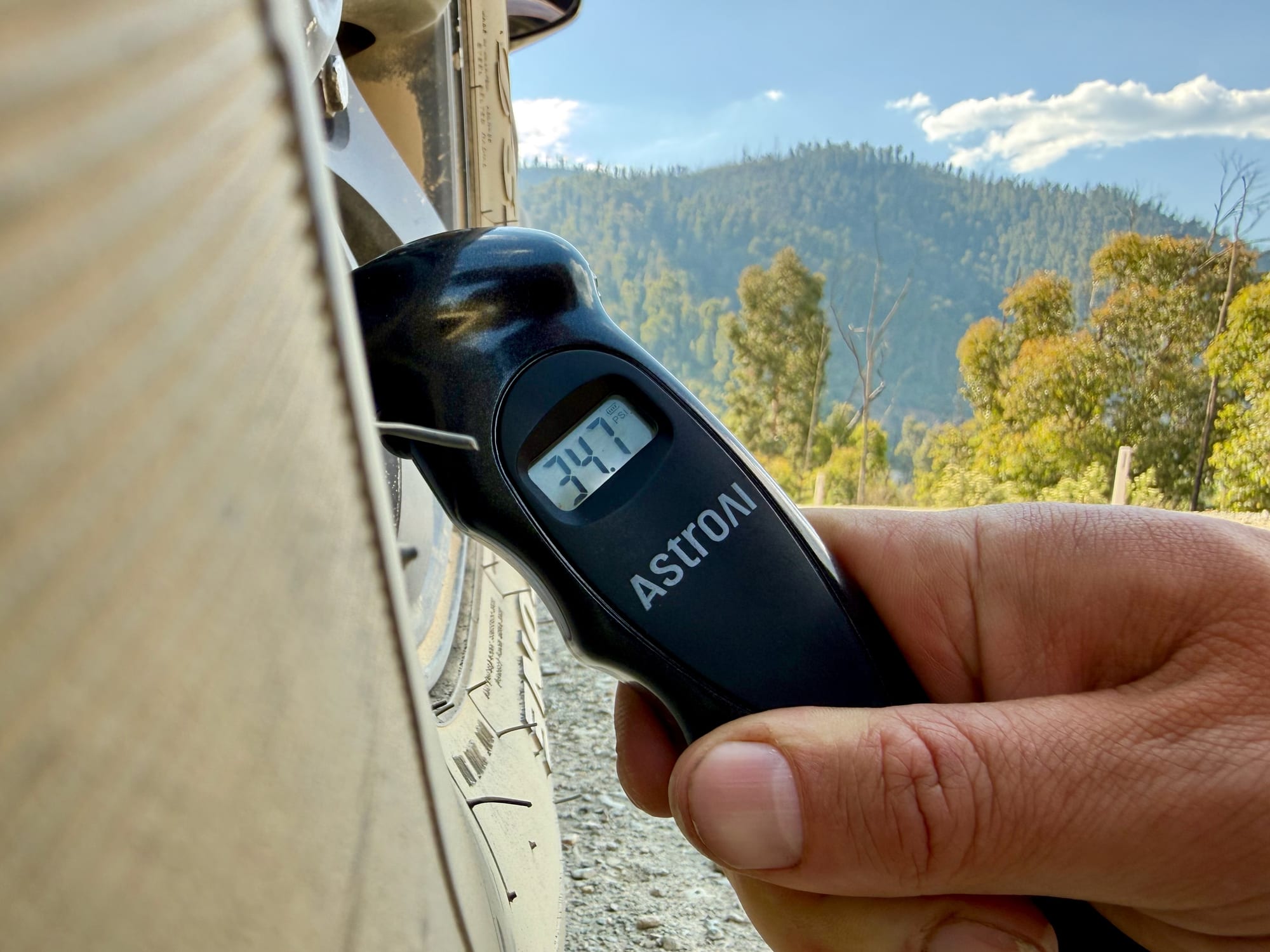
The gauge on a compressor hose is often only a guide, so check the final pressure with a separate tyre gauge. We keep the AstroAI digital tyre pressure gauge in the glovebox for that.
- Size
A compressor in a case takes boot space. A mini inflator fits in a drawer, and a cordless pump in the door pocket.
Not sure what pressure to run? See our guide on how to determine PSI for your 4WD tyres.
How we test
We buy the gear ourselves and take it on camping trips around Australia to put it to the test in real outdoor conditions, in the 4WD and at camp, and to see how it holds up over a few trips. We weigh everything on our own scale, photograph it ourselves, and score it on five things: ease of use, performance, portability, durability and value. If we haven’t used something, we say so, and if anything fails later on, we update the review.