Tyre pressure is the first question every new 4WD owner asks, and the answers they get contradict each other. It matters more than most things on the vehicle: pressure is what connects the car to the track, decides how the suspension feels, and whether you float over soft sand or dig into it.
There is no single number. There is a highway pressure for your loaded vehicle, and a lower pressure for each kind of ground. This guide shows how to find the highway figure first, then how far to drop it for gravel, rocks, sand and mud. We run 20 PSI for mud, sand and rocky tracks in our Prado, and the reasons are below.
What is PSI?
PSI is pounds per square inch, the air pressure inside the tyre. That air carries the whole weight of the vehicle and sets the shape of the contact patch, the small area of rubber on the ground. More pressure means a smaller, firmer patch and less rolling resistance: good for fuel use and stability on bitumen.
Less pressure lets the sidewall flex, so the patch gets longer and wider. On sand that lets the tyre float on top instead of cutting in. On rocks the tyre wraps around edges, grips better and takes the sting out of the hits. The number on the compliance plate inside the door is the minimum for carrying the car’s maximum load on the road, not the right pressure for every surface.
How to find your highway PSI (the 4 PSI rule)Finding your highway PSI
Finding the right PSI starts with your highway pressure. This must be done when your tyres are “cold” (driven less than 2 km). A good starting point is usually 32 PSI to 40 PSI, but here’s a simple test I use:
- 1Set the cold pressure
Inflate all four tyres to the manufacturer’s maximum recommended pressure on the tyre placard (often 36 PSI to 40 PSI) or your desired starting point.
- 2Drive and test
Drive for at least an hour on the highway at a constant speed.
- 3Check the hot pressure
Immediately pull over and check the pressures again.
Hot pressure minus cold pressure should be about 4 PSI.
- +2 PSIStarted too highLosing grip and comfort: start lower
- +4 PSIJust rightThis cold figure is your loaded highway PSI
- +6–8 PSIStarted too lowTyres overheating from flexing: start higher
Adjust your cold PSI until that 4 PSI increase is achieved. This adjusted figure becomes your reliable, loaded Highway PSI.
Tyre pressure by terrain
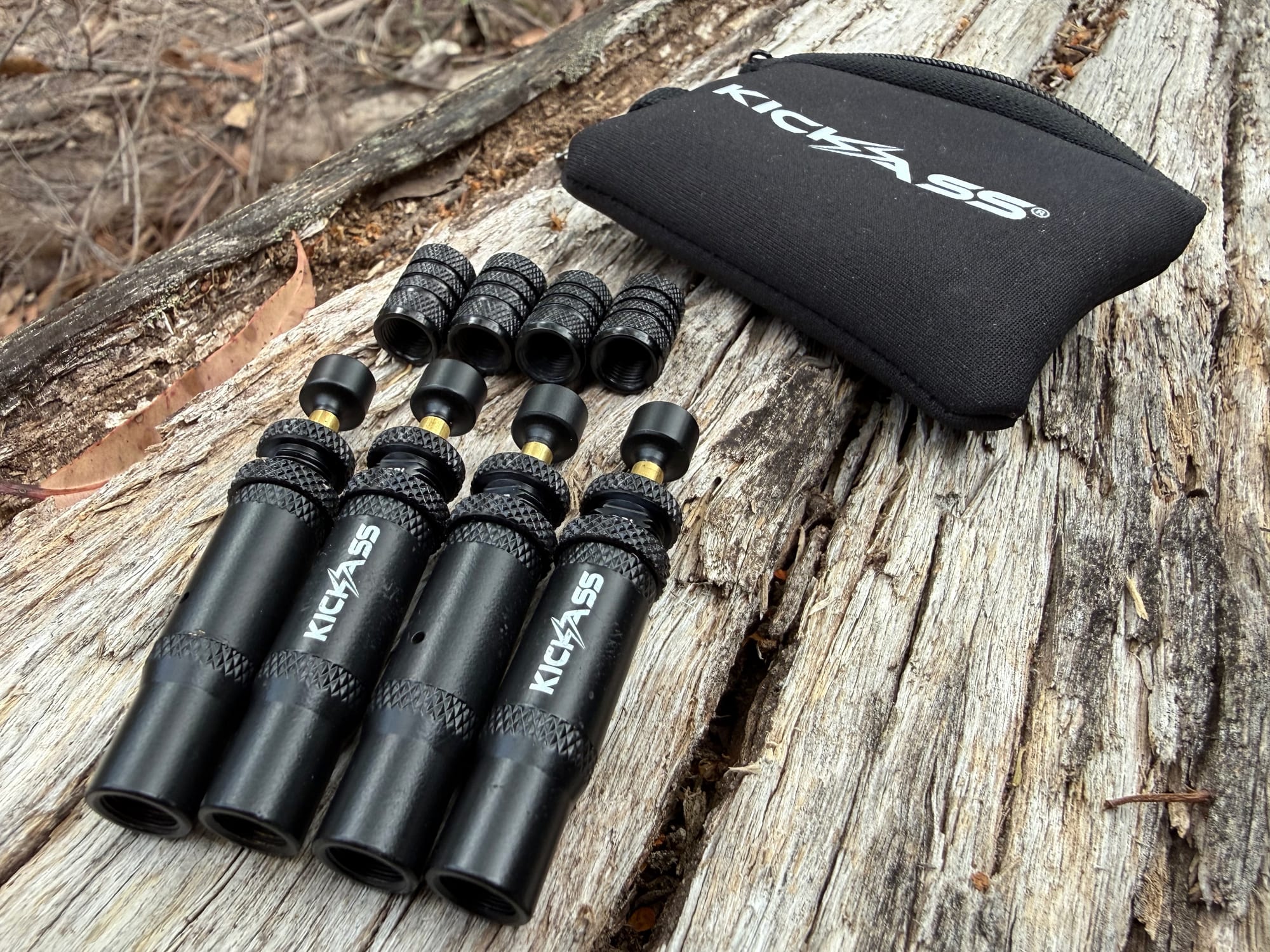
With the highway figure known, dropping for the dirt is simple: lower pressure for more grip and comfort, and a lower speed to match. Preset deflators make airing down quicker: here is how to set Staun tyre deflators.
- Highwaymax 100 km/h
32–40 PSI
- Gravel/
Corrugations max 60 km/h25–30 PSI
- Rocky Tracksmax 25 km/h
20–25 PSI
- Soft Sand/
Mud max 20 km/h14–20 PSI
Approximate starting pressures and speeds. Adjust for your load and tyres.
Our own numbers sit a little outside that. The Prado is heavily loaded, with the rooftop tent and drawers on board, so on bitumen we run 42 to 44 PSI, above the usual highway range. On gravel we drop to around 28 PSI.
Sand, rocks and mud
Each surface asks something different of the tyre: on sand it needs to spread out and float, on rocks it needs to flex, and in mud the tread needs to clear itself. These are the usual starting points, with our own setting below them.
Sand: start around 18 PSI and only go lower, down to 12 to 14 PSI, if you are still struggling. The lower you go the slower you must drive, or the tyre can roll off the rim or overheat its sidewalls.
Rocks: 20 to 25 PSI is the usual middle ground. The tyre flexes over sharp edges without straining the sidewall, which is what keeps you from a puncture.
Mud: pressure here is less about floating and more about letting the tread clear itself. 20 to 25 PSI is common, depending on how deep and sticky it is.
Our own setting is 20 PSI for all three, mud, sand and rocky tracks, set once on the Staun deflators so airing down is the same every time. Whatever you run, air back up to highway pressure before any fast driving, even a short stretch of bitumen.
Summary
Tyre pressure changes with the surface and the load. Find your loaded highway PSI with the 4 PSI rule first; that is the reference for everything else. On gravel a small drop to around 28 PSI takes the vibration out. On sand and rocky tracks 18 to 20 PSI spreads the weight and lets the tyre grip; we run 20 PSI.
The lower the pressure, the slower you drive. Never exceed 40/50 km/h on very low pressures. Managing pressure is not only about not getting stuck, it is what looks after an expensive set of tyres and makes a long corrugated road bearable.
Do's
- Do check pressure on cold tyres
- Do use a quality pressure gauge
- Do adjust PSI for heavy loads
- Do carry a reliable compressor
- Do re-inflate for bitumen roads
Don'ts
- Don't use one PSI for all terrain
- Don't drop below 12 PSI
- Don't drive fast on low pressures
Recommended gear
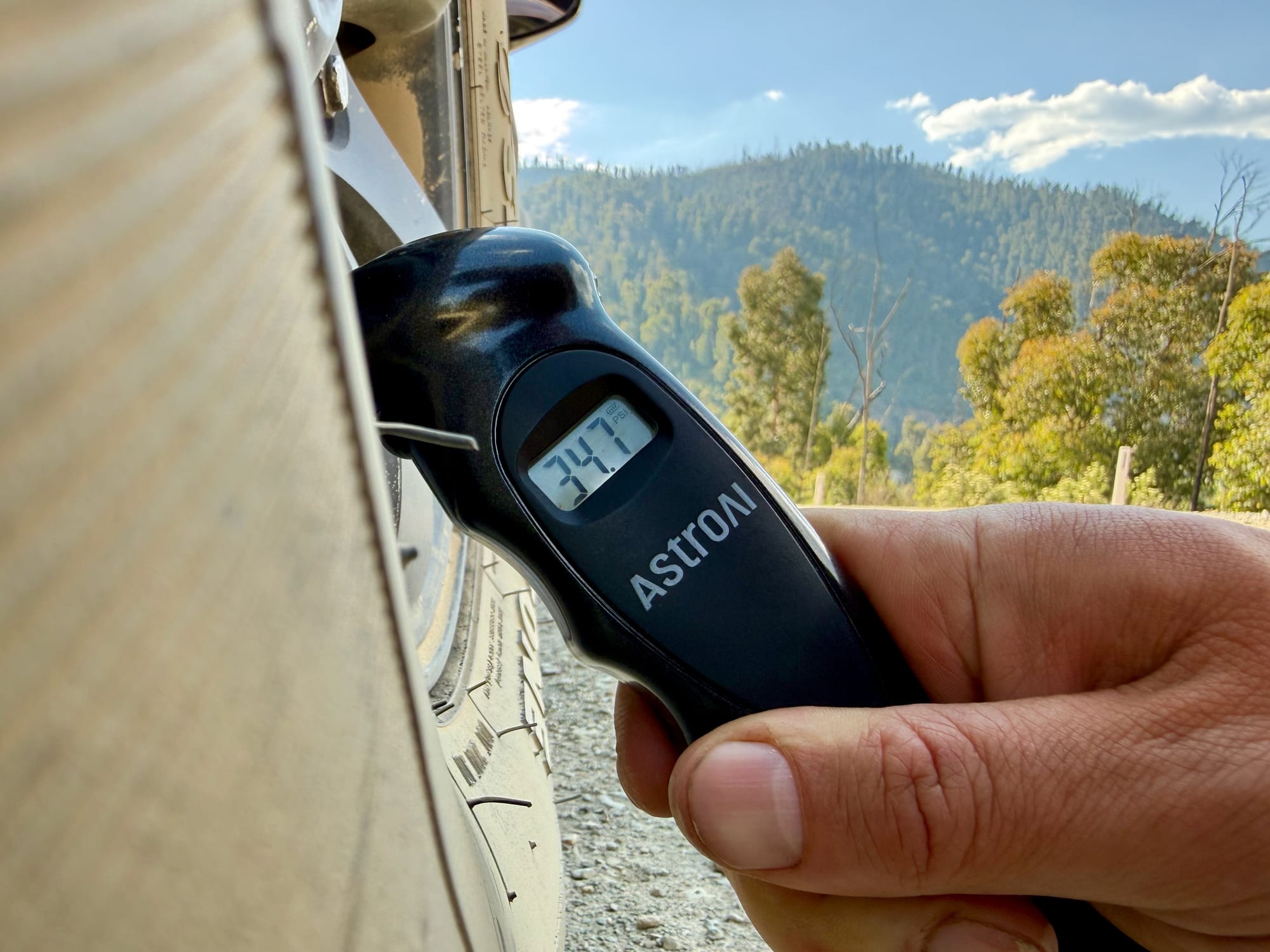
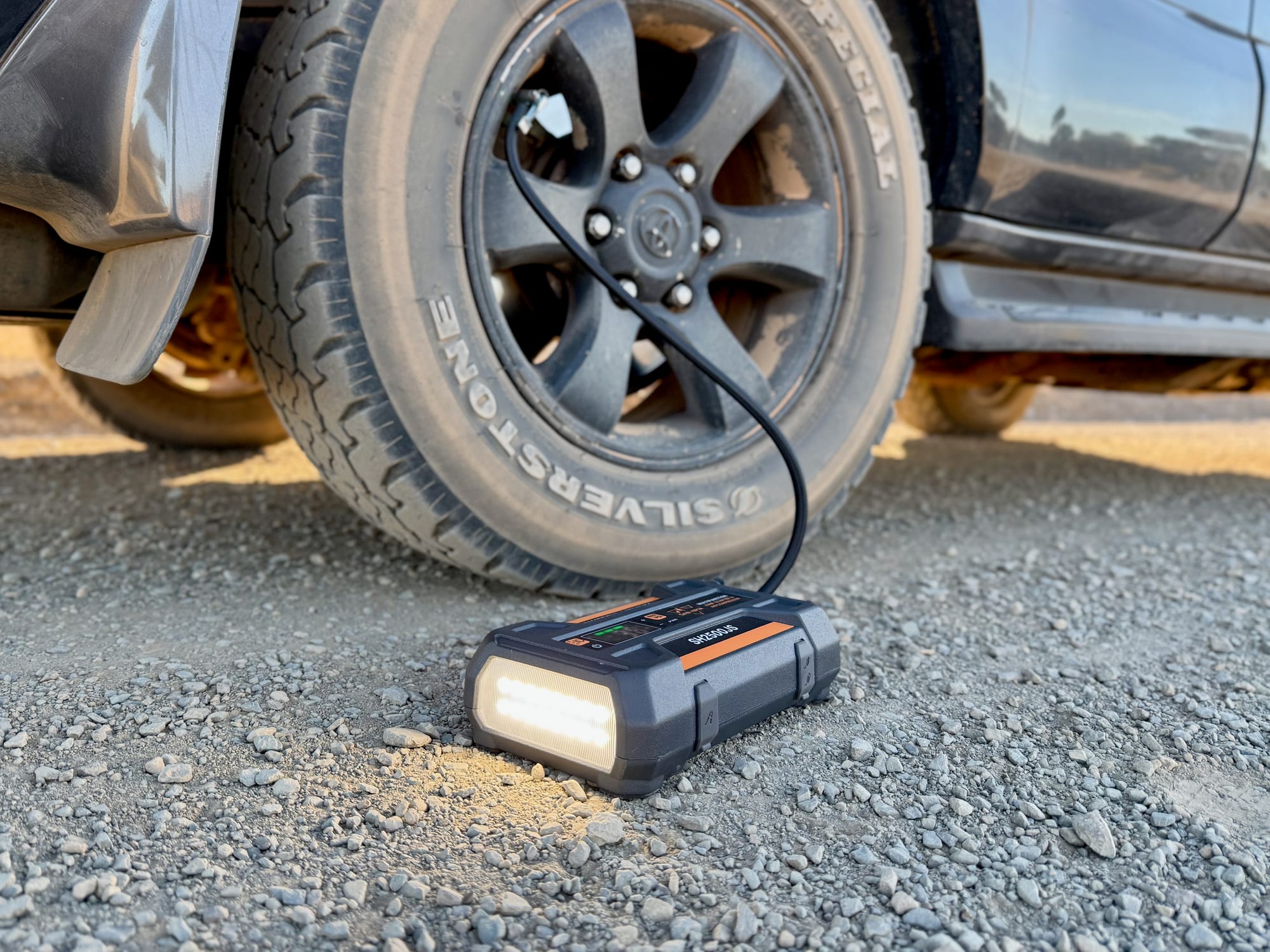
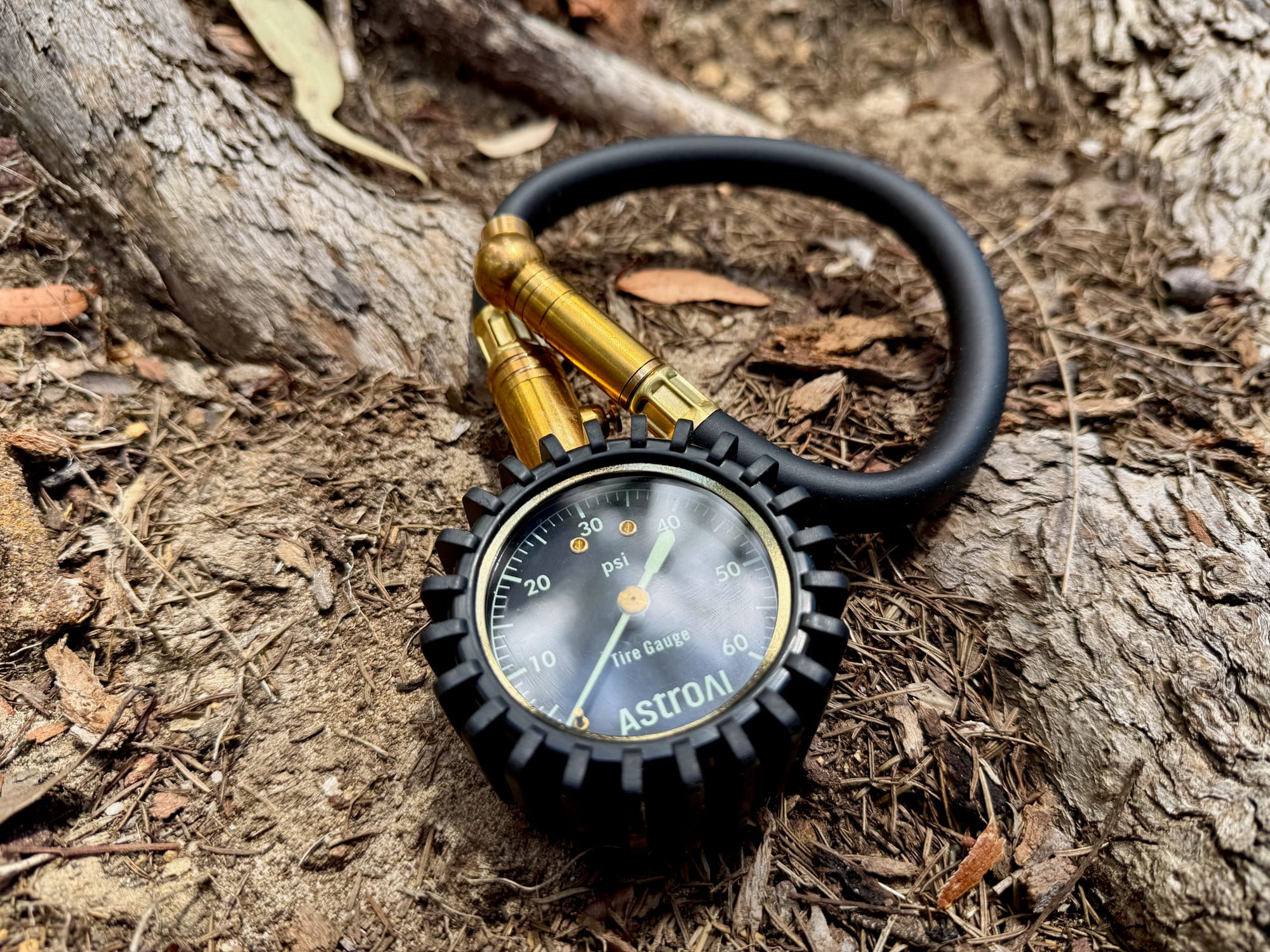
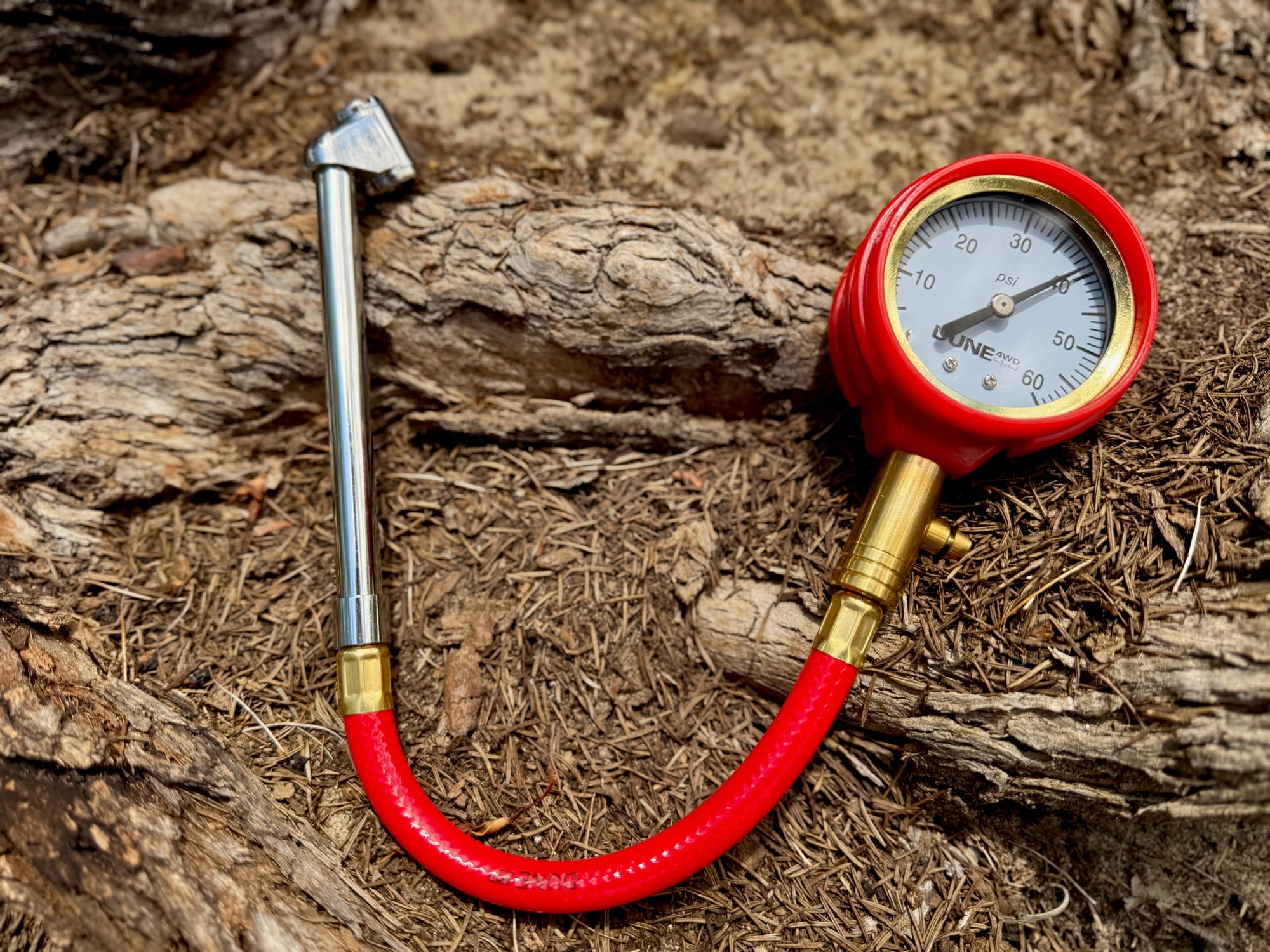
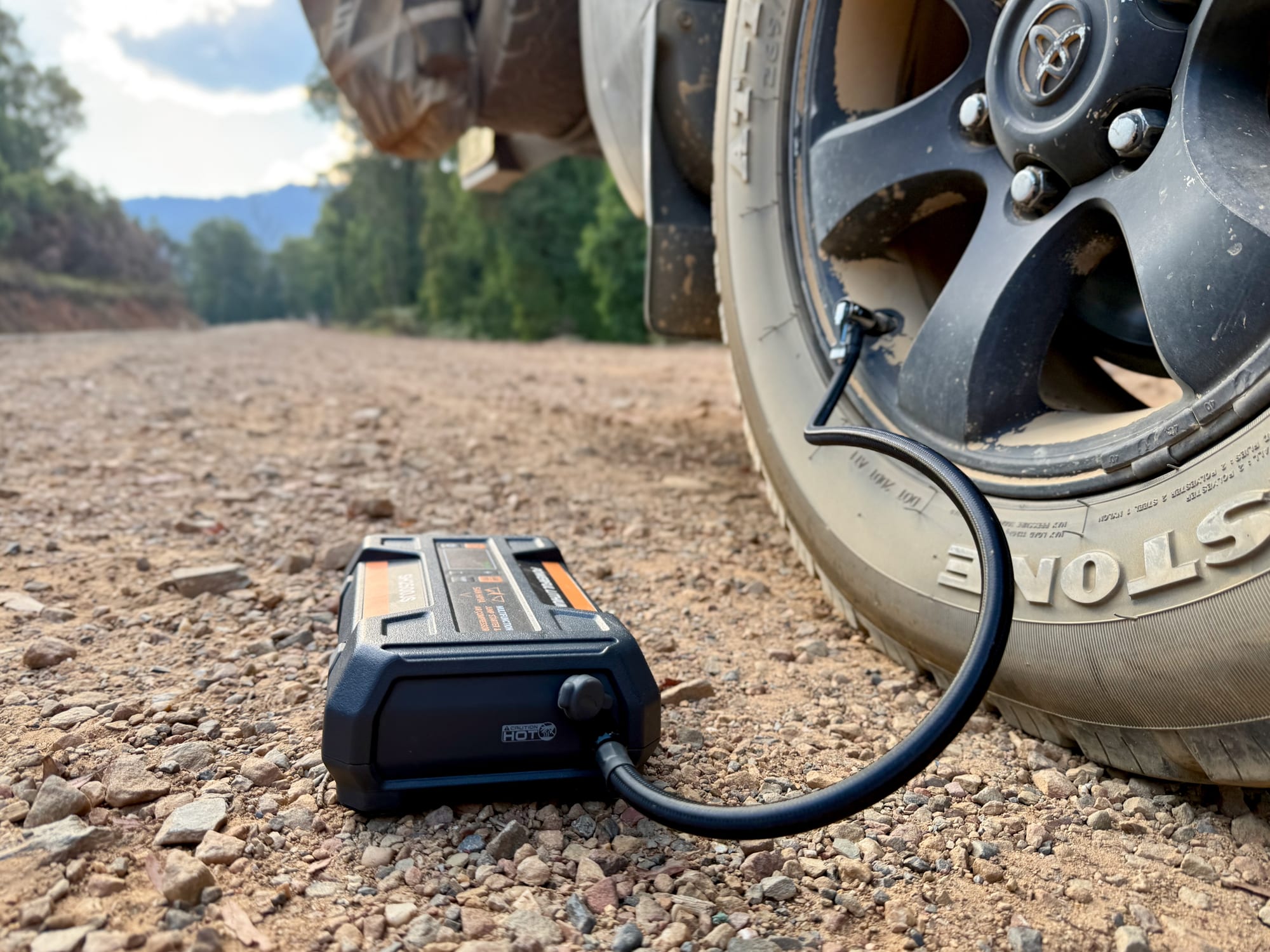
To change pressures on the track you need a way to let air out and put it back in: a set of tyre deflators, a tyre inflator and an accurate pressure gauge.