A digital tyre gauge is small and precise, right up to the day the batteries are flat. A mechanical gauge has no such day. The AstroAI Mechanical Tyre Pressure Gauge is the solid kind: brass, steel and rubber, with a needle on a dial. I paid $25 for it, and we’ve used it on trips north of Sydney, to the Hunter Valley and further up to Seal Rocks for beach driving.
Featured inBest Tyre Deflators of 2026
What You’re Getting
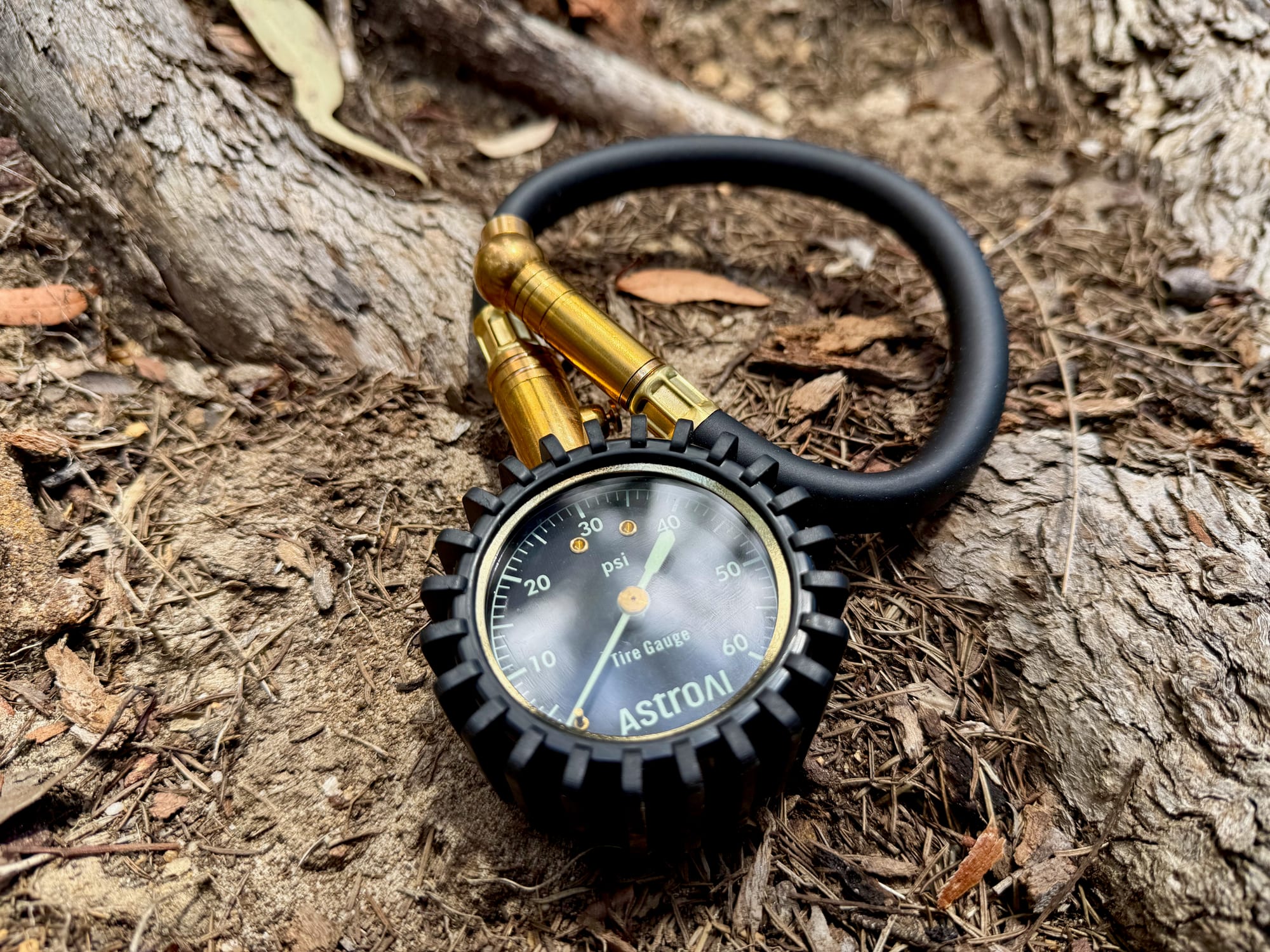
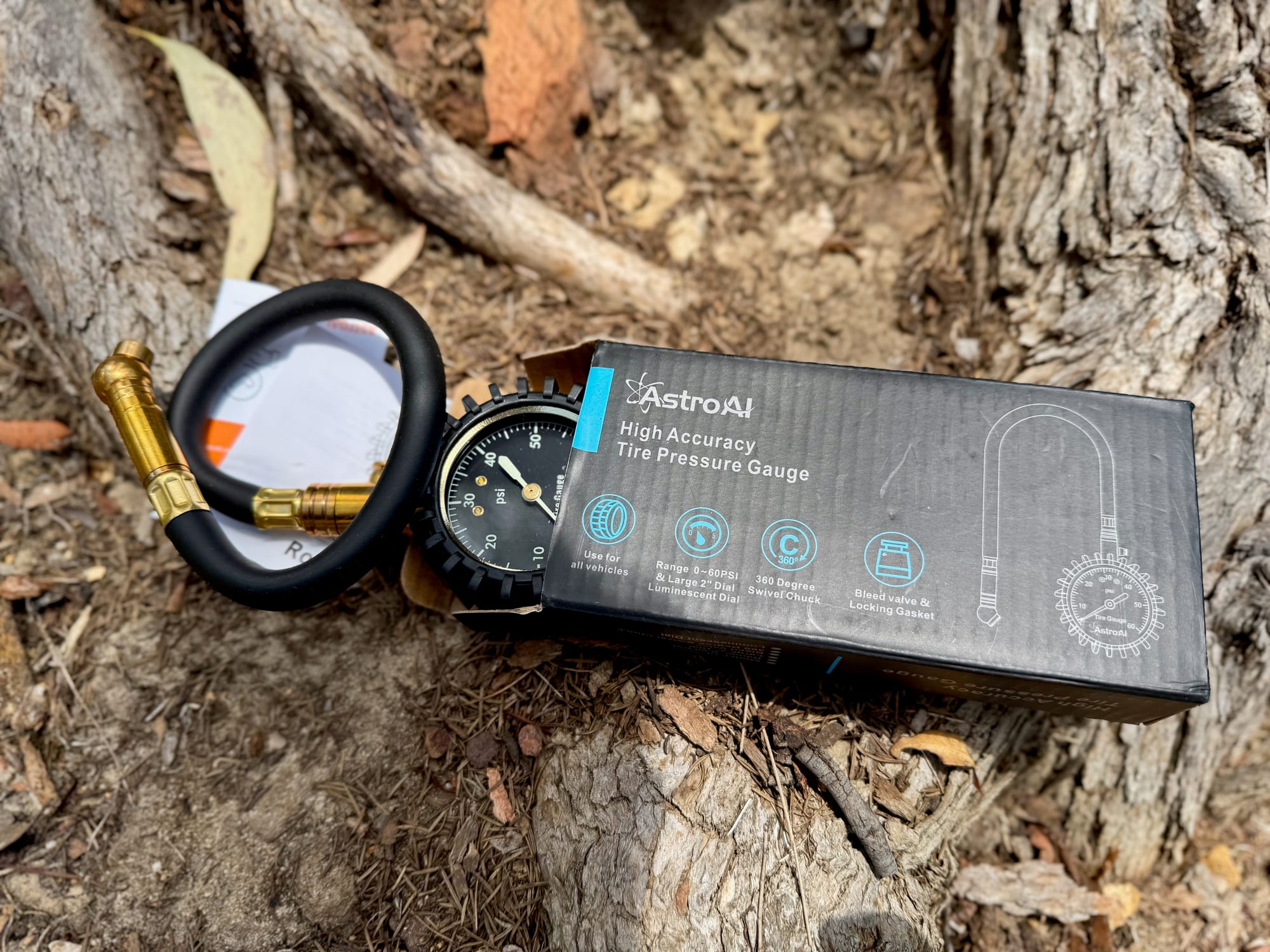
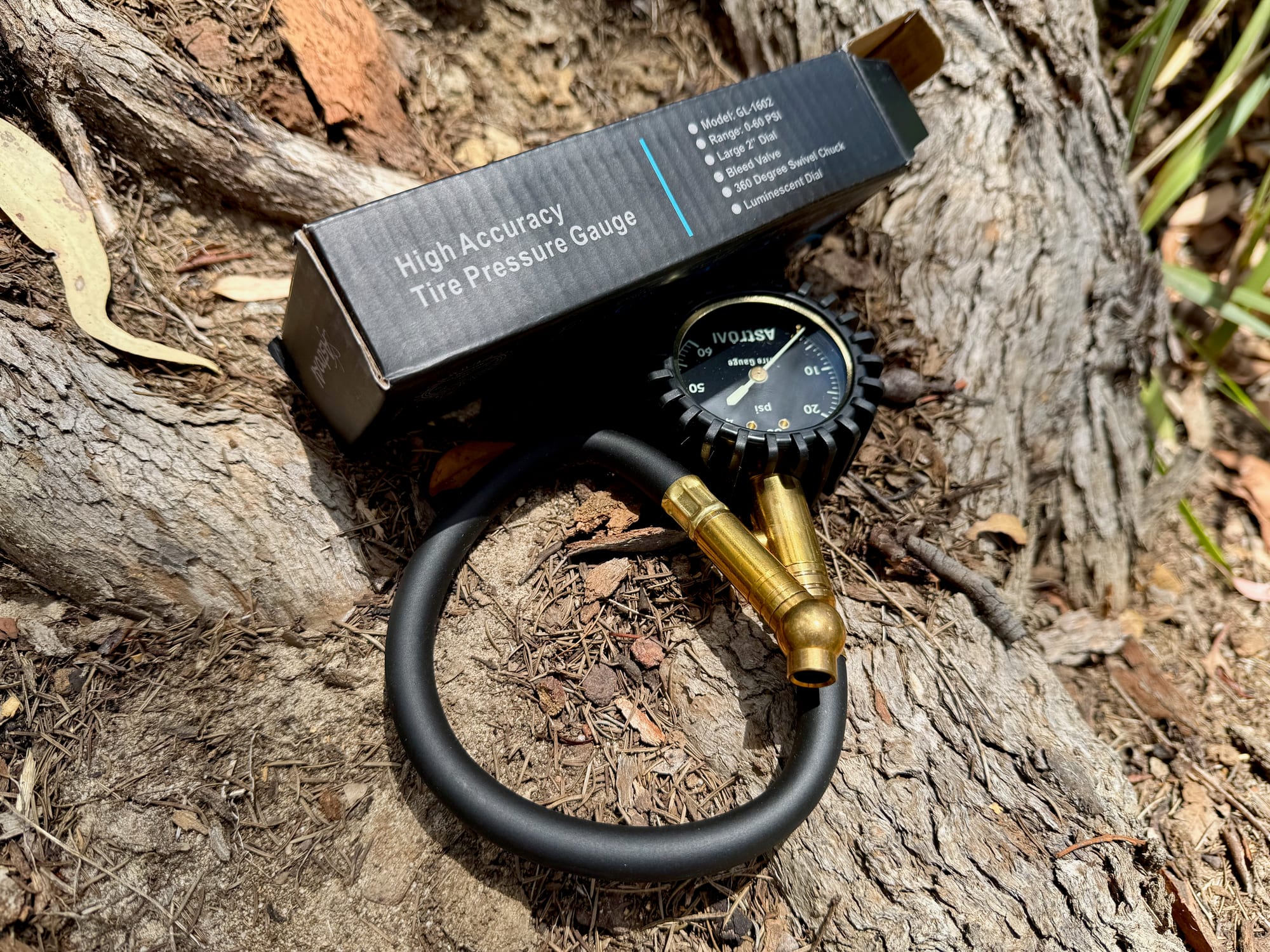
A mechanical pressure gauge with a 2 inch black dial inside a toothed rubber guard, brass fittings, a black rubber hose and a brass chuck with an angled head. There’s a bleed valve on the brass body. Nothing needs charging or setting up.
The good
- Brass and steel build
- Glow-in-the-dark dial
- Chuck swivels 360 degrees
- Bleed valve lets air out
- Holds the reading, no batteries
- Rubber guard around the dial
The not-so-good
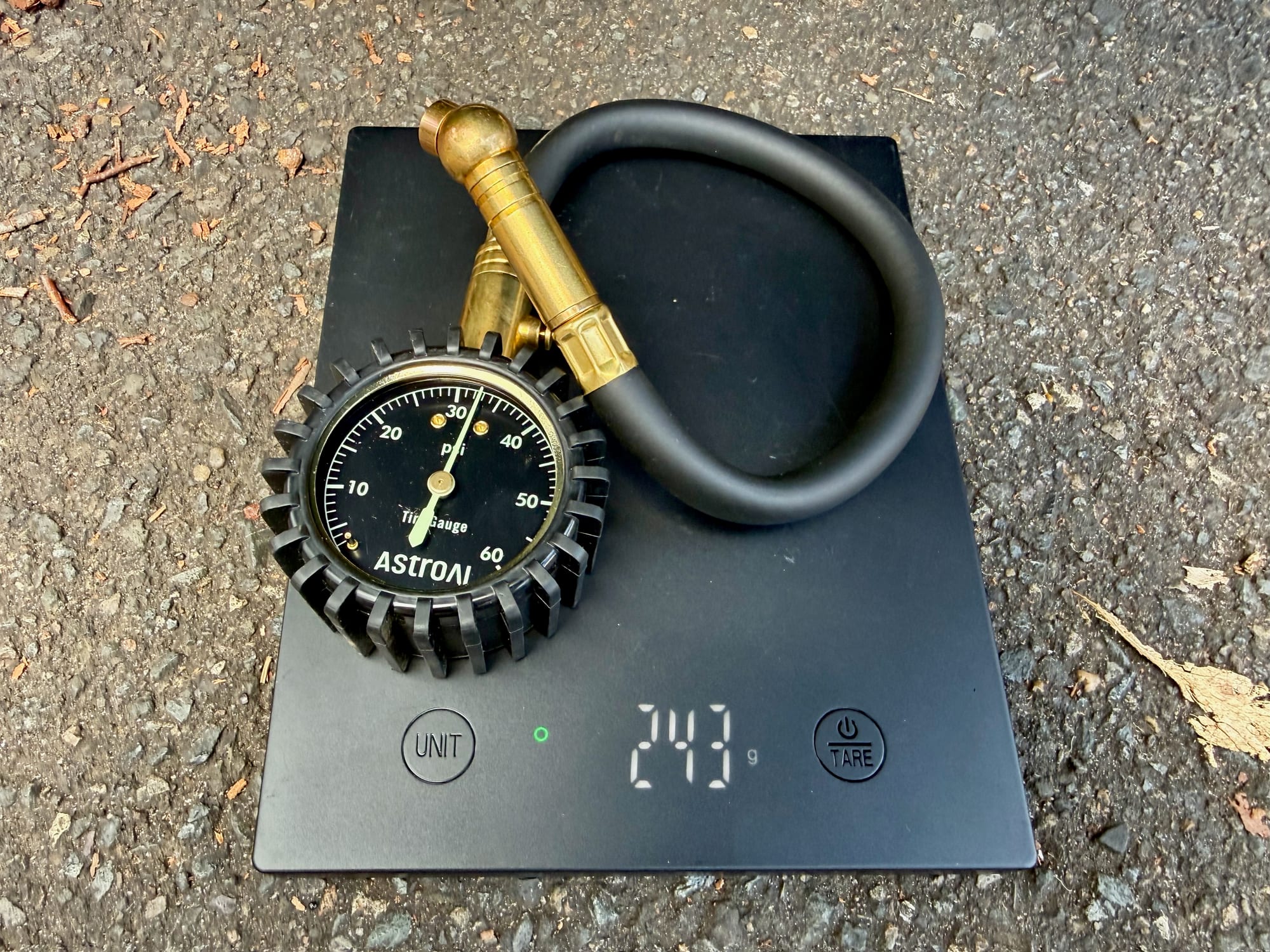
- Heavy for a gauge at 243 g
- Too bulky for a glovebox tray
Quick Specs
| Spec | Details |
|---|---|
| Brand | AstroAI |
| Weight | 243 g |
| Type | Mechanical dial gauge |
| Range | 0 to 60 PSI on oursNow sold as 0 to 100 PSI |
| Dial | 2 inchGlow in the dark |
| Chuck | BrassSwivels 360 degrees |
| Power | None needed |
| Extras | Bleed valveFlexible hose |
Taking a reading
The chuck is the best part of this gauge. It has an angled head and swivels all the way round on the end of the hose, so you can turn it to suit the valve instead of fighting the hose. That helps on wheels where the valve sits at an awkward angle behind a spoke.
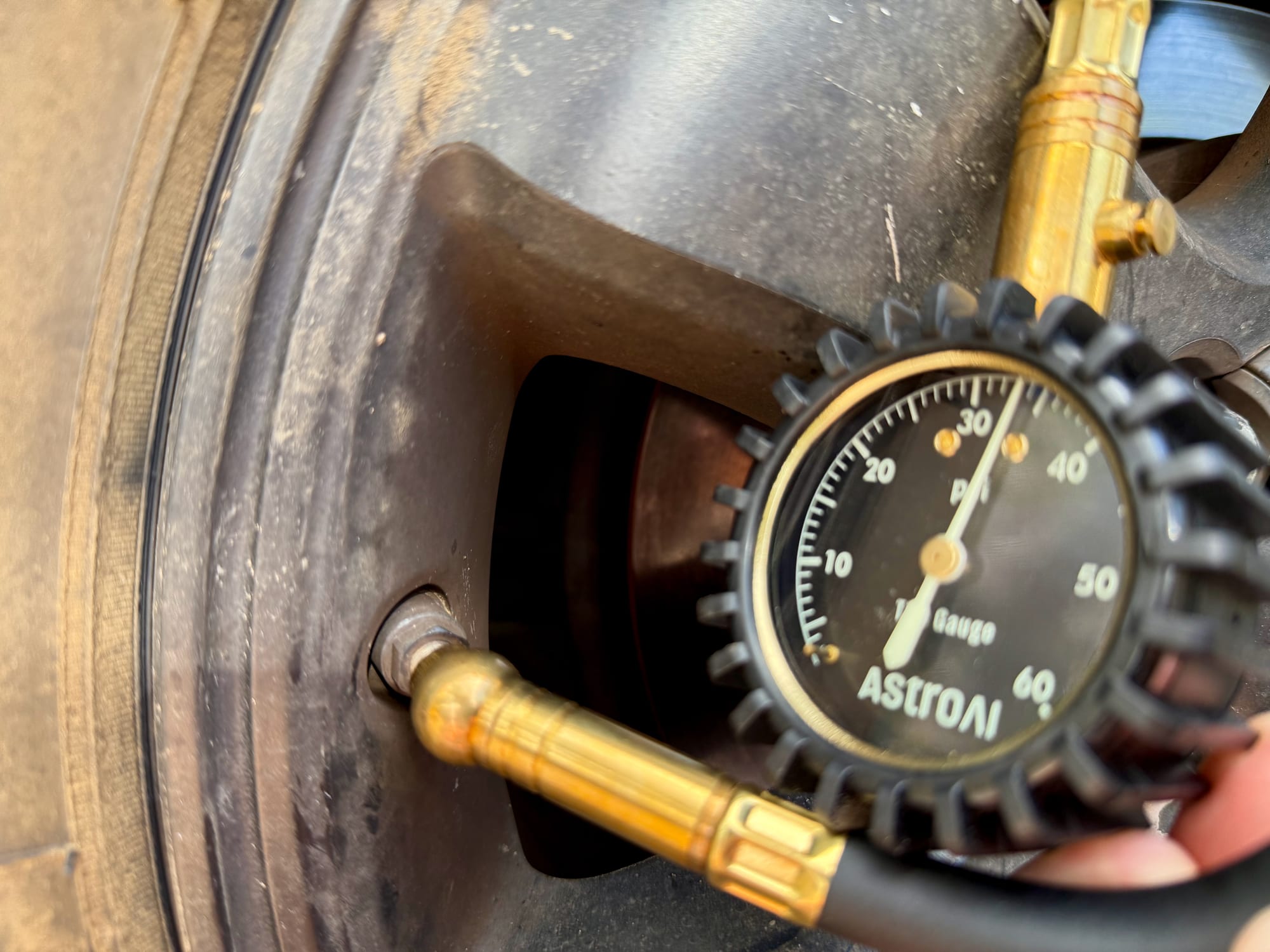
The dial is black with pale numbers and a pale needle, which makes it quick to read in daylight. On our Prado’s tyre the needle sat at about 35 PSI. The needle holds that reading after you pull the gauge off, so you can look at it properly before you release it.
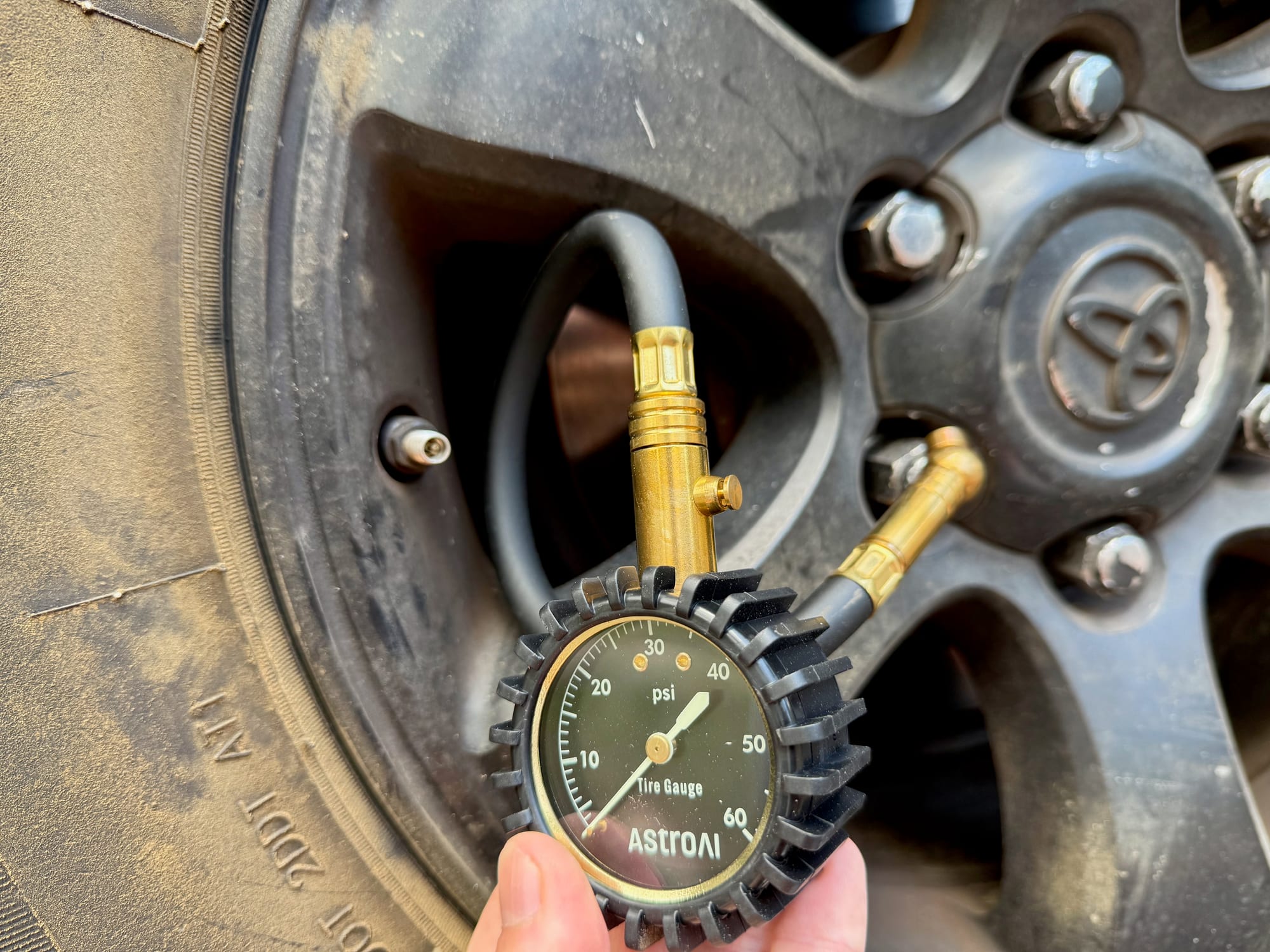
The numbers and the needle glow in the dark. That’s a small thing until you’re checking tyres at a campsite after sunset.
Bleed valve
With the gauge on the valve, a press on the bleed valve lets air out of the tyre while you watch the needle drop. It’s the way to take a few PSI out for a gravel road or to match four tyres exactly. On our beach driving trips up to Seal Rocks, a gauge is what tells you where the tyres are before the sand and again before the bitumen. For airing all four right down, though, a set of deflators is much quicker: see our guide to the best tyre deflators. And to put the air back in afterwards, you need a compressor: see the best tyre inflators.
Range, size and build
Our gauge reads from 0 to 60 PSI, which covers normal 4WD and car pressures, on the road and aired down. Since we bought it, AstroAI has raised the range to 100 PSI, and that’s the version our button links to. The rest of the gauge is the same, and the higher range also suits tyres that run above 60 PSI.
It’s built heavier than most. The fittings are brass and steel, the hose is thick rubber, and the dial sits inside a rubber guard with deep teeth that take the knocks. All of that adds up: it weighs 243 g on our scale and fills a hand.
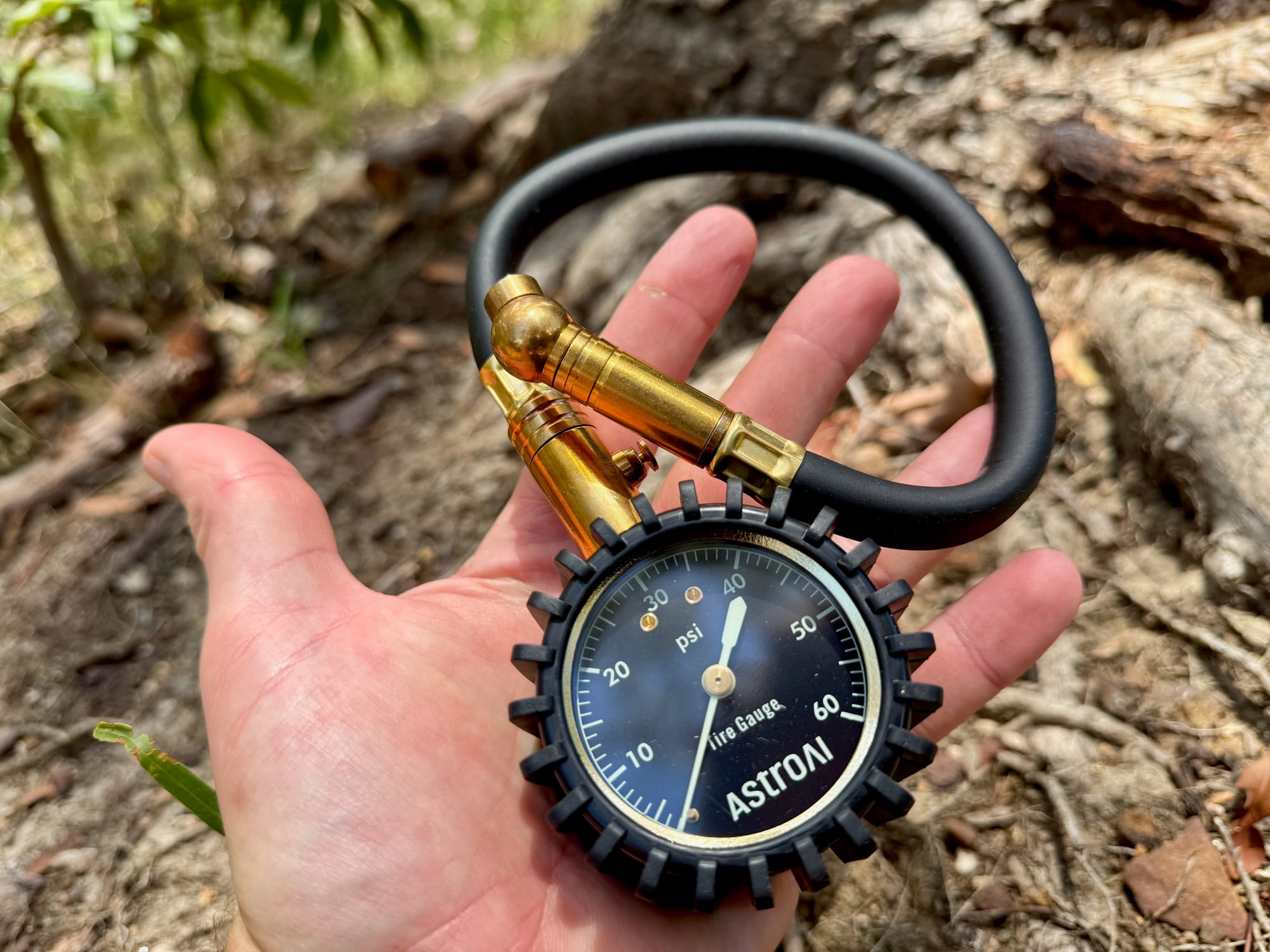
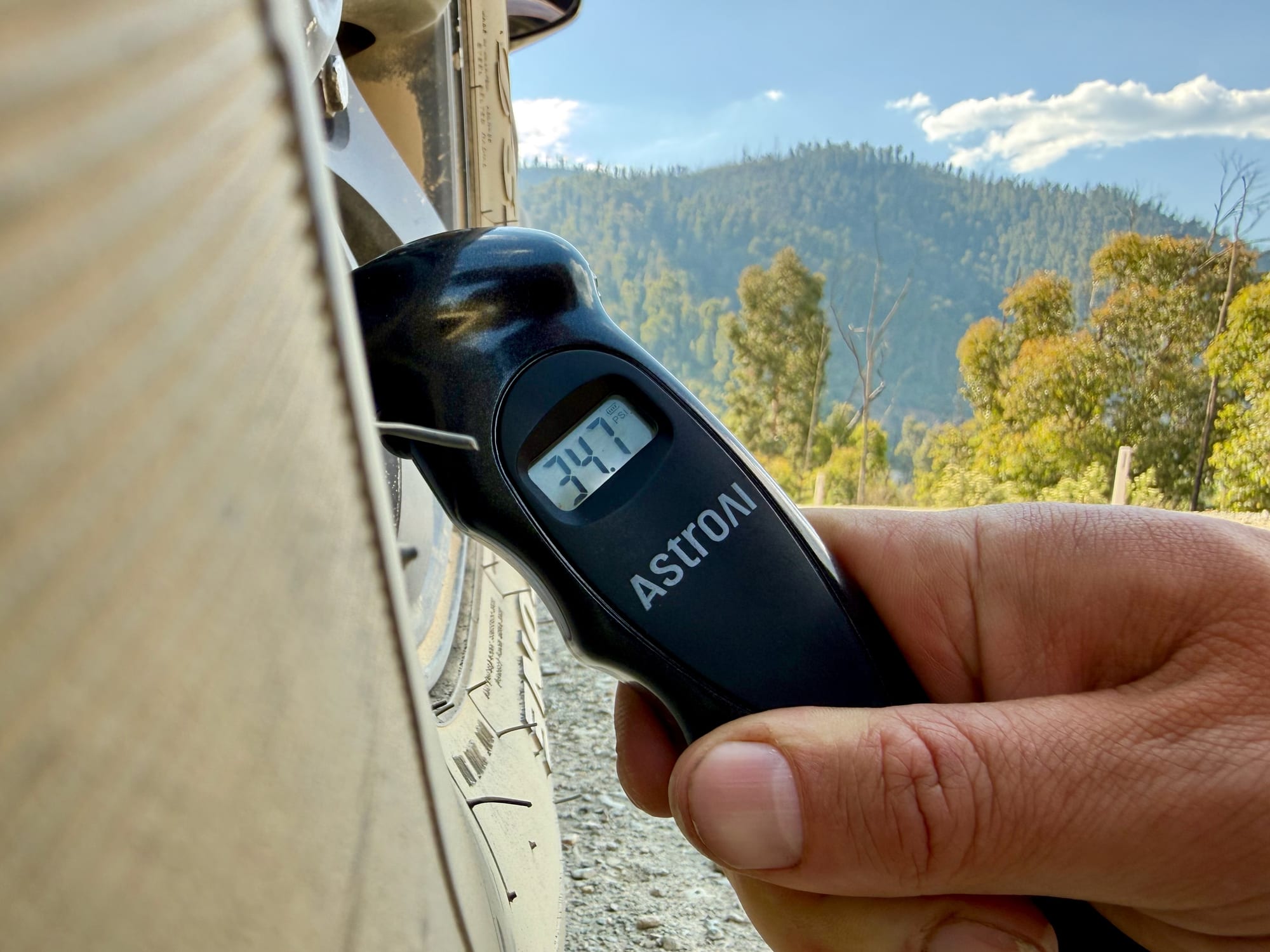
So it’s a gauge for the recovery bag or a drawer, not the glovebox tray. If you want something small to keep up front, we also have the AstroAI digital tyre pressure gauge, which weighs 72 g.
Conclusion: AstroAI Mechanical Tyre Pressure Gauge
The AstroAI Mechanical Tyre Pressure Gauge is a solid brass and steel gauge with a glow dial, a chuck that swivels all the way round and a bleed valve for letting air out. It needs no batteries and holds its reading. Ours reads to 60 PSI and the version sold now goes to 100. At 243 g it’s heavy and bulky for a gauge. For $25, it’s one to throw in the recovery bag and forget about until you need it.
A mechanical gauge with a glow dial, brass and steel fittings, a 360 degree swivel chuck and a bleed valve.
No batteries. Heavy at 243 g. $25.
- 4WD tourers
- Caravanners
- Car campers
Yes. I paid $25 for a brass and steel gauge with nothing to charge. If you’d rather have something small for the glovebox, the AstroAI digital gauge is the one.