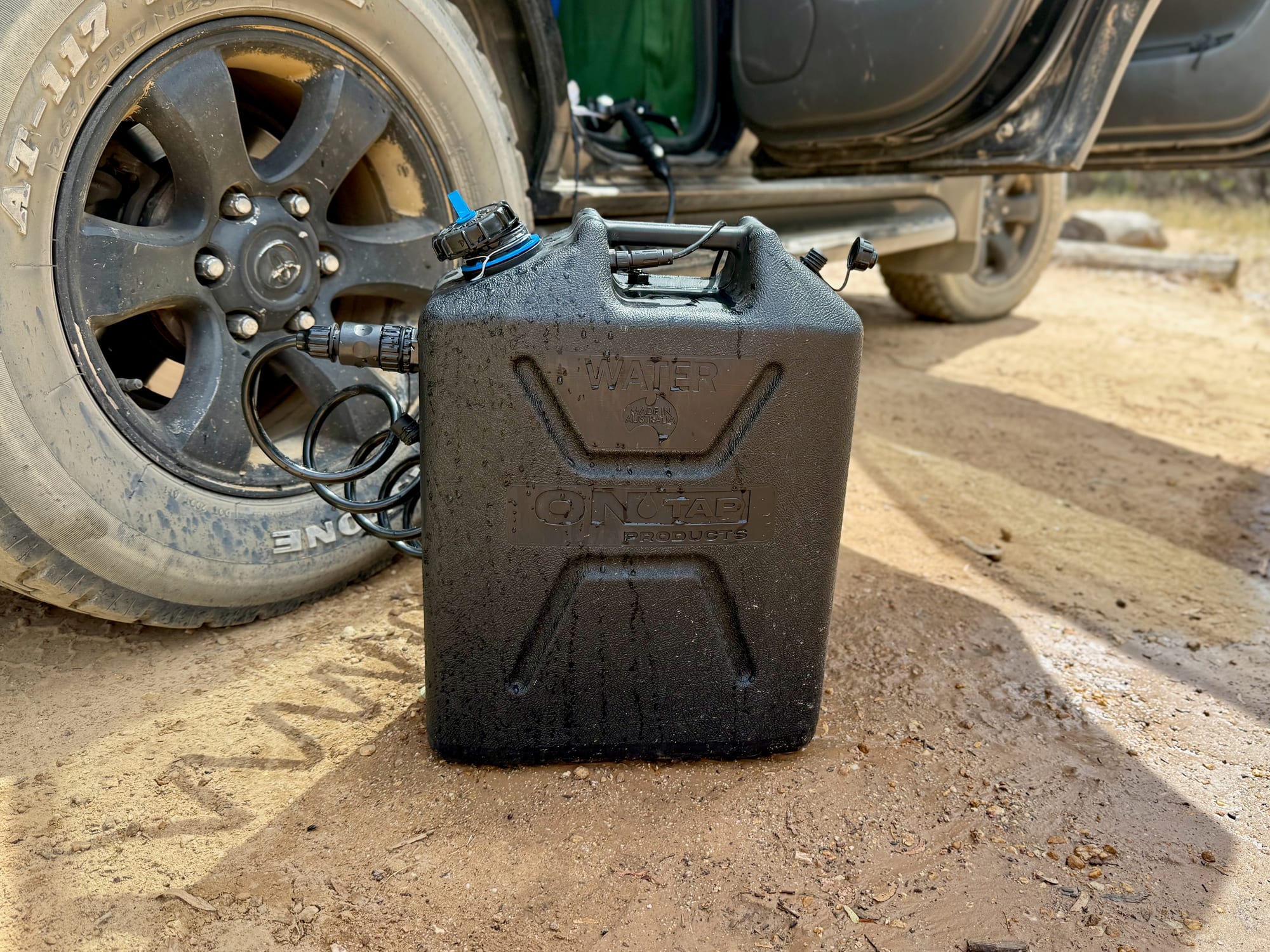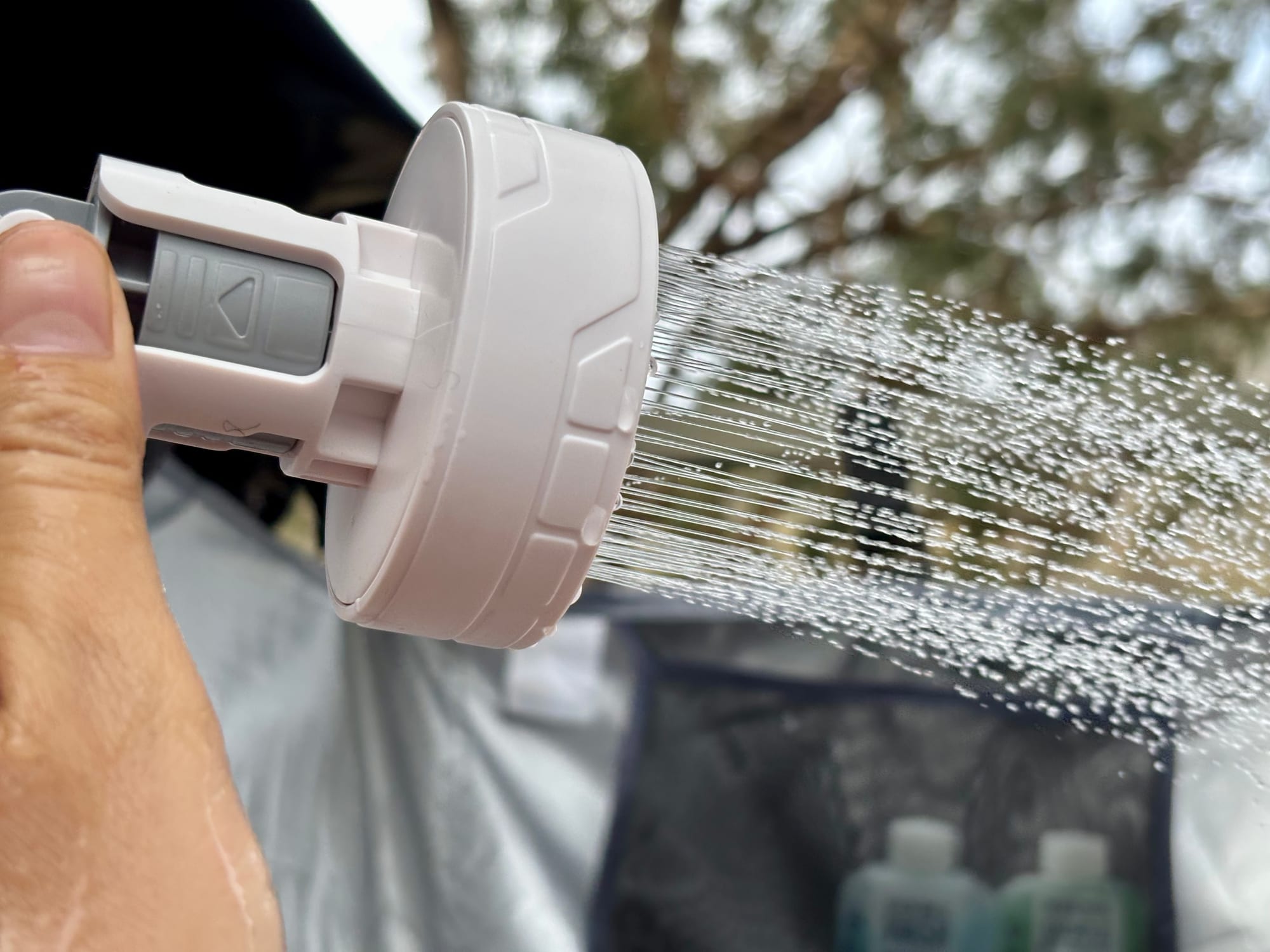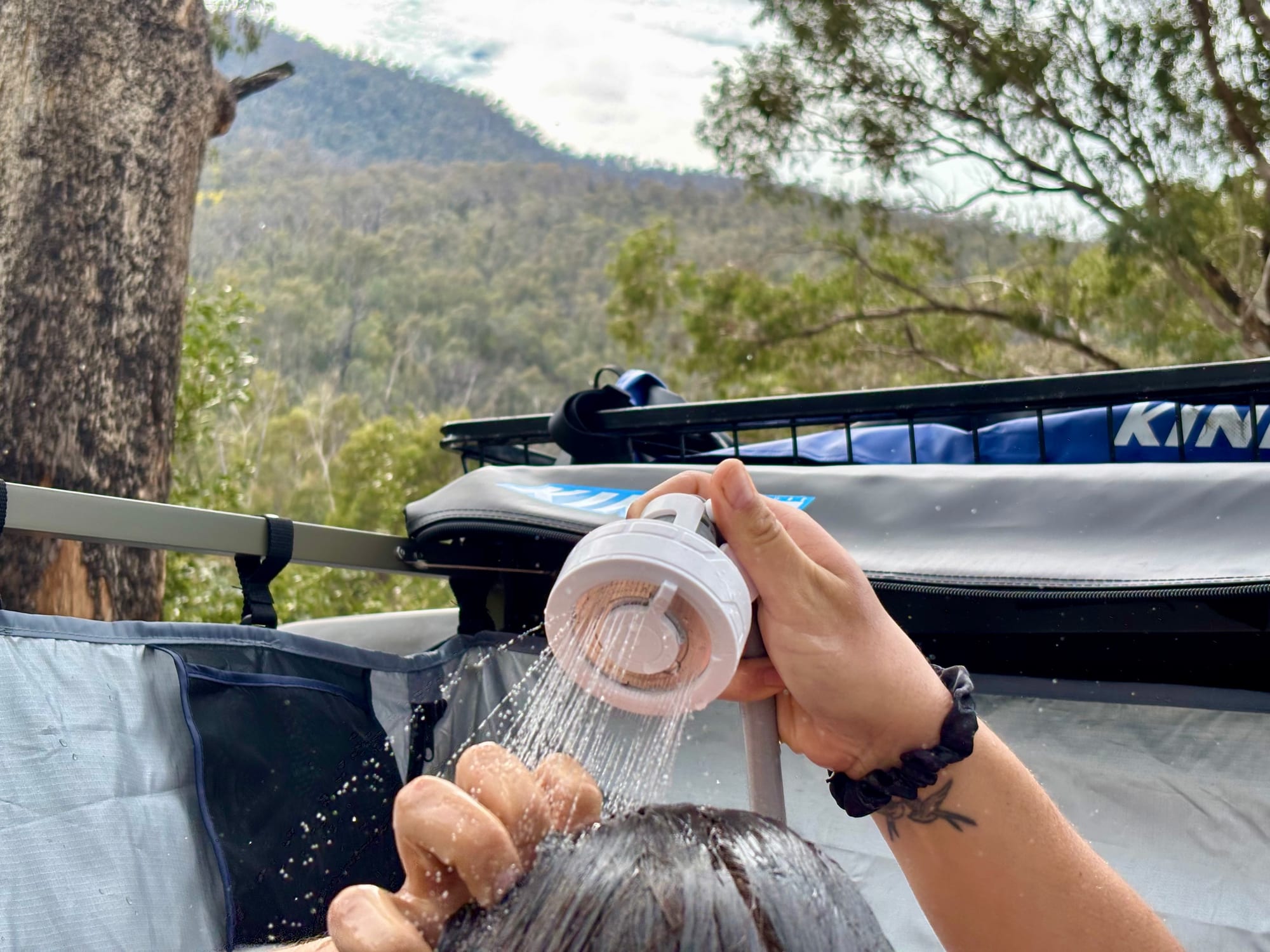
When you’re camping off-grid, staying clean can feel like a luxury, especially after a long hike, dusty drive, or saltwater swim. There’s nothing like a proper rinse at the end of the day. A portable off grid shower helps wash off salt, sweat, or sunscreen, to feel refreshed before bed whilst avoiding polluting creeks or waterways
These days, you don’t need to rough it. Whether you’re touring in a 4WD, hiking light, or just escaping for the weekend, there’s a portable shower setup to match your style. The key is choosing a system that balances weight, water capacity, pressure, and ease of use, so let’s break them down.
In this guide, I’ll break down the three most practical off-grid shower options (pocket showers, portable pump showers, and ensuite tents) plus what I use and recommend based on real experience.
My off-grid shower setup and water tipsMy off-grid shower setup
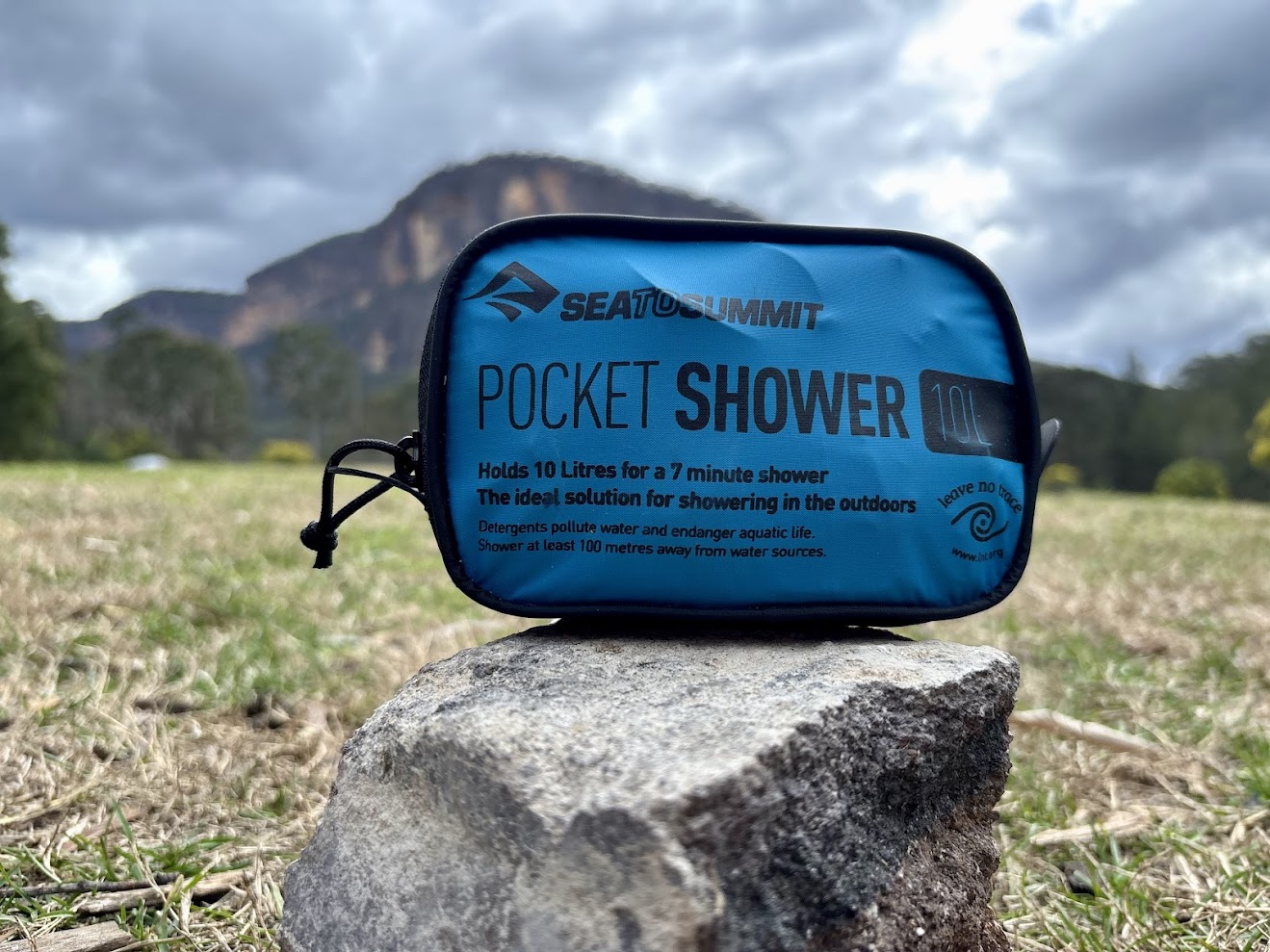
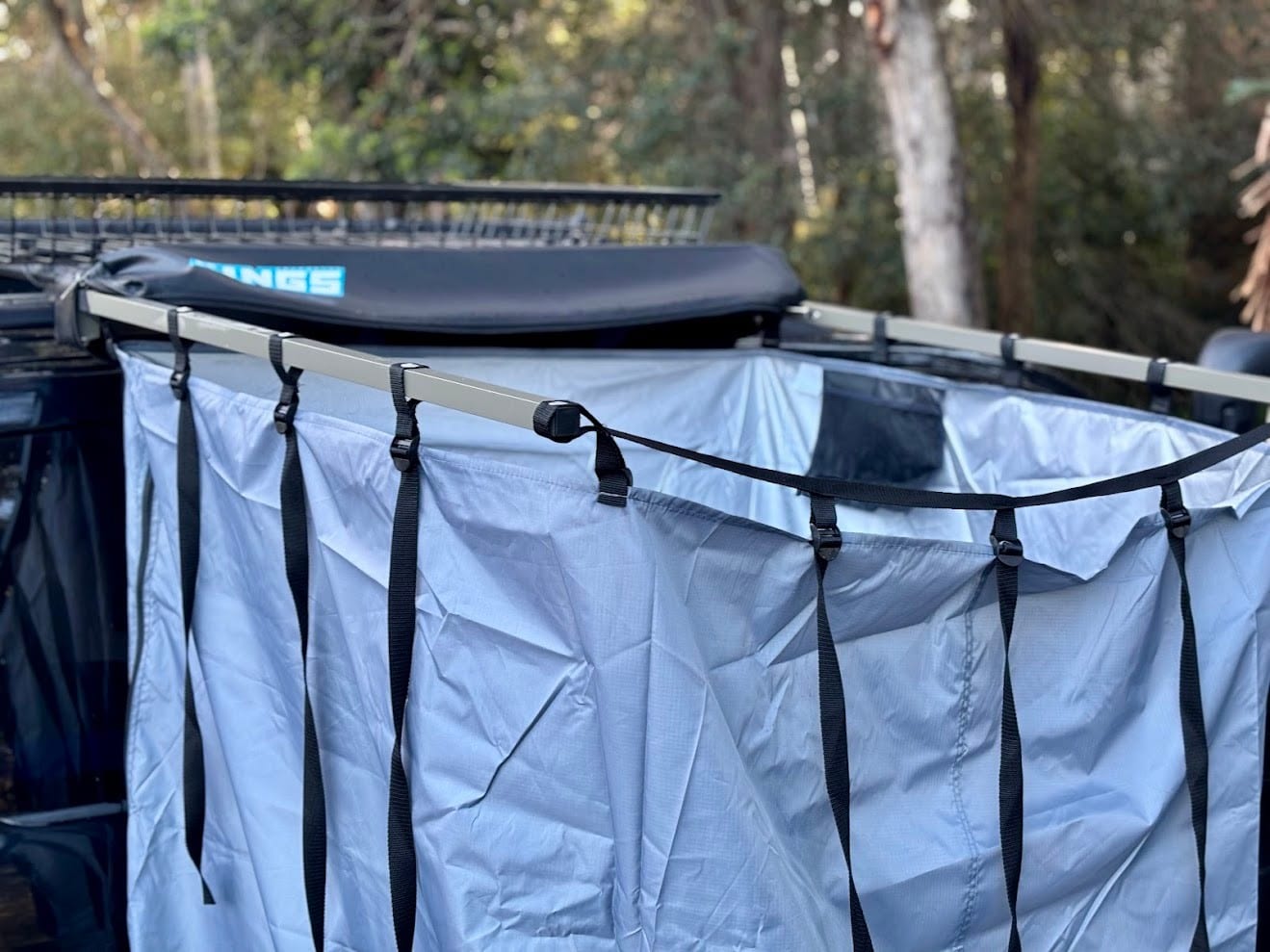
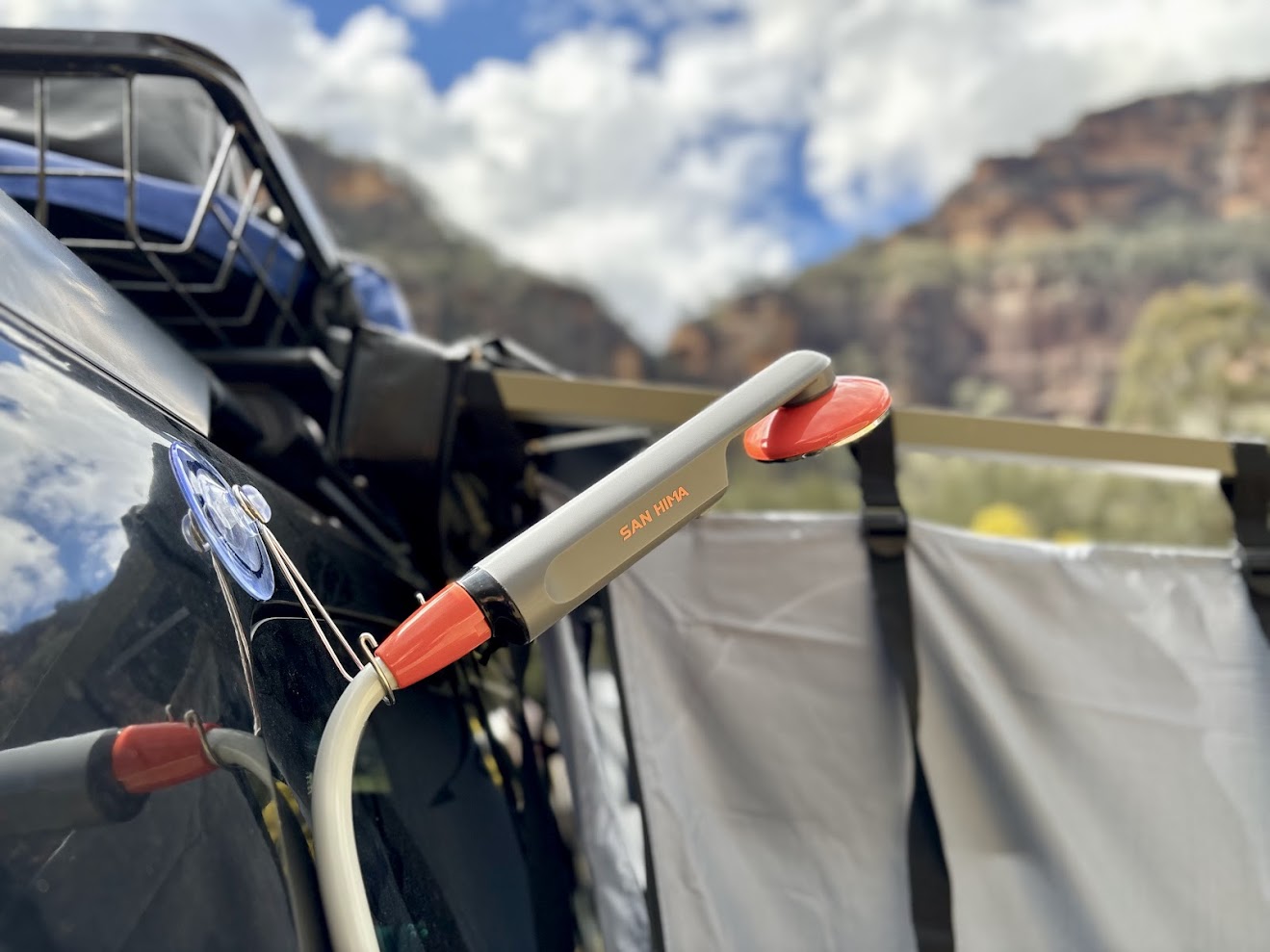
When I’m on the road with the Prado, I keep things flexible with two go-to options: the Sea to Summit Pocket Shower for short overnight stays or quick hikes, and the San Hima Portable Shower for longer trips or beach camps where a proper rinse feels essential. If I know I’ll be near others (like at a popular free camp), I’ll also have my ensuite awning from Kings to add some privacy, especially when using the pump setup. Over time, I’ve picked up a few habits that make off-grid showering more effective (and less messy):
- Use creek or river water when allowed, just filter it first if you’re unsure.
- Let your water warm up in the sun or heat it on the stove for a more comfortable wash.
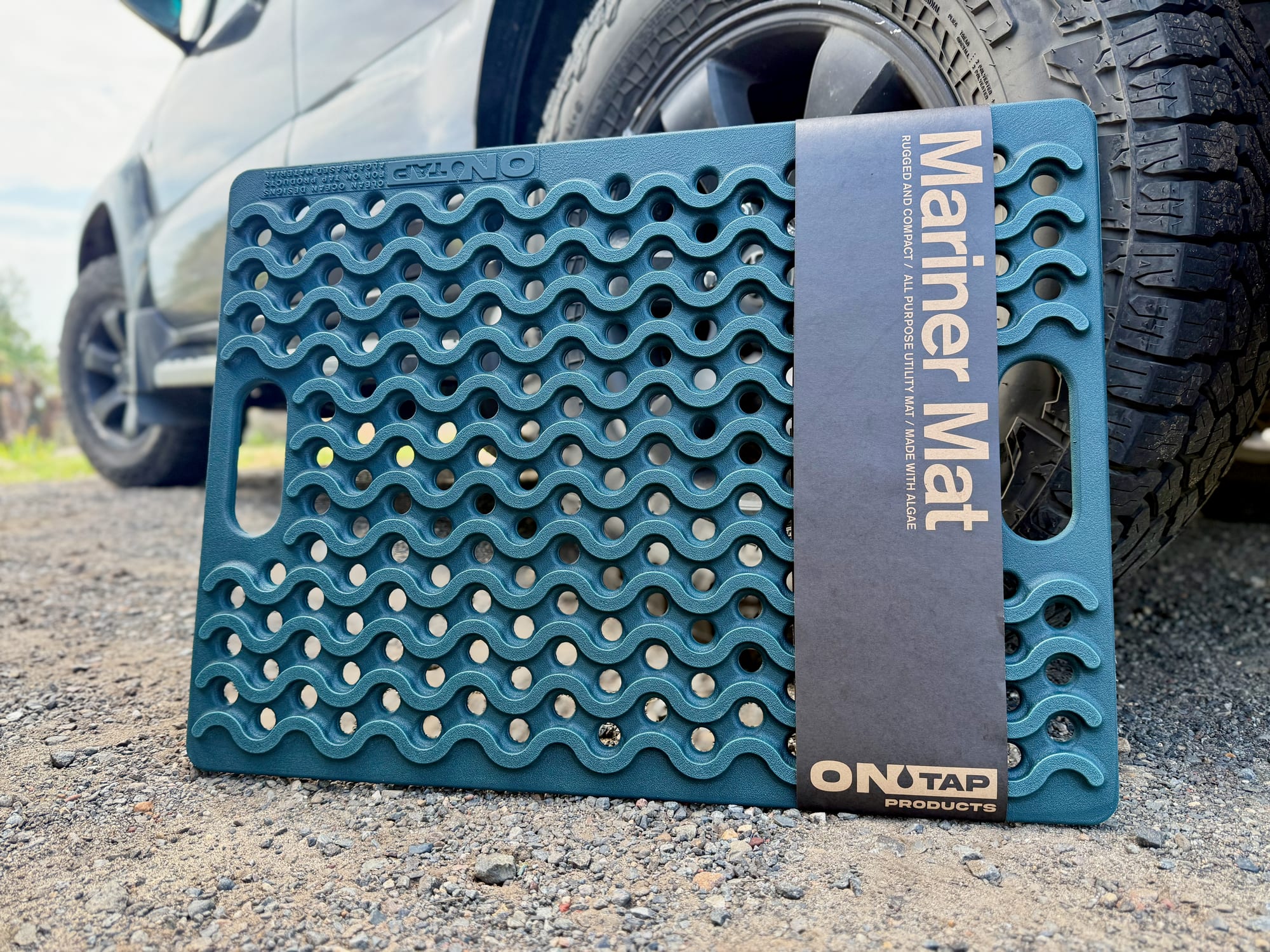
- Stand in a tub, mat, or mesh tray to avoid turning your site into a muddy puddle.
- Always use biodegradable soap. For example the Sea to Summit Shampoo Leaves or the Sea to Summit Liquid Pocket Shampoo, keeping your shower setup well away from natural water sources to protect the environment.
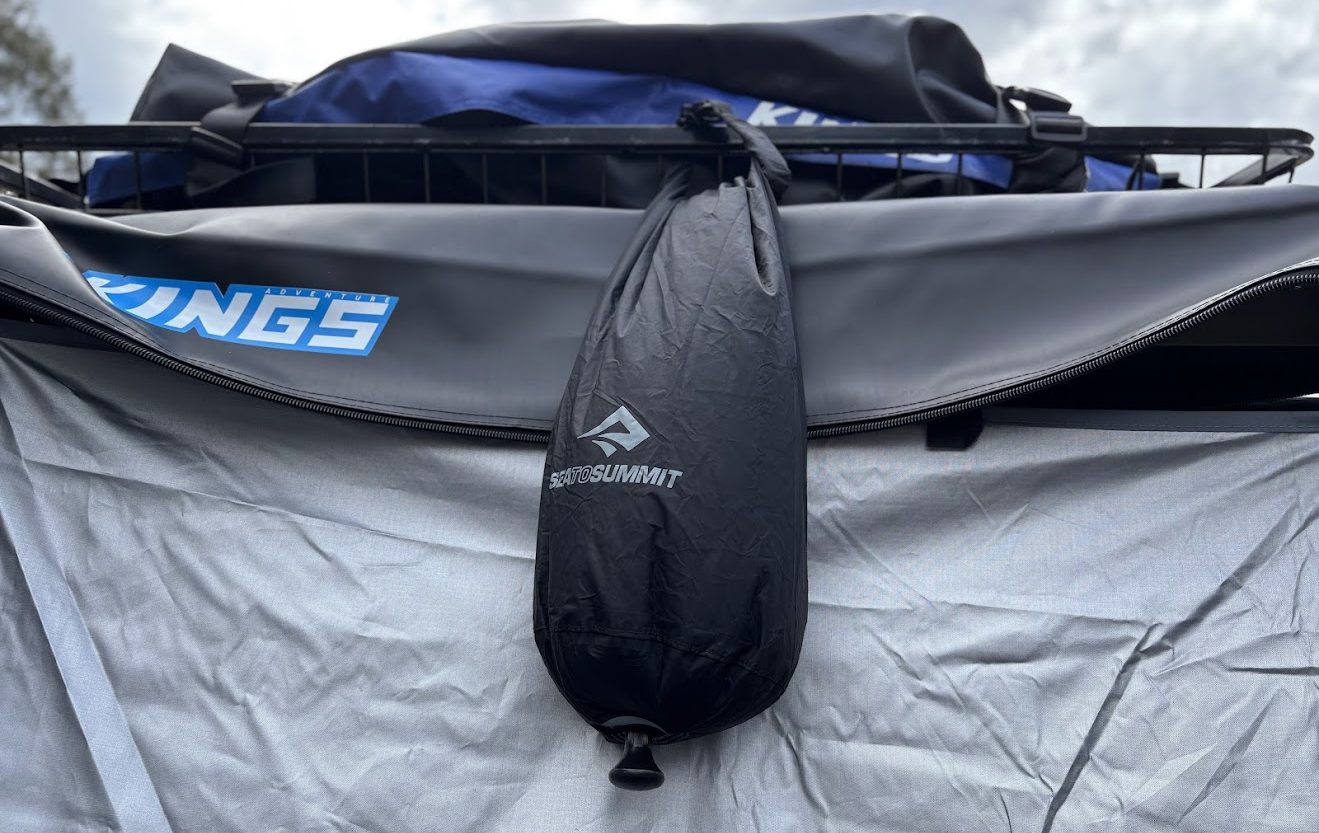
Pocket Showers: Lightweight & SimplePocket Showers
If you’re hiking, bikepacking, or just packing light, a pocket shower might be all you need. These gravity-fed systems are incredibly compact (often no bigger than a fist when packed) and weigh next to nothing in your bag. They’re perfect for rinsing off after a long day on the trail without needing power, pressure, or complex setup. Just fill it with water, hang it from a tree or rack, and let gravity do the work. For solo travellers or minimalist campers, it’s one of the simplest and most space-efficient ways to stay clean off-grid.
What we like
- Packs small, light
- Cost-effective, reusable
- Option to heat with sun power
- Saves on water use
What we don’t
- Needs a sunny day
- Low pressure, small size
Portable Pump Showers: Pressure & ConveniencePortable Pump Showers
If you want a more “real shower” feel (without going full luxury), a portable pump shower hits the sweet spot. These handy units use a compact, battery-powered pump that you simply drop into a bucket, collapsible tub, or jerry can. With the push of a button, you get a steady stream of water through a proper showerhead, bringing comfort and convenience to your off-grid setup without needing mains power or complicated plumbing.
What we like
- Consistent water pressure
- No need for gravity
- Can draw from any source
- Adjustable spray settings
What we don’t
- Heavier, bulkier to carry
- More complex, prone to leaks
- Costs more to buy
Ensuite Tents: Privacy & ComfortEnsuite Tents
For couples, families, or longer stays at camp, an ensuite tent is a total game-changer. These pop-up shelters provide a private, enclosed space where you can comfortably shower, get changed, or use a portable toilet, without feeling exposed or cramped. They’re especially handy at busy free camps or when you’re travelling with others and need a bit of personal space in the bush.
What we like
- Offers complete privacy
- A safe, secure space
- Keeps bugs and critters out
- Can also be a toilet tent
What we don’t
- Takes time to set up
- Can be unstable in wind
- Needs flat ground and pegs
- Mainly useful when staying longer in one spot
Summary
There’s no one-size-fits-all solution when it comes to off-grid showering. It really depends on your setup and priorities. If you’re going ultralight and space is tight, a gravity-fed pocket shower like the Sea to Summit is perfect: it’s compact, reliable, and weighs next to nothing. If you value comfort, pressure, and convenience (especially after a long day on the tracks), a rechargeable pump shower offers a proper rinse without the bulk or complexity of a full camp plumbing system. And if you’re setting up a longer-term base camp or camping with others, investing in a pop-up ensuite tent brings privacy and usability to the next level.
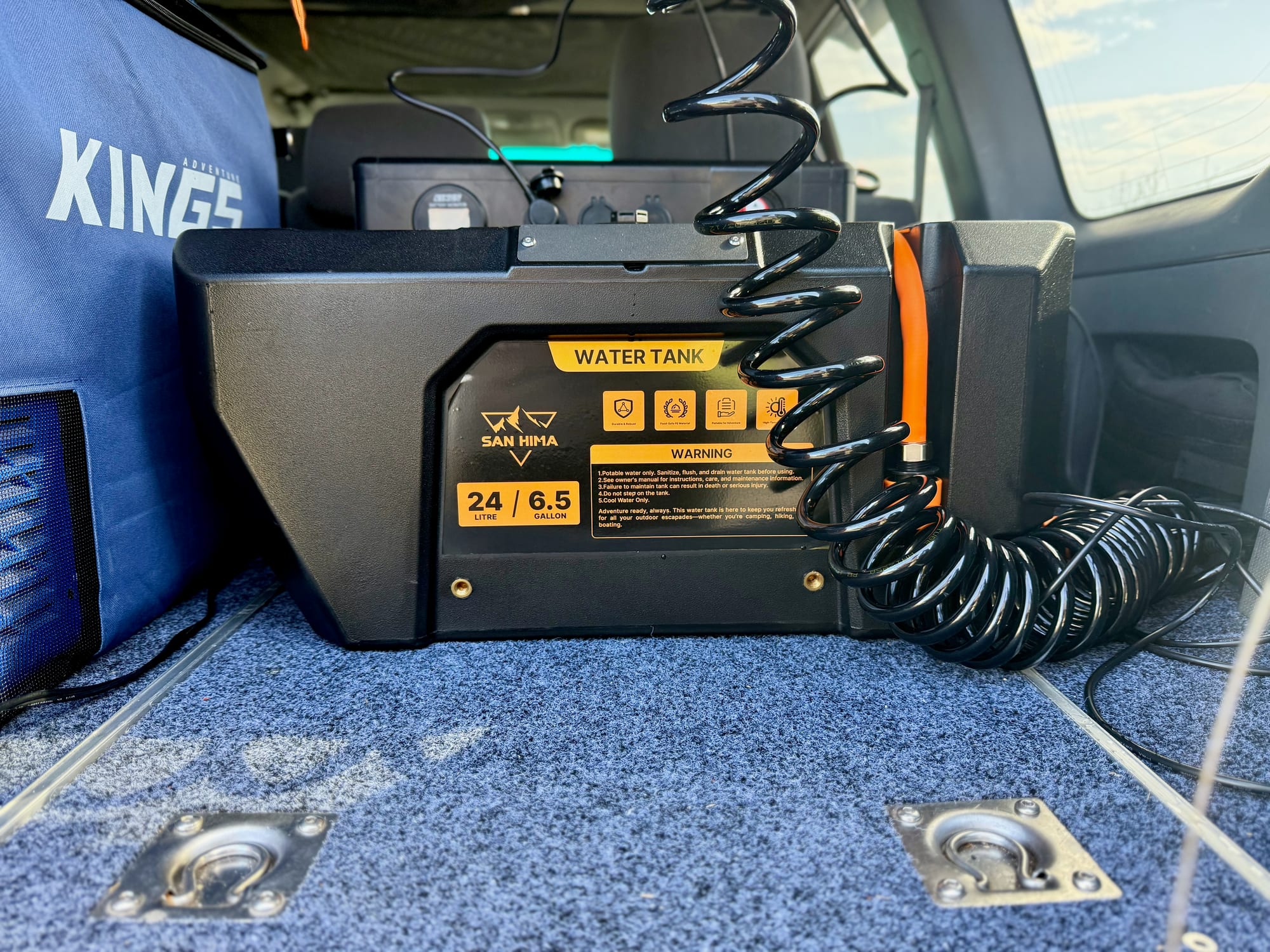
For most Aussie campers doing a mix of weekend escapes and longer trips, a battery-powered pump shower hits the sweet spot, offering solid pressure, quick setup, and flexibility. I personally use the San Hima Portable Shower, which pairs perfectly with a 12-litre water storage tank. It gives you just the right amount of water for a comfortable wash without wasting space or weight in your setup.
Do's
- Use biodegradable soap
- Shower at least 30 metres from creeks and lakes
- Let the water warm in the sun first
- Stand on a mat, tub or mesh tray
- Pack the shower away dry
Don'ts
- Don't wash in or next to a waterway
- Don't expect pump pressure from a gravity bag
- Don't store a shower bag or pump wet
Recommended gear
The pocket shower, pump shower and ensuite tent from this guide, plus a solar shower. For more options, see our camping showers guide.