A campfire is the best part of the evening at camp: heat, light and dinner in one spot. It is also where you see people struggle for half an hour with a lighter and a pile of logs, because the preparation got skipped.
Fire needs three things, heat, fuel and oxygen, and lighting one well is just giving it those three in the right order. Here is the structure we use, from match to a steady cooking fire, and how to adapt it when the wood is wet, the wind is up or you are on sand.
How does fire work?
The fire triangle is heat, fuel and oxygen. Take any one away and the fire goes out. The fuel is the wood, in three sizes: tinder, kindling and fuel wood. The heat comes from a match, a lighter or a ferro rod. The oxygen is the air moving through the stack.
Air is the part people get wrong. Wood packed too tightly can’t breathe, so it smokes instead of burning. Wood stacked too loosely lets the heat escape before the next piece catches. A good stack keeps the heat together while leaving gaps for air to come in at the bottom.
Tinder, kindling and fuel woodTinder, kindling & fuel
A fire needs three sizes of fuel, from fine tinder that catches the spark to the thick fuel wood that keeps it burning. Have all three ready before you light it.
- Tinder
SizeFine, cotton-ball size (less than 1 mm thick)
FunctionCatches the spark/flame and holds initial heat.
- Kindling
SizePencil to thumb thickness (3 mm to 15 mm)
FunctionCatches fire from tinder and builds a steady base of heat.
- Fuel Wood
SizeWrist to forearm thickness (over 25 mm)
FunctionProvides long-lasting heat and coal base for cooking.
How to build and light the fireBuilding the fire
Clear a space of about 3 metres around the fire pit or ring, then gather everything before you strike a match: a ball of tinder, a good pile of kindling and the fuel wood. You always need more kindling than you think.
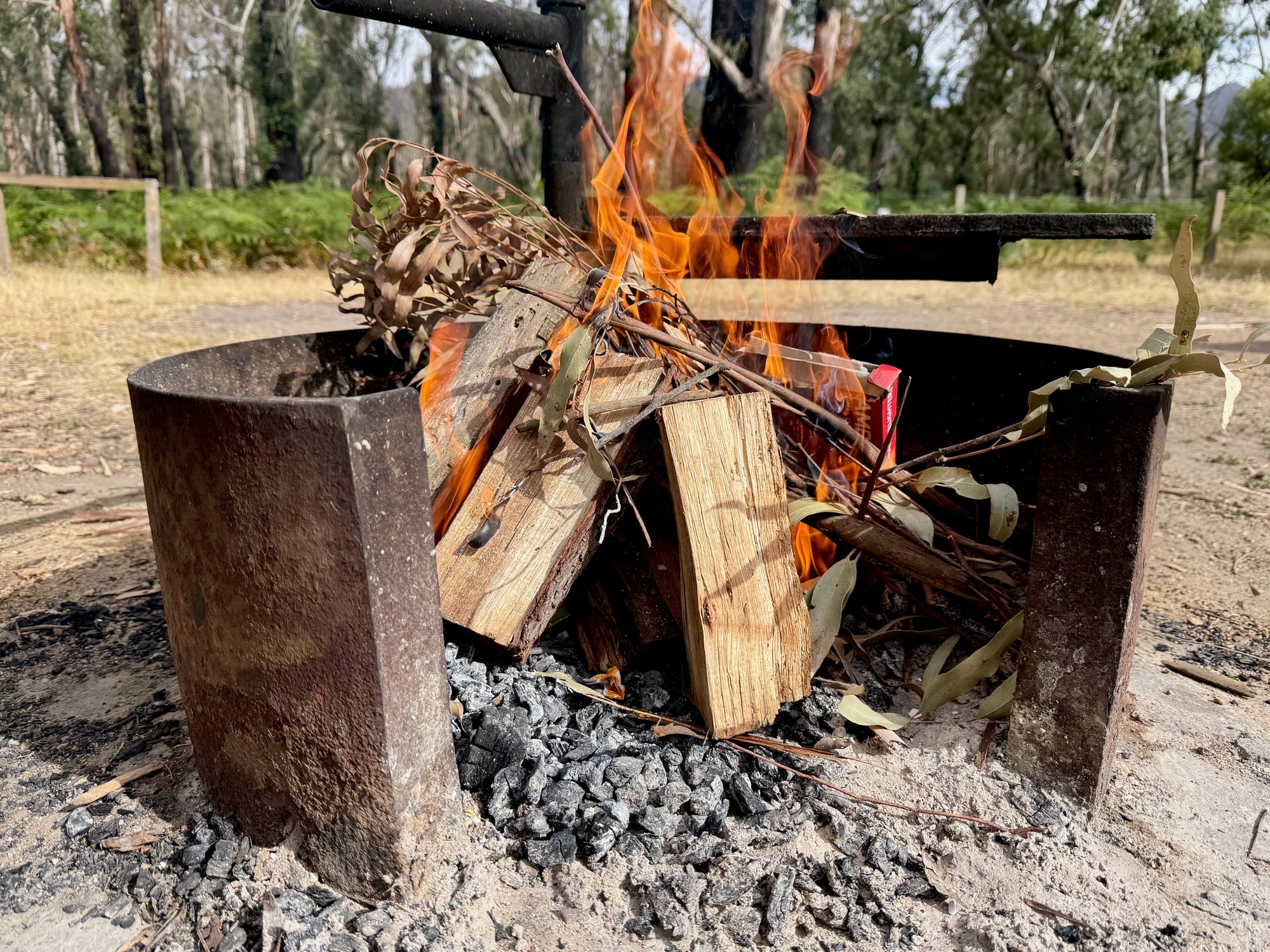
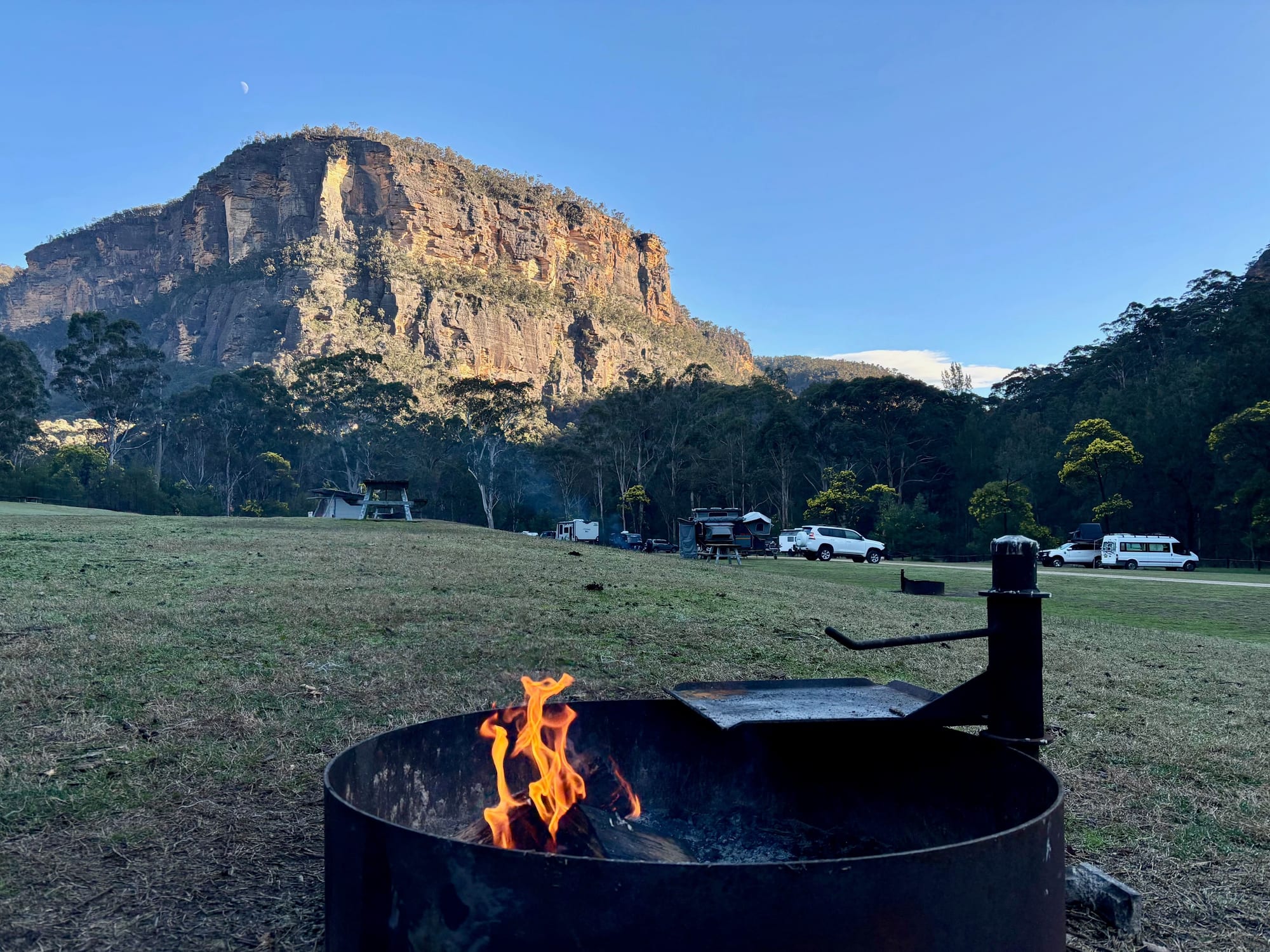
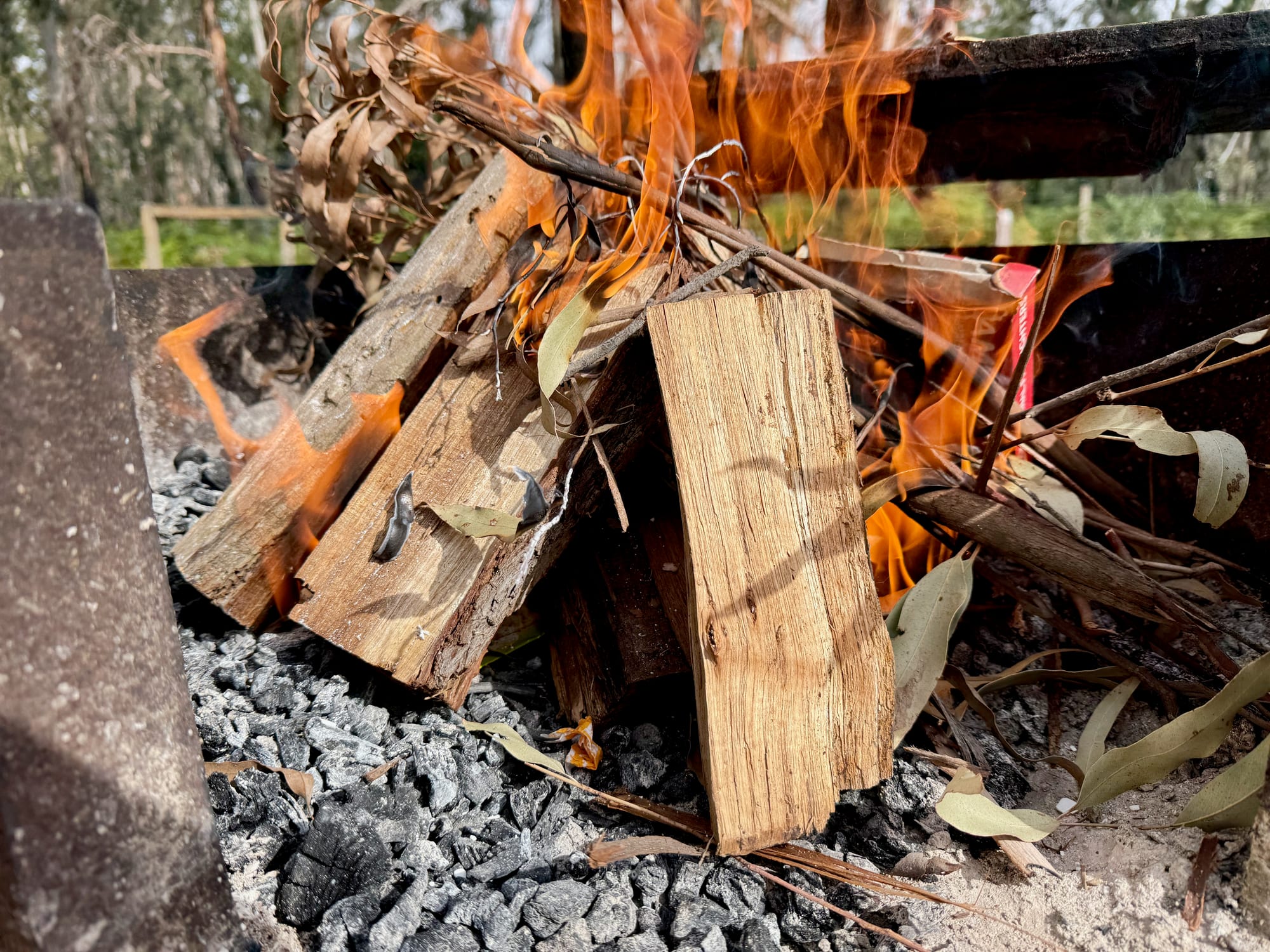
We build a little triangle. Put a tight ball of tinder in the middle of the pit and lean three or four of the thinnest kindling sticks against each other over it, like a small pyramid, leaving gaps at the base for air. Light the tinder at the bottom. As it burns, the kindling catches and the heat goes up through the middle of the triangle. Add slightly thicker kindling to the outside, gently, and once that is burning well, lean the fuel wood around it. That gives you long heat and, after a while, the bed of coals you want for a BBQ plate or a campfire tripod.
Wet weather, wind, sand and snowWet, wind, sand & snow
Wet weather is the hard case. Use only wood that is properly dry: dead branches still standing, not logs lying on wet ground. Peel wet bark off to reach the dry wood underneath, and shave a piece of kindling into fine curls for tinder. Waterproof matches or a firelighter block make it much easier.
In wind, build a break on the upwind side with rocks or logs, or the wind takes the heat and blows sparks around. On sand, dig a shallow pit so the embers stay put. In snow, build on a platform of green logs or flat rocks, because a fire lit straight on the snow melts its way down and puts itself out. And before gathering a single stick, check the current fire bans and the rules for that campground.
Putting the fire out properlyPutting it out
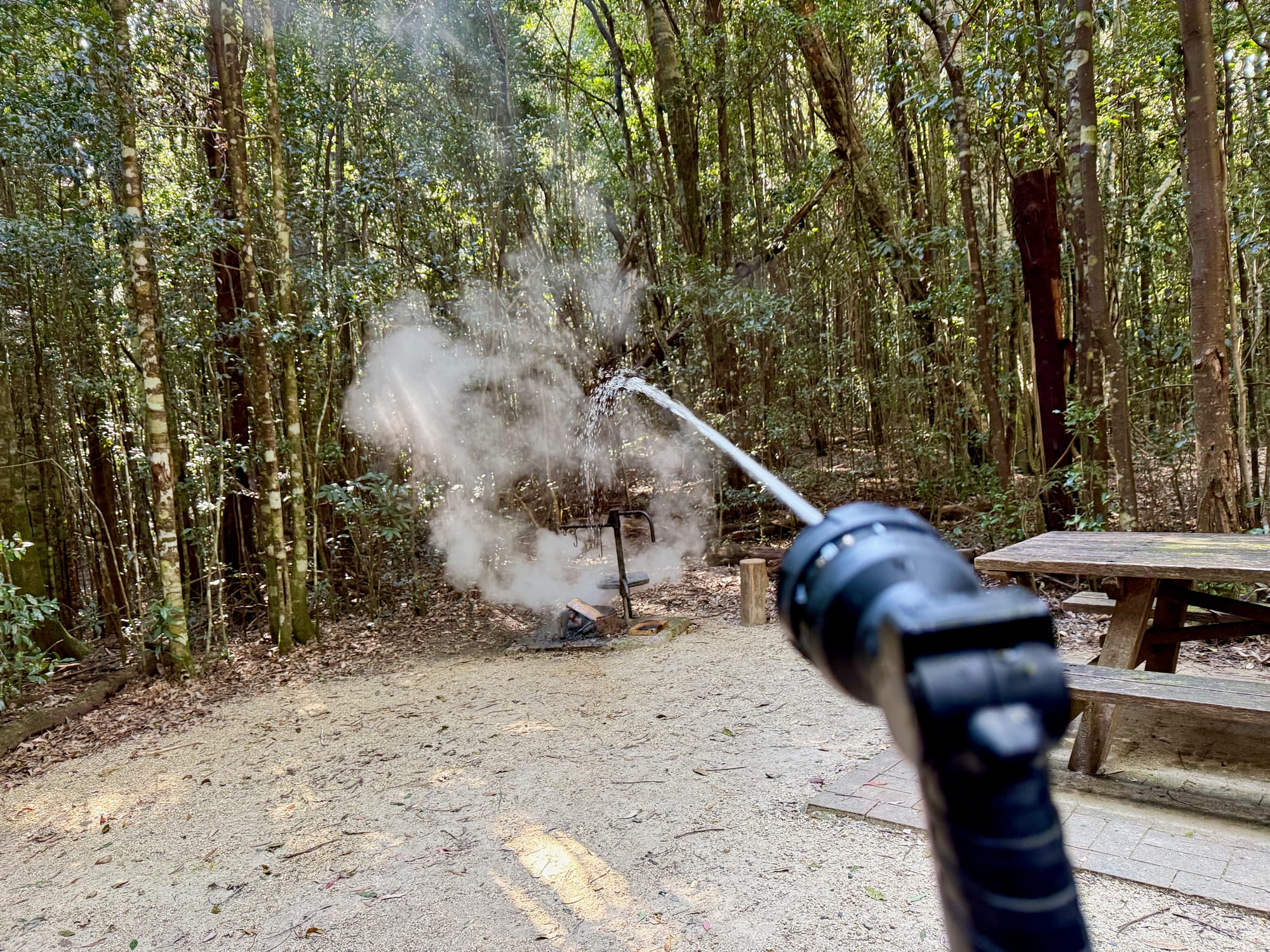
A campfire isn’t finished when you head to bed or pack up. Pour water over the coals, stir the ashes with a stick so nothing hides underneath, and pour again until the hissing and steam stop and the coals are cold to the touch. If water is short, smother it with sand or soil, but never just bury hot coals: they can smoulder for hours under the surface and flare up once you’ve gone.
A big fire can still be very hot the next morning. We then use our ONTAP portable shower to put it out: its spray reaches quite far, so you can soak the whole fire pit without standing over the steam, and keep going until it stops.
Summary
Heat, fuel and oxygen. Gather plenty of tinder, kindling and fuel wood before you light anything, build a small triangle of kindling that keeps the heat together but lets air in at the base, and feed it from thin to thick. Done that way the fire goes from match to cooking coals without drama.
Check fire restrictions first, keep water or sand next to the fire, and put it out completely before bed or before you leave: the coals should be cold to the touch.
Do's
- Do clear a 3 metre safe area
- Do use dry standing dead wood
- Do have water ready to extinguish
- Do build your fire in layers
- Do fully extinguish with water
Don'ts
- Don't leave a fire unattended
- Don't stack fuel wood too tightly
- Don't use flammable liquids
Recommended gear
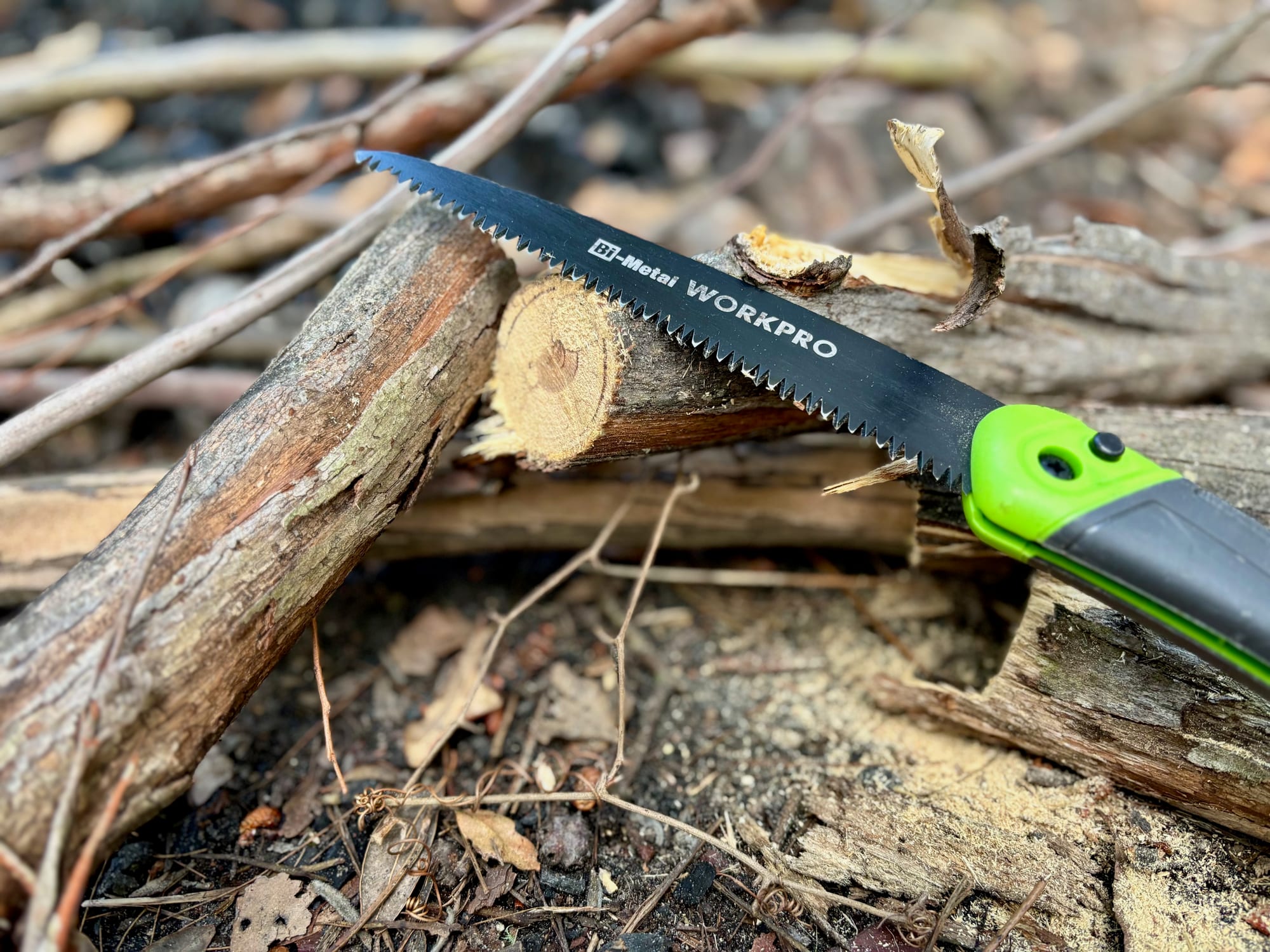
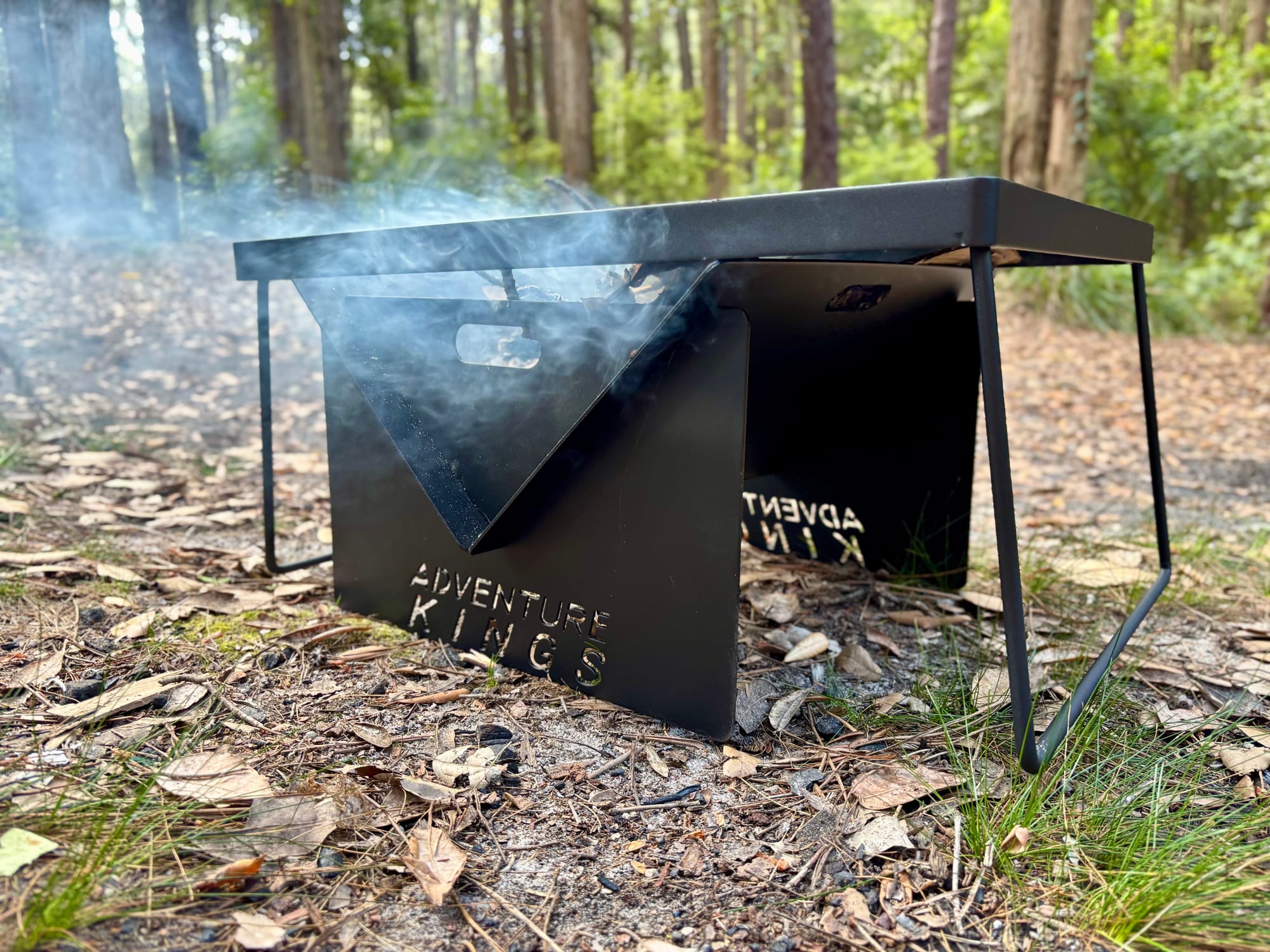
A folding saw cuts fuel wood to length, a ferro rod lights the tinder when matches are damp, a fire pit keeps the fire off the ground, and a BBQ plate lets you cook over it.