The cable is the part of a power bank that gets left at home. You pack the power bank, you get to camp, and the one cable that fits your phone is still on the kitchen bench.
Featured inBest Camping Power Banks of 2026
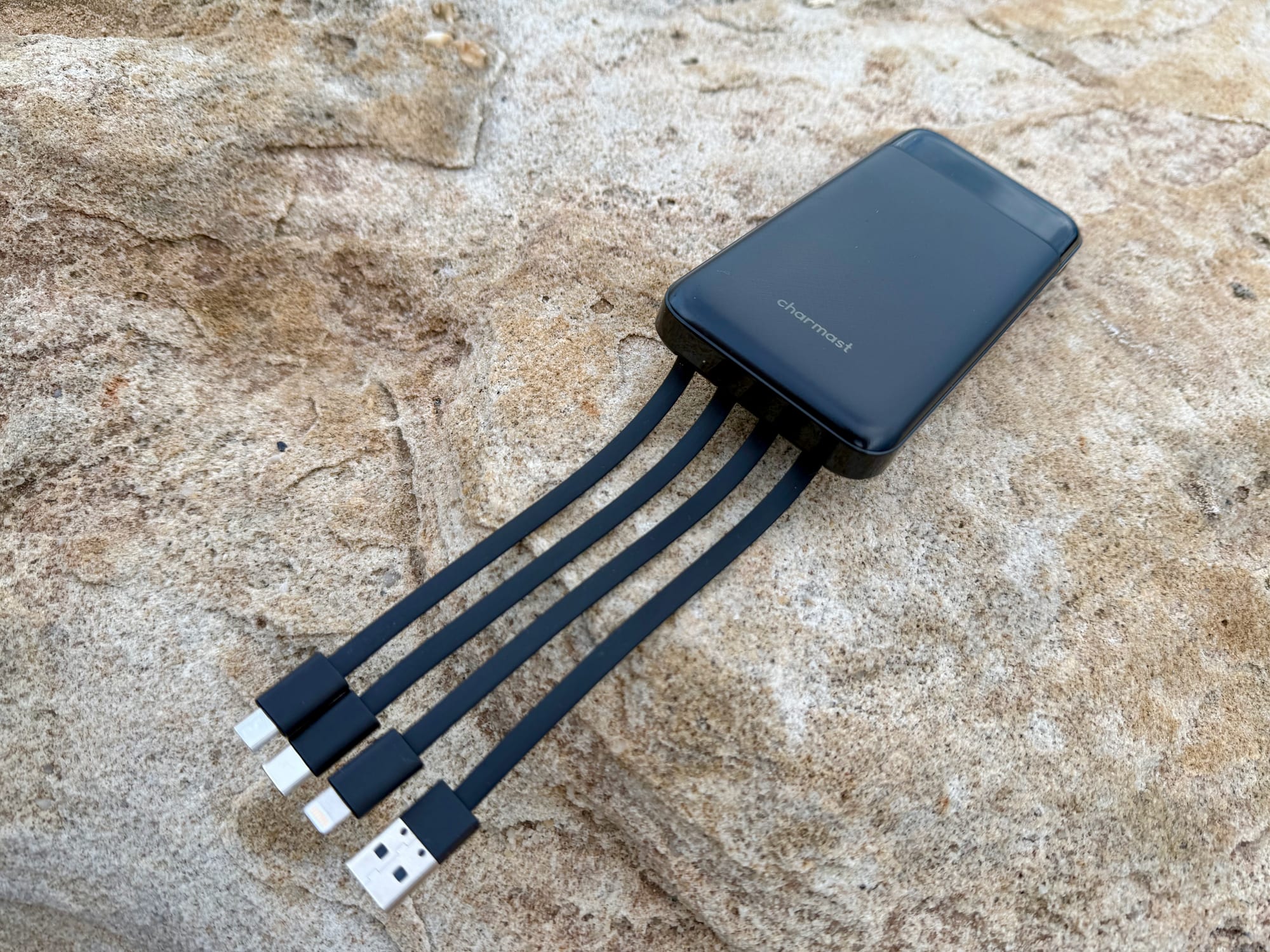
The Charmast power bank solves that with four cables built into the body. I tested the 10,000 mAh version. The button on this page links to the 20,000 mAh version, which is much better value in my view: it’s basically the same body, just with more capacity.
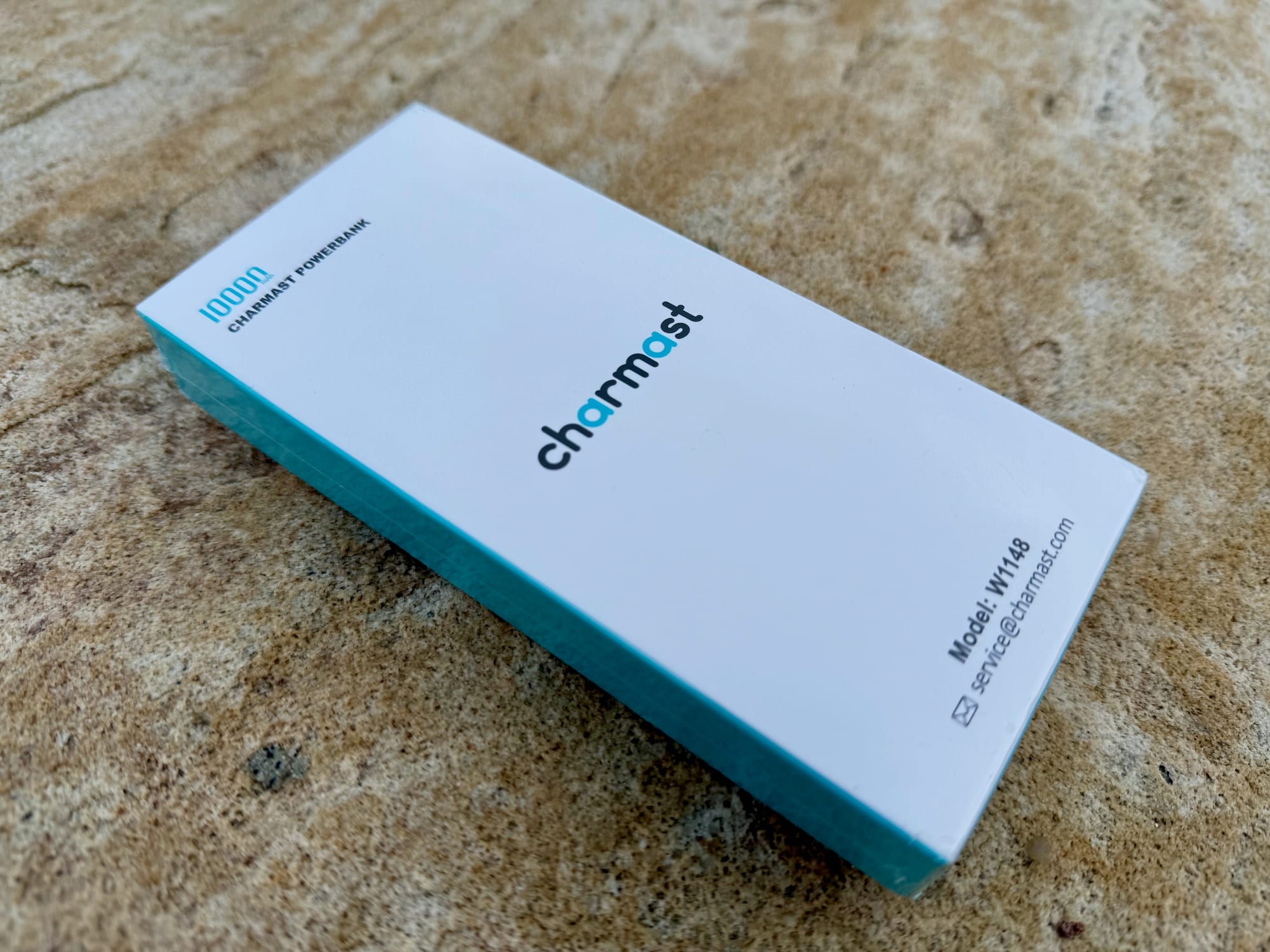
What You’re Getting
A 10,000 mAh (37 Wh) power bank from Charmast with four built-in cables (USB-C, Lightning, micro-USB and a USB-A cable for recharging), extra USB ports on the body, a percentage display and a drawstring pouch. It’s available in Black, White, Blue, Pink, Purple and Red.
The good
- Four built-in cables: every charging option with you at all times
- Cables tuck away nicely and securely
- No issues charging with the built-in cables
- Extra USB ports on the body as well
- Just under 2 phone charges
- Display shows the battery percentage
The not-so-good
- Relatively long recharge time
- Reduced output when charging several devices
- Built-in cables can wear
Quick Specs
| Spec | Details |
|---|---|
| Brand | Charmast |
| Model | W1148 |
| Weight | 241 g |
| Dimensions | Approx. 16 × 7.2 × 1.9 cm |
| Colour options | BlackWhiteBluePurpleRedPink |
| Capacity | 10,000 mAh / 37 Wh (version tested) |
| Built-in cables | USB-CLightningMicro-USB (out)USB-A (in) |
| Ports on the body | 2 × USB-A1 × USB-C1 × micro-USB (version tested) |
| Phone charges | Just under 2 (10,000 mAh)Just under 4 (20,000 mAh) |
| Recharge time | 3 hours (10,000 mAh)About 6 hours (20,000 mAh) |
| Display | Battery percentage |
| Included | Drawstring pouch |
The built-in cables
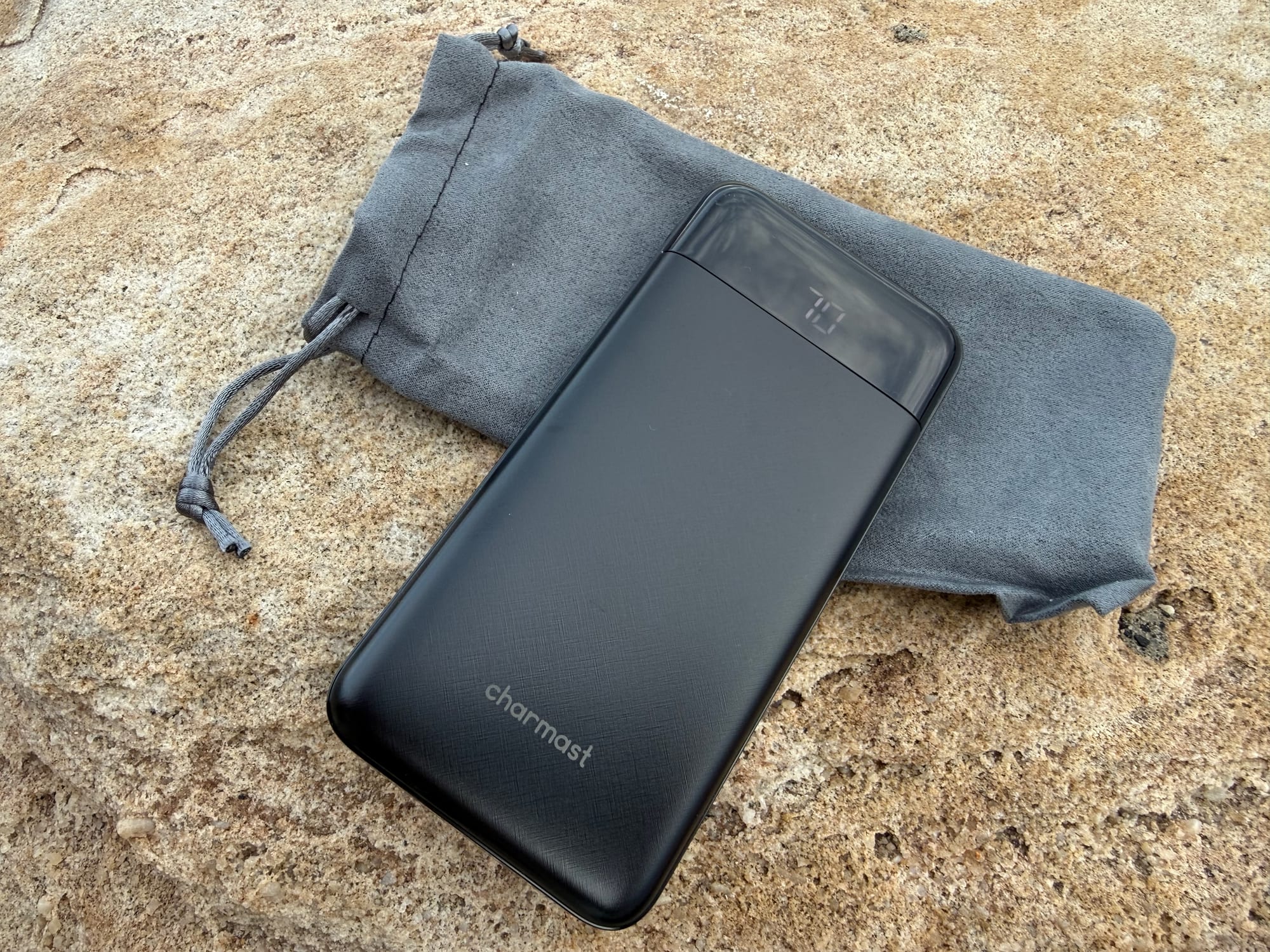
This is what makes the Charmast great. It has four cables integrated into the body, which gives you all charging options at all times: a USB-C cable, a Lightning cable and a micro-USB cable for charging your devices, and a USB-A cable for plugging the power bank itself into a charger. Whatever phone, head torch or camp light needs power, the right plug is already attached.
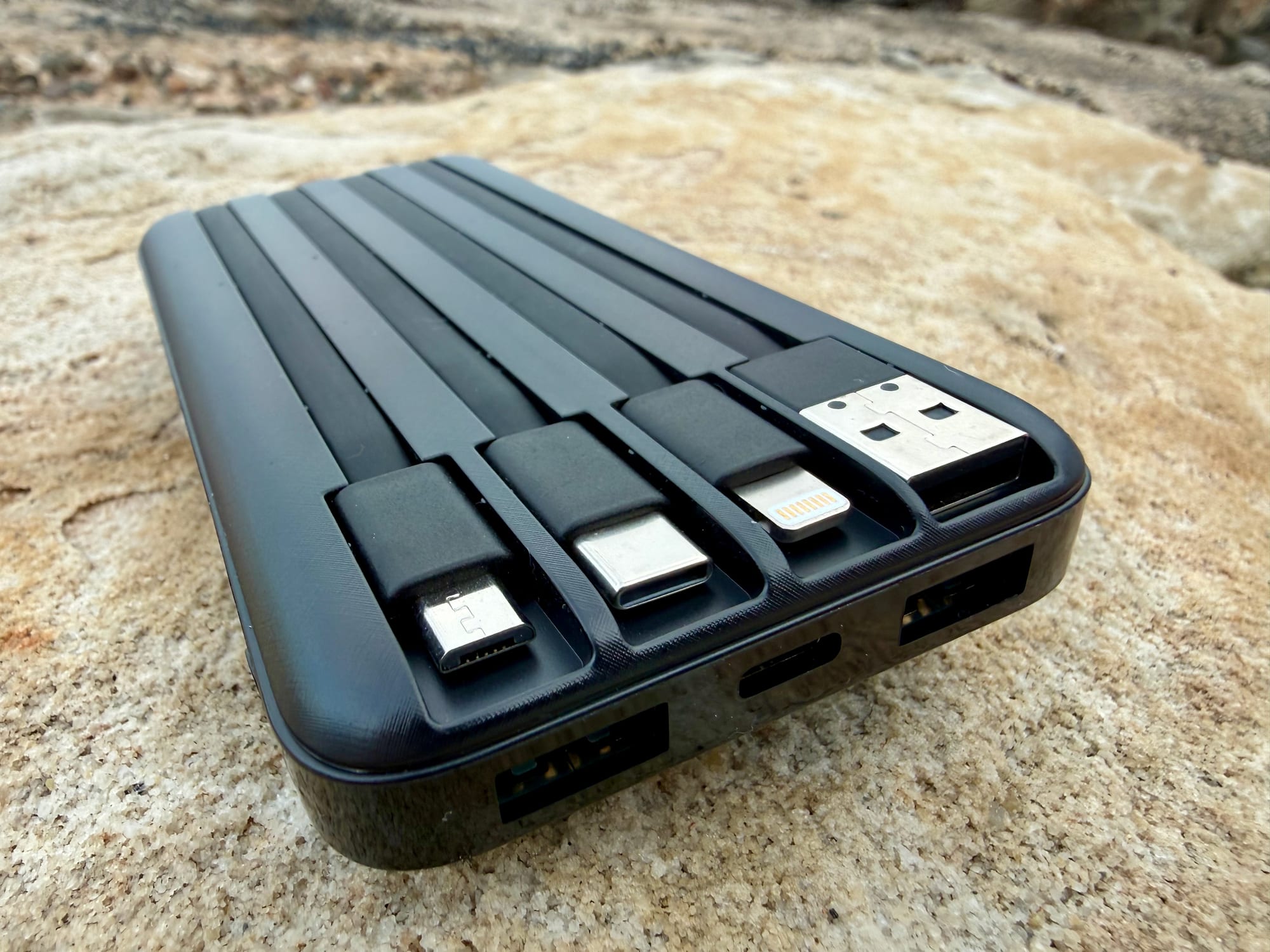
When you’re not using them, the cables tuck away nicely and securely in grooves on the back of the power bank. Each one has its own channel and sits flush, so nothing dangles or catches when you slide it into a bag or its pouch.
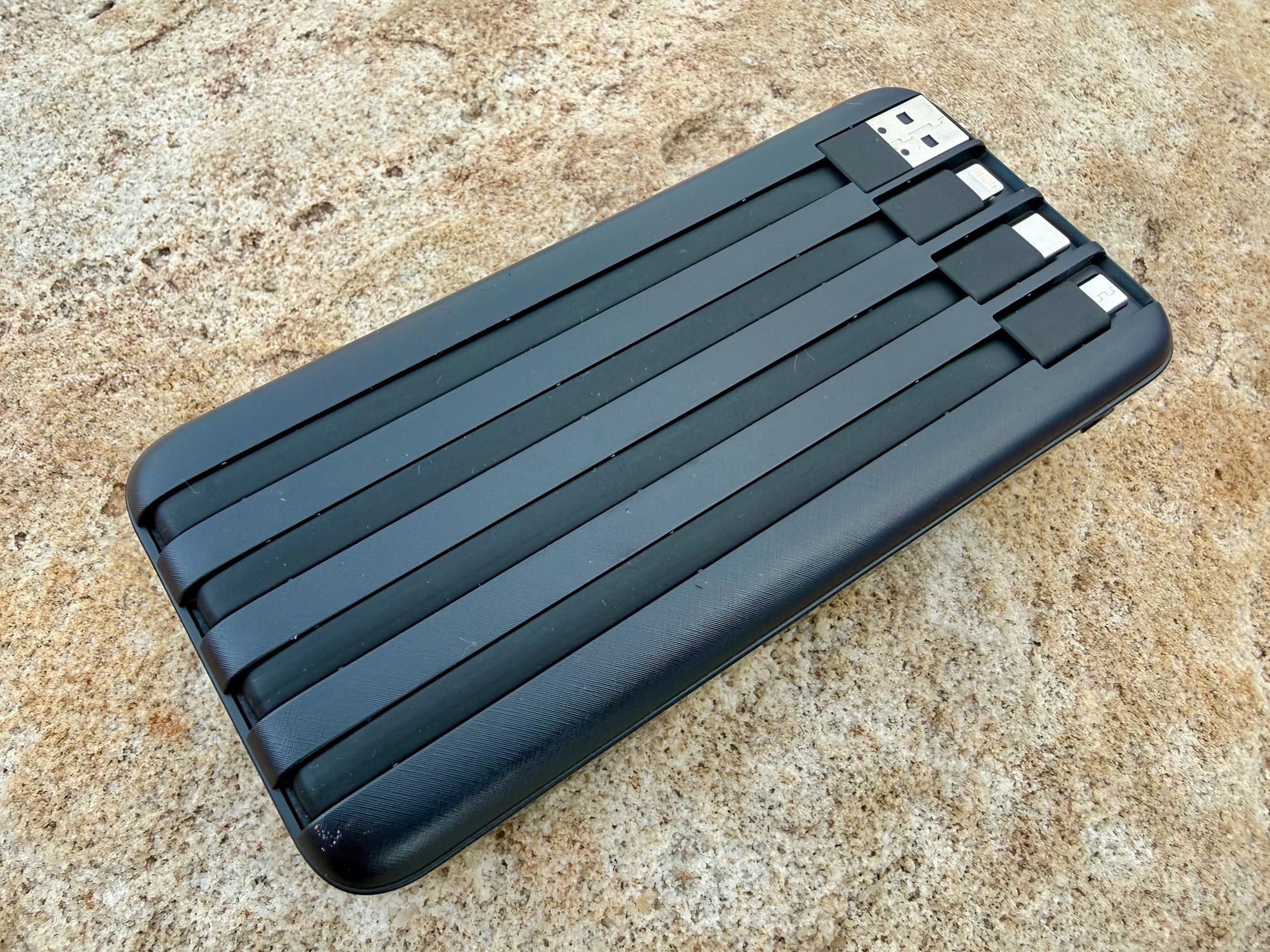
I’ve had no issues charging with the built-in cables. They’re short, so the phone sits right next to the power bank while it charges, which is fine on a camp table or in the tent. The one downside of built-in cables is wear: they get bent and tucked away every time you use them, and you can’t swap one out the way you can a loose cable.
Ports and recharging
Besides the cables, there are ports on the body itself, so you can still use your own cables or charge more devices at once. My 10,000 mAh version has two USB-A ports and a USB-C port on the end, plus a micro-USB input on the side. The 20,000 mAh version has two USB-A and two USB-C ports with 18 W.
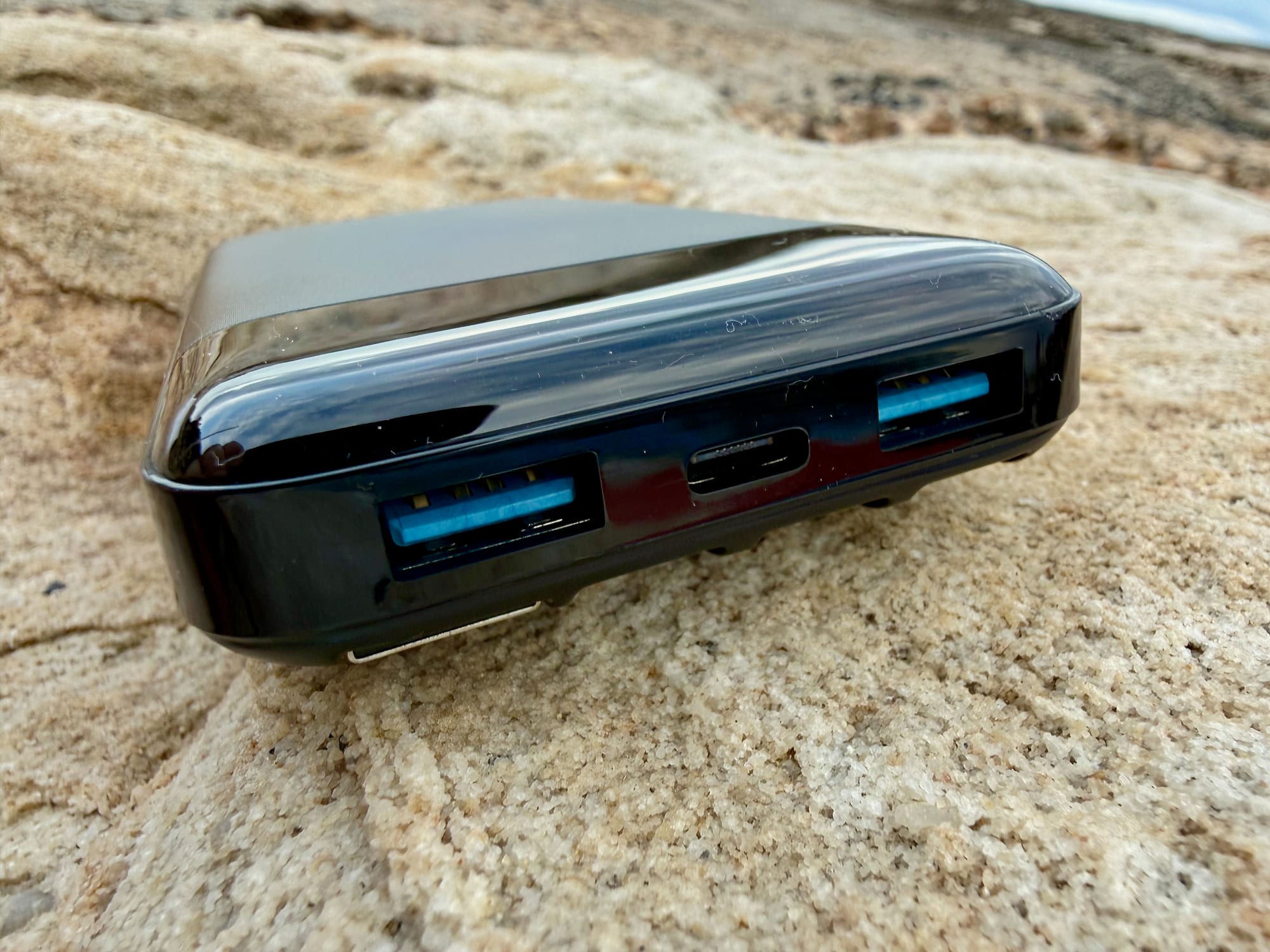
The 10,000 mAh version gives me just under 2 full phone charges, and the 20,000 mAh version gives just under 4.
The recharge time is relatively long. My 10,000 mAh version took 3 hours to recharge fully, and the 20,000 mAh version, with twice the capacity, takes about 6 hours, so it’s one to plug in overnight or leave charging in the car during the day.
The output is also reduced when you charge several devices at once: the power is shared between them, so each one charges more slowly. For a quick top-up, charge one device at a time.
Display, size and weight
A display behind the glossy panel on the front shows the remaining battery as a percentage, so you know exactly how much is left before you head out.
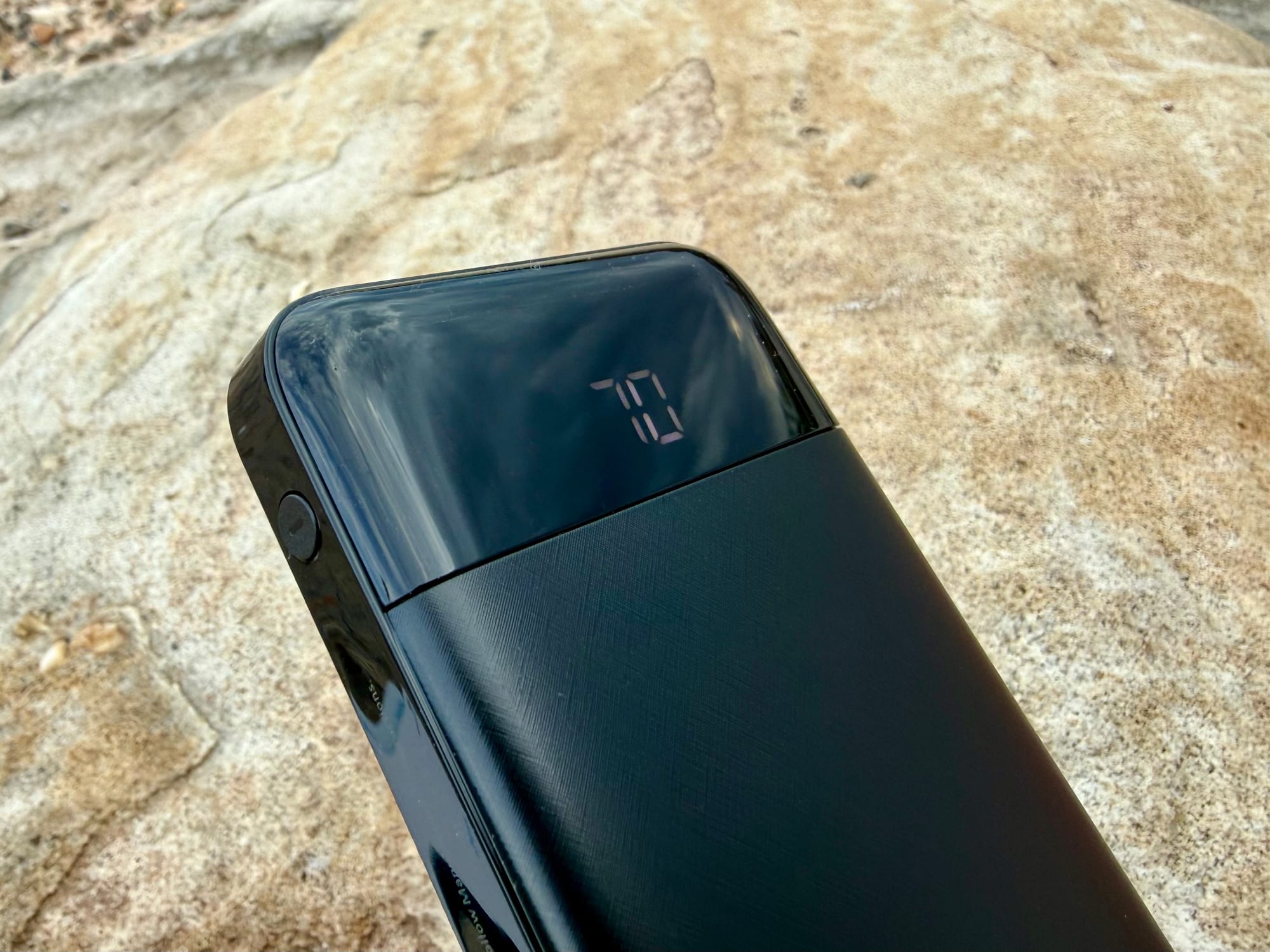
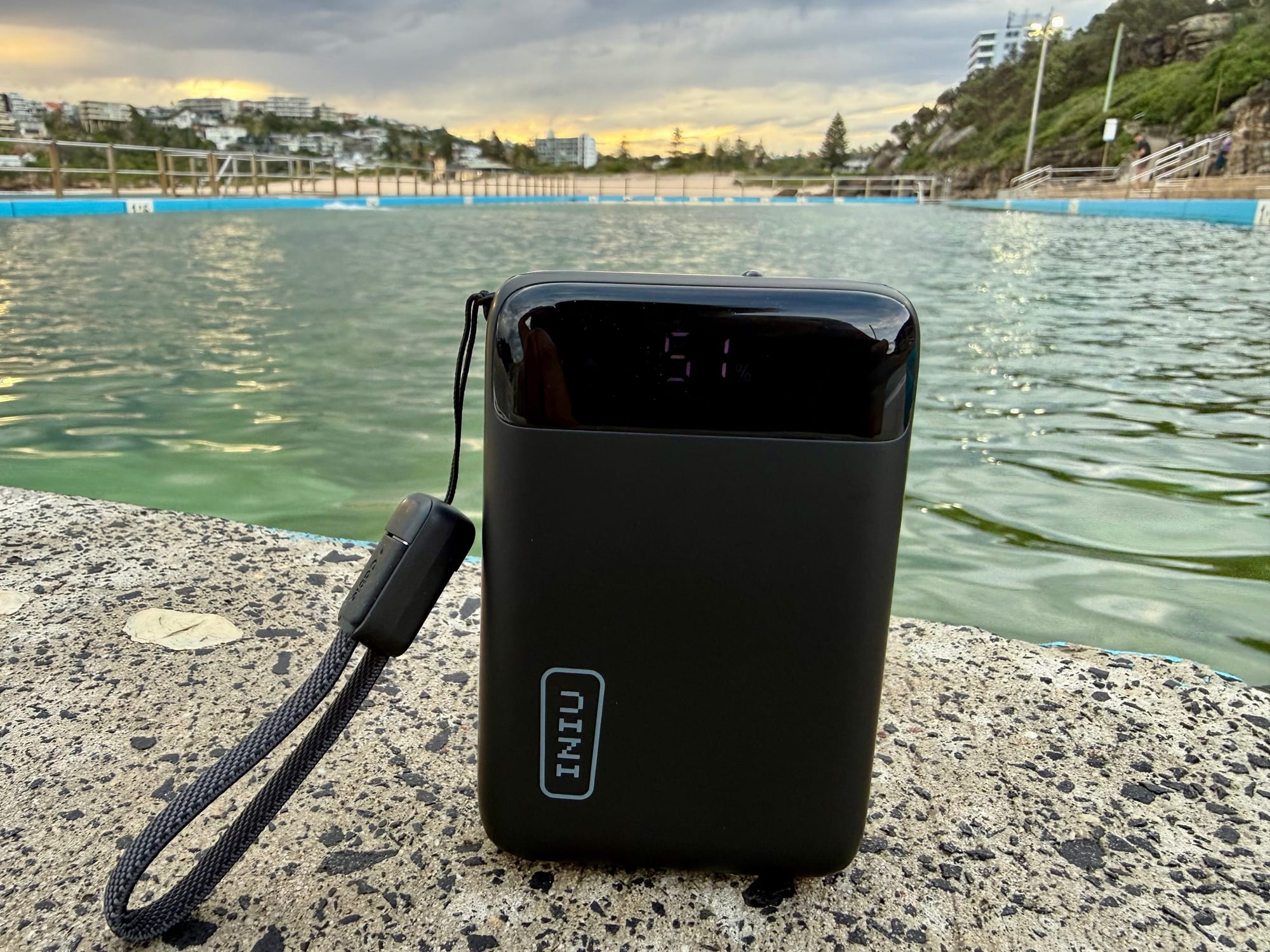
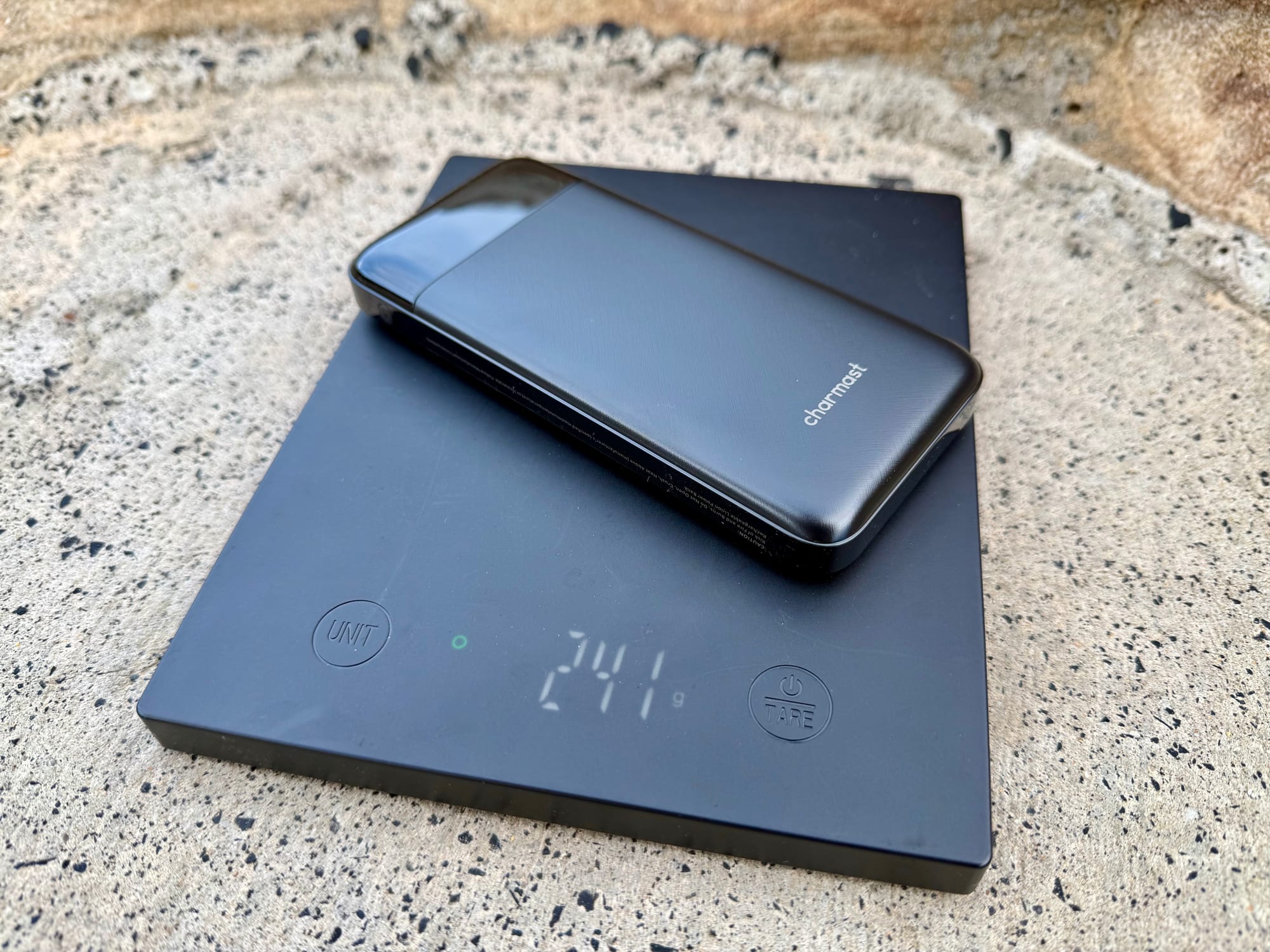
It measures approximately 16 × 7.2 × 1.9 cm, about the footprint of a large phone, and weighs 241 g on my scale. That’s a bit heavier than other 10,000 mAh power banks we’ve tested, like the Kings 10,000mAh at 201 g, but those don’t carry their own cables. It comes with a grey drawstring pouch that keeps it from getting scratched in a bag.
10,000 or 20,000 mAh?
I tested the 10,000 mAh version, and it does everything described above. If I were buying again, I’d take the 20,000 mAh version. It’s basically the same body with the same four built-in cables, just with more capacity: just under 4 phone charges where the 10,000 gives just under 2. That makes it the better choice for camping trips where you’re away from a wall socket for more than a night or two.
That’s why the button on this page goes to the 20,000 mAh version. If you want the lightest option and only need a charge or two, the 10,000 mAh is still a good power bank.
Conclusion: Charmast 10,000mAh Power Bank
The Charmast’s four built-in cables give you every charging option at all times, they tuck away nicely and securely, and I’ve had no issues charging with them. Add the extra ports on the body and the percentage display, and it’s a very easy power bank to live with. The downsides are a relatively long recharge time, reduced output with several devices plugged in, and wear on the built-in cables. I paid $65 for it. My advice is to go for the 20,000 mAh version: same body, more capacity.
For all the power banks we’ve tested side by side, see our best camping power banks guide.
A power bank with four built-in cables that tuck away securely, so you never need to bring a cable.
Recharging takes relatively long, and the output drops with several devices plugged in. We tested the 10,000 mAh; the 20,000 mAh version is basically the same body with more capacity.
- Campers
- Travellers
Yes. I paid $65, and you get a power bank that never needs a separate cable. For the best value, take the 20,000 mAh version: basically the same body with more capacity.