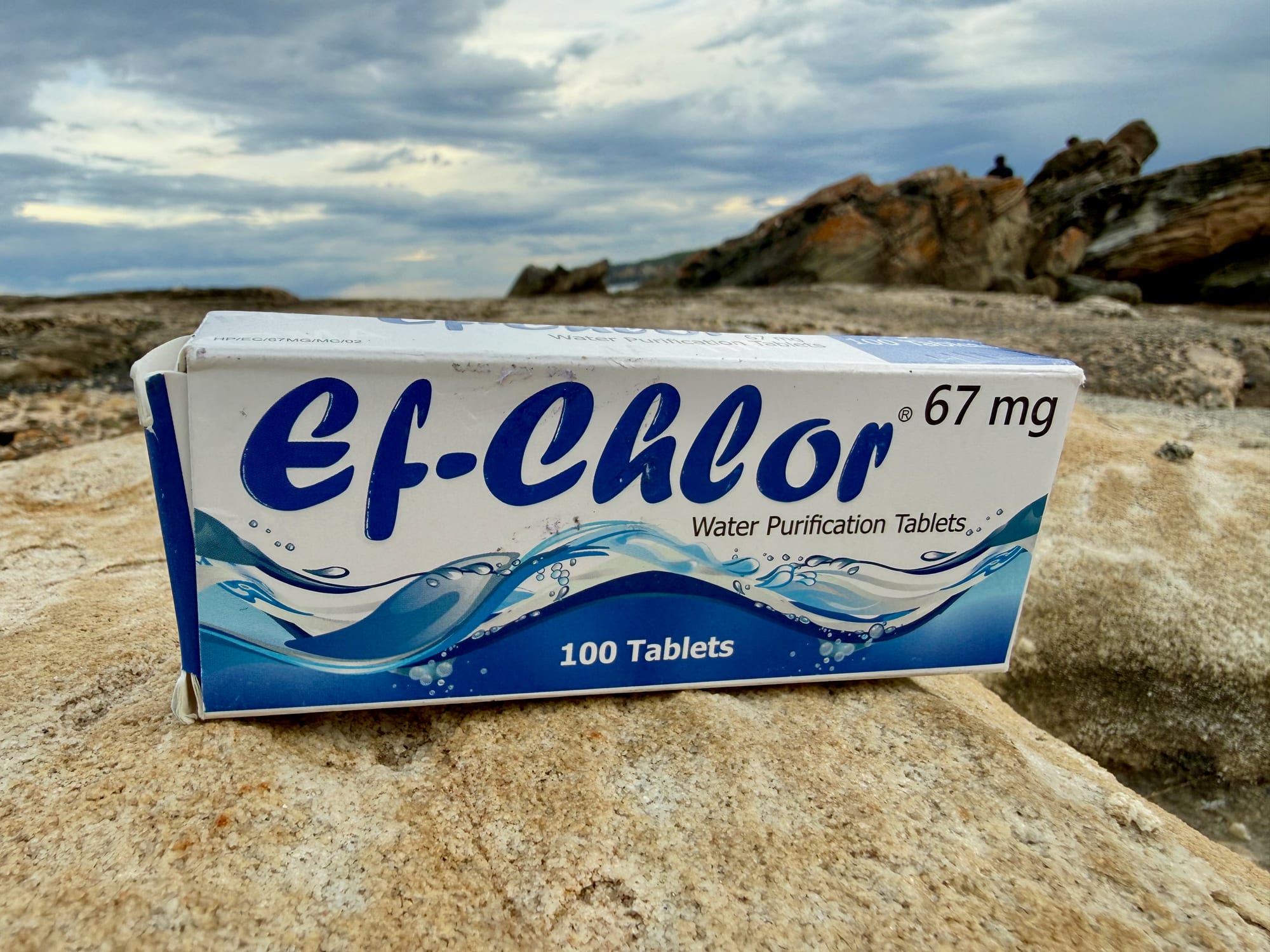
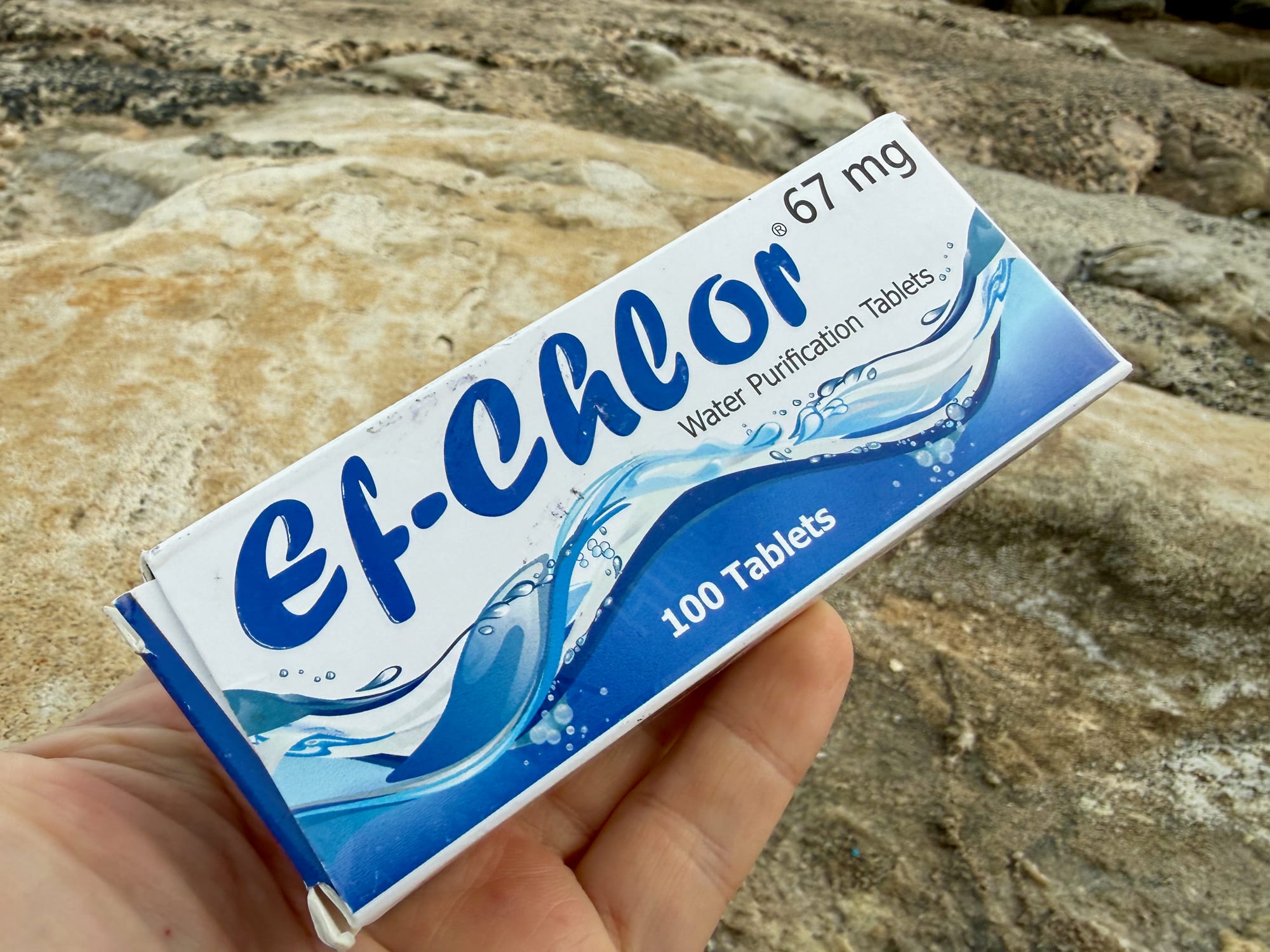
Carrying enough drinking water is one thing. Being able to trust the water you find, or the water that has sat in a tank for a while, is another. Ef-Chlor water purification tablets are the small, cheap answer to that: chlorine tablets you drop into a container of water. I paid $17 for a box of 100, and we carry them as a backup on longer trips to remote areas.
How-toHow much water to carry
What You’re Getting
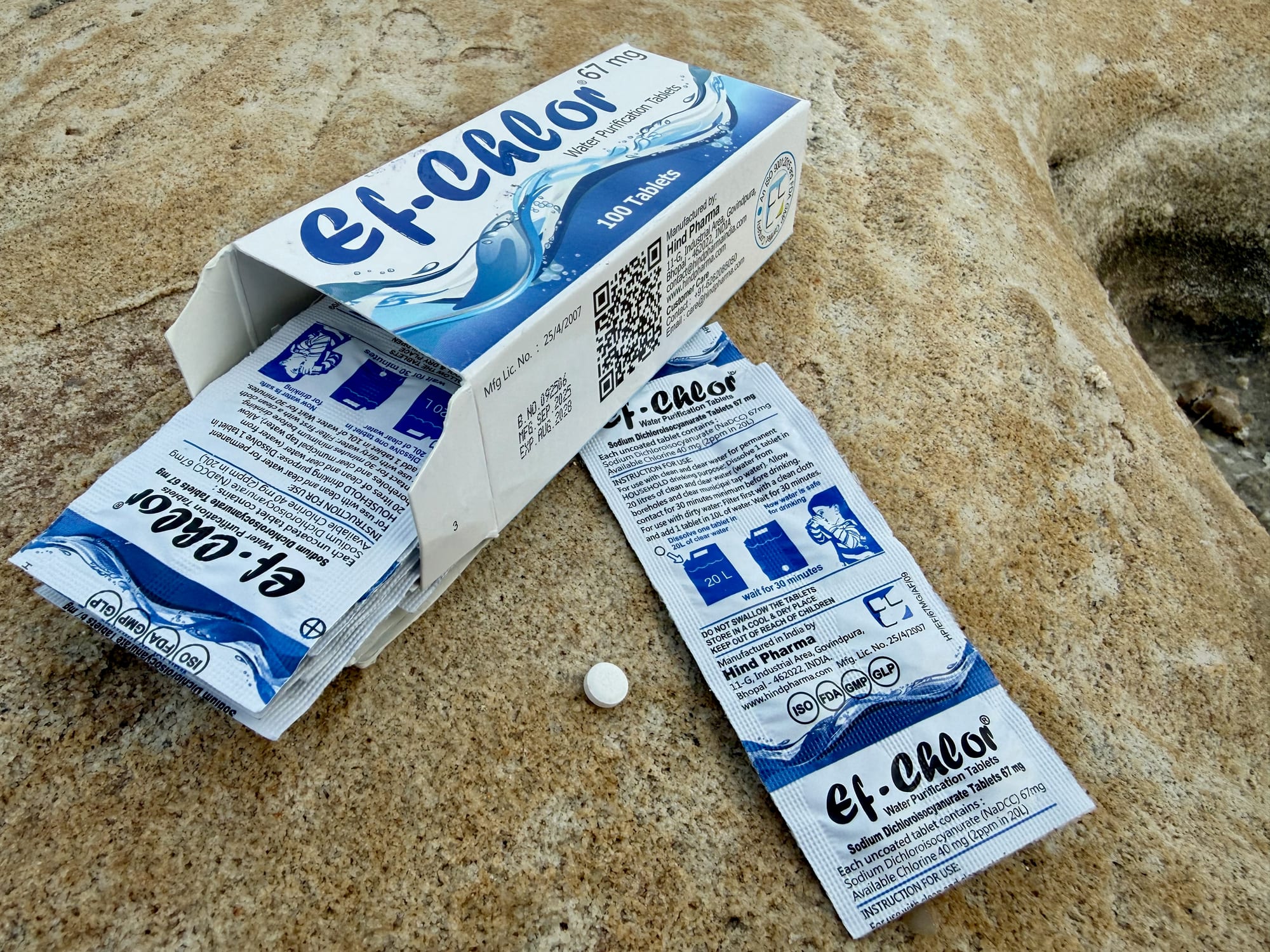
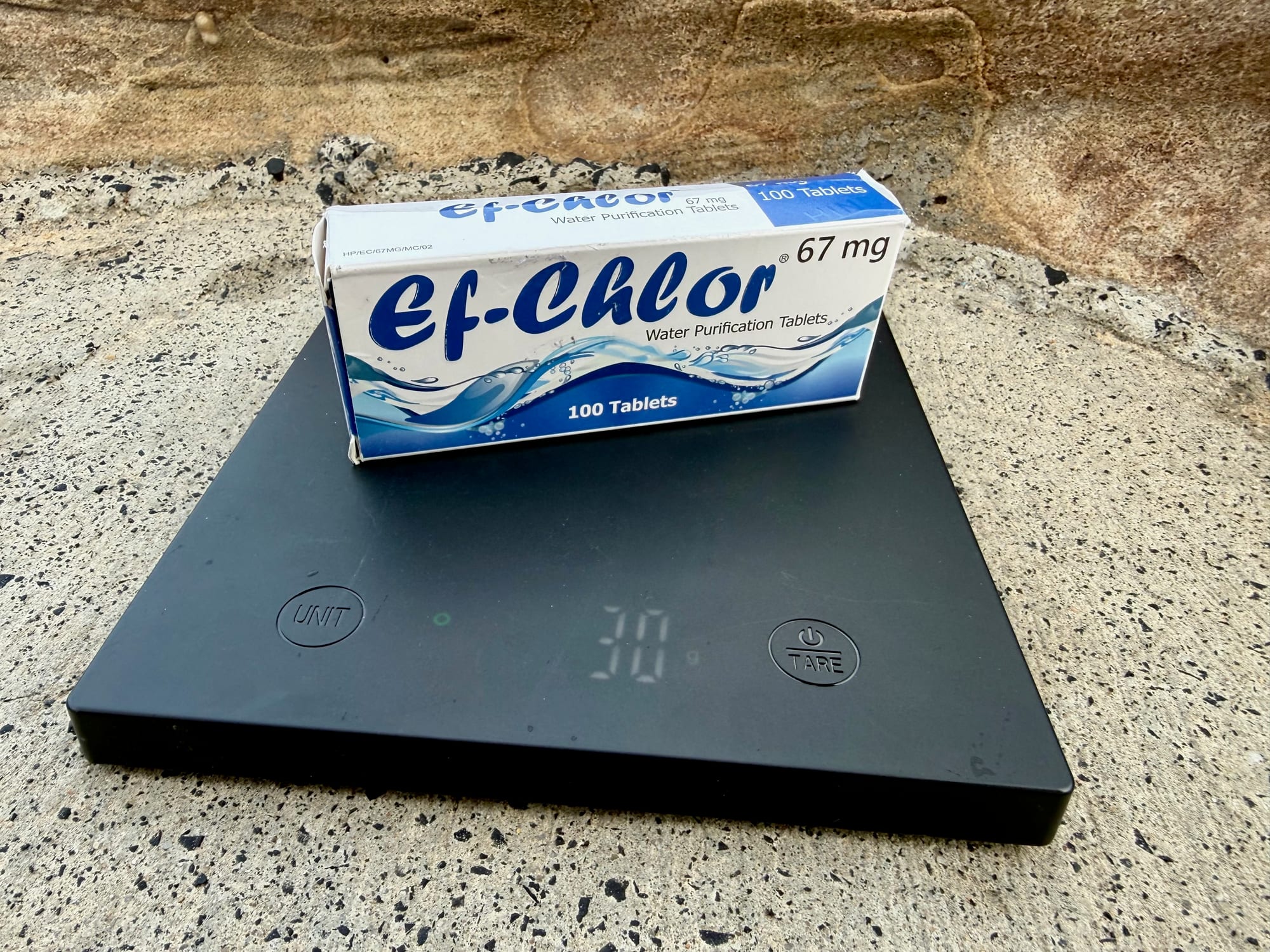
A box of 100 small white tablets, sealed in foil strips. Each tablet contains 67 mg of sodium dichloroisocyanurate, usually shortened to NaDCC, which releases 40 mg of chlorine into the water. The whole box weighs 30 g on our scale and fits in the palm of a hand.
The good
- One tablet treats up to 20 litres
- 100 tablets: up to 2,000 litres
- The whole box weighs 30 g
- Simple: drop in, wait 30 minutes
- No strong chlorine taste or smell
- A backup for remote, outback trips
The not-so-good
- 30 minute wait before drinking
- Doesn’t clear dirty water
- Dosed for 10 to 20 L, not a bottle
Quick Specs
| Spec | Details |
|---|---|
| Brand | Ef-Chlor |
| Weight | 30 gfor the box |
| Tablet | 67 mg NaDCC (40 mg available chlorine) |
| Quantity | 100 tablets |
| Clear water | 1 tablet per 20 litres |
| Cloudy water | 1 tablet per 10 litres |
| Wait time | 30 minutes |
| Packaging | Foil strips |
How to use them
The instructions are printed on the back of the box, with pictures, and they come down to three steps: drop a tablet in the water, wait 30 minutes, drink.
The dose depends on the water. For clean, clear water, such as tap water or bore water that you’re storing, it’s one tablet in 20 litres. For cloudy water of unknown quality, such as surface water, the box calls that emergency use and halves the amount: one tablet in 10 litres.
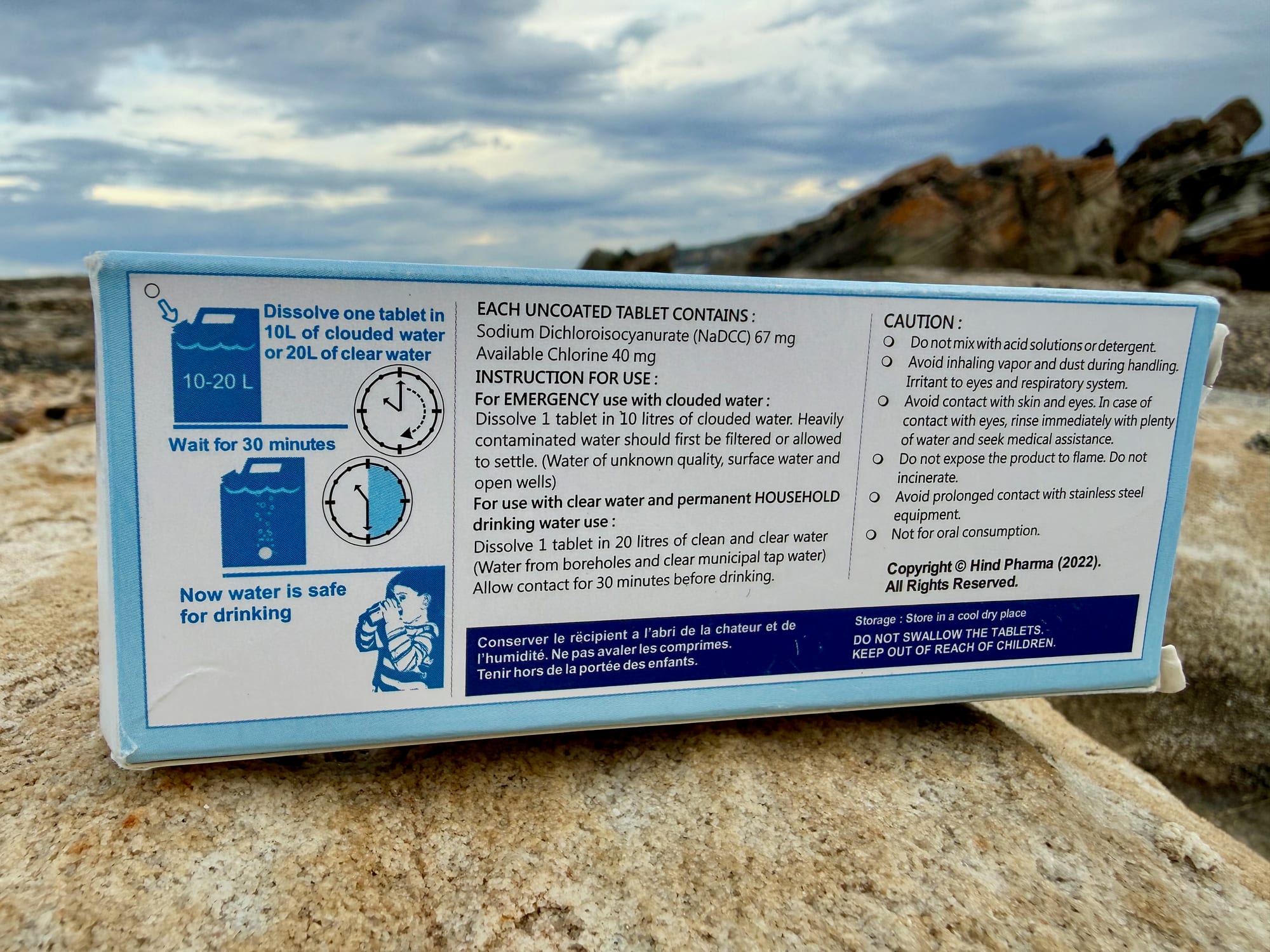
Two things follow from that. First, these tablets are dosed for jerry cans and tanks. One tablet is far too much for a one-litre drink bottle, so they’re not the thing for topping up a bottle on a walk. Second, they treat water, but they don’t clean it. The box says heavily contaminated water should first be filtered or allowed to settle. If the water is muddy, it will still be muddy afterwards.
One practical point from the box: the tablets go in the water, never in your mouth, and they shouldn’t sit in stainless steel for long. A plastic jerry can or water tank is the place to treat water, not a stainless steel bottle or pot.
How we use them
For us, these are a backup. They come along on longer trips to more remote, outback areas, like our loop from Sydney to Adelaide, Melbourne and back to Sydney, where we came through the New South Wales outback. Out there you can’t count on the next tap.
There are two situations we carry them for. The first is running low on fresh water when there’s rainwater at a campsite we could use. The second is a tap in a remote place where the water looks or smells questionable. In both cases, a tablet in the tank and half an hour’s wait is a lot better than going without or taking a chance.
We’ve used them that way. On that outback loop we filled our water tank from a tap in Pooncarie, in far western New South Wales, and treated it with the tablets before drinking it.
The treated water generally doesn’t have a strong chlorine taste or smell. It also stays clear: unlike the older iodine treatments, the tablets don’t turn the water yellow or leave a medicinal aftertaste. One thing we do: once the 30 minutes are up, we leave the lid off the tank for a few minutes, so any leftover chlorine gas can escape before we drink from it.
Size and weight
This is where tablets beat every other way of making water drinkable. The box of 100 weighs 30 g and is small enough to hold in one hand. At one tablet per 20 litres, that box covers up to 2,000 litres of clear water.
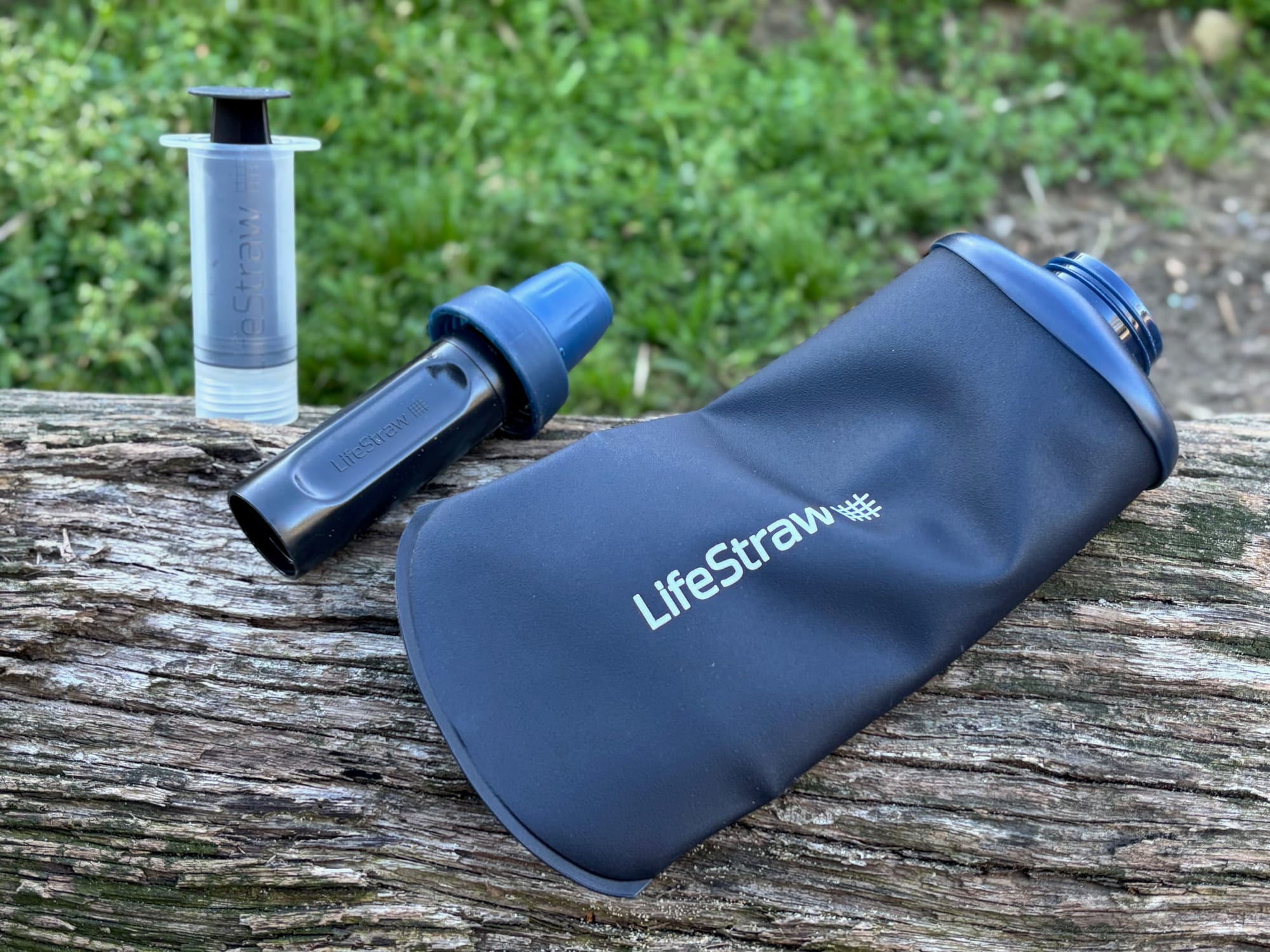
Tablets and filters do different jobs, and they work well together. A filter takes the dirt and grit out; tablets treat a big volume at once. For a single bottle from a creek, a filter like the LifeStraw Peak Squeeze is the better tool. For a full jerry can, see our guide to the best camping water containers.
Conclusion: Ef-Chlor Water Purification Tablets
Ef-Chlor 67 mg Water Purification Tablets are a cheap, tiny backup for drinking water. One tablet treats 20 litres of clear water or 10 litres of cloudy water in 30 minutes, and the box of 100 weighs 30 g. The treated water generally has no strong chlorine taste or smell. They’re dosed for jerry cans and tanks, not for a drink bottle, they don’t clear dirty water, and you have to wait half an hour. For $17, they’re an easy backup to carry on any trip to remote country, and that’s how we use them.
Chlorine tablets that treat 10 to 20 litres each in 30 minutes.
A box of 100 weighs 30 g and cost $17. Dosed for jerry cans and tanks, not a drink bottle, and dirty water has to be filtered or settled first.
- 4WD tourers
- Caravanners
- Emergency kits
Yes. I paid $17 for 100 tablets, which is up to 2,000 litres of treated water. As a backup for remote trips, it costs and weighs next to nothing.