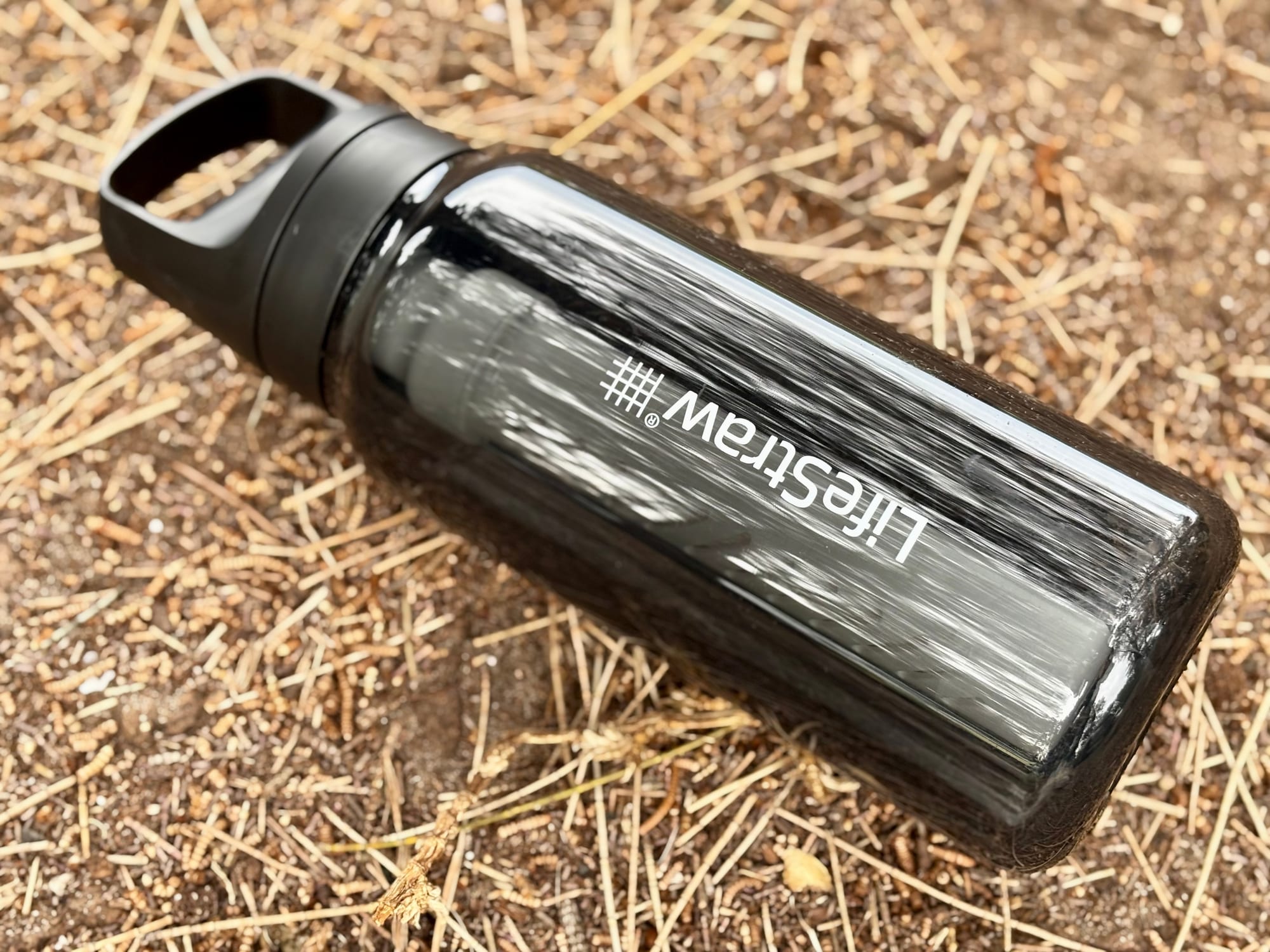
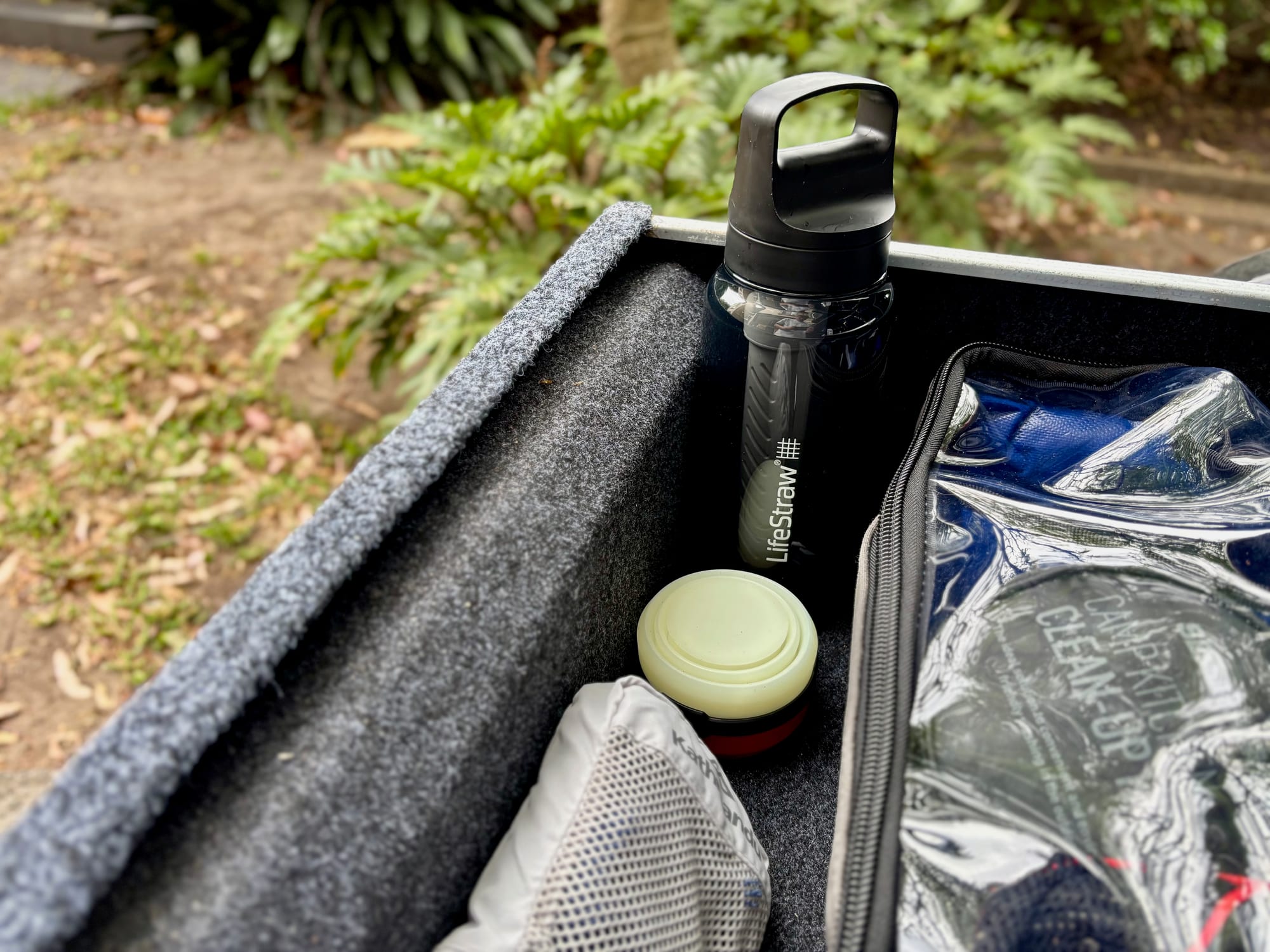
Most water bottles only carry water. The LifeStraw Go Series 2.0 also cleans it: a two-stage filter in the lid means you can fill the bottle from a creek, a rainwater tank or a doubtful tap and drink from it straight away. We paid $110 for the 1 litre version in Nordic Noir, and it lives in the drawers of the 4WD.
Featured inBest Camping Water Bottles of 2026
How-toHow much water to carry
What You’re Getting
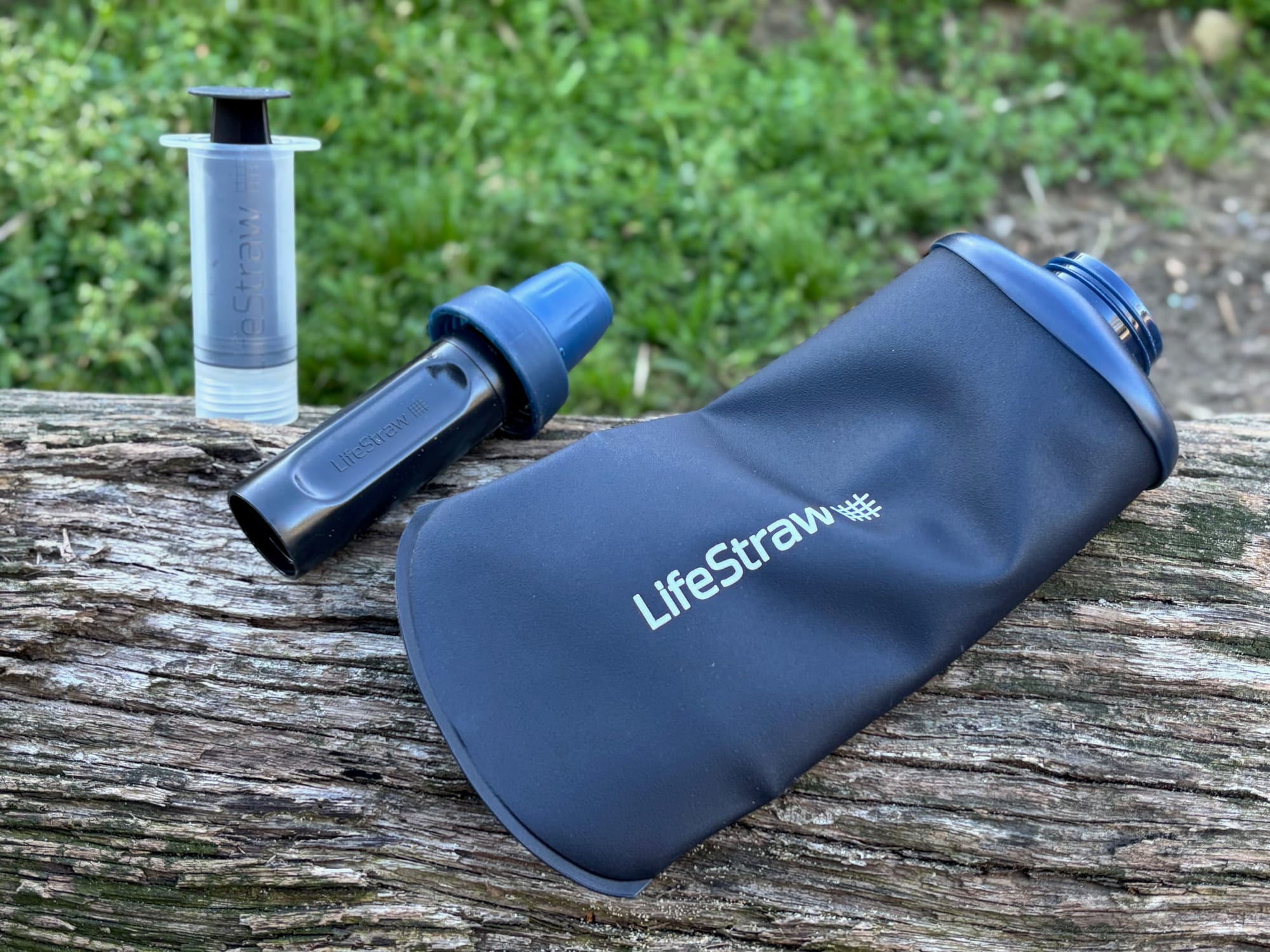
A 1 litre BPA-free plastic bottle with a screw lid, a carry loop and a soft mouthpiece under a cap. The filter unit screws into the underside of the lid, and both filter stages are included. It comes in two colours: Nordic Noir and Aegean Sea.
The good
- Filters bacteria and parasites
- Carbon filter improves taste
- Fill from a creek and drink
- Membrane lasts up to 4,000 litres
- Bottle is dishwasher-safe
- 50% recycled, BPA-free plastic
The not-so-good
- Doesn’t filter viruses
- Takes more suction than a bottle
- Pricey, carbon filter lasts 100 L
Quick Specs
| Spec | Details |
|---|---|
| Brand | LifeStraw |
| Model | Go Series 2.01 L |
| Weight | 273 g |
| Height | 27.4 cm |
| Colour options | Nordic NoirAegean Sea |
| Capacity | 1 litre |
| Filter | Membrane microfilter + carbon filter |
| Filter life | Membrane 4,000 LCarbon 100 L |
| Material | BPA-free plastic50% recycled |
| Warranty | 3 years |
How the filter works
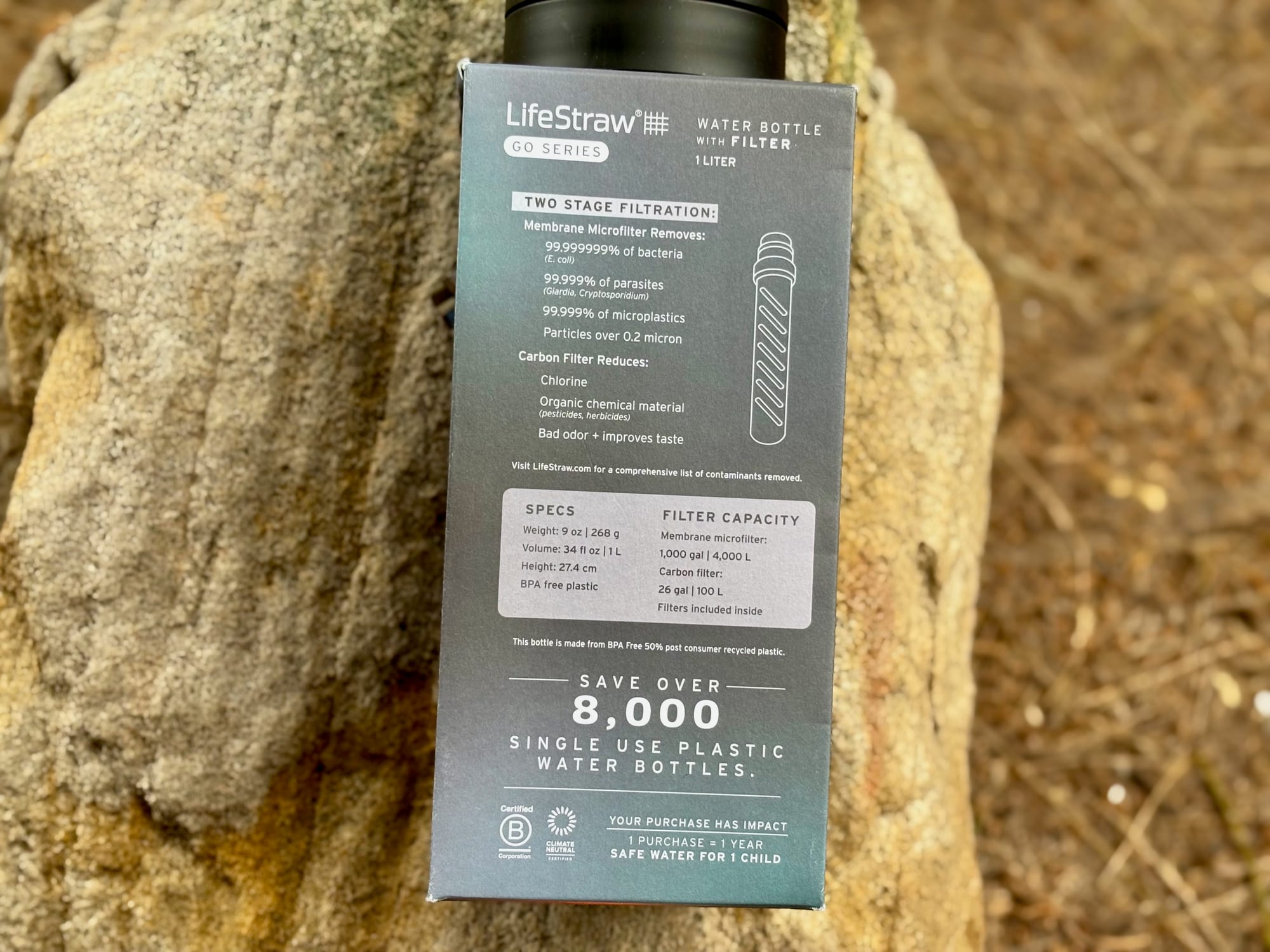
The filter has two stages, and you drink through both every time you take a sip.
The first is a membrane microfilter. According to LifeStraw it removes 99.999999% of bacteria such as E. coli and Salmonella, 99.999% of parasites such as Giardia and Cryptosporidium, 99.999% of microplastics, and sand, dirt and cloudiness down to 0.2 micron. Those are the things that usually make you sick from a creek.
The second is a carbon filter. It reduces chlorine and organic chemicals such as pesticides and herbicides, and takes away bad smells, so the water tastes better too. That part helps with tank and tap water as much as with creek water.
What it doesn’t remove is viruses. They’re smaller than 0.2 micron and pass through the membrane, as they do with most straw filters. Where viruses are a risk, treat the water another way as well.
Filter life and replacement
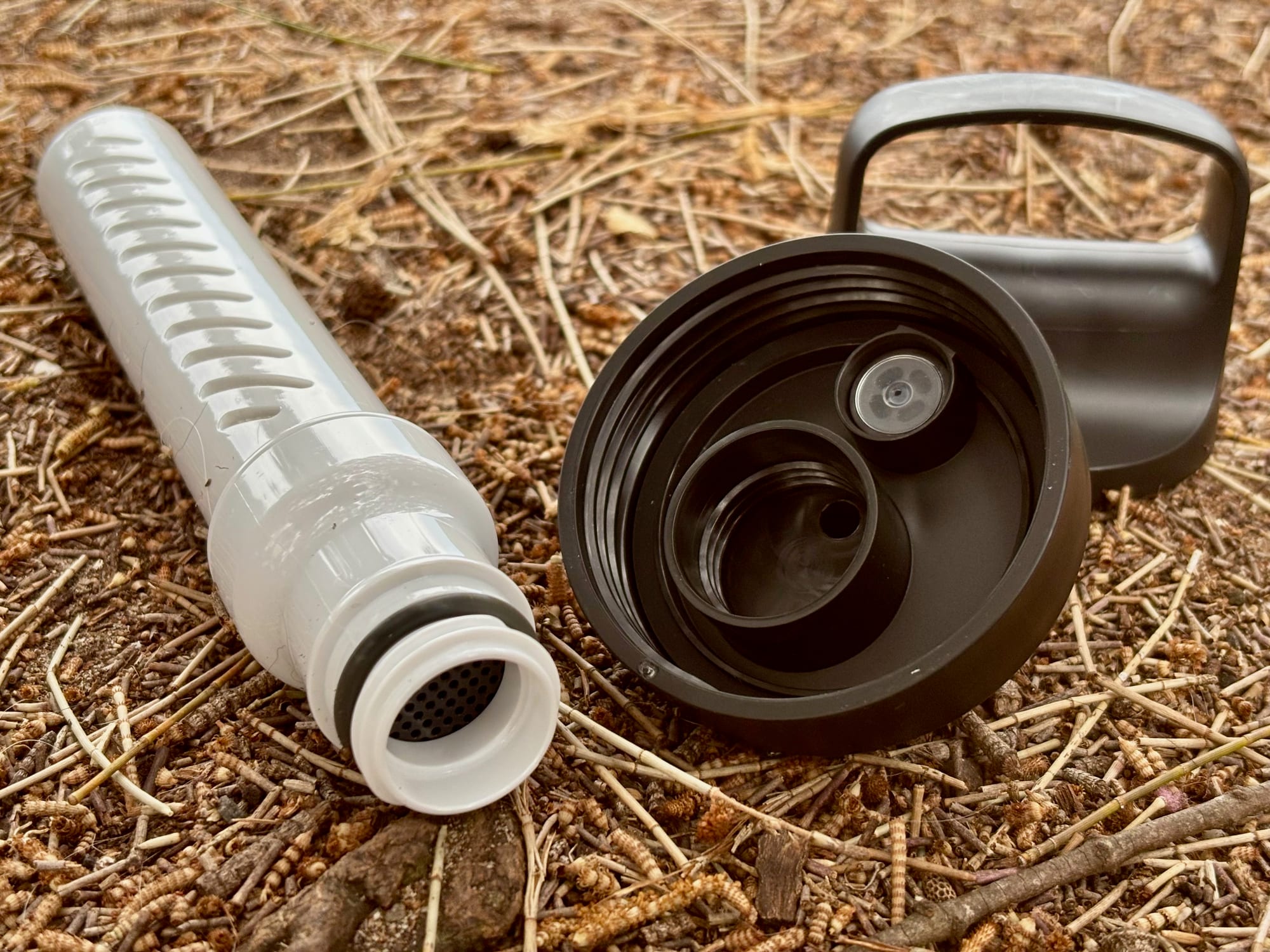
The two stages don’t last equally long. The membrane microfilter is rated for 4,000 litres, which LifeStraw puts at about five years of daily use. When it’s spent, the water stops flowing, so you can’t drink unfiltered water by accident. The carbon filter is rated for only 100 litres, or about two months of daily use, so it’s the one that needs replacing regularly if you want it to keep improving the taste.
That’s an ongoing cost on top of the price of the bottle, and worth knowing before you buy.
Using it
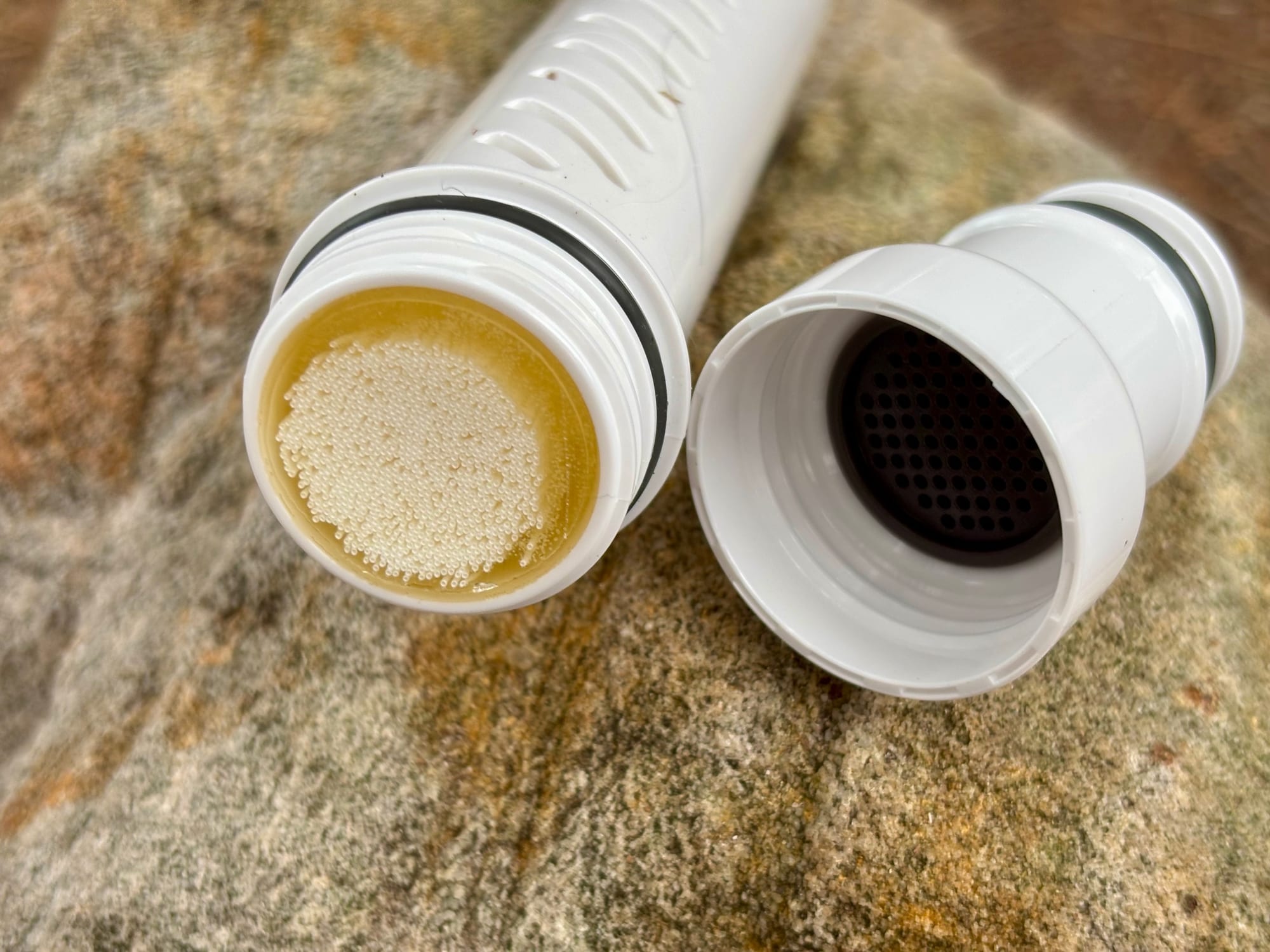
Unscrew the lid, fill the bottle up to the MAX line and screw the lid back on. Flip the cap off the mouthpiece and drink. The water is drawn up through the filter as you sip, so there’s nothing to pump and no waiting.
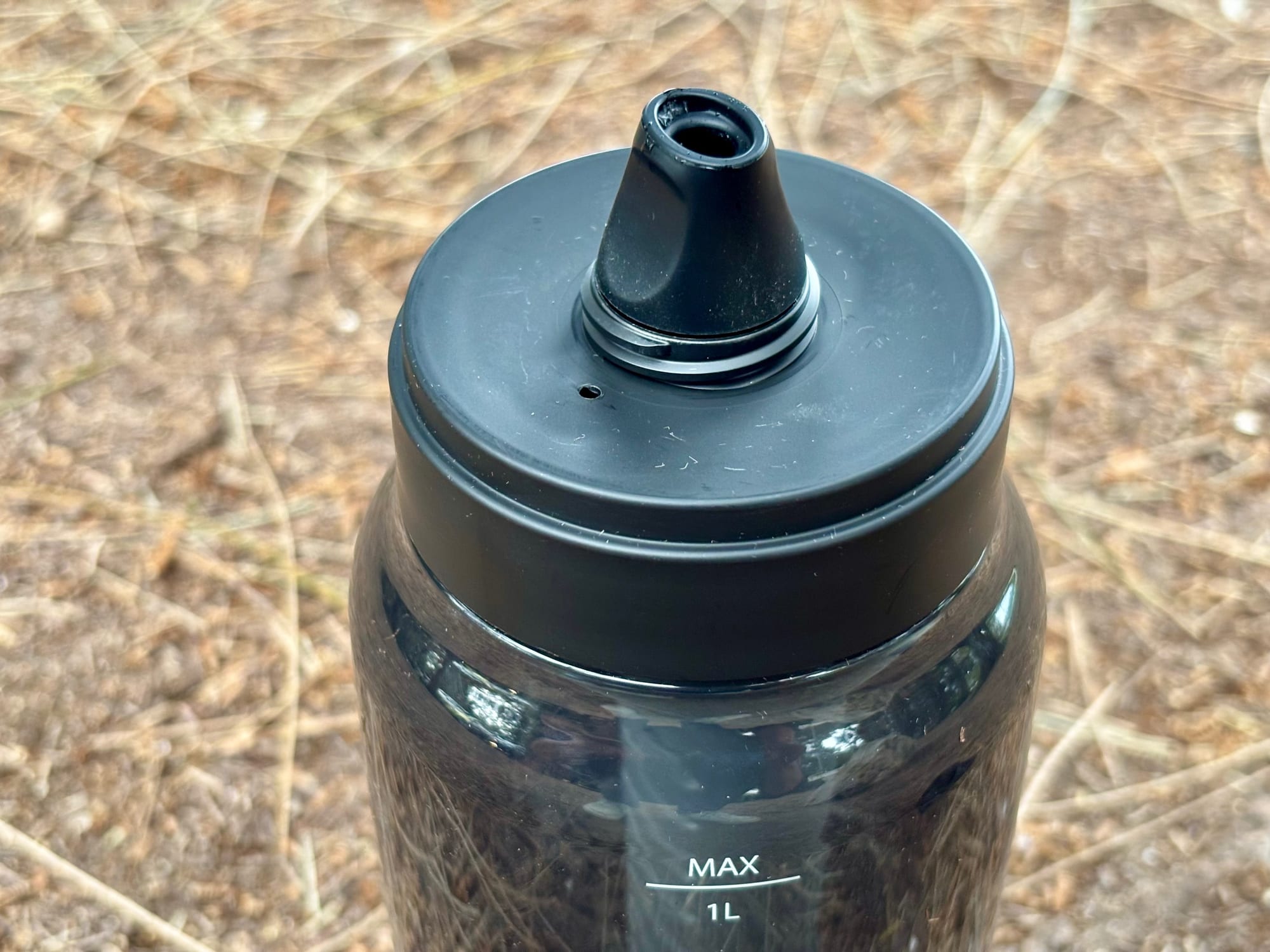
It does take more suction than a normal straw bottle, because the water has to be pulled through the microfilter. And the water is only filtered on the way to your mouth: the bottle is rigid, so you can’t squeeze or pour filtered water into a pot for cooking.
The lid has a rigid loop for carrying, and a cap that covers the mouthpiece to keep dust off it, which matters on dirt roads.
Cleaning
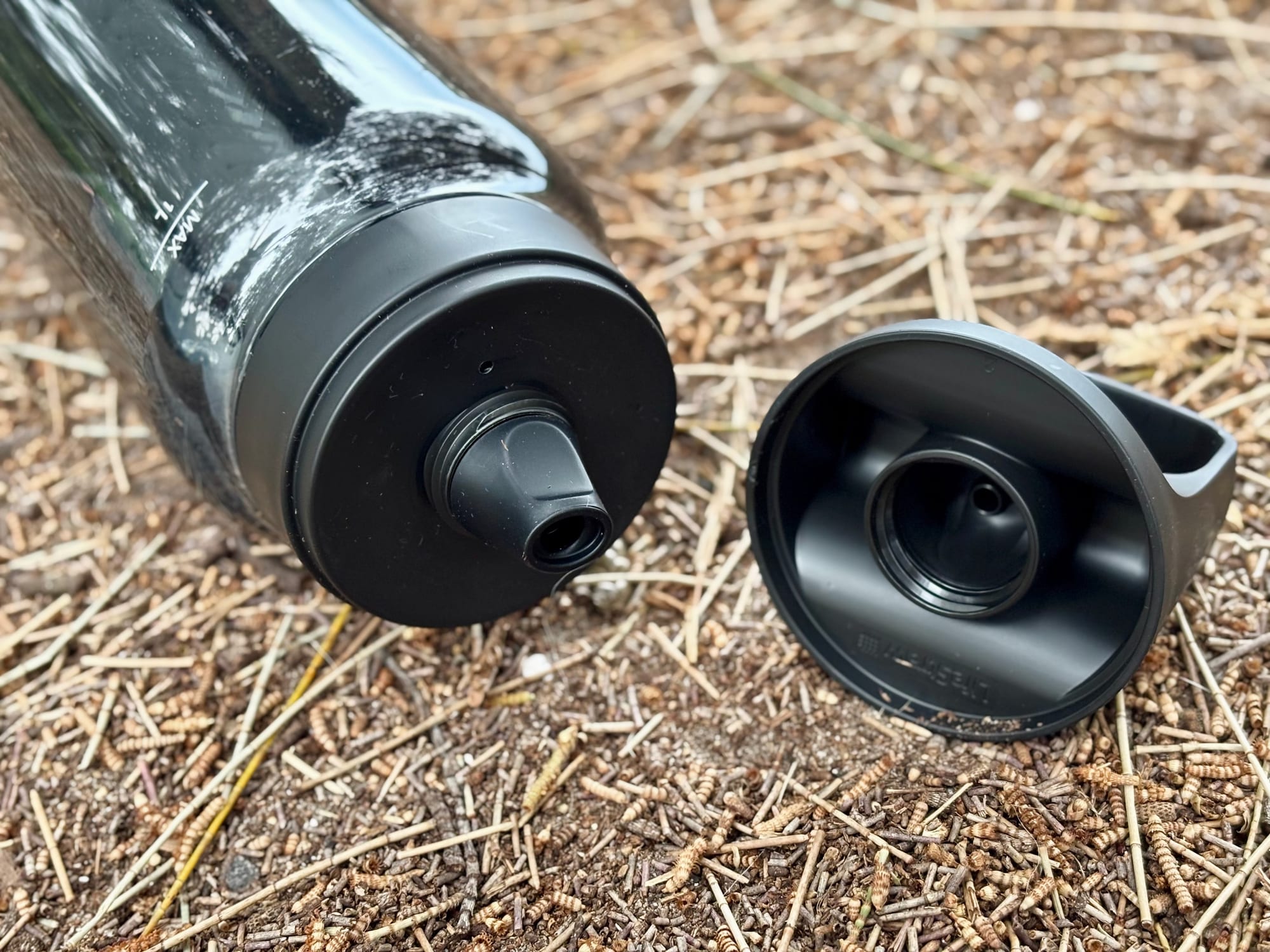
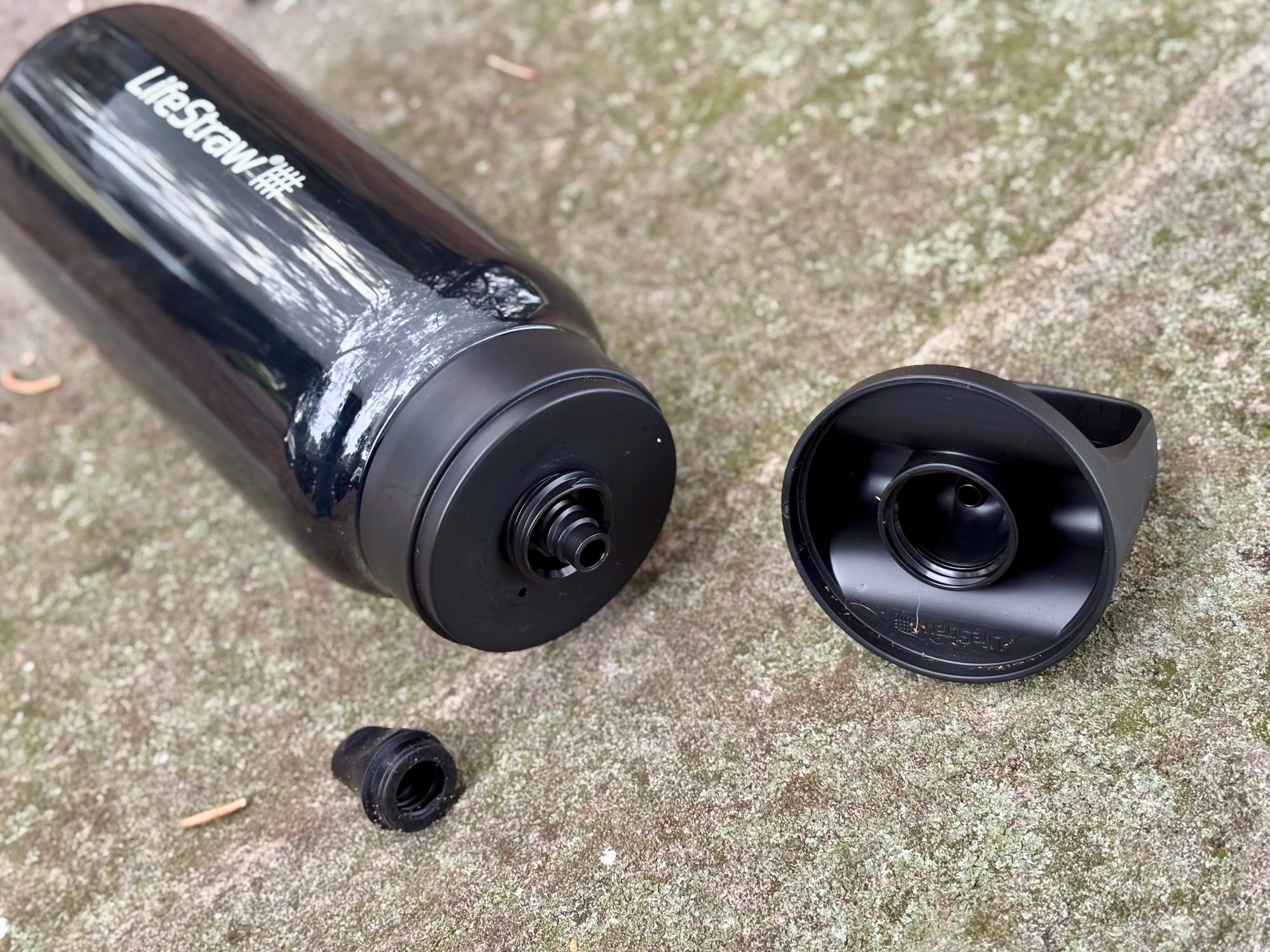
For cleaning, unscrew the filter and take it out. The bottle itself can then go in the dishwasher. The cap unscrews from the lid and the soft mouthpiece pulls off, so you can easily clean the part you drink from as well, which is where the dust and dirt end up.
Size and weight
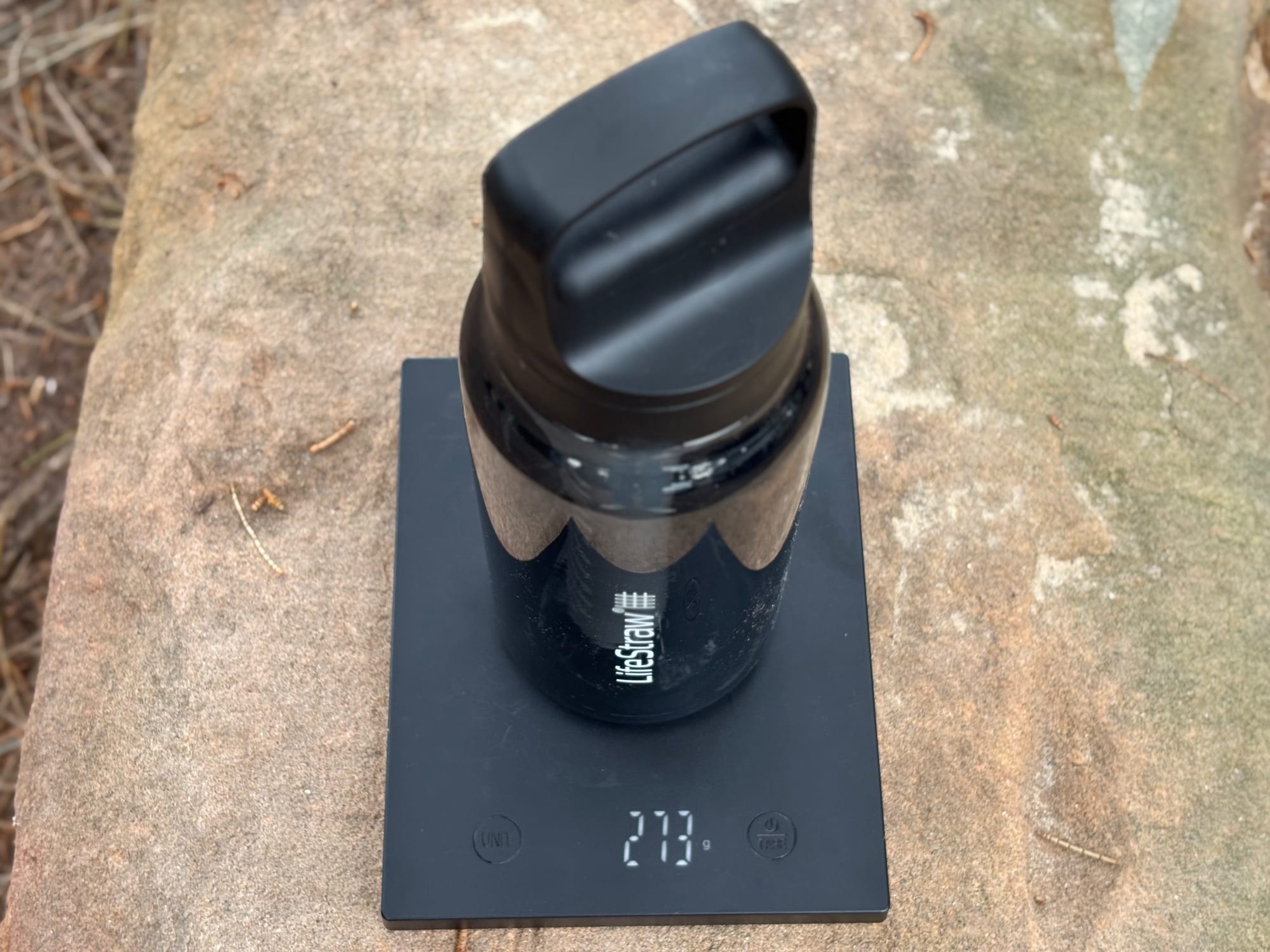
The bottle stands 27.4 cm tall and holds 1 litre. Ours weighed 273 g on the scale with the filter inside, against the 268 g on the box. That’s light for a bottle that carries its own filter, and far lighter than an insulated steel bottle of the same size.
It’s a single-wall plastic bottle, so it isn’t insulated: cold water warms up through the day. The plastic is BPA-free and made from 50% post-consumer recycled material.
Conclusion: LifeStraw Go Series 2.0 Water Bottle with Filter
The LifeStraw Go Series 2.0 is a water bottle that makes untreated water safe to drink. Its two-stage filter removes bacteria, parasites and microplastics and improves the taste, the membrane lasts 4,000 litres, and the whole bottle weighed 273 g on our scale. It doesn’t filter viruses, it takes more suction than a normal bottle, and the carbon filter needs replacing after 100 litres. I paid $110 for it. For hikers, travellers and 4WD tourers who fill up from creeks and tanks, it’s a very good bottle to have in the car.
A 1 litre bottle with a two-stage filter that removes bacteria, parasites and microplastics and improves the taste, at 273 g.
It doesn’t filter viruses, and the carbon filter lasts only 100 litres. It suits hikers and tourers who fill up from untreated water.
- Hikers
- Travellers
- 4WD tourers
Yes, if you drink from creeks, rainwater tanks or taps you don’t trust. $110 is a lot for a plastic bottle, but you’re paying for the filter. Prices differed a lot between the shops when we looked, so compare before you buy.