A set of jumper leads costs little and saves a long wait when a battery goes flat. I tested the Kincrome Standard Booster Cables 100 Amp, the lightest set in Kincrome’s range.
They’re made for 12V cars with smaller four-cylinder petrol engines. A larger 4WD or a diesel needs something heavier, but for a standard car, or as a backup set, these Kincrome jumper leads are worth a look.
What’s in the box
Standard 100 amp booster cables, 2.5 metres long, with heavy-duty terminal clamps, surge protection and copper clad aluminium (CCA) cable, for 12V cars with four-cylinder petrol engines.
What we like
- Handy round carry bag included
- 2.5 metre cable length
- Includes surge protection
- Suits 12V 4-cylinder petrol
What we don’t
- Not suitable for large 4WD
- Only 100 Amp capacity
- CCA cables, not pure copper
Quick Specs
| Spec | Details |
|---|---|
| Brand | Kincrome |
| Weight | 1.0 kg |
| Amperage Rating | 100 Amps |
| Cable | 2.5 m longCopper-clad aluminiumCCA |
| Application Voltage | 12V DC |
| Engine Suitability | 4-Cylinder Petrol Engines |
| Features | Surge ProtectionHeavy Duty Terminal Clamps |
Carry bag and first impressionsCarry bag & first look
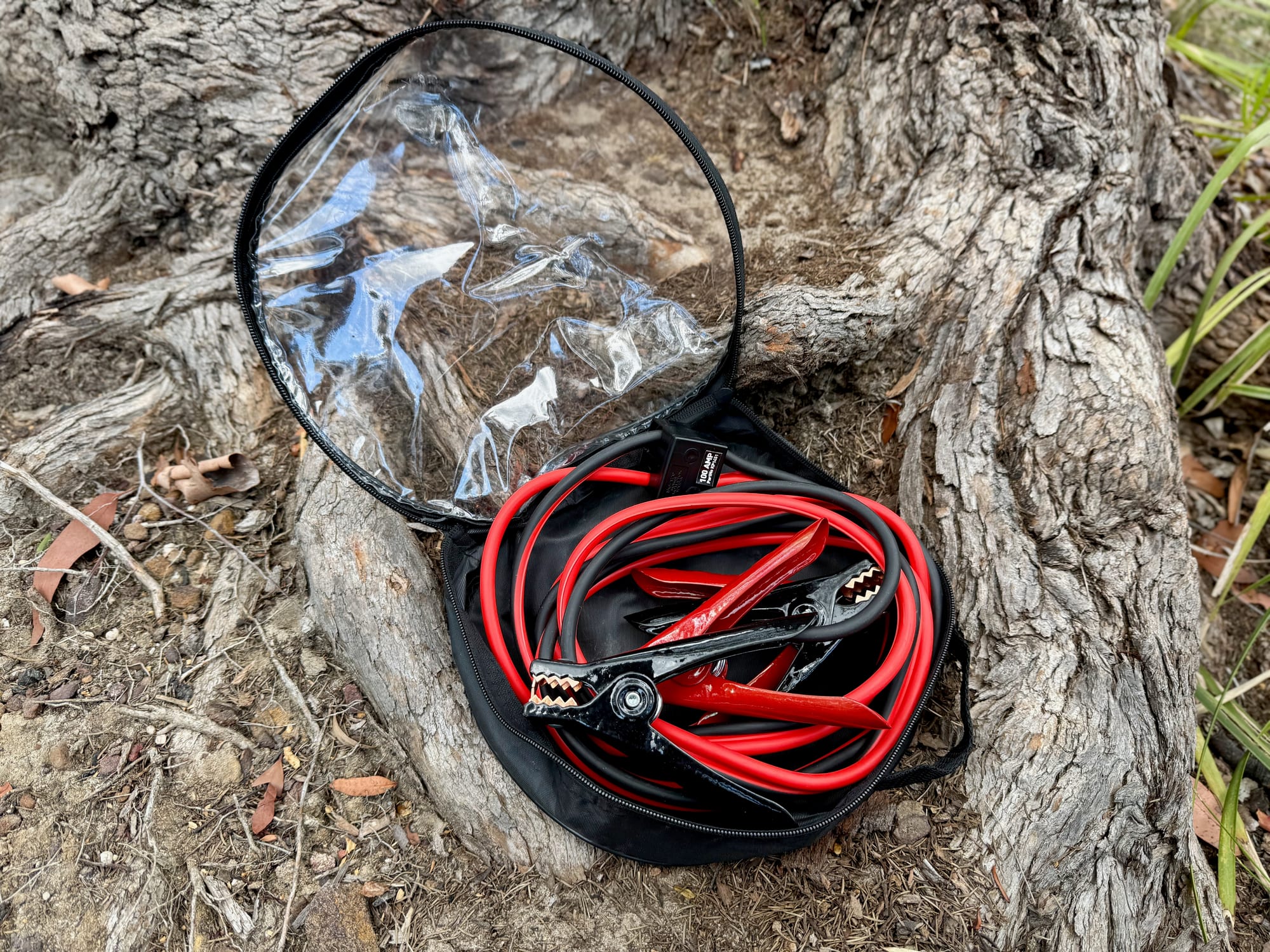
The leads come in a round carry bag with a clear zip-up lid. It keeps them tidy in the boot or under a seat, and stops them unravelling and tangling with the rest of your gear.
Out of the bag, the clamps look sturdy and grip a battery terminal firmly. This is the standard 100 amp version. Kincrome also sells 200 amp, Premium 400 amp and Extra Heavy Duty sets up to 1,000 amps.
Cable, clamps and surge protectionCable, clamps & protection
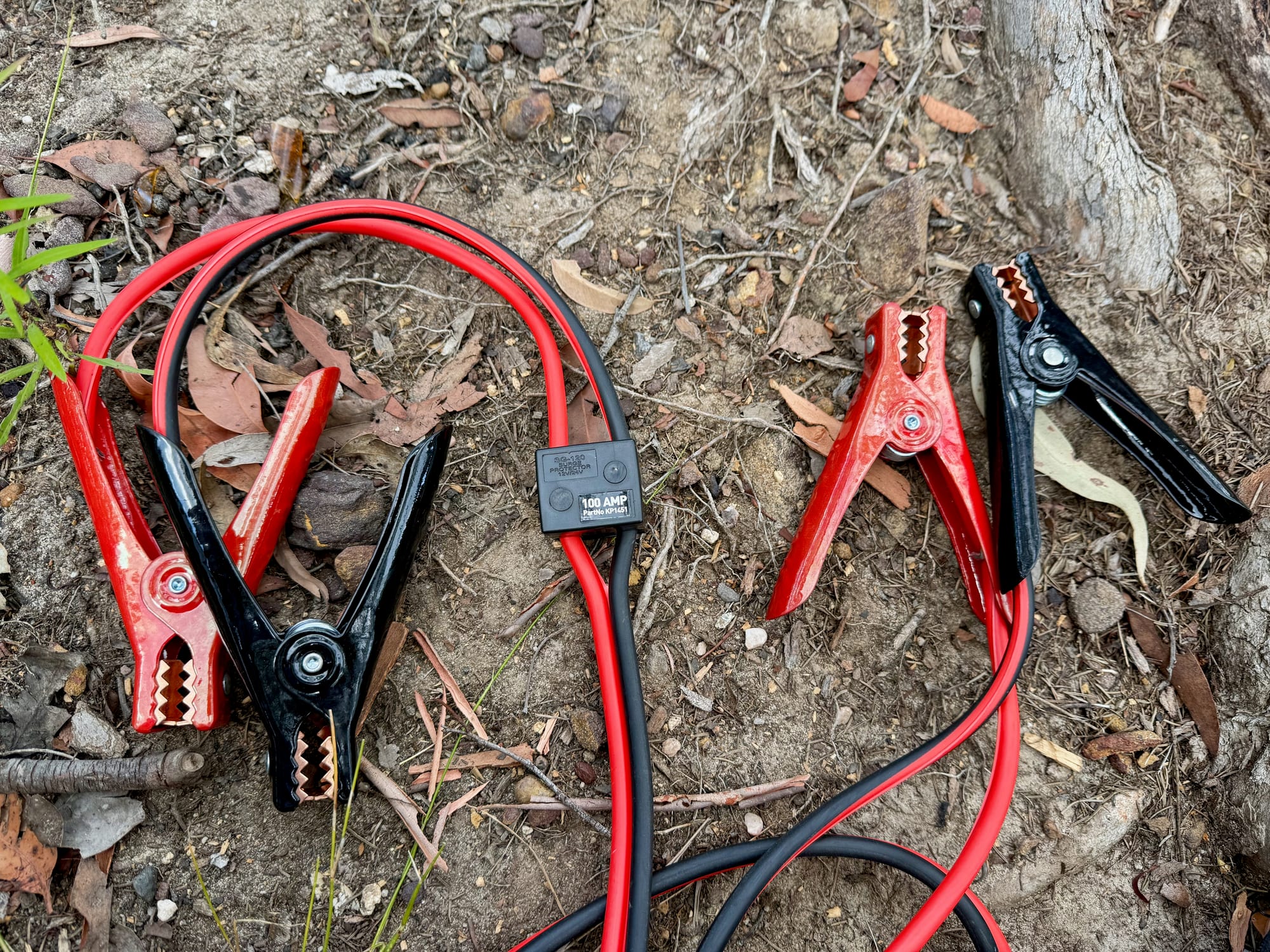
The cable is copper clad aluminium (CCA). It’s the budget alternative to pure copper, and it keeps the cost and the weight down. For a 100 amp rating it carries the power reliably. The insulation is thick, made to cope with being dragged across engine bays and the ground.
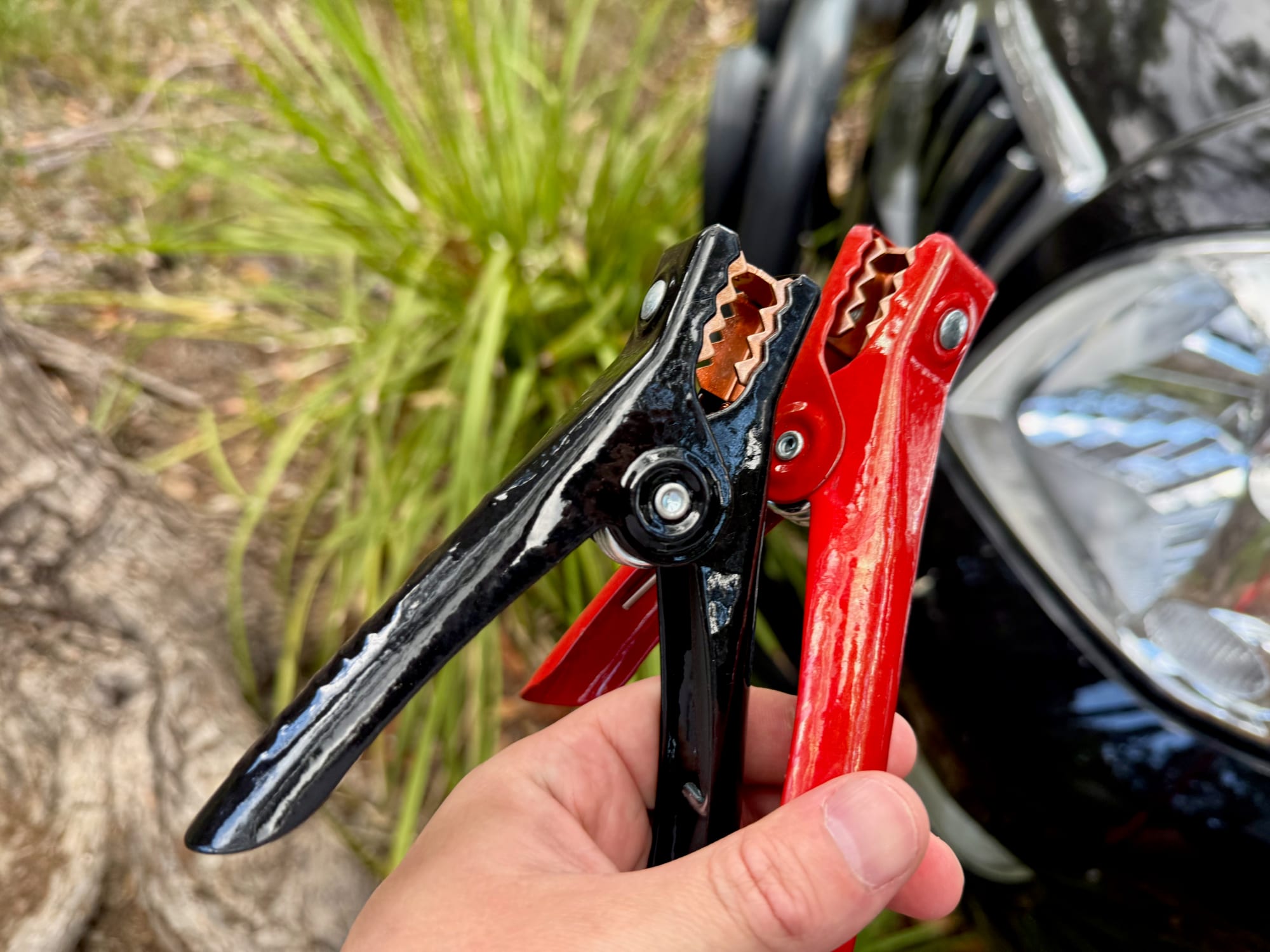
The clamps are colour-coded, red for positive and black for negative. They open wide, have strong springs for a tight connection and keep resistance low where they connect.
The surge protection is the feature I value most. Connecting and disconnecting leads can cause voltage spikes, and those can damage the electronics in modern vehicles. The protection guards both vehicles during a jump start.
Length and weight
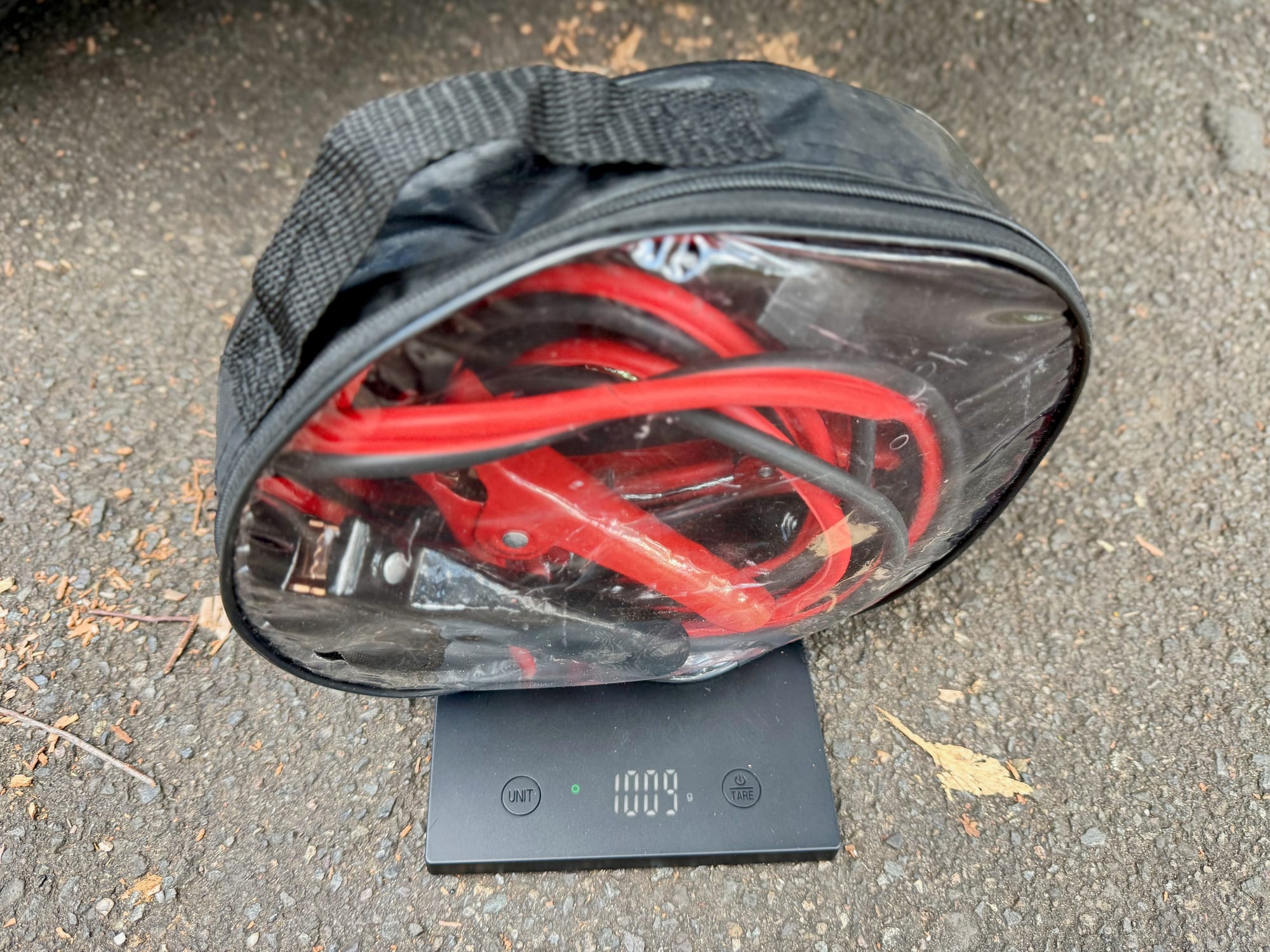
At 2.5 metres, the leads reach between two cars without parking them bumper to bumper, and they’re short enough not to tangle when you pack up. The whole pack weighs about 1 kg, so it’s easy to handle and no burden to keep in the car.
How to connect them
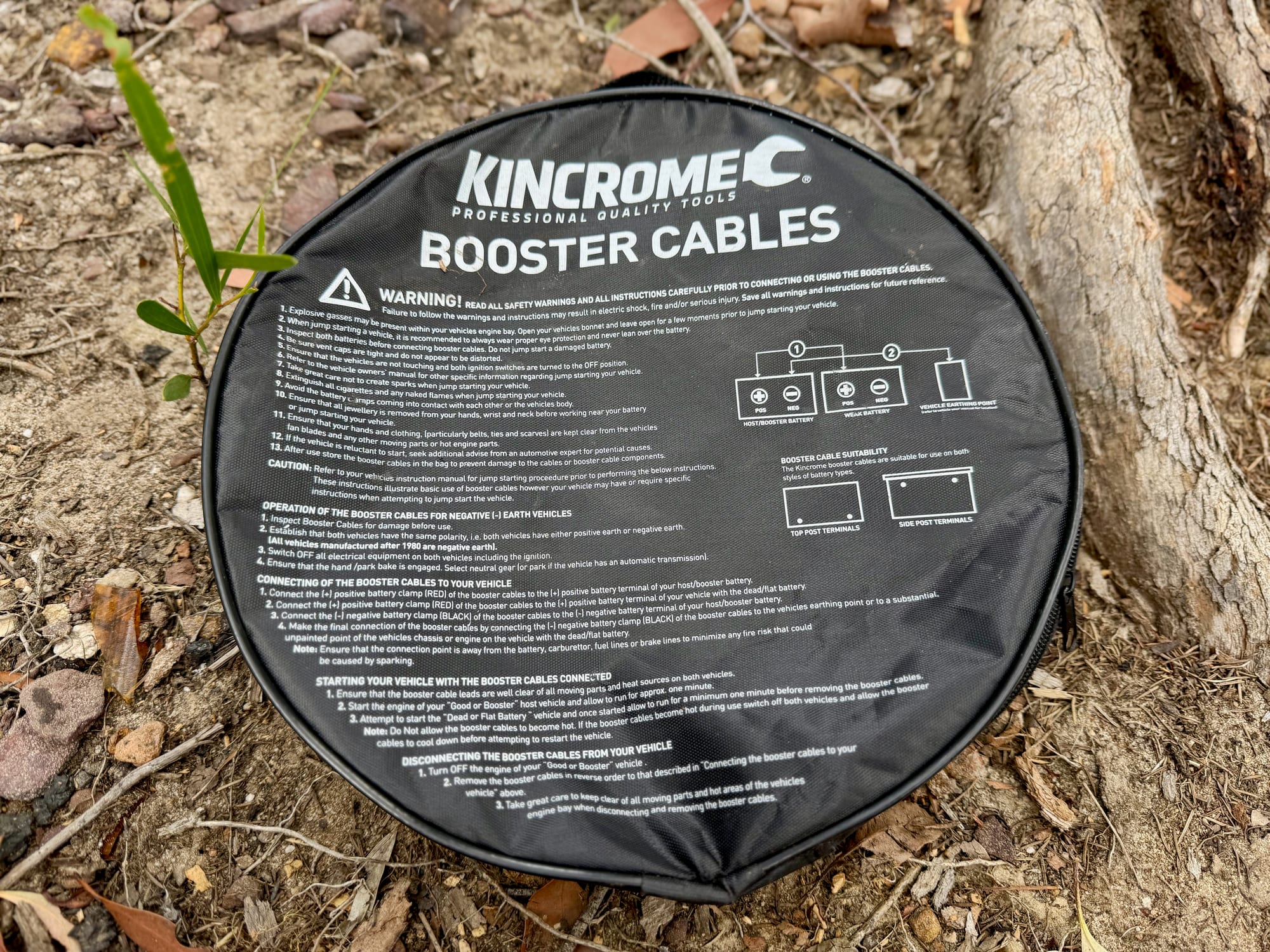
Before using any jumper leads, I make sure the ignition and all electrical equipment are off in both vehicles. The order you connect the clamps in matters:
- Flat car
1 Red clamp
Positive (+) terminal of the flat battery
- Donor car
2 Red clamp
Positive (+) terminal of the donor battery
- Donor car
3 Black clamp
Negative (–) terminal of the donor battery
- Flat car
4 Black clamp
An unpainted metal point on the chassis or engine, away from the battery
The colour coding and the guide on the pack make the steps easy to follow, even if you’ve never done it before. Our guide on how to jump start a car with leads covers the whole job, including which leads suit which vehicle.
Which rating to get
The 100 amp rating suits smaller 12V vehicles, mainly four-cylinder petrol engines, and that’s where these leads work well. The CCA cable isn’t pure copper, but it delivers the 100 amps it’s rated for.
Know the limit, though: for our 4WD, 100 amps turned out to be too light a rating. If you drive a 4WD, get at least 400 A, and more for a big diesel. We’ve since upgraded to the San Hima 12V Jump Starter With Air Compressor, a handy 2-in-1 that starts the car without a second vehicle and pumps up the tyres too.
Besides the rating, look at the cable and the length. For a 4WD, thicker cable is better: 4 gauge at the least and 2 gauge ideally (with gauge, a lower number means thicker cable, which carries more current without getting hot). Diesels need more cranking power than petrol engines of the same size, so size up for a diesel. A length of 4 to 6 metres lets you reach from another vehicle parked nose to nose or side by side on a track, and the clamps should be fully insulated and colour-coded, ideally with surge protection for the car’s electronics.
Kincrome comparison
Kincrome makes the same leads in six ratings. Ours, the 100 A, is for small petrol cars; the bigger the engine, and especially a diesel 4WD, the more amps you need. The bigger sets also get longer cables, 24V for trucks and, from the 600 A, a polarity alarm and a voltage display. The suggestions below are a rough guide: check what your vehicle needs before you buy. All six are at Automotive Superstore.
| Ours100 A | Standard200 A | Premium400 A | Heavy600 A | Ultimate800 A | Ultimate1,000 A | |
|---|---|---|---|---|---|---|
| Model | KP1451 | KP1452 | KP1453 | KP1454 | KP1455 | KP1456 |
| Voltage | 12V | 12V | 12V | 12 & 24V | 12 & 24V | 12 & 24V |
| Best for | 4-cyl petrol & small cars | 4–6 cyl petrol & light utes | 4–8 cyl petrol & light diesel | Petrol, diesel & commercial | Commercial diesel | Trucks & earthmoving |
| Extras | Surge protection | Surge protection | Surge protection | Polarity alarm & alternator check | Intelli-Check display | Intelli-Check II display |
| Length | 2.5 m | 2.5 m | 3 m | 3.5 m | 3.5 m | 6 m |
| Shop | View | View | View | View | View | View |
Conclusion: Kincrome Standard Booster Cables 100 AmpConclusion
The Kincrome Standard Booster Cables 100 Amp do what they’re meant to: jump-start standard 12V cars with four-cylinder petrol engines, simply and at a low price. The heavy-duty clamps, the 2.5 metre length and above all the surge protection put them ahead of cheap generic leads. They pack into a sturdy carry bag, so they can live in the car until you need them. Owners of larger 4WDs need a higher-rated set, but for an everyday car or as a backup, these are a sound buy.
Good leads, but too light a rating for our 4WD.
Secure clamps, surge protection, 2.5 m cables and a handy carry bag suit a small petrol car; for a 4WD get at least 400 A. We’ve since upgraded to the San Hima jump starter with air compressor.
- Car campers
- Everyday carry
- Emergency kits
Yes, for smaller cars. Surge protection, 2.5 m cables and a carry bag make it a good budget buy for 4-cylinder petrol engines. For a 4WD, get at least 400 A.