A flat battery announces itself with a slow click when you turn the key, usually somewhere inconvenient. With a set of jumper leads and another car you can be going again in a few minutes, as long as the leads go on in the right order.
That order matters more than it used to. Modern cars are full of electronics, and clamps connected the wrong way round or in the wrong sequence can spark, blow a fuse or damage a control unit. This guide gives the safe sequence, the one safety step most people skip, and what to check before you connect anything.
What you need: a donor car and jumper leadsWhat you need
You need the dead car, a donor car with a battery of the same voltage (12 V for almost every car and 4WD) and preferably a similar or larger engine, and a set of jumper leads.
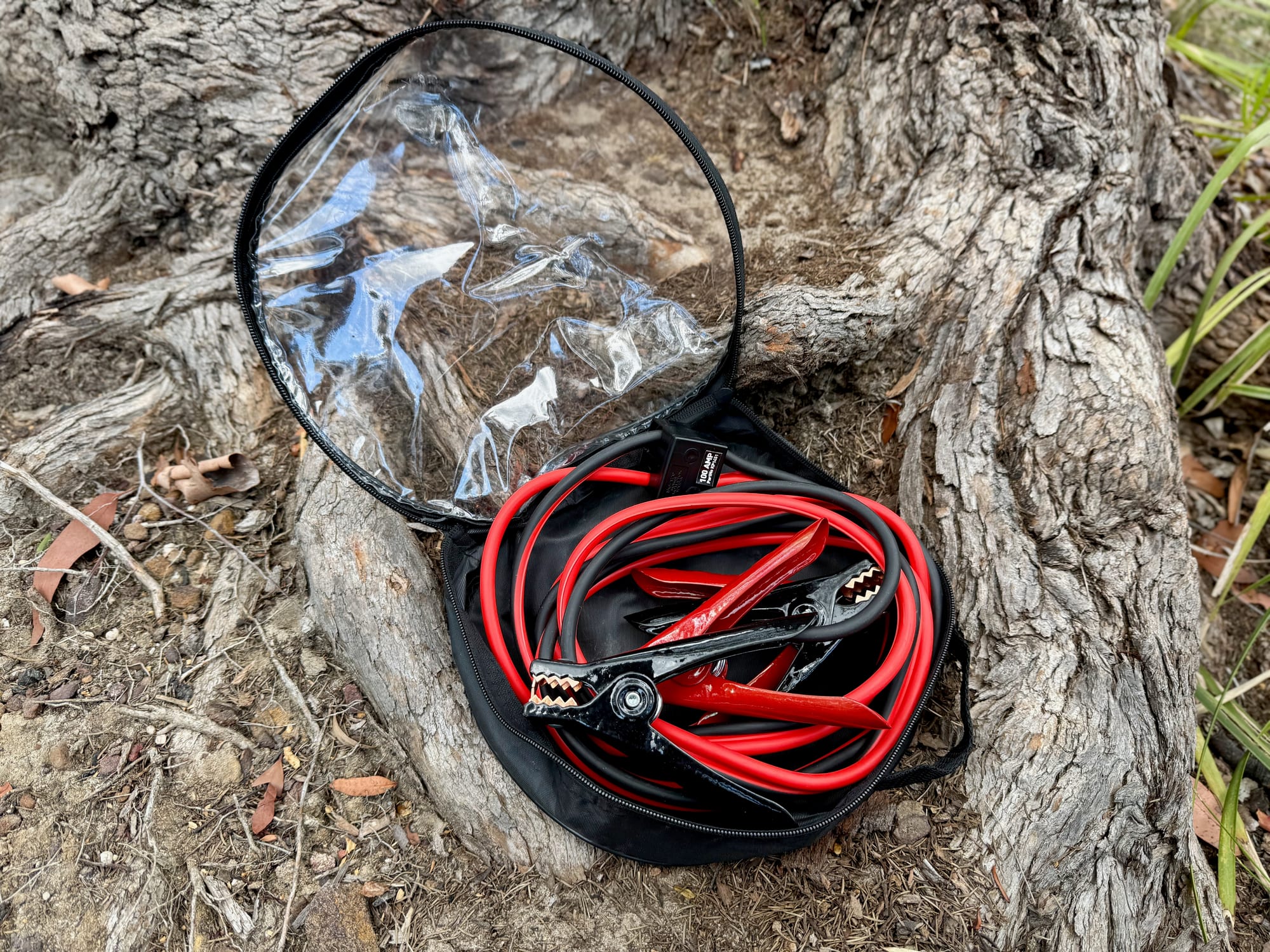
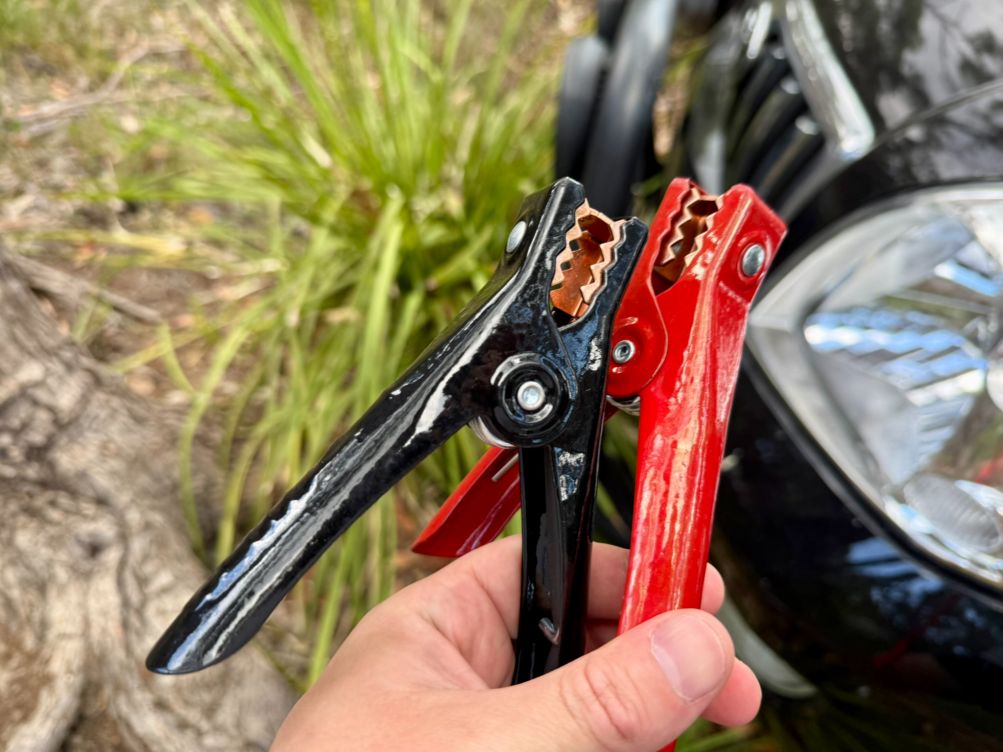
Leads have a red clamp for the positive terminal (+), which carries the power, and a black clamp for the negative (–), the return path. The last black clamp does not go on the dead battery’s negative terminal. It goes on a bare metal earth point in the dead car’s engine bay, such as the engine block or a chassis bolt, so that any spark happens away from the battery. Batteries can give off hydrogen, and that is the whole reason for the rule.
Which jumper leads for which vehicle
Jumper leads are sold by amp rating, and the bigger the engine, the heavier the leads it needs. A light set that starts a small petrol car won’t carry enough current for a big diesel. As a guide, this is how Kincrome rates its booster cables, from 100 to 1,000 amps.
- Small cars
100 Amp
Standard leads: standard 12V cars, 4-cylinder petrol engines and small SUVs
- Mid-sized cars and SUVs
200 Amp
Standard leads: mid-sized petrol engines (4 and 6 cylinder) and larger SUVs
- Big petrol engines, smaller diesel 4WDs
400 Amp
Premium duty: large V6 and V8 petrol engines and the common smaller diesel 4WDs
- V8 diesel 4WDs
600 Amp
Extra heavy duty: serious V8 diesel 4WDs and medium-sized trucks
- Heavy-duty 4WDs
800 Amp
Extra heavy duty: large V8 and V10 engines and heavy-duty 4WDs
- Trucks and machinery
1,000 Amp
Ultimate heavy duty: commercial vehicles, large trucks and heavy machinery
How to jump start a car
Connect the four clamps in the order in the table below. Then start the donor car and let it run for five to ten minutes at a fast idle so its alternator puts some charge into the flat battery. Don’t skip the wait; a battery that has had a few minutes of charge starts far more easily.
Try the dead car. If it starts, leave it running and take the leads off in the reverse order: black from the dead car’s earth point, black from the donor, red from the donor, red from the dead car. Keep the clamps away from each other and from any metal while you do it. Then drive the recovered car for at least half an hour so its own alternator can recharge the battery.
Connection Sequence for jump starting a carConnection sequence
The order you connect the leads in matters: red goes on first, and the last black clamp goes on bare metal of the dead car, not on its battery. Follow these four connections in this order.
- Dead Car
1 Red clamp
Positive (+) Terminal
- Donor Car
2 Red clamp
Positive (+) Terminal
- Donor Car
3 Black clamp
Negative (-) Terminal
- Dead Car
4 Black clamp
Unpainted Metal Earth Point (Engine Block/Chassis)
Safety checks before you connectSafety checks
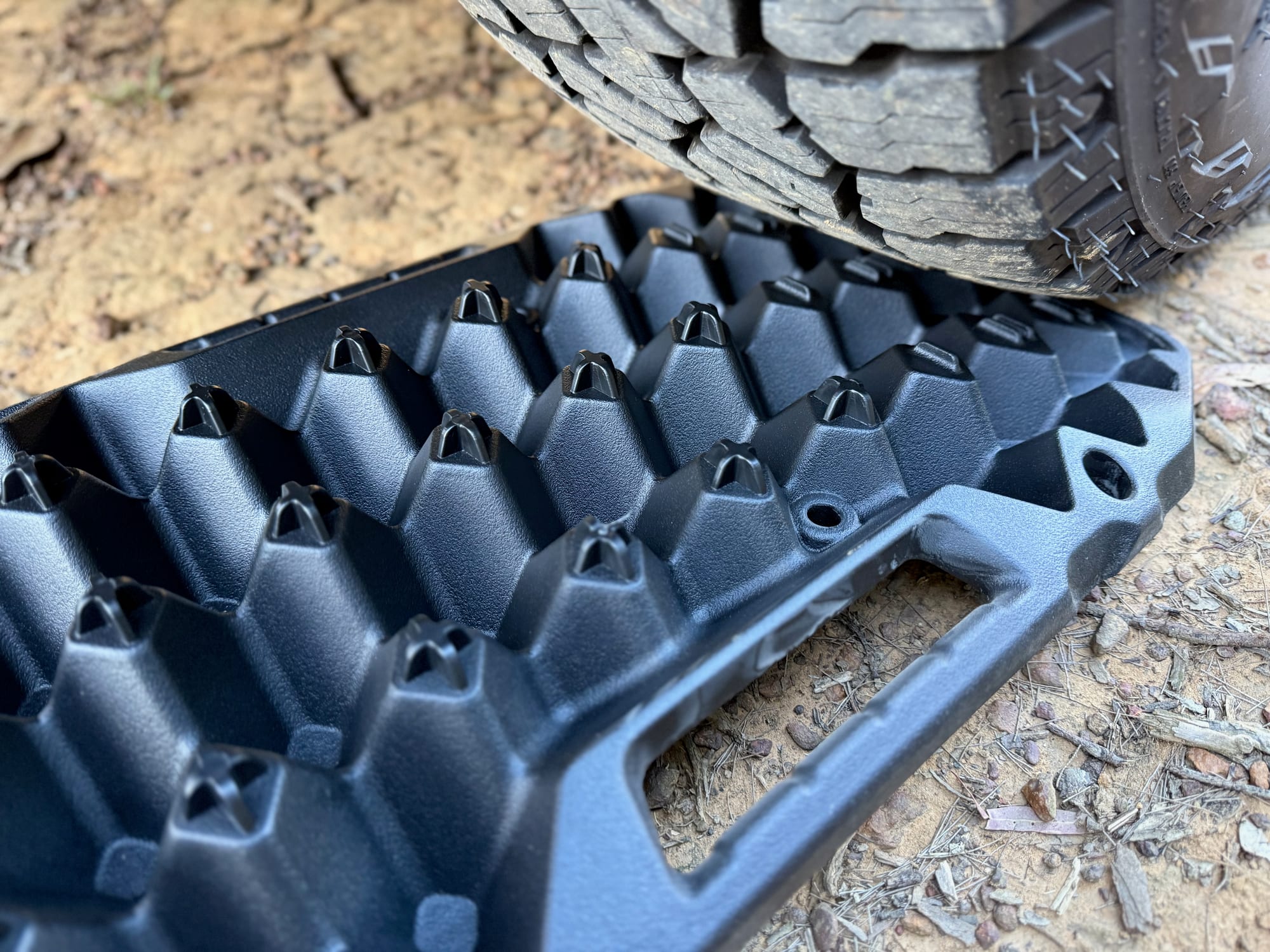
Park both cars on level ground, handbrakes on, ignitions off, before any lead goes on. Bogged in mud or sand, chock the wheels so nothing rolls; a set of Recovery Boards does the job.
Diesels and big petrol engines need thick, good-quality leads. Thin cheap ones can’t carry the current, get hot and can melt. The same procedure works for a sealed AGM or deep-cycle battery in a 4WD storage setup, as long as it is 12 V; check that before connecting. Don’t try to jump a battery that may have frozen in extreme cold, as it can rupture. And read the owner’s manual first: some cars have dedicated jump points away from the battery, and the manual will say so.
Summary
Red to positive, black to negative, and the last black clamp on a bare metal earth point on the dead car, never on its battery. That final connection is the safety step.
Let the donor run for several minutes before trying the dead car, take the leads off in reverse order, and drive for half an hour afterwards. A sturdy set of leads with thick cables belongs in every 4WD, especially one that spends time away from help.
Do's
- Do check battery voltage first (12V)
- Do connect red leads first
- Do let donor car idle for 10 minutes
- Do remove leads in reverse order
- Do check the car manual first
Don'ts
- Don't let the clamps touch
- Don't connect black to dead battery
- Don't use cheap, thin leads
Recommended gear
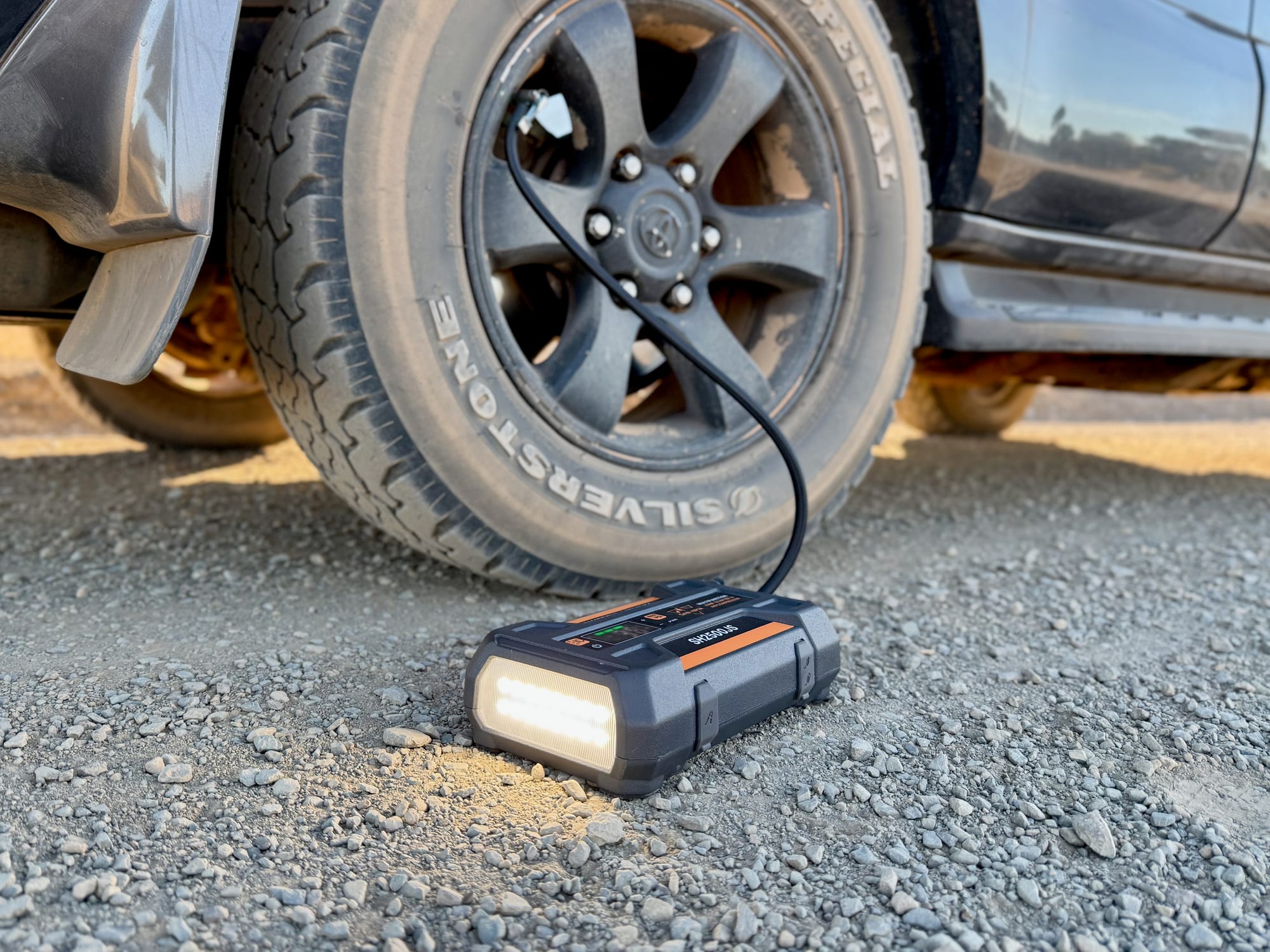
A set of jumper leads with thick cables is worth keeping in the car, or a jump starter if there’s no second car around. A head torch and a multitool are handy to have with them.