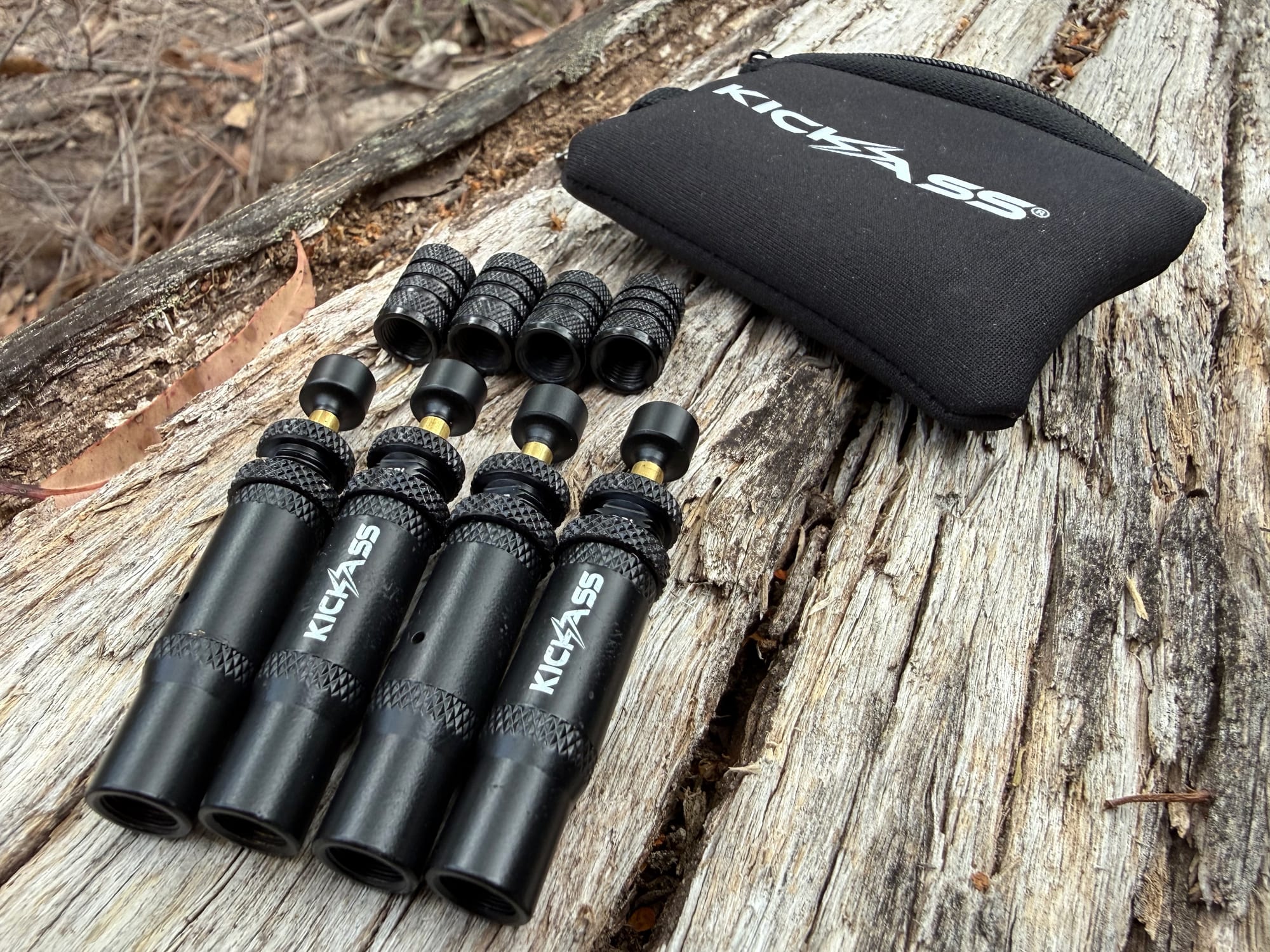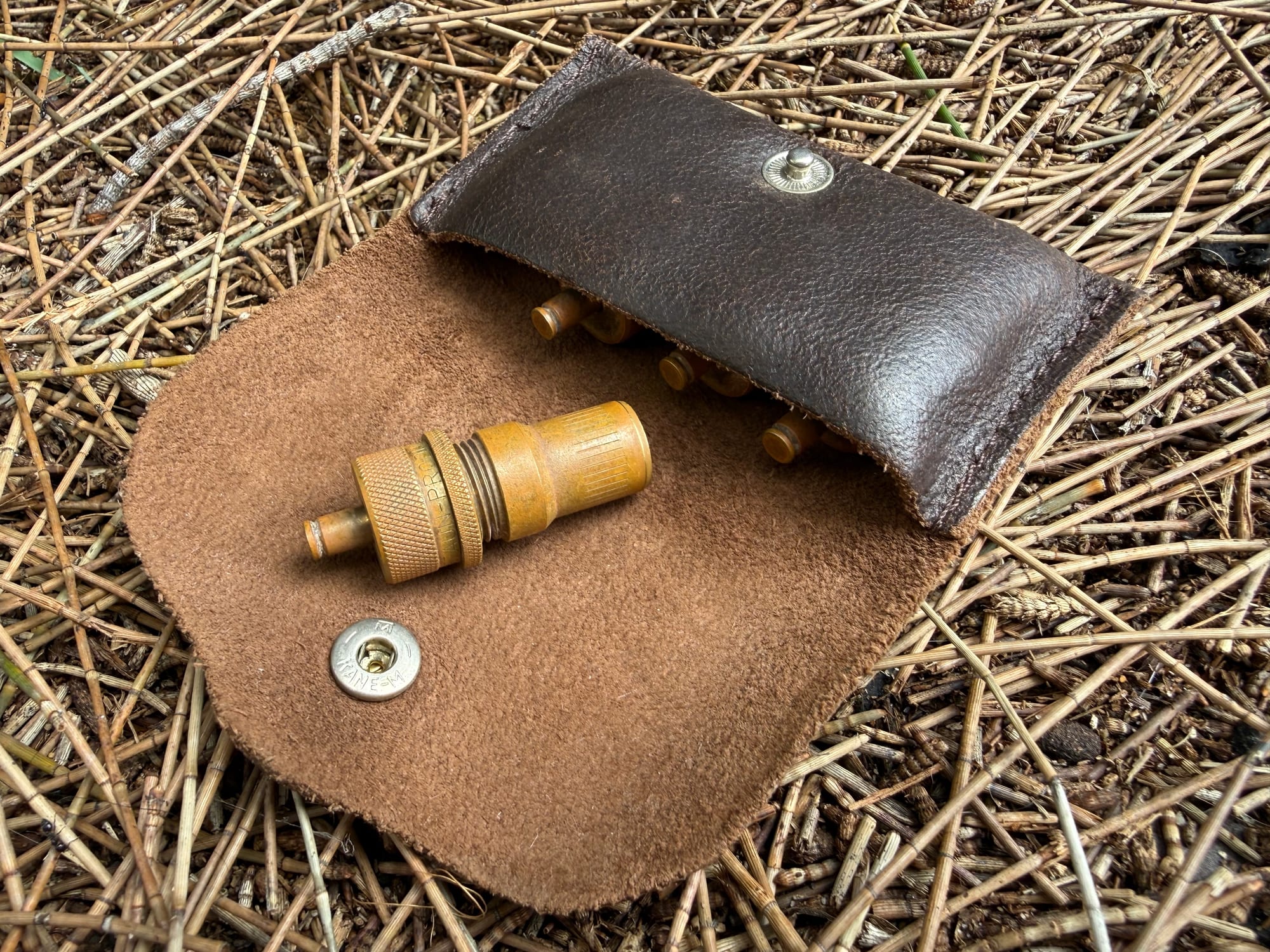
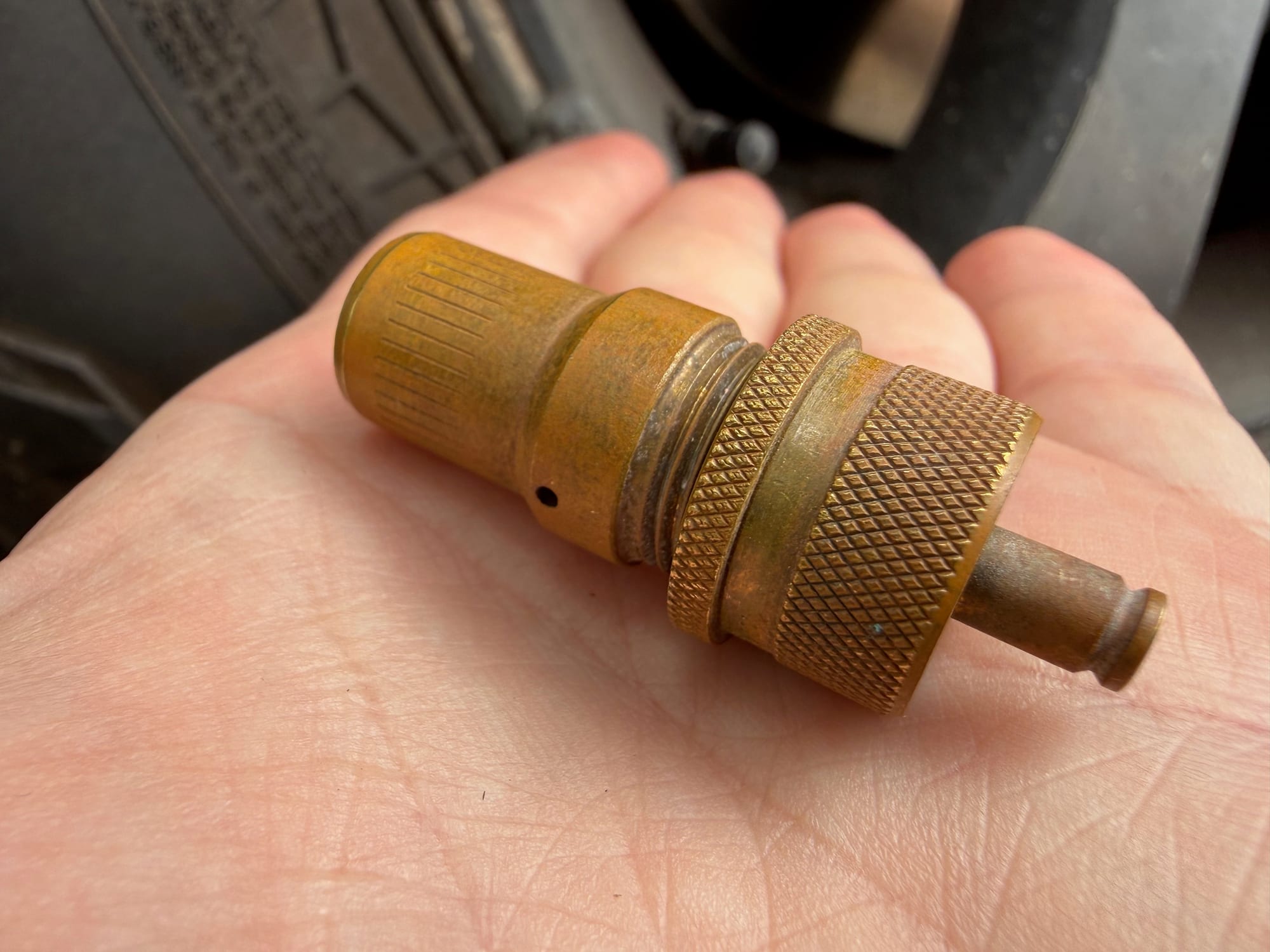
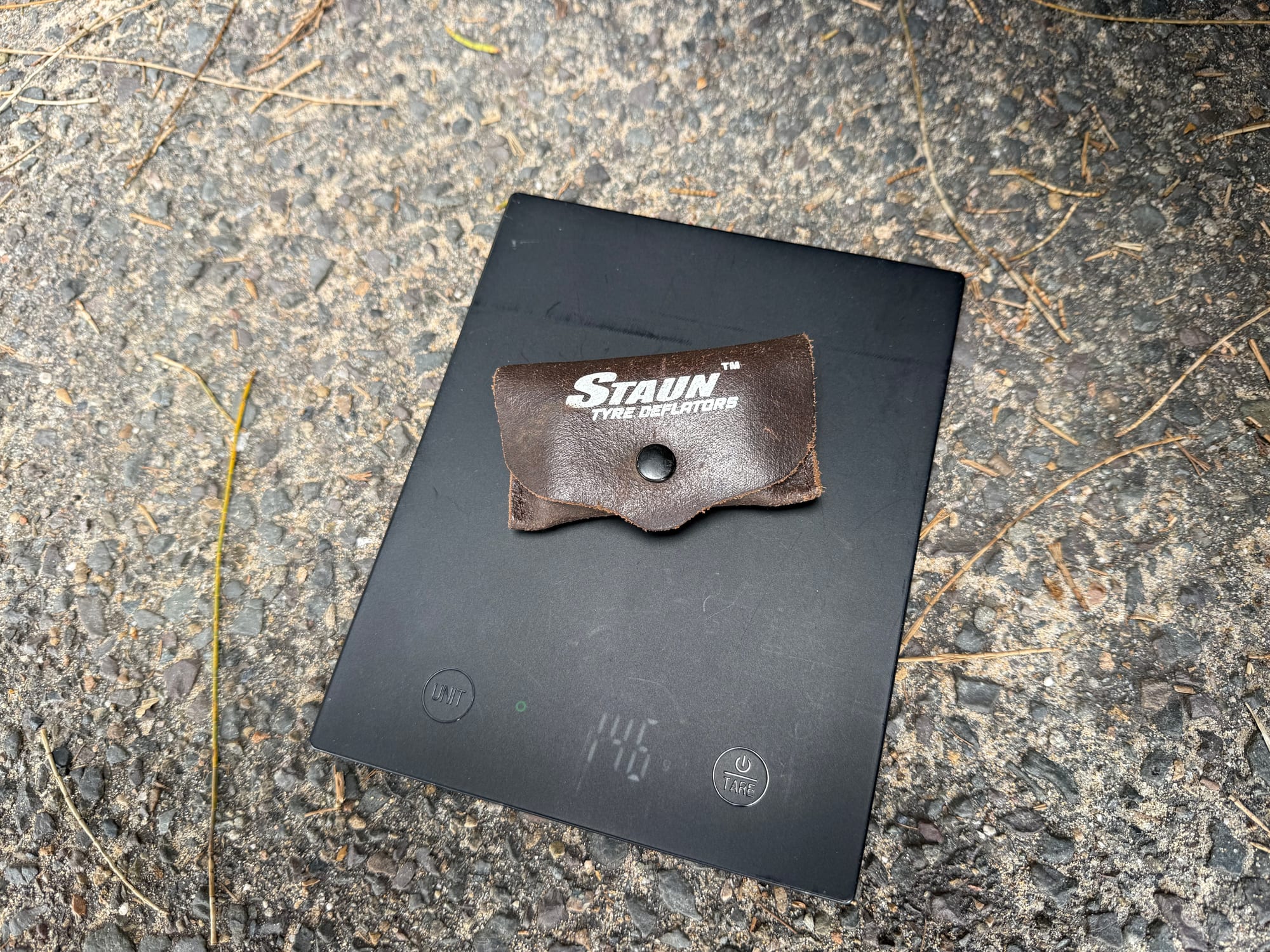
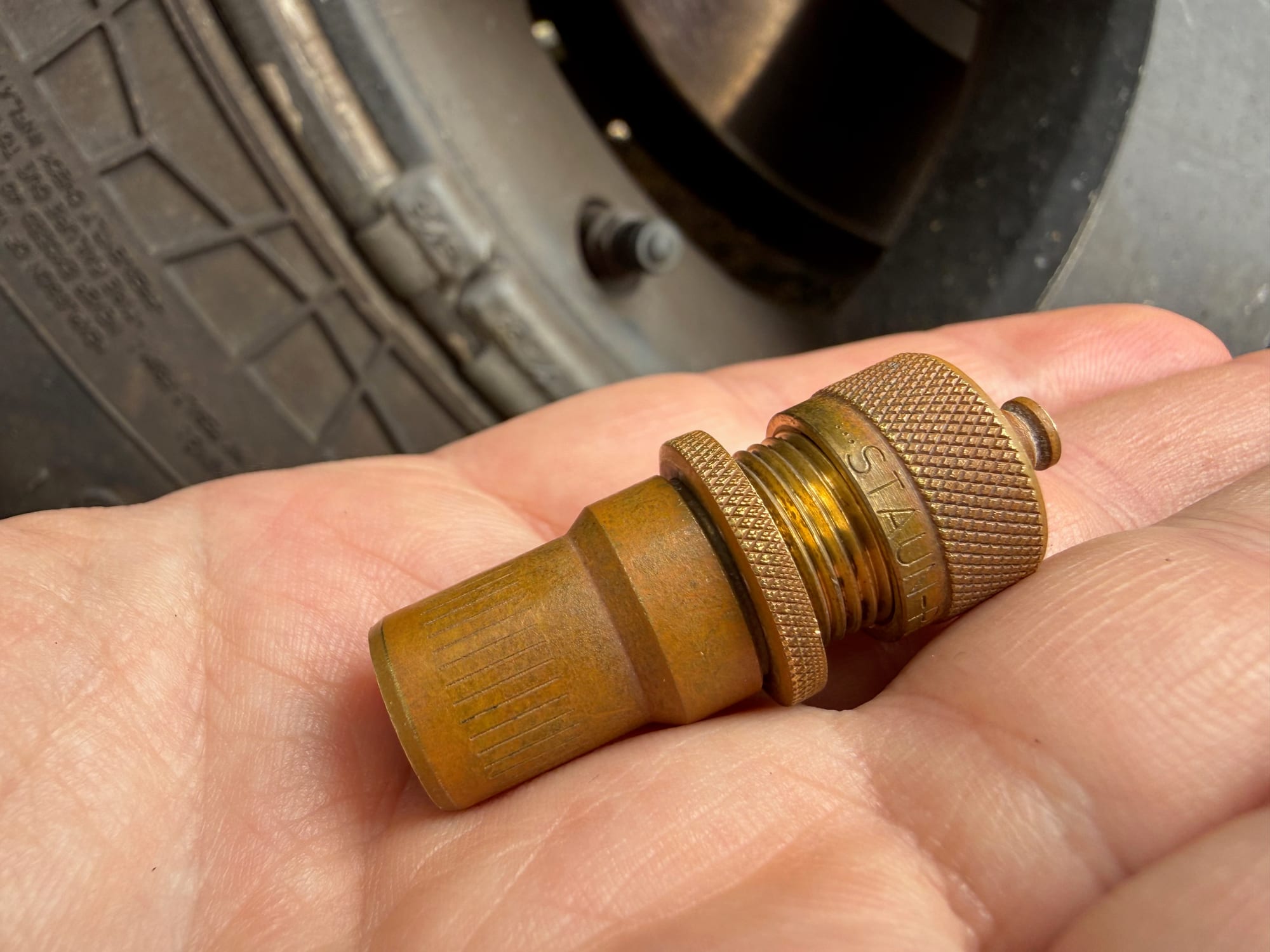
The Staun Tyre Deflators are four automatic deflators made entirely of brass. Set them once to the pressure you want, screw one onto each tyre valve, and they let the air out and stop by themselves, so all four tyres end up at the same pressure. They adjust from 6 to 30 PSI, weighed 146 g with their leather pouch, and cost me $80.
What’s in the box
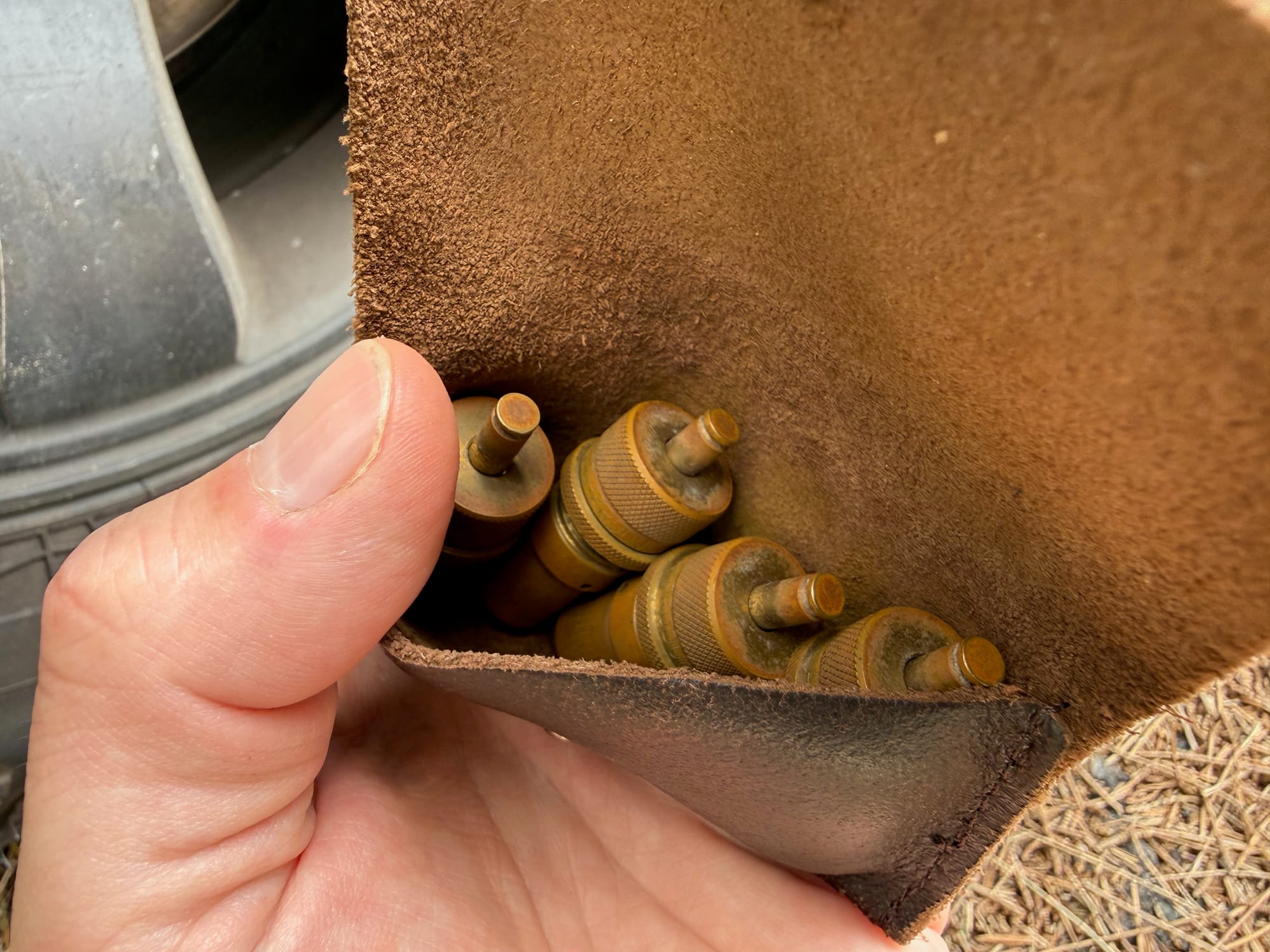
Four solid brass deflators, preset to 18 PSI from the factory, in a leather pouch with press studs. They can be fully unscrewed, which makes it easy to clean out any sand that gets in.
What we like
- All four tyres end up even
- Solid brass, won't rust
- 6 to 30 PSI
- 146 g in a leather pouch
- Unscrew to clean out sand
What we don’t
- Fiddly to set, needs a gauge
- Start by hand below 12 PSI
- No scale to dial in
Quick Specs
| Spec | Details |
|---|---|
| Brand | Staun |
| Material | Brass |
| Weight | 146 gwith the pouch |
| Type | Automatic |
| Pressure range | 6–30 PSI |
| Factory preset | 18 PSI |
| Pack | Set of 4 |
Setting them
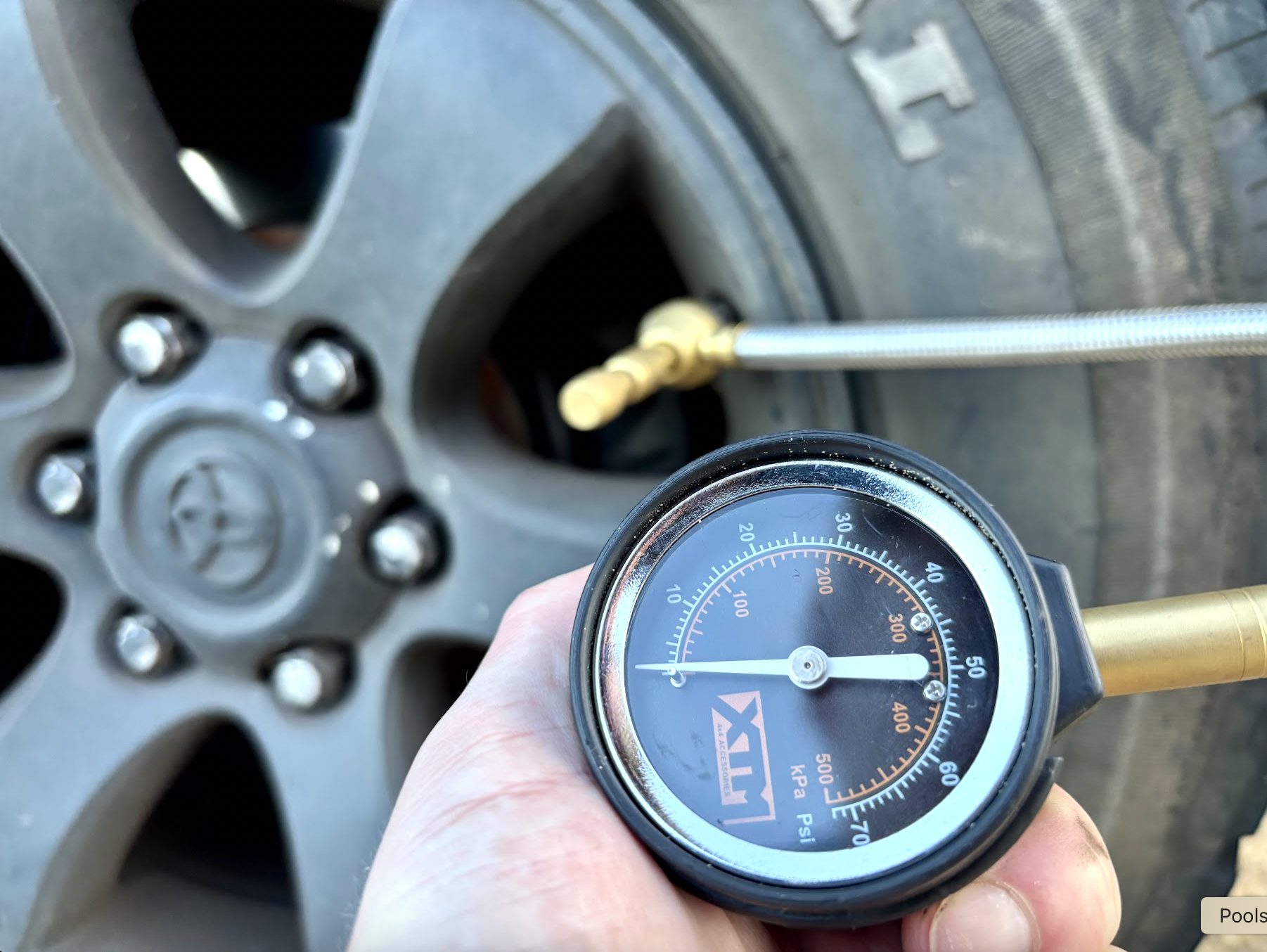
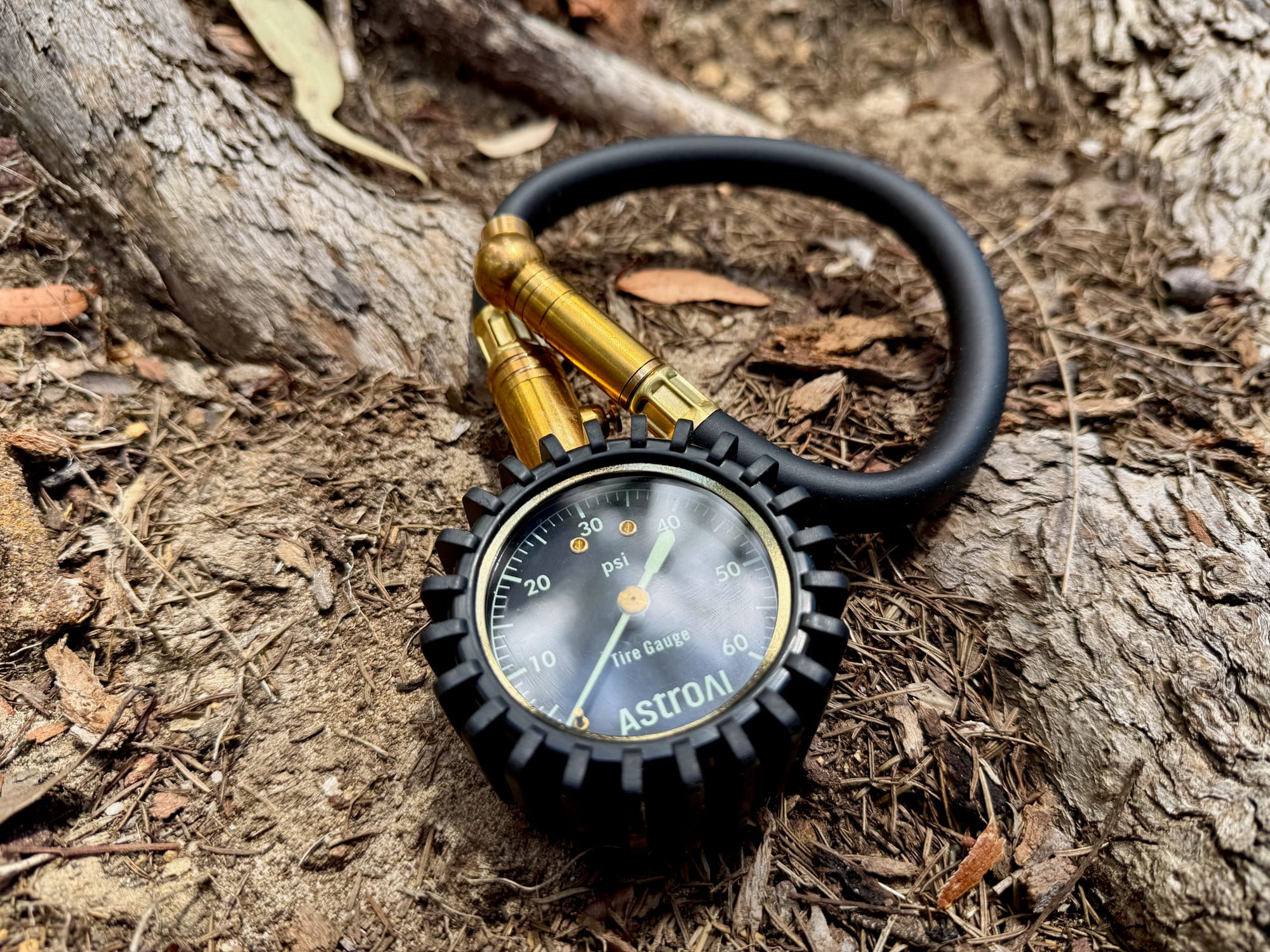
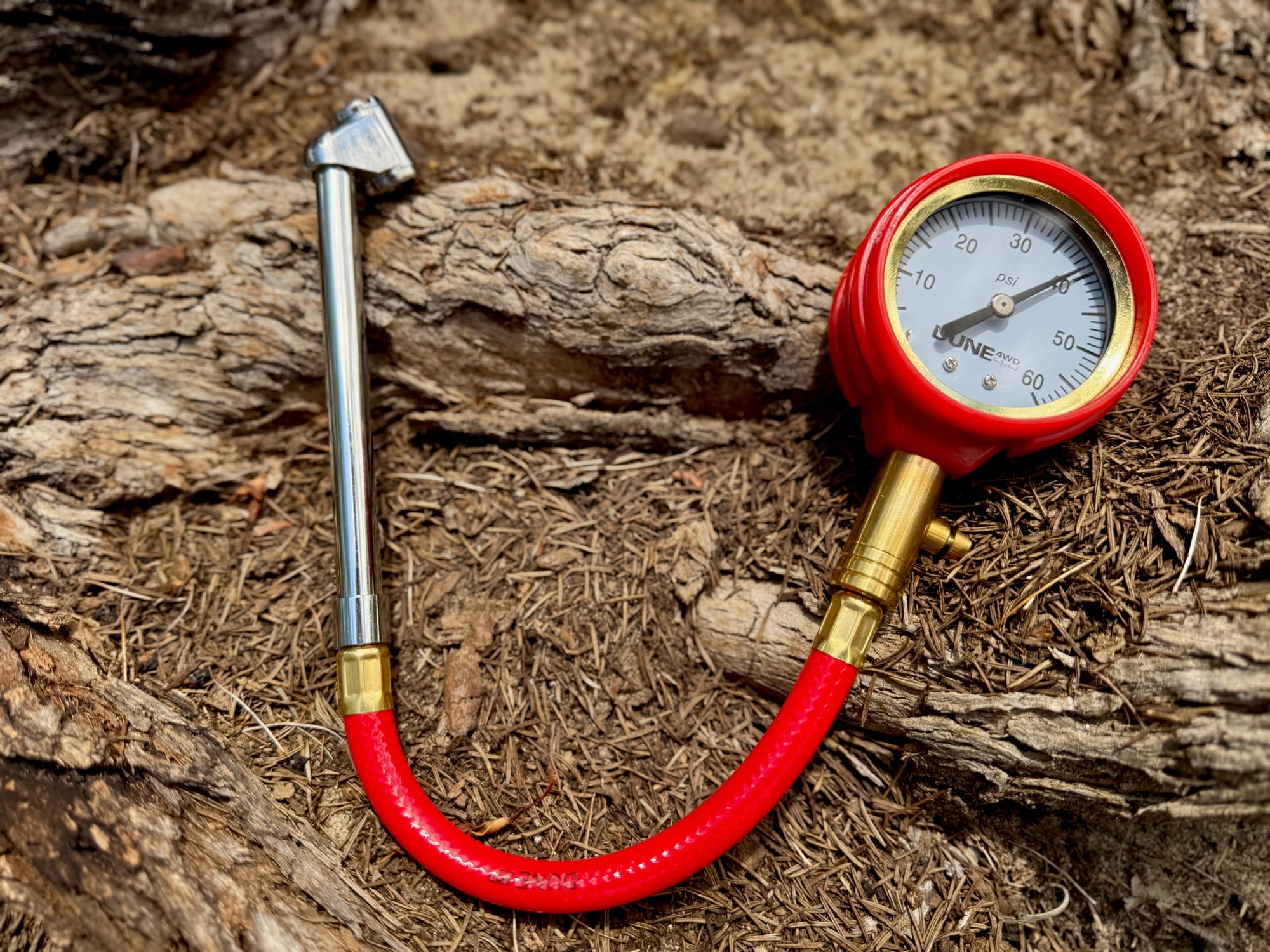
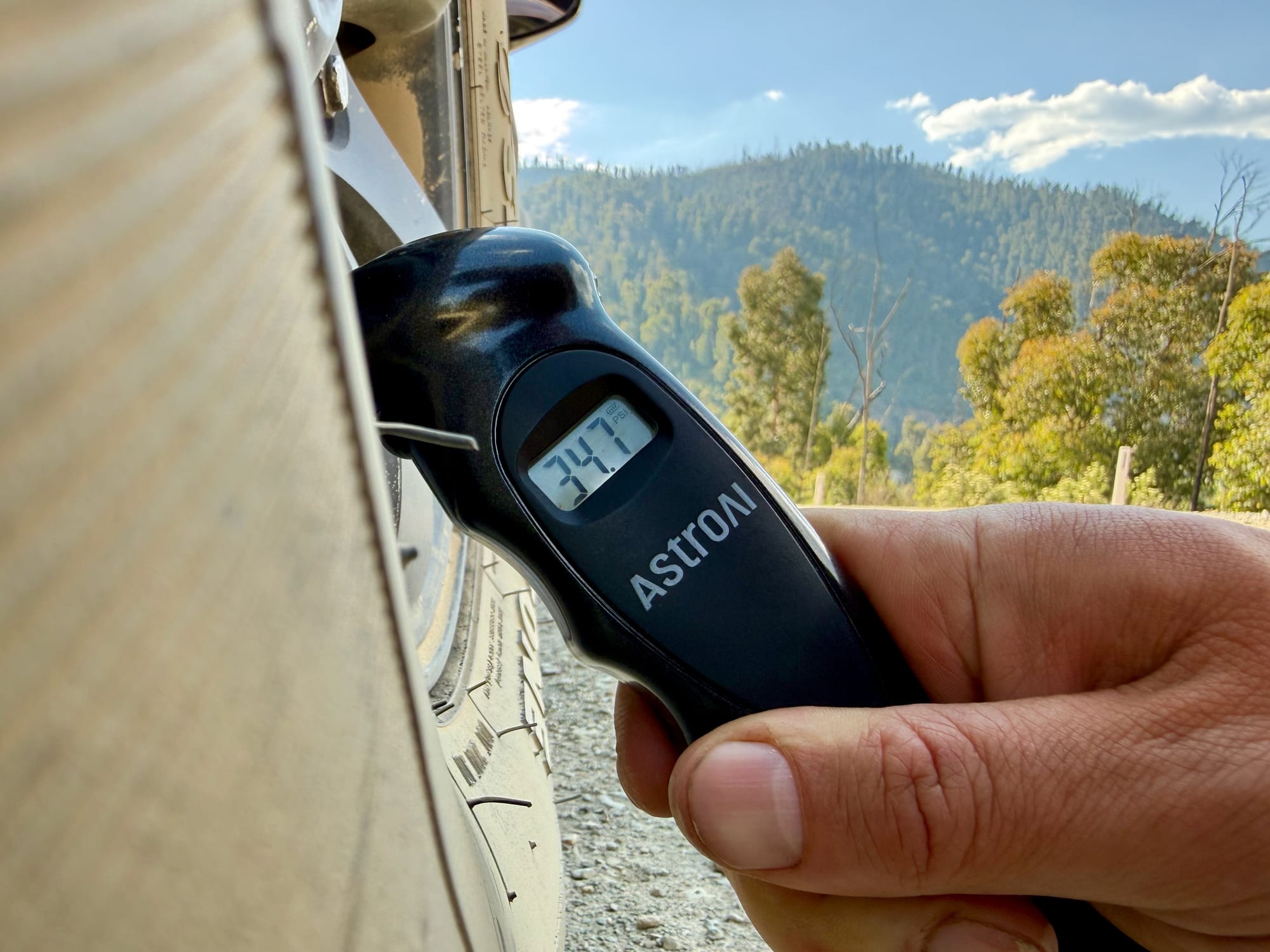
This is the fiddly part, and the reason the Staun scores lower than newer sets for ease of use. They’re set by hand and there’s no scale to dial in. You let one tyre down to your target with a separate pressure gauge, wind the cap and locking ring fully in and screw a deflator on. Then you slowly back the cap off until air hisses, turn it back until it stops, and lock the ring against the cap. Doing all four takes a while. Our guide to setting Staun deflators goes through it step by step, with photos. Once they’re set, they stay set.
On the tyres
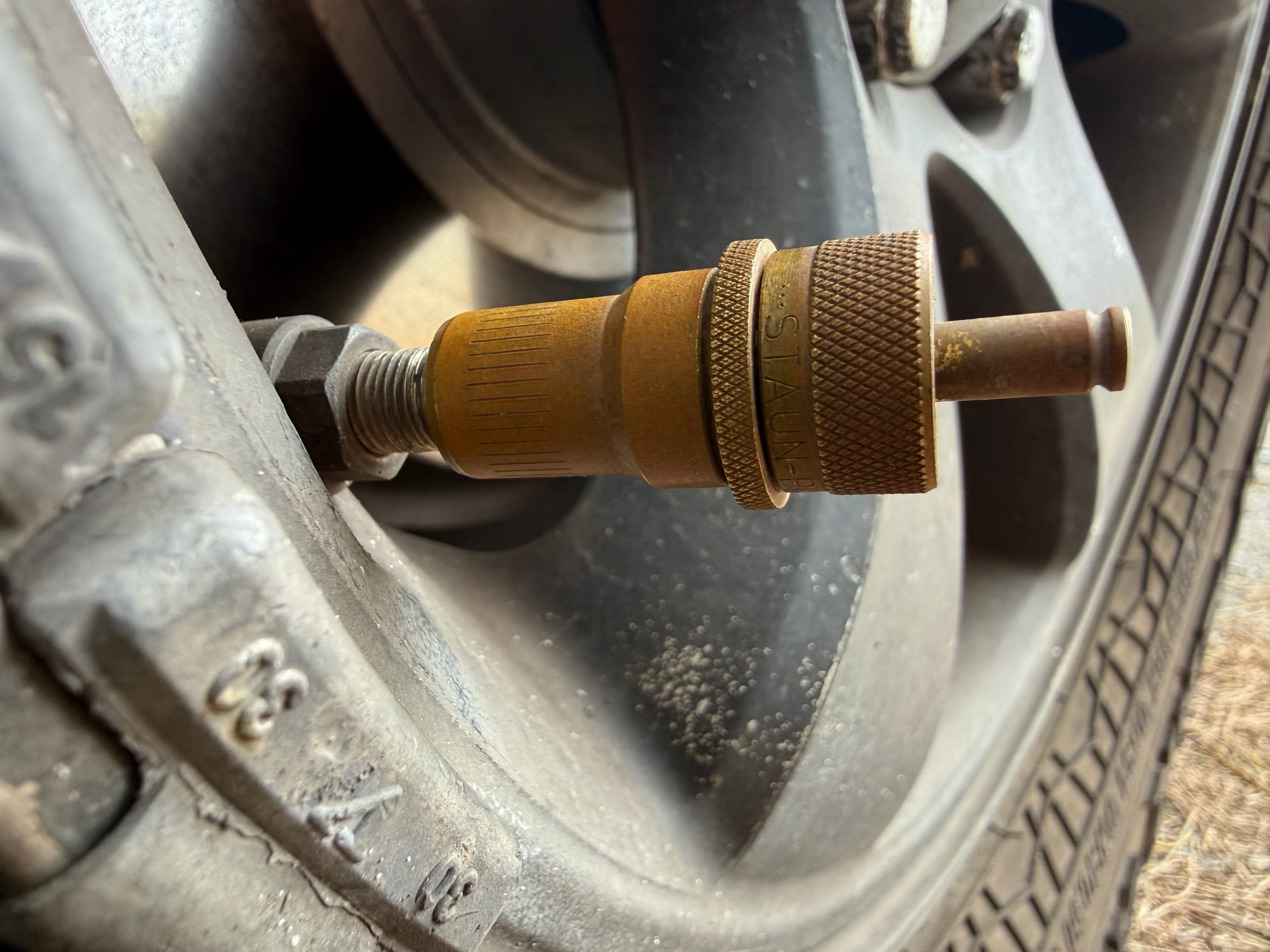
Screw all four on and walk away: each deflator lets air out until its tyre reaches the set pressure, then shuts off. The result is the real strength of the Staun: all four tyres end up at the same pressure, far more even than doing it by hand. Here’s the range they cover.
- Range
6–30 PSI
Set them anywhere in that range, by hand, with a gauge.
- Factory preset
18 PSI
Out of the box they stop at 18 PSI, until you reset them to your own pressure.
- Below 12 PSI
Start by hand
At very low pressures, you lift the pin inside by hand to get the air flowing.
Build and carry
Brass doesn’t rust, so they handle beach driving and muddy tracks, and the knurled bodies grip well with dusty fingers. The leather pouch protects them and keeps them together, and at 146 g the set lives in the glovebox. After a sandy day, unscrew them and rinse out the grit.
Deflators compared
We also use the KickAss Tyre Deflator Set and the CampBoss Boss Air set. Both are easier to set than the Staun. The KickAss cost less but only goes down to 10 PSI; the CampBoss goes down to 5 PSI and is our top-rated set. Our tyre deflators guide compares all the deflators and gauges we’ve tested.
This one Staun Deflators |  CampBoss Boss Air | 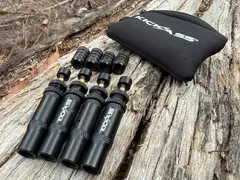 KickAss Deflators | |
|---|---|---|---|
| Easy to set | No | Yes | Yes |
| Type | Automatic × 4 | Automatic × 4 | Automatic × 4 |
| Range | 6–30 PSI | 5–30 PSI | 10–30 PSI |
| Weight | 146 g | 114 g | 133 g |
| Price paid | $80 | $90 | $50 |
| Our score | 9.3 | 9.5 | 9.3 |
Conclusion: Staun Tyre DeflatorsConclusion
The Staun Tyre Deflators are tough, all-brass automatic deflators that leave all four tyres at the same pressure, adjustable from 6 to 30 PSI and 146 g in a leather pouch. Setting them takes a separate gauge and some patience, and below 12 PSI you start them by hand. I paid $80; once they’re set, they’re a set you’ll keep for years.
Tough brass deflators that leave all four tyres at the same pressure.
Set them once and screw them on: they adjust from 6 to 30 PSI, weigh 146 g in a leather pouch and will last for years. Setting them takes a separate gauge and patience, there's no scale, and below 12 PSI you start them by hand.
- 4WD tourers
- Beach & picnics
- Travellers
Yes, if you don't mind the first setting. I paid $80 for a set of brass deflators that will last for years. Newer sets with a scale are easier to set.