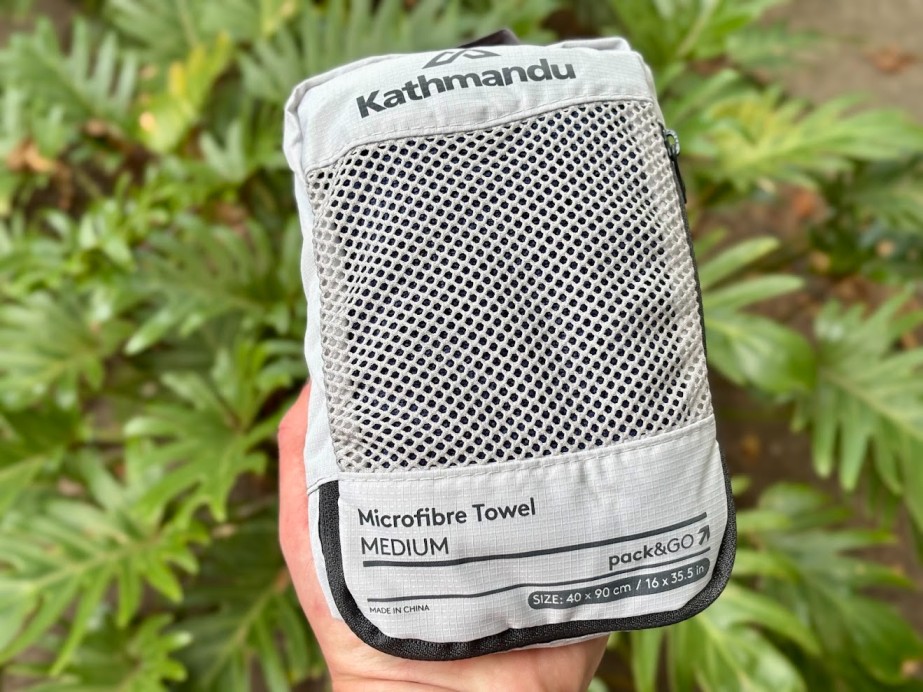
A cotton towel is heavy, takes up half a drawer and takes days to dry at camp. The Kathmandu microfibre towel is the opposite: the medium size we use is 40 × 90 cm, weighs 107 g with its pouch on our scale and folds into a zip pouch the size of a phone. We paid $40 for it, and it’s our everyday towel on camping trips.
What’s in the box
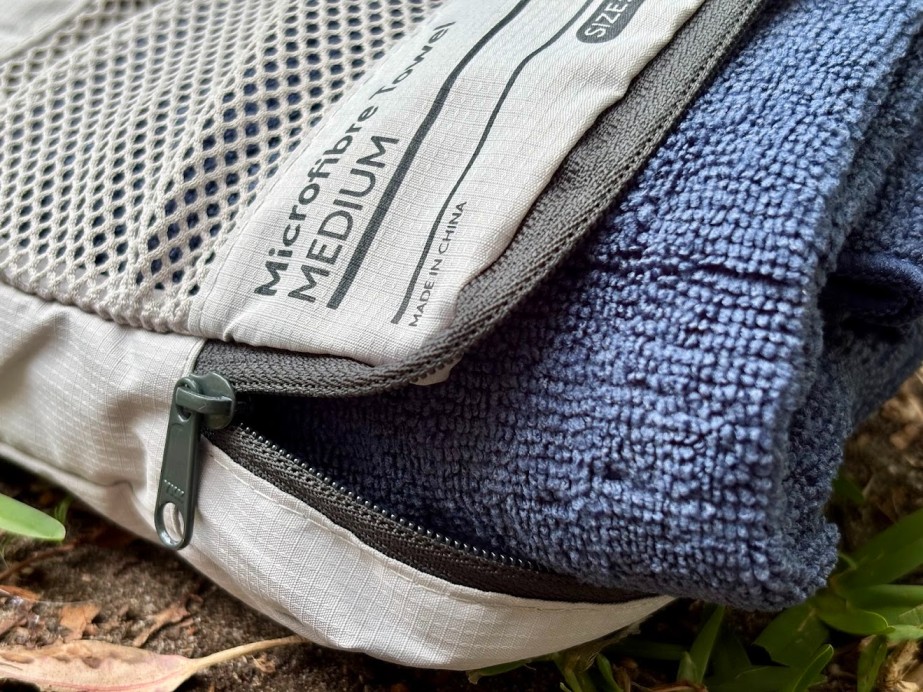
A dark blue microfibre towel of 40 × 90 cm in 88% polyester and 12% nylon, with a hanging loop, in a light grey zip pouch with a mesh front so it can breathe. It’s part of Kathmandu’s pack&GO range.
What we like
- Only 107 g with pouch
- Packs to 17 × 12 × 3 cm
- Dries in under an hour
- Big enough for a shower
- Soft, looped fabric
- Good zip pouch with mesh
What we don’t
- Pat dry, don’t rub
- A bit rubbery on wet skin
- Dark blue shows lint
Quick Specs
| Spec | Details |
|---|---|
| Brand | Kathmandu |
| Material | 88% polyester12% nylon |
| Colour | Dark blue |
| Weight | 107 gwith pouch |
| Size | 40 × 90 cm |
| Packed size | 17 × 12 × 3 cm |
| Included | Zip pouch |
Size and feel
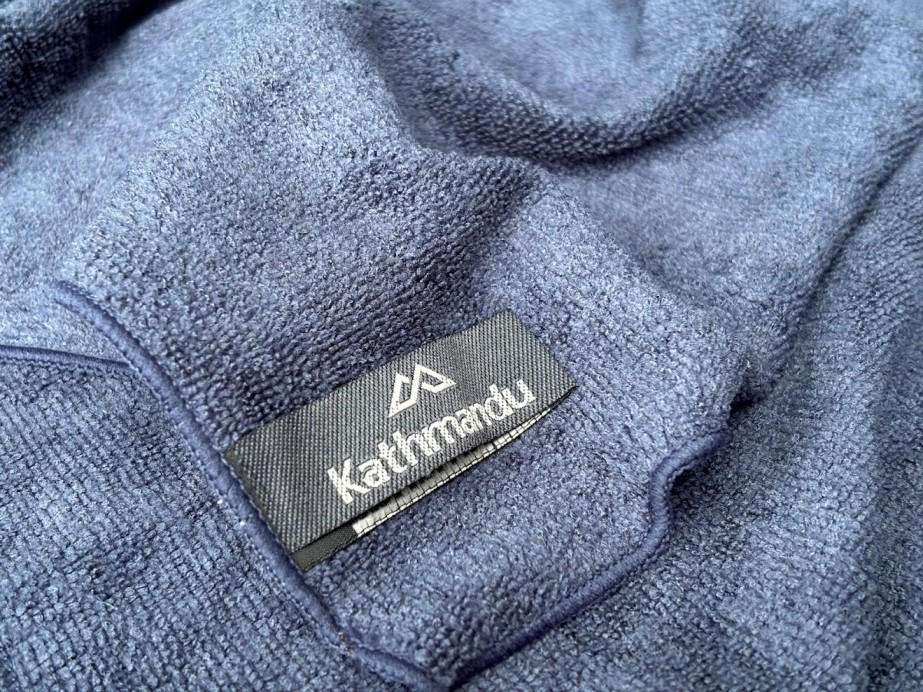
The fabric has a soft, looped texture, closer to a normal towel than the smooth, suede-like microfibre of some travel towels, and the edges are neatly stitched. At 40 × 90 cm the medium size won’t wrap around you like a beach towel, but it’s enough to dry your whole body after a camp shower. It does feel a little rubbery on wet skin, as microfibre does, and the dark blue shows lint easily.
Drying
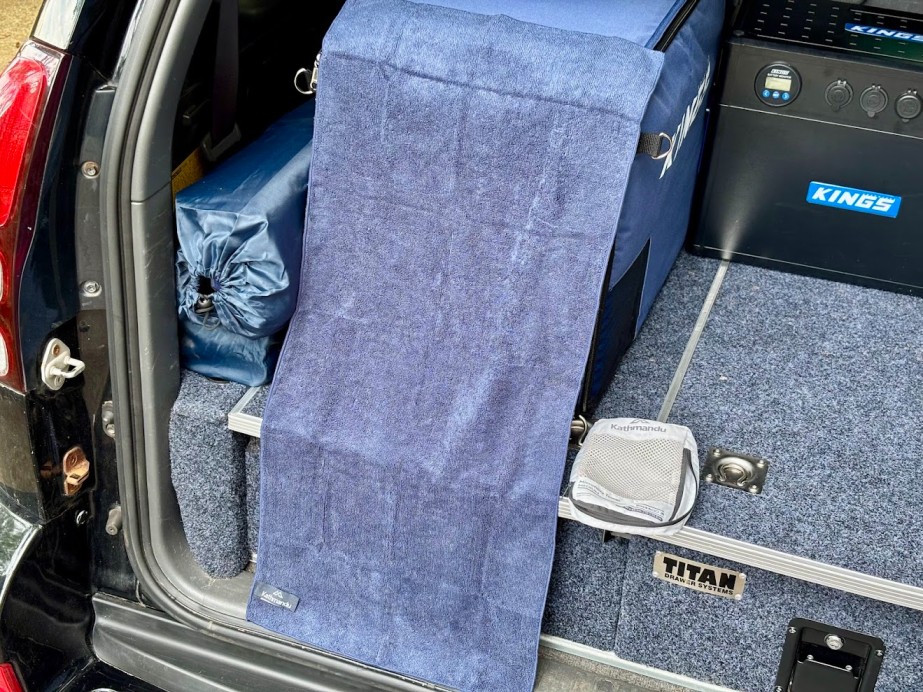
Microfibre works best when you pat or press yourself dry rather than rub, and then it soaks up water quickly. The real win is how fast it dries again: in decent weather it goes from wet to dry in well under an hour, so after a morning wash it’s ready to pack before breakfast is done, without the damp smell of cotton. At camp we hang it over the fridge in the back of the car, or from a line by its loop.
Weight and packing
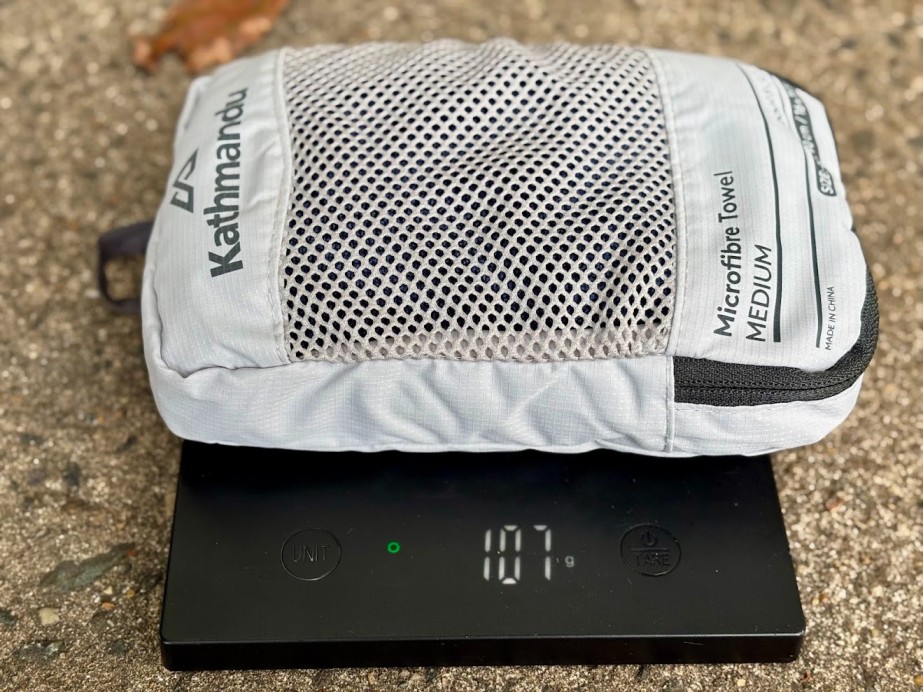
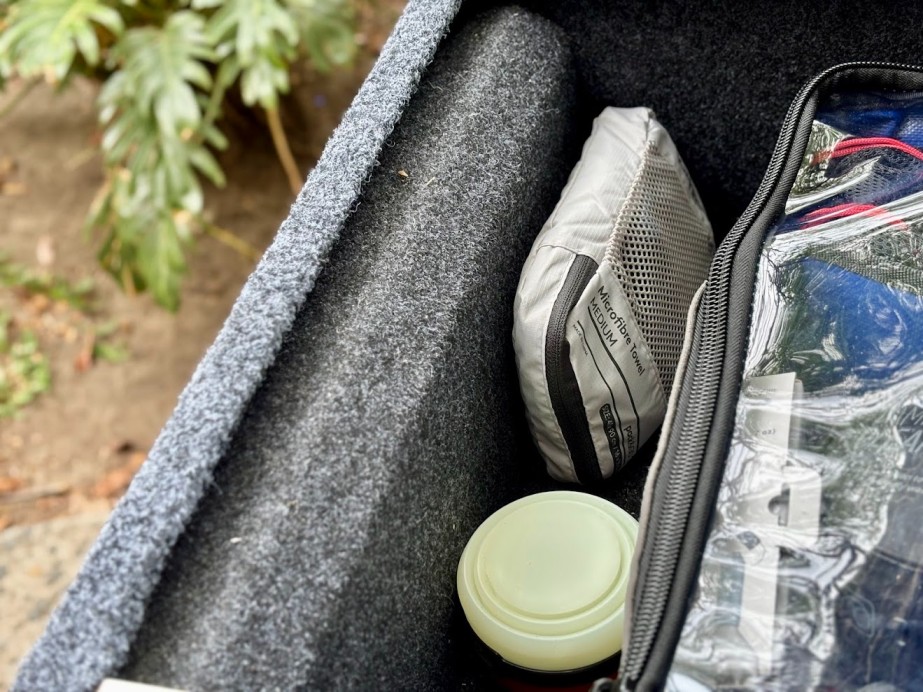
At 107 g with the pouch, you won’t notice it in a backpack, and packed it measures 17 × 12 × 3 cm. The pouch is well made and the right size, so you don’t have to fight to get the towel back in, and the mesh lets it air. Ours lives in the drawer in the back of the Prado, where it takes up about as much room as a phone.

Kathmandu or a bigger towel?
The Kathmandu is the light, compact choice. If you want a towel big enough to wrap around you, the Rainleaf is 122 × 61 cm for less money, and the Sea to Summit Tek Towel feels the most like a normal towel. Our camping towels guide compares all four we’ve tested.
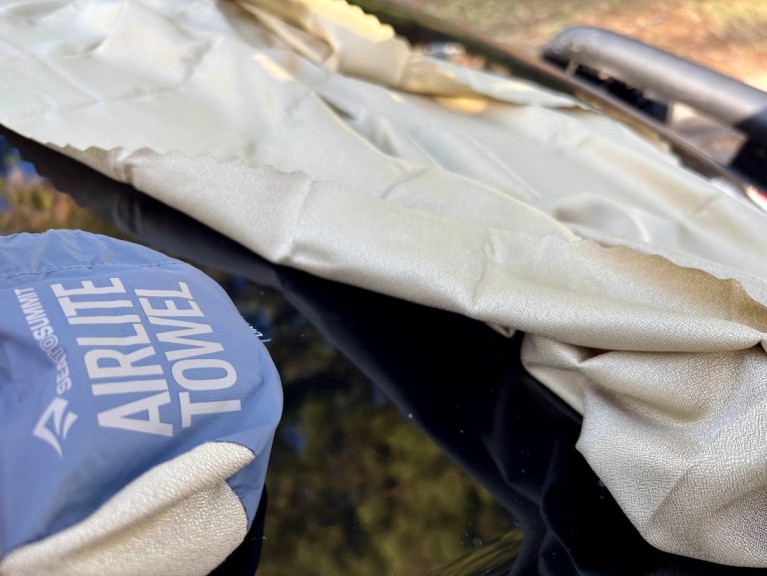
Here’s how it compares with the two Sea to Summit towels we’ve tested (weights on our scale, with the pouch or case):
This one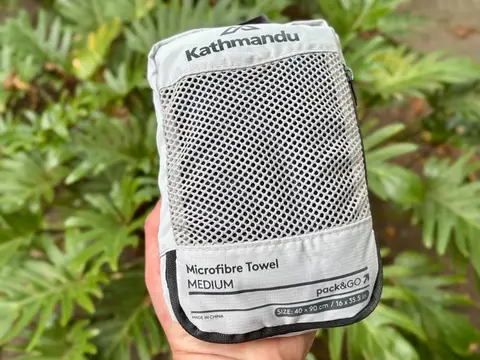 Kathmandu Towel | 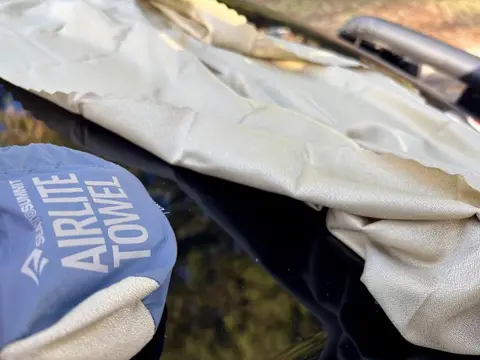 Airlite Towel |  Tek Towel | |
|---|---|---|---|
| Size | 90 × 40 cm | 120 × 60 cm | 120 × 60 cm |
| Feel | Soft, looped | Very thin | Thick, soft |
| Comes in | Zip pouch | Stuff sack | Zip case |
| Weight | 107 g | 67 g | 303 g |
| Price paid | $40 | $30 | $40 |
| Our score | 9.3 | 8.6 | 8.7 |
Conclusion: Kathmandu Microfibre TowelConclusion
The Kathmandu microfibre towel does what it says: a useful 40 × 90 cm towel that weighs 107 g with its pouch, dries in well under an hour and packs to the size of a phone. You pat dry rather than rub, it feels a little rubbery on wet skin and the dark blue shows lint. For $40, it’s the towel we take on every trip.
The towel we take on every trip.
At 40 × 90 cm and 107 g with its pouch, it dries in well under an hour and packs to the size of a phone. You pat dry rather than rub, it feels a little rubbery on wet skin and the dark blue shows lint.
- Hikers
- Backpackers
- Travellers
Yes. I paid $40 for a towel that weighs 107 g, dries far faster than cotton and packs into a small zip pouch. You pat dry rather than rub.