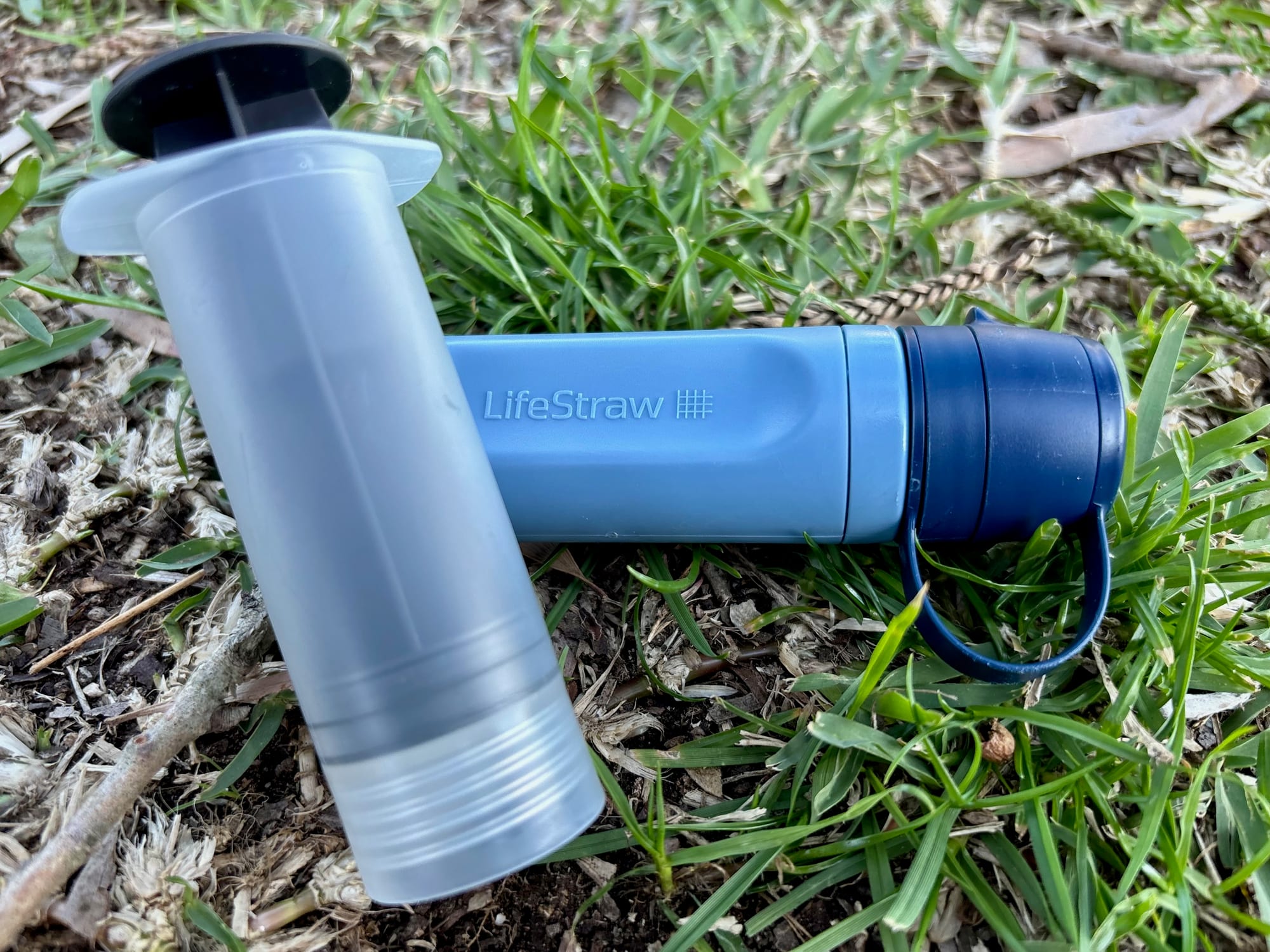
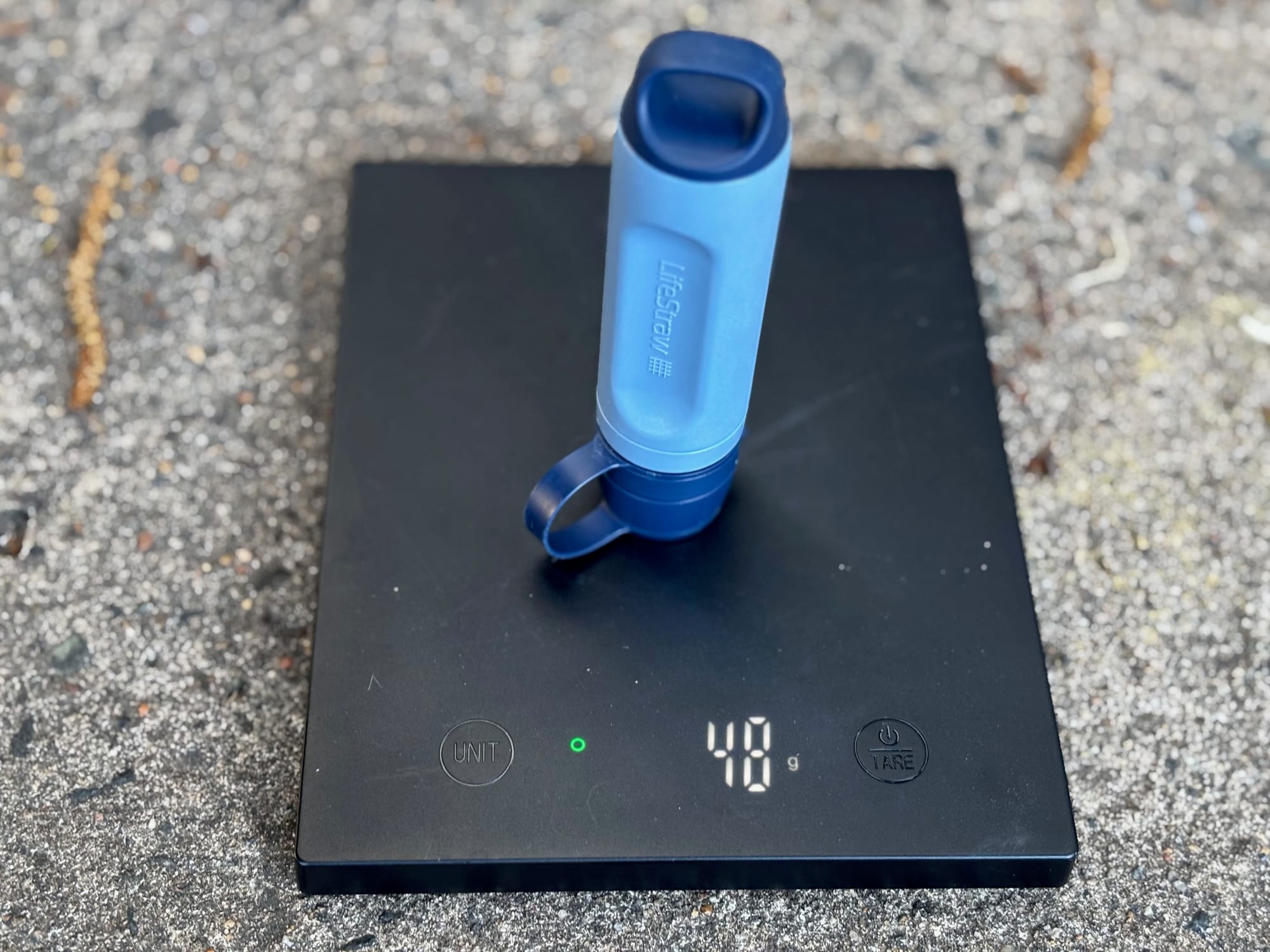
The LifeStraw Peak Solo is a small water filter that screws onto a standard water bottle, so you can fill up from a creek or a tank and drink straight away. It weighed 48 g on our scale. Unlike the original LifeStraw, which you had to drink through straight from the creek, it’s made to sit on a bottle: squeeze the water through, sip from it, or use it as a straw if you have to. We keep it in the back of the car, where it takes up no space at all. I paid $50 for it.
What You’re Getting
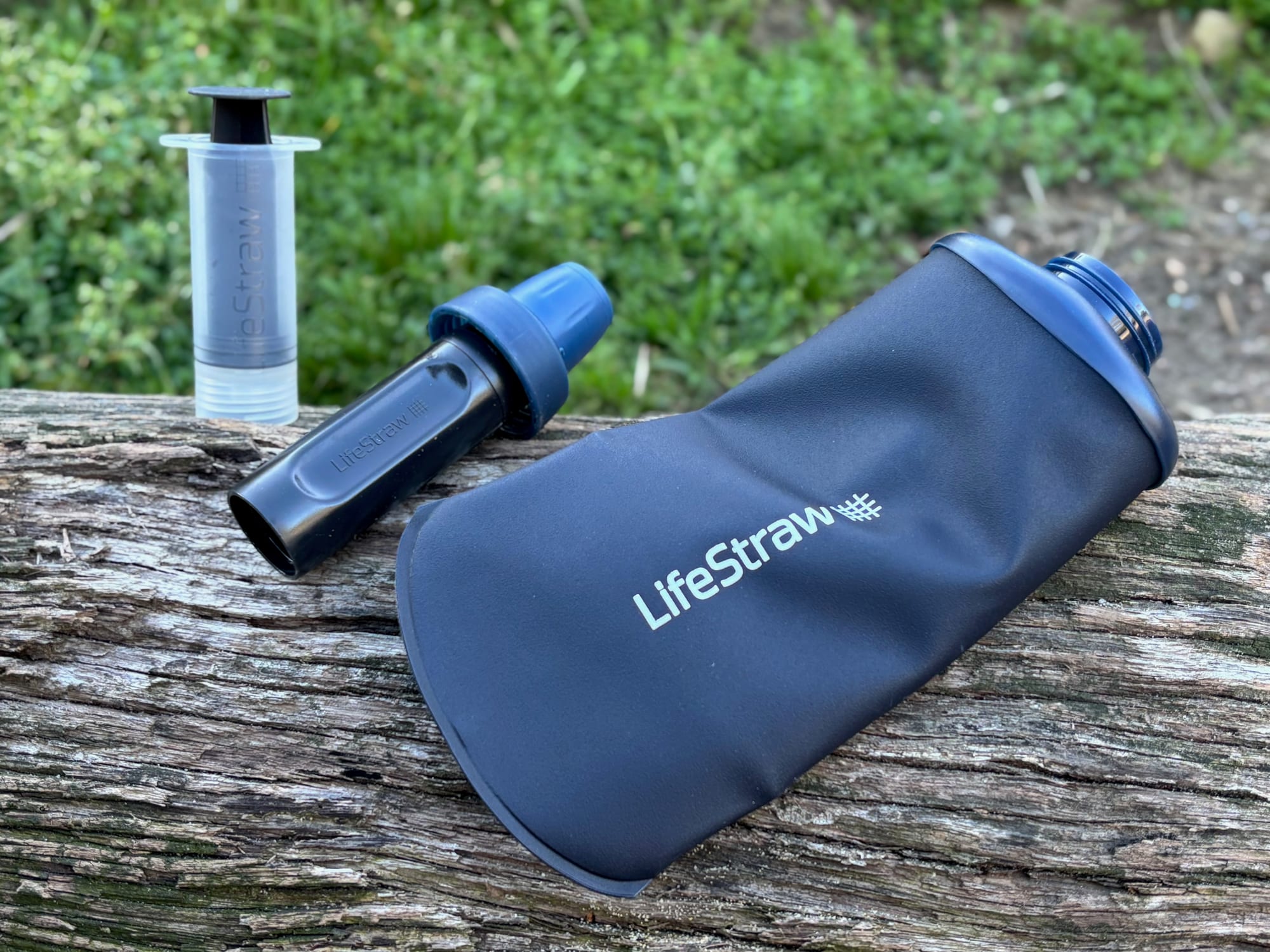
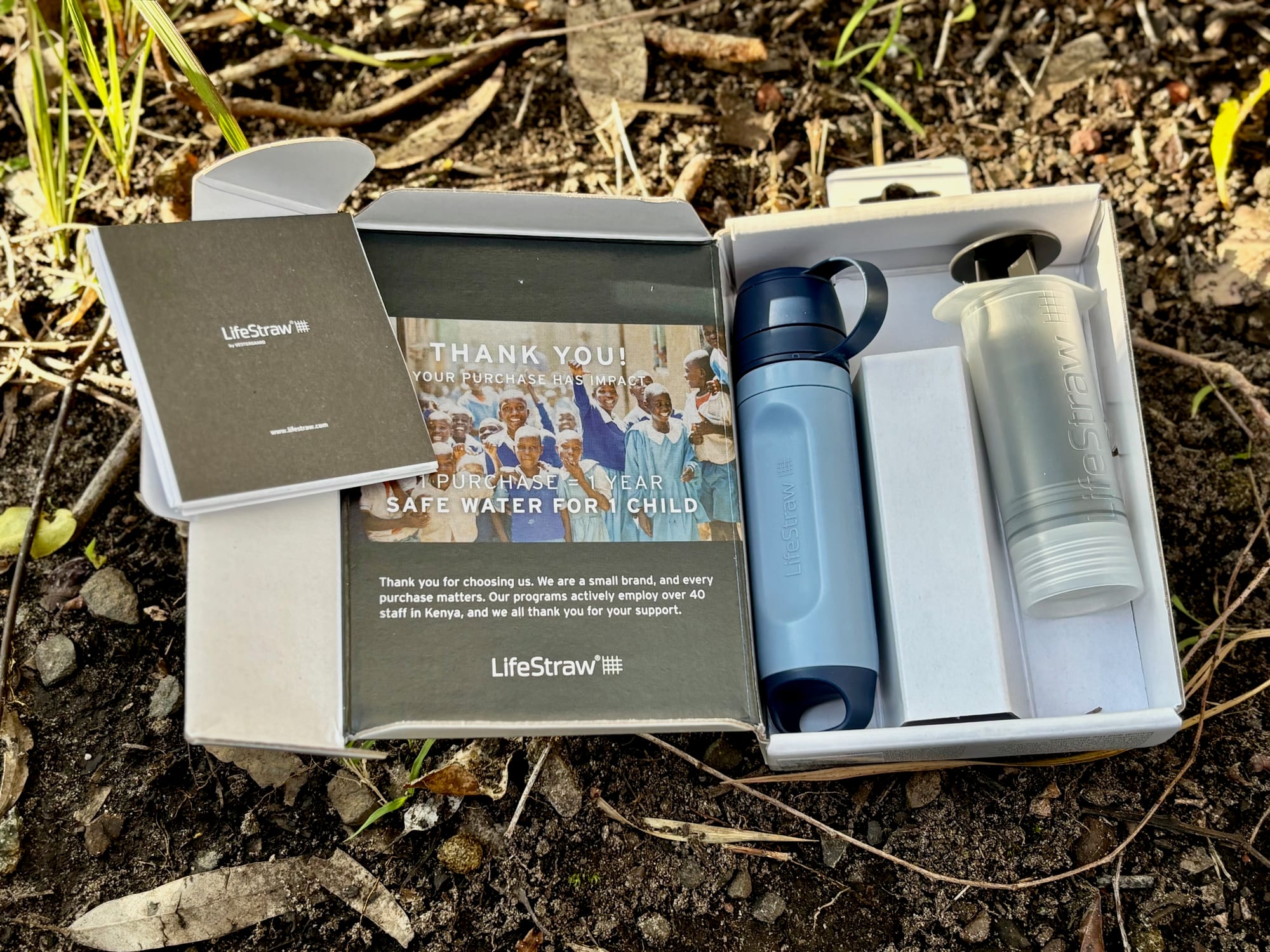
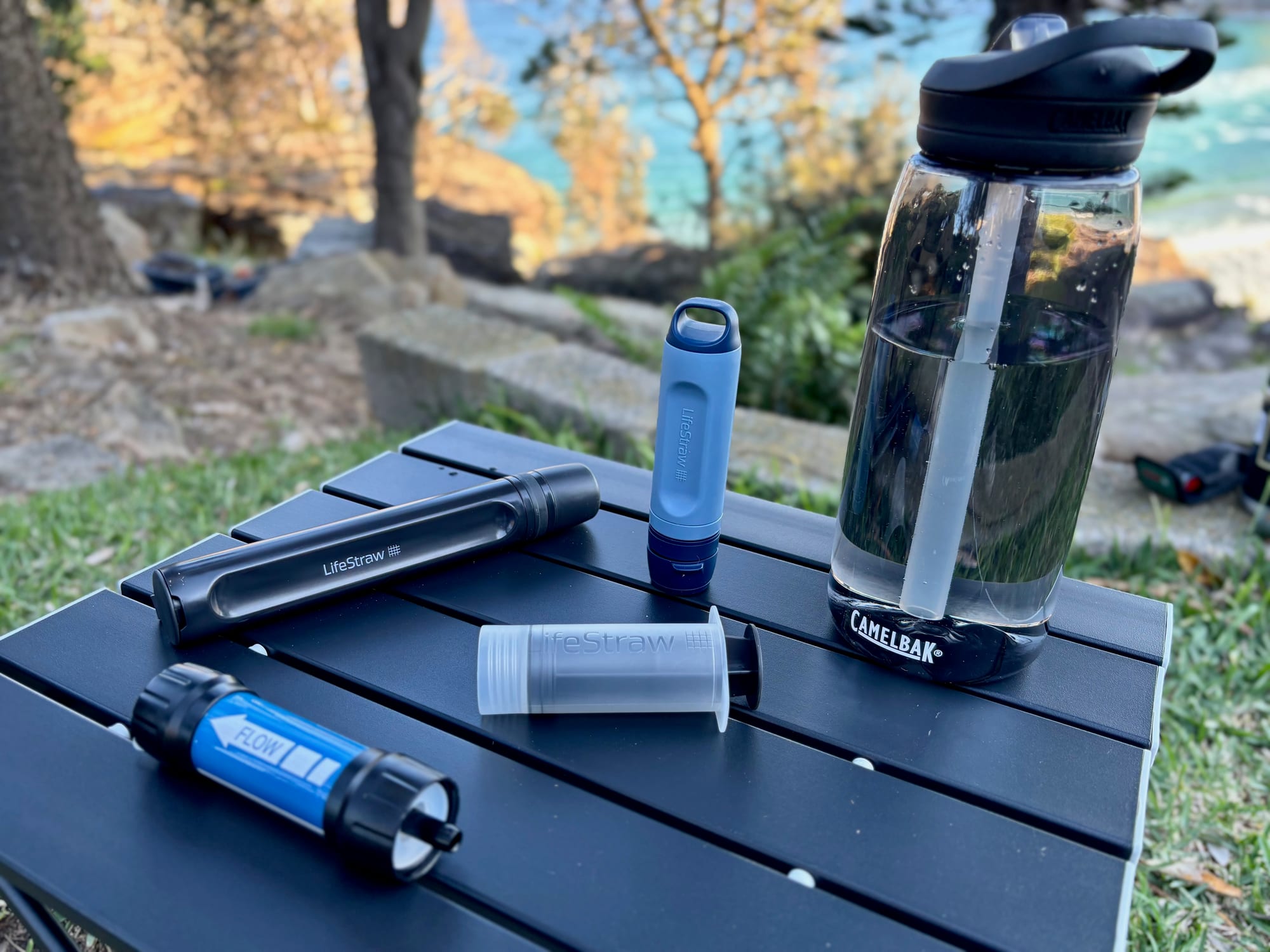
A short blue filter with a dark blue cap on top, a cap with a carry loop on the bottom, and a clear backwash syringe. The box sums it up as a filter that removes bacteria, parasites and microplastics, lasts up to 2,000 litres and weighs 48 g, which is exactly what it weighed on our scale.
What we like
- 48 g, fits in a pocket
- Squeeze, sip or use as a straw
- Flows up to 3 L a minute
- Leakproof caps on both ends
- Blocks water when it's used up
- Backwash syringe included
What we don’t
- No virus or chemical protection
- Squeezed bottles collapse
- Half the life of the Peak straw
Quick Specs
| Spec | Details |
|---|---|
| Brand | LifeStraw |
| Weight | 48 g |
| Filter | 0.2 micron membrane microfilter |
| Removes | BacteriaParasitesMicroplastics |
| Flow rate | Up to 3 L a minute |
| Filter life | Up to 2,000 LThen blocks |
| Fits | Standard 28 mm bottle thread |
| Included | Top and bottom capsBackwash syringe |
On a water bottle
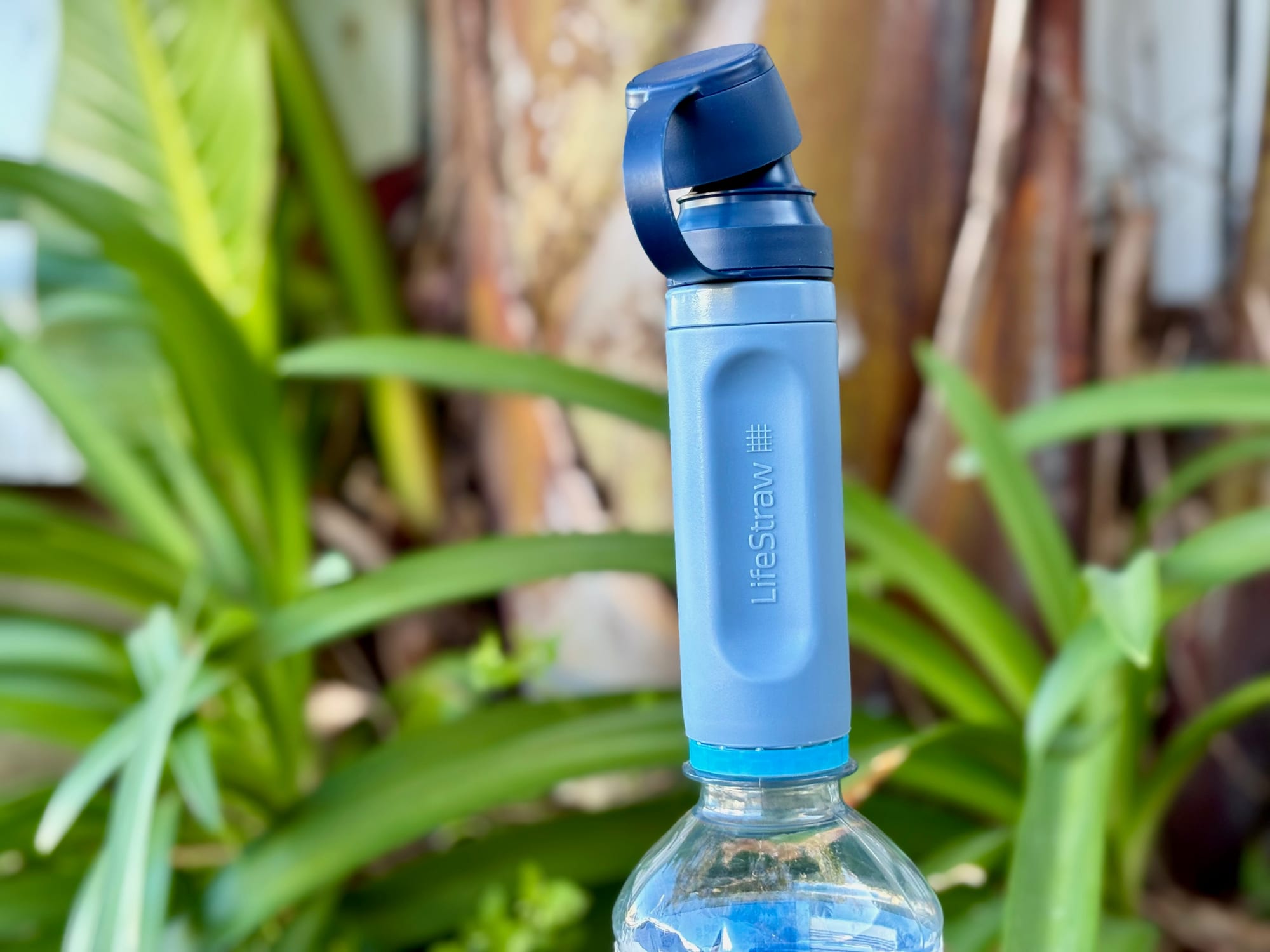
The bottom of the filter has a standard 28 mm thread, the same as most plastic drink bottles. Fill the bottle from the creek, screw the Peak Solo on, flip the top cap open and drink from the bottle, or squeeze the water through into a pot or another bottle. The flow is fast, up to 3 litres a minute, so a one-litre bottle squeezes through in about 20 seconds, with much less effort than older LifeStraws or smaller filters. One catch: a rigid plastic bottle collapses as you squeeze, so you have to unscrew the filter a little now and then to let air back in. And the 28 mm thread won’t fit wide-mouth bottles or some soft flasks.
The filter inside
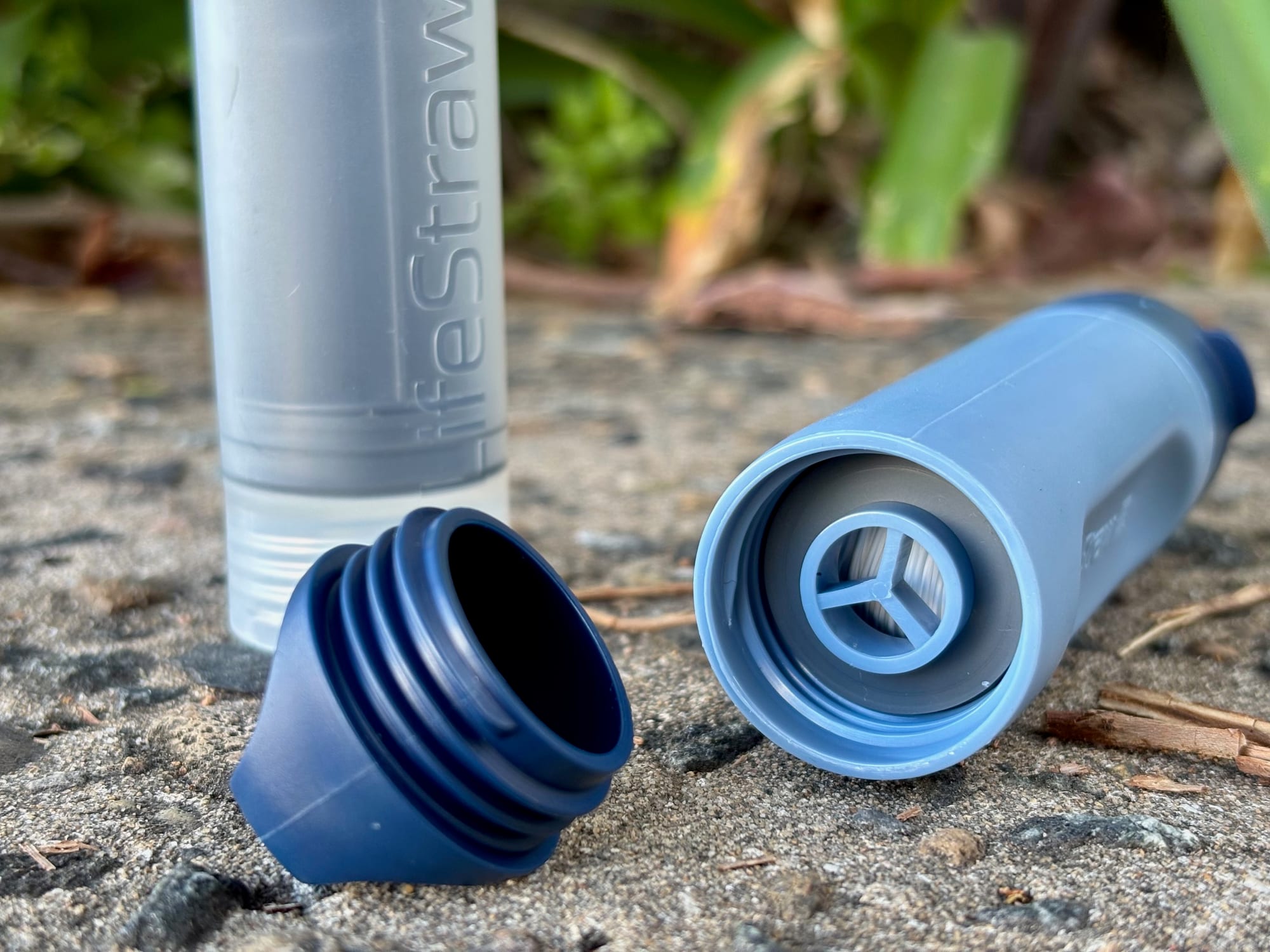
Inside the blue body is the membrane microfilter, which you can see when you take the bottom cap off. The 0.2 micron membrane removes 99.999999% of bacteria like E. coli and salmonella, 99.999% of parasites like Giardia and Cryptosporidium, and microplastics, sand and dirt. It doesn’t remove viruses, heavy metals, chemicals or salt, so it’s for creeks, rivers and tanks: not seawater, and not water near heavy industrial runoff.
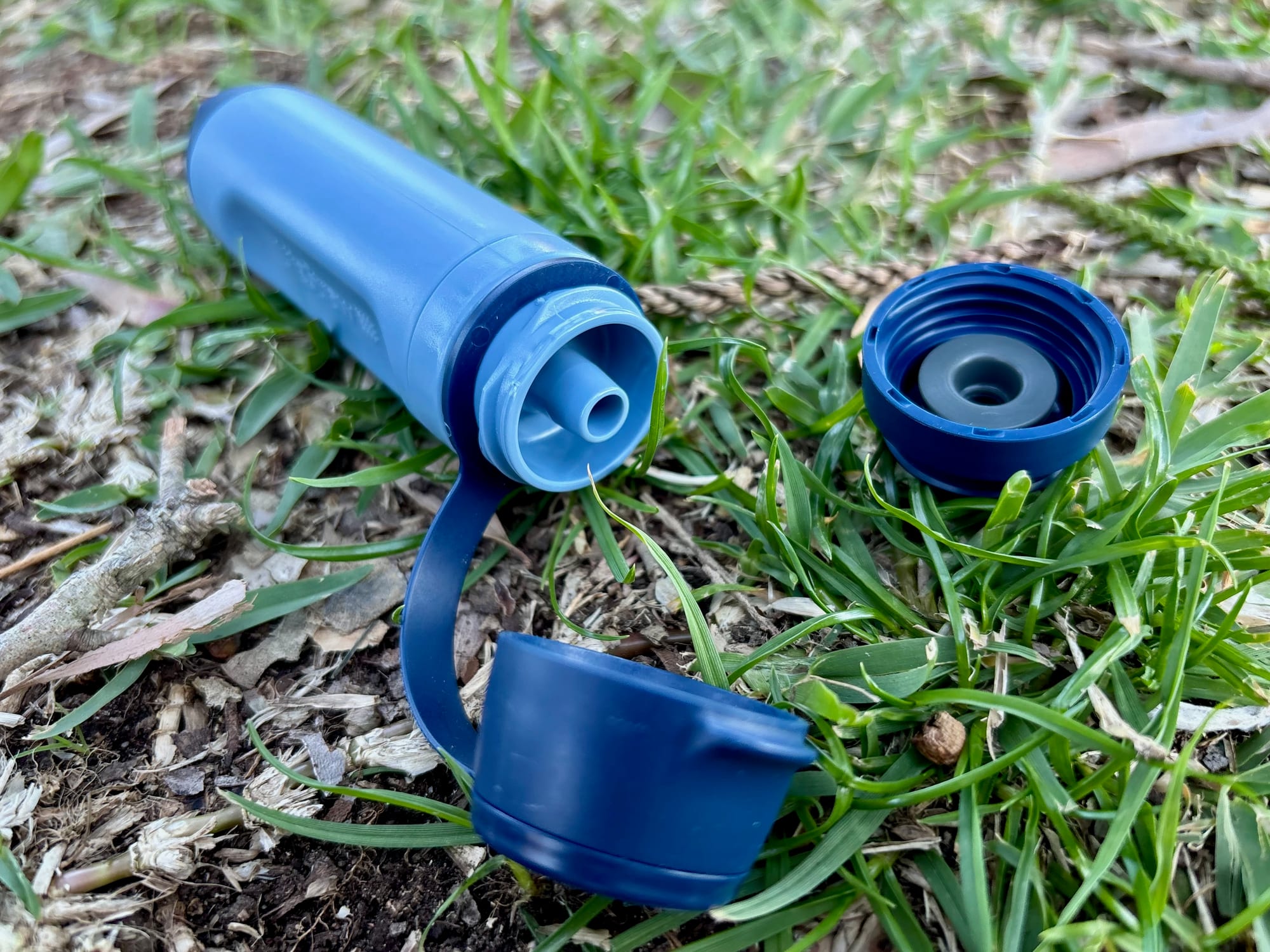
As a straw
You can also drink through it like a straw, straight from a creek or a puddle, without a bottle. It’s short, though, so you have to get right down to the ground, more or less lying flat, to reach the water. That works in a pinch, but screwed onto a bottle is the easier way to use it.
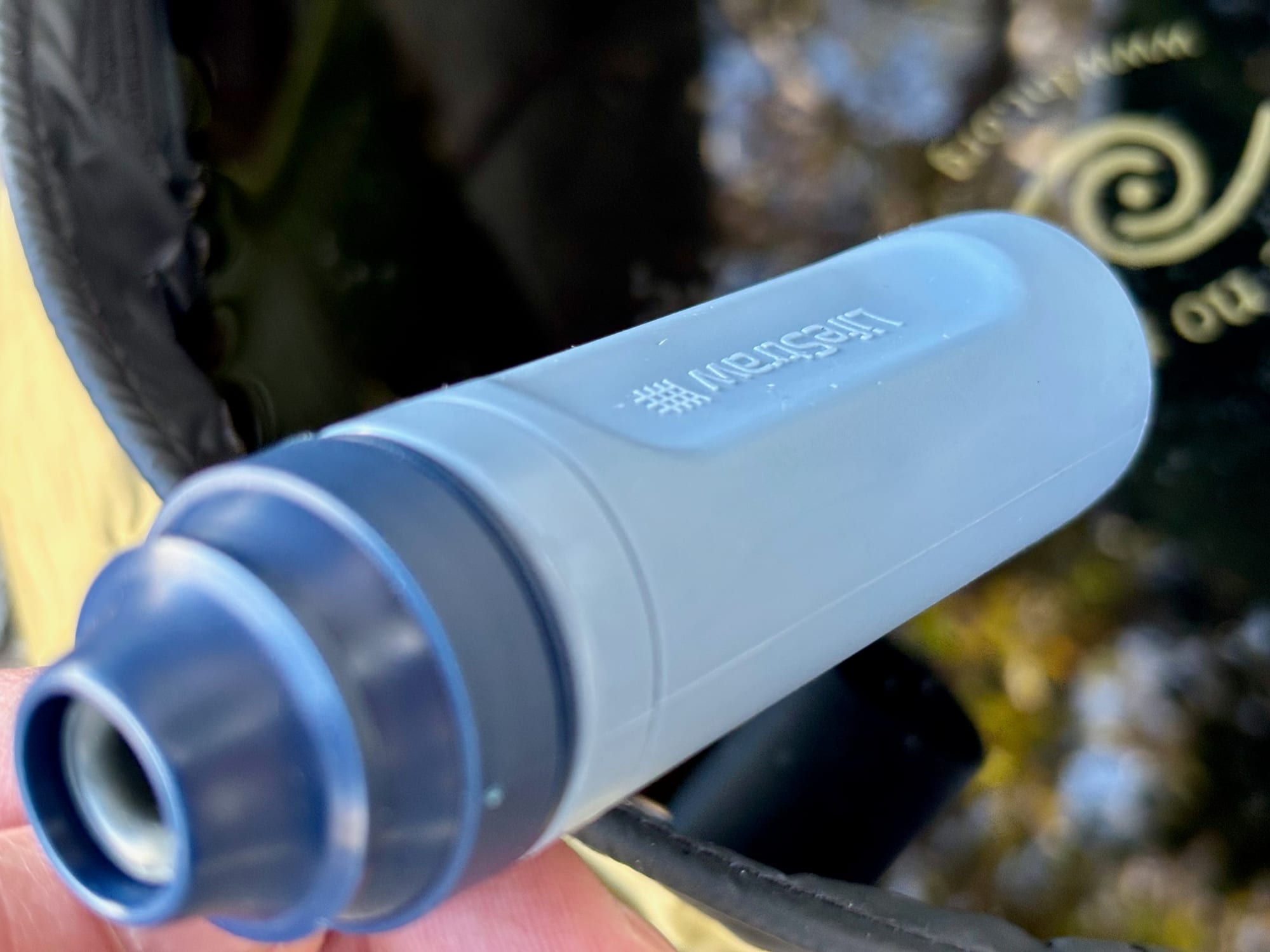
Backwashing
Over time the membrane clogs with dirt and the flow slows down. The syringe that comes with it fixes that: fill it with clean water, push it through the filter backwards, and the dirt washes out. Doing that regularly is what keeps it going for its full 2,000 litres, half the life of the Peak Series straw and far less than the Sawyer Mini. When it’s used up, it blocks the water completely, so you can’t drink dirty water by accident. The leakproof caps on both ends are attached, and they’ve sealed reliably, so no dirty water drips into your bag.
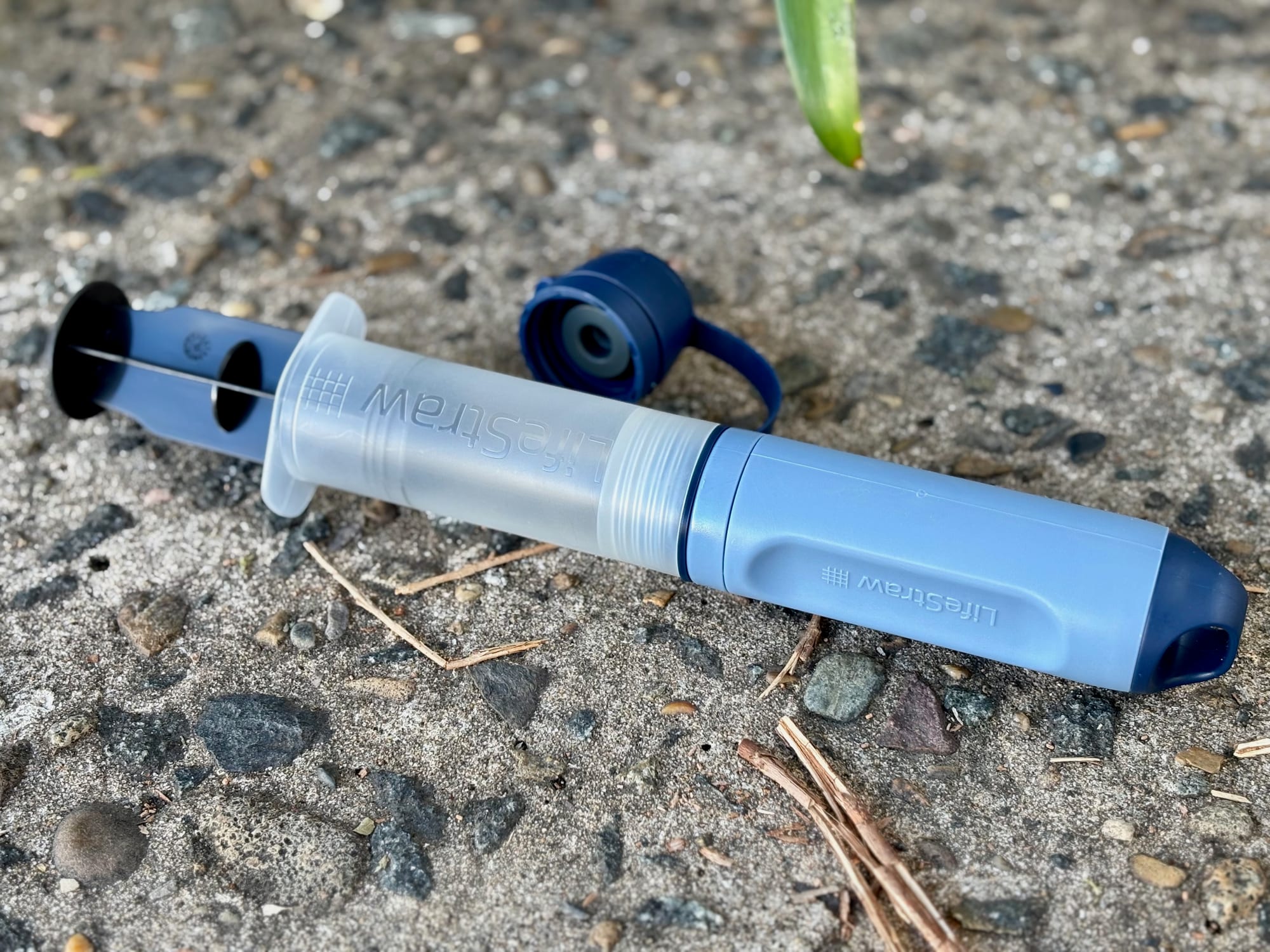
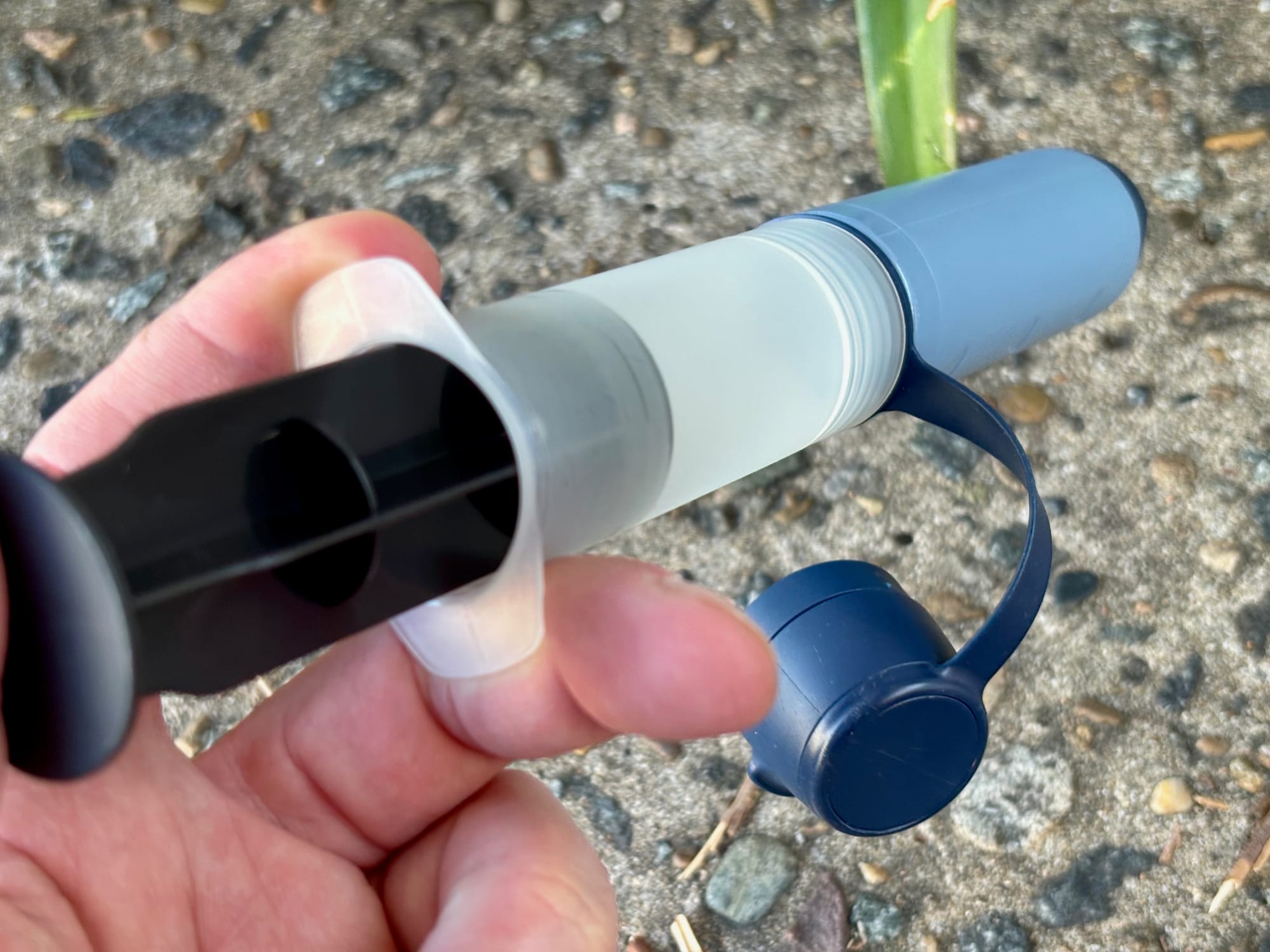
Size and weight
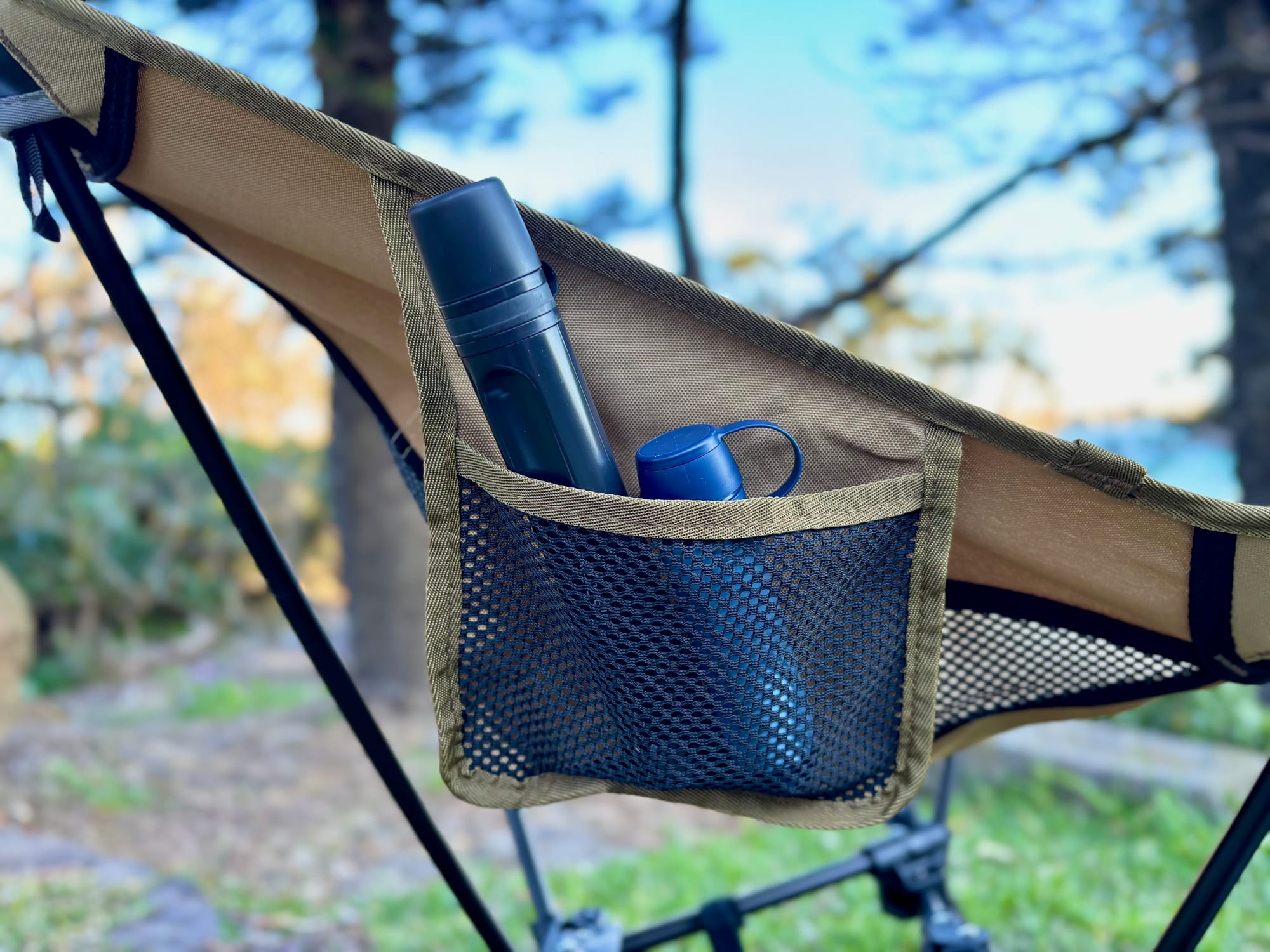
We keep ours in the back of the car: it’s so compact it doesn’t take up any space, and it’s there whenever we find a creek or a tank. At 48 g and about the size of a large marker pen, it also disappears into a pocket, a running vest, the glovebox or a chair’s side pocket at camp. The loop on the bottom cap lets you clip it to a bag.
Peak Solo vs Peak Series straw vs Sawyer MiniVs Peak straw & Sawyer
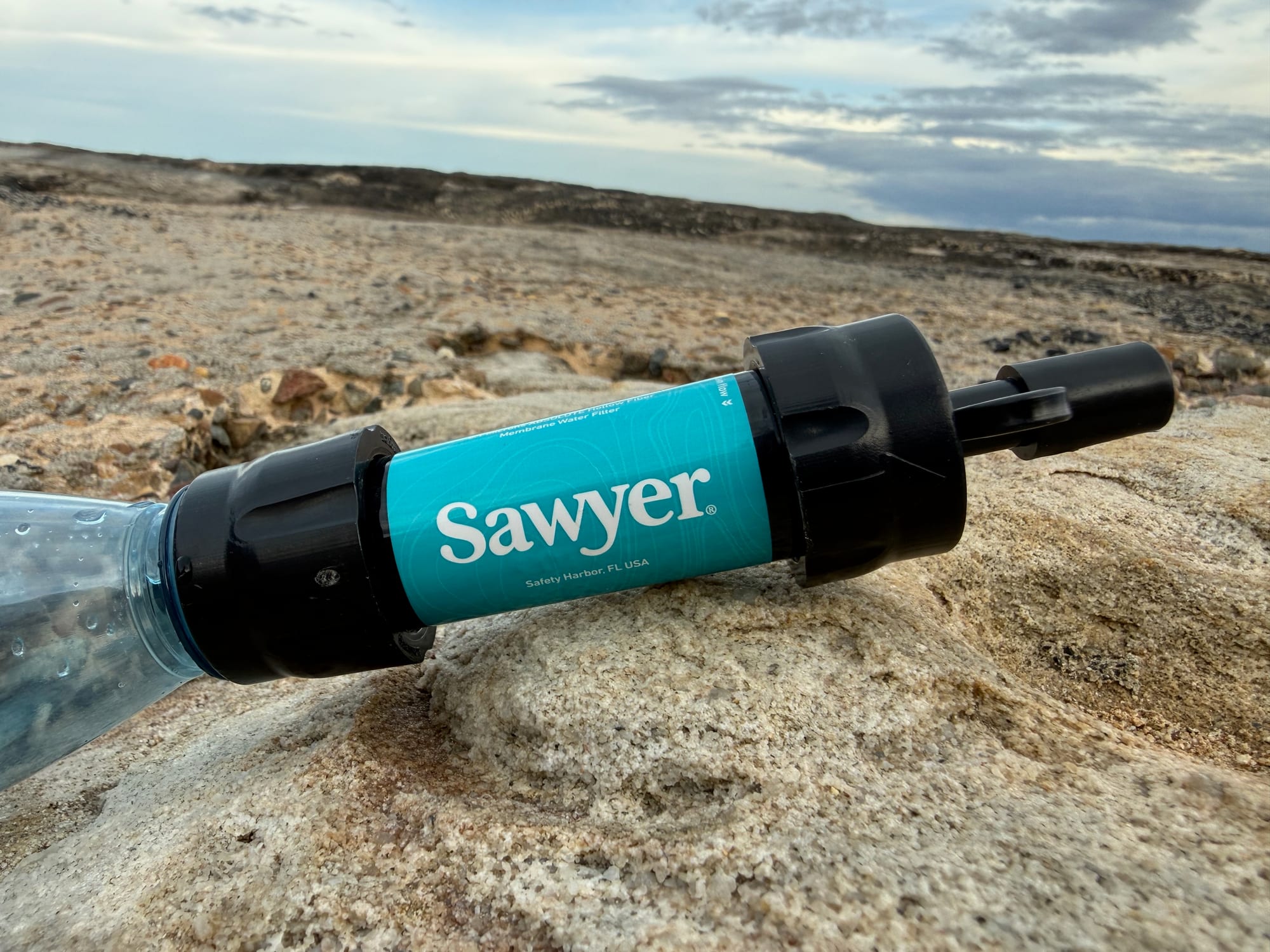
We’ve tested three small filters that screw onto a bottle. The LifeStraw Peak Series straw is longer and heavier, but it lasts twice as long. The Sawyer Mini filters finer: its pores are 0.1 micron against 0.2 micron for the two LifeStraws. That doesn’t change what they stop, as all three remove bacteria and parasites like Giardia, which are bigger than 0.2 micron, and none of them stops viruses. A finer filter does catch a little more of the smallest particles, but it flows more slowly. The Sawyer is also the cheapest and lasts far longer. The Peak Solo is the lightest of the three and flows freely.
This review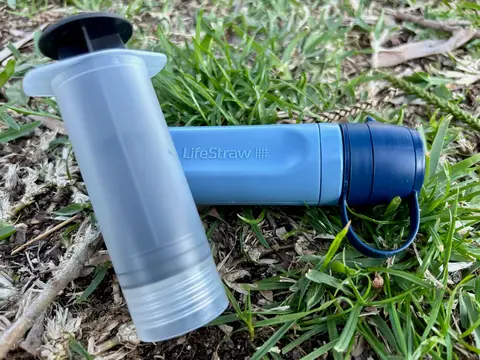 LifeStraw Peak Solo | 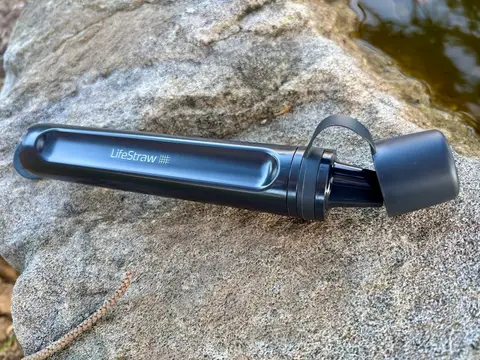 LifeStraw Peak Series straw | 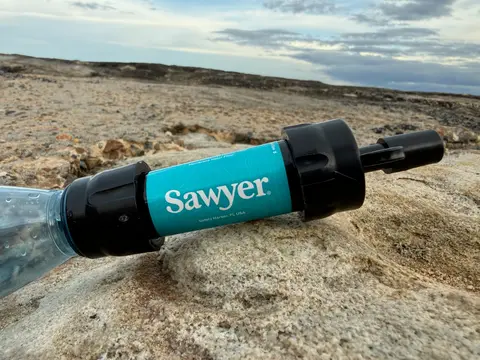 Sawyer Mini | |
|---|---|---|---|
| Filter | 0.2 micron | 0.2 micron | 0.1 micron |
| Filter life | 2,000 L | 4,000 L | 378,000 L |
| Weight | 48 g | 70 g | 65 g |
| Price paid | $50 | $50 | $36 |
| Our score | 9.3 | 9.1 | 9.0 |
Conclusion: LifeStraw Peak Solo Water FilterConclusion
The LifeStraw Peak Solo weighed 48 g on our scale, screws onto a standard 28 mm bottle and filters down to 0.2 micron, removing bacteria, parasites and microplastics. It flows fast, up to 3 litres a minute, the leakproof caps keep your bag dry, and the syringe keeps it clean for up to 2,000 litres. It doesn’t stop viruses or chemicals, rigid bottles collapse as you squeeze, and it’s short to use as a straw. It’s so compact that ours just lives in the back of the car, and as a filter you can always have with you, it’s hard to beat. I paid $50.
A 48 g, 0.2 micron water filter that screws onto a standard 28 mm bottle, flows up to 3 L a minute and comes with a backwash syringe.
It's rated to 2,000 litres.
- Hikers
- Backpackers
- Campers
Yes, if you want the smallest, fastest filter for a pocket or the glovebox. I paid $50; if you want a filter that lasts longer, the Peak Series straw costs about the same.