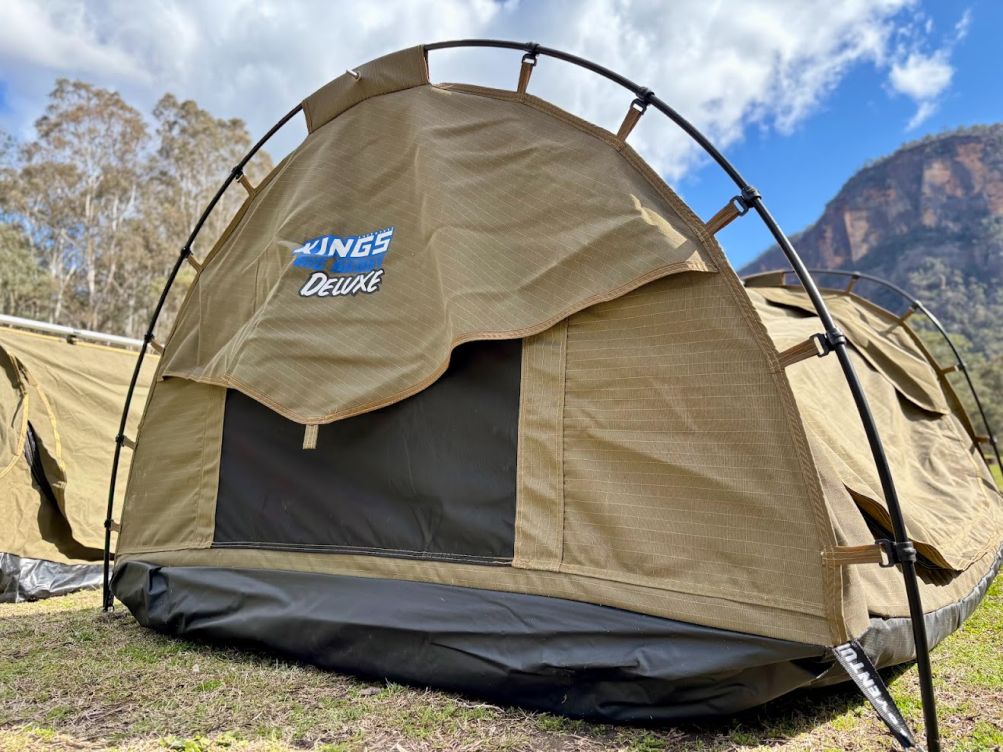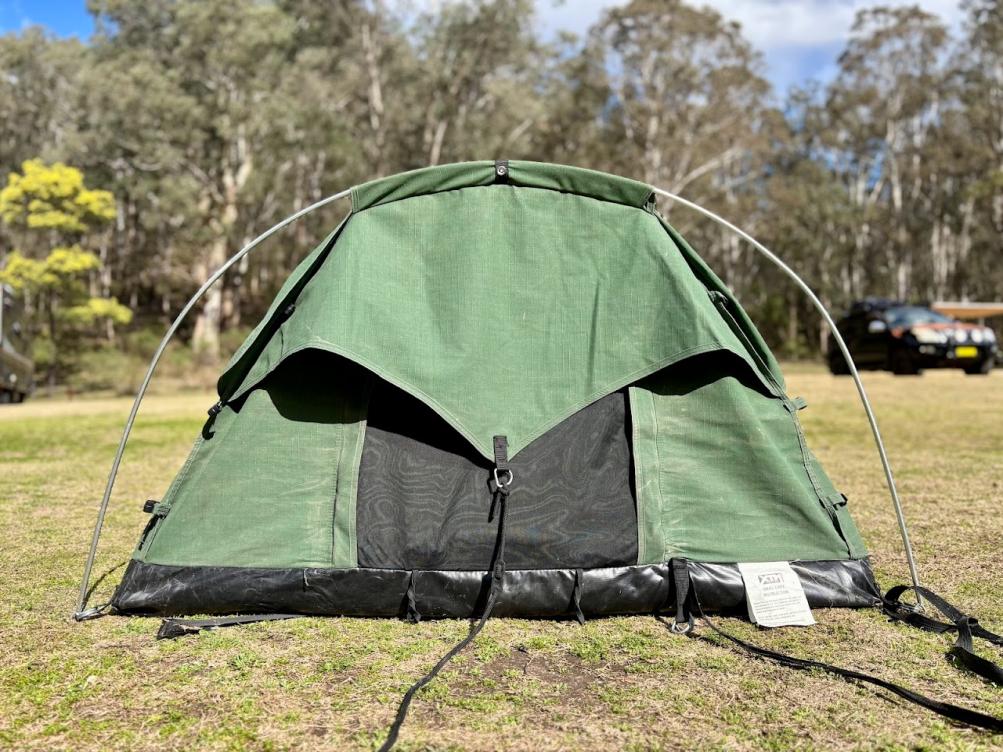
A new canvas swag will keep you dry for years, but not straight out of the bag. Before the first trip the canvas needs to be seasoned, and that goes for any new canvas, a swag or a camping tent.
The reason is the stitching. A swag is sewn together from large pieces of canvas, and every needle hole along a seam is a tiny open hole. The canvas itself is tightly woven, but those holes let water straight through until the cotton has swelled up around the thread.
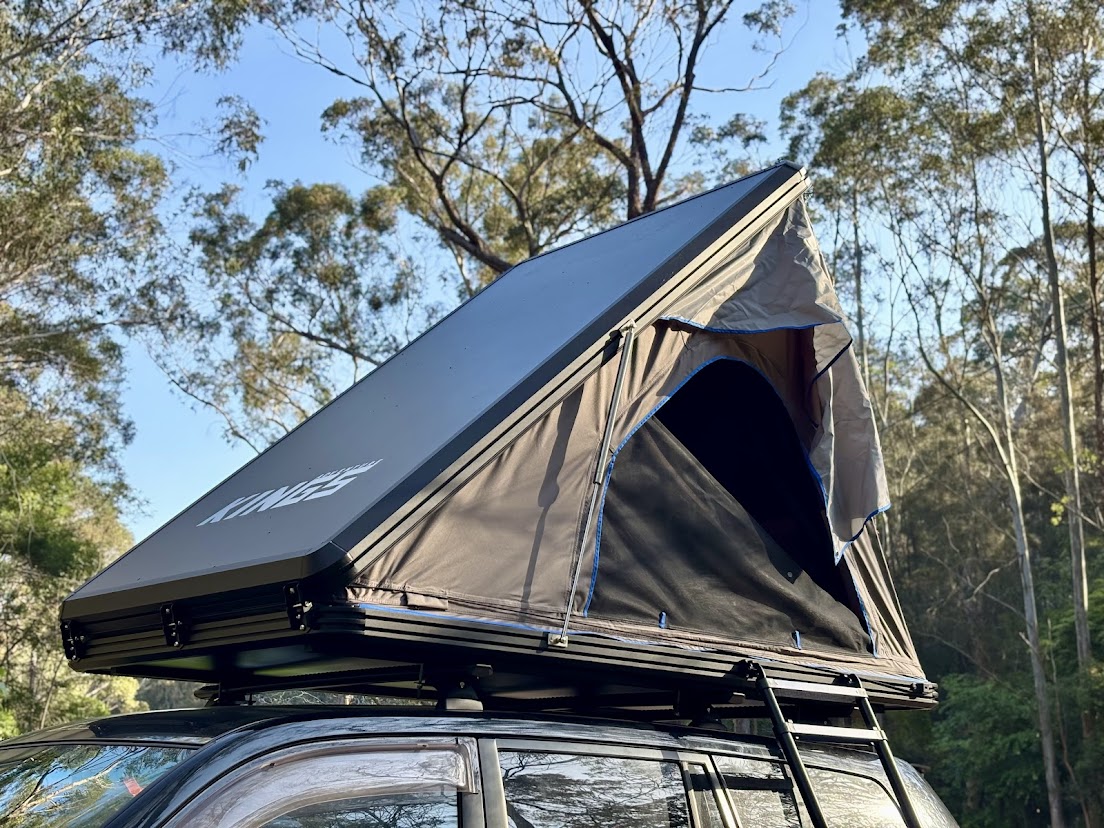
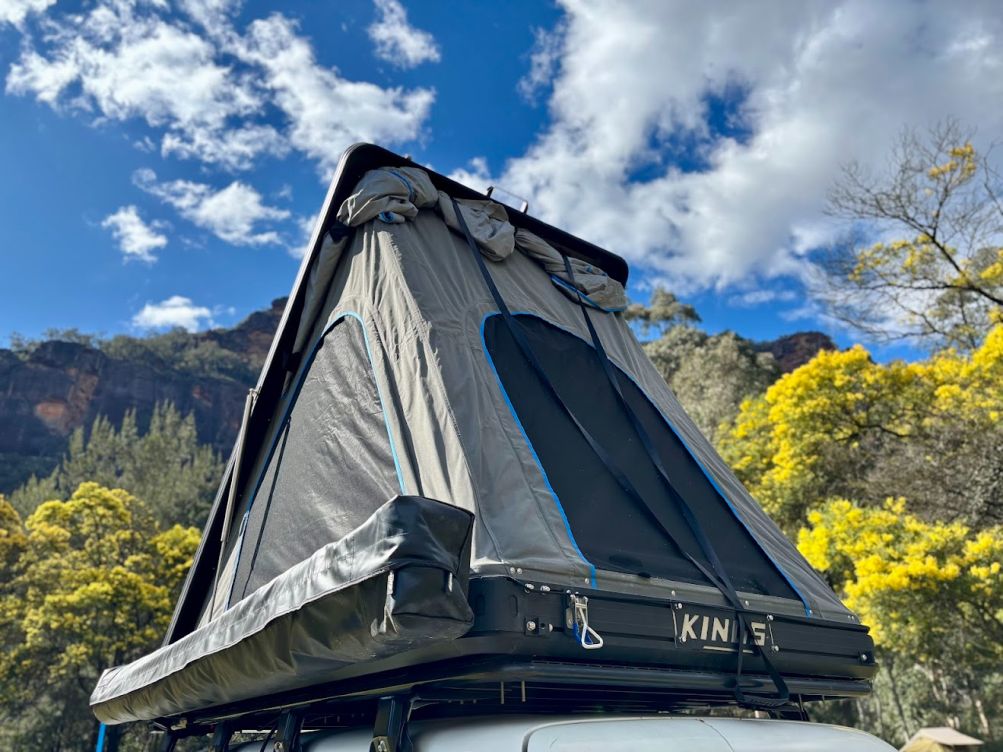
Seasoning is just wetting and drying the canvas a few times so that happens before you rely on it in the rain. It takes a hose, a sunny weekend and no money. We seasoned the canvas of our Kings Grand Tourer Lite rooftop tent, the one on the roof of the Prado now, exactly this way before its first trip. Here is how we do it.
What is seasoning a swag?
Cotton fibres soak up water and swell. When they dry again they settle a little larger than they were, so each wet-and-dry cycle tightens the weave and closes the needle holes along the seams. The canvas moulds itself around the thread, and that is what makes the seams waterproof.
Skip it and the first real downpour will come in through the seams, which is a miserable way to find out. Do it once, properly, and the canvas stays sealed for the life of the swag.
How do you season a swag?
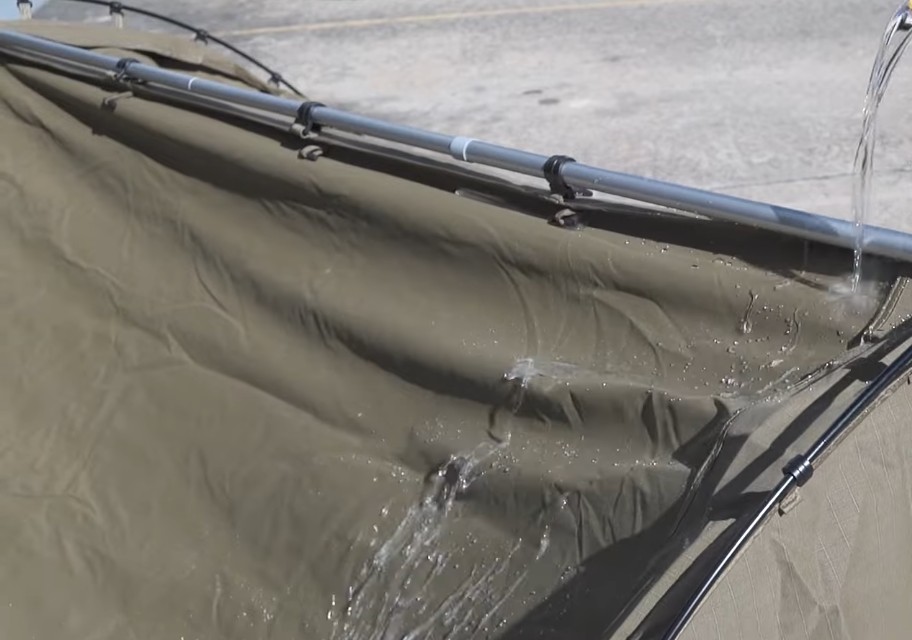
Pitch the swag outside, fully set up and pulled taut, the way you would at camp. Then soak it with a garden hose. Don’t go easy: the whole canvas needs to be wet through, and the seams, zip edges and the stitching around the window mesh need the most water.
Leave it soaked for a few minutes so the fibres take the water in, then let it dry completely where it stands. Depending on the heat that takes a few hours or the rest of the day. Once it is bone dry, soak it again. Two cycles is the minimum; we did three on the rooftop tent, and it has been through rain since and stayed dry inside. You know it is done when water beads and runs off the canvas, including along the seams.
- Cycle 1
Action (wet)Soak canvas thoroughly using a hose.
Action (dry)Allow to fully dry in warm, sunny conditions.
- Cycle 2
Action (wet)Repeat the soak, focusing water on the seams.
Action (dry)Allow to fully dry; check seams for beading.
- Cycle 3 (Optional)
Action (wet)Heavy soak with a high pressure hose.
Action (dry)Final inspection, the swag is now fully sealed.
Drying, mould and what not to useDrying & mould
Pick a stretch of dry, warm weather, because the canvas must dry out fully between soaks. A damp swag that gets folded, even for a day, can grow mould, and mould ruins canvas and its water resistance for good.
Don’t use soap or detergent. It strips the water-resistant treatment the canvas comes with and weakens the cotton. Plain water does the job. If you are seasoning an older swag or tent, also check the plastic or PVC seals on the fly and window mesh; once those have gone brittle they need a proper seam sealer, not more soaking.
Then be patient with the packing up. The swag goes into its bag only when it is completely dry, that time and every time after.
Summary
Every new canvas swag needs seasoning before it will keep rain out. Pitch it taut, soak it with the hose with extra attention to the seams, let it dry fully, and repeat at least twice. The swelling cotton closes the needle holes in the stitching, and from then on the seams are sealed.
No soap, no packing away damp, and no shortcuts on the drying. Two or three sunny days and the swag, or in our case the rooftop tent, is ready for its first wet night.
Do's
- Do pitch the swag fully and tautly
- Do repeat the cycle at least twice
- Do soak seams and zips thoroughly
- Do dry it in full sun
- Do check local water restrictions
Don'ts
- Don't use soap or detergent
- Don't fold the swag when damp
- Don't pack away until 100% dry
Recommended gear
Seasoning applies to any new canvas, swag or rooftop tent. See our Australian swags and rooftop tents guides.