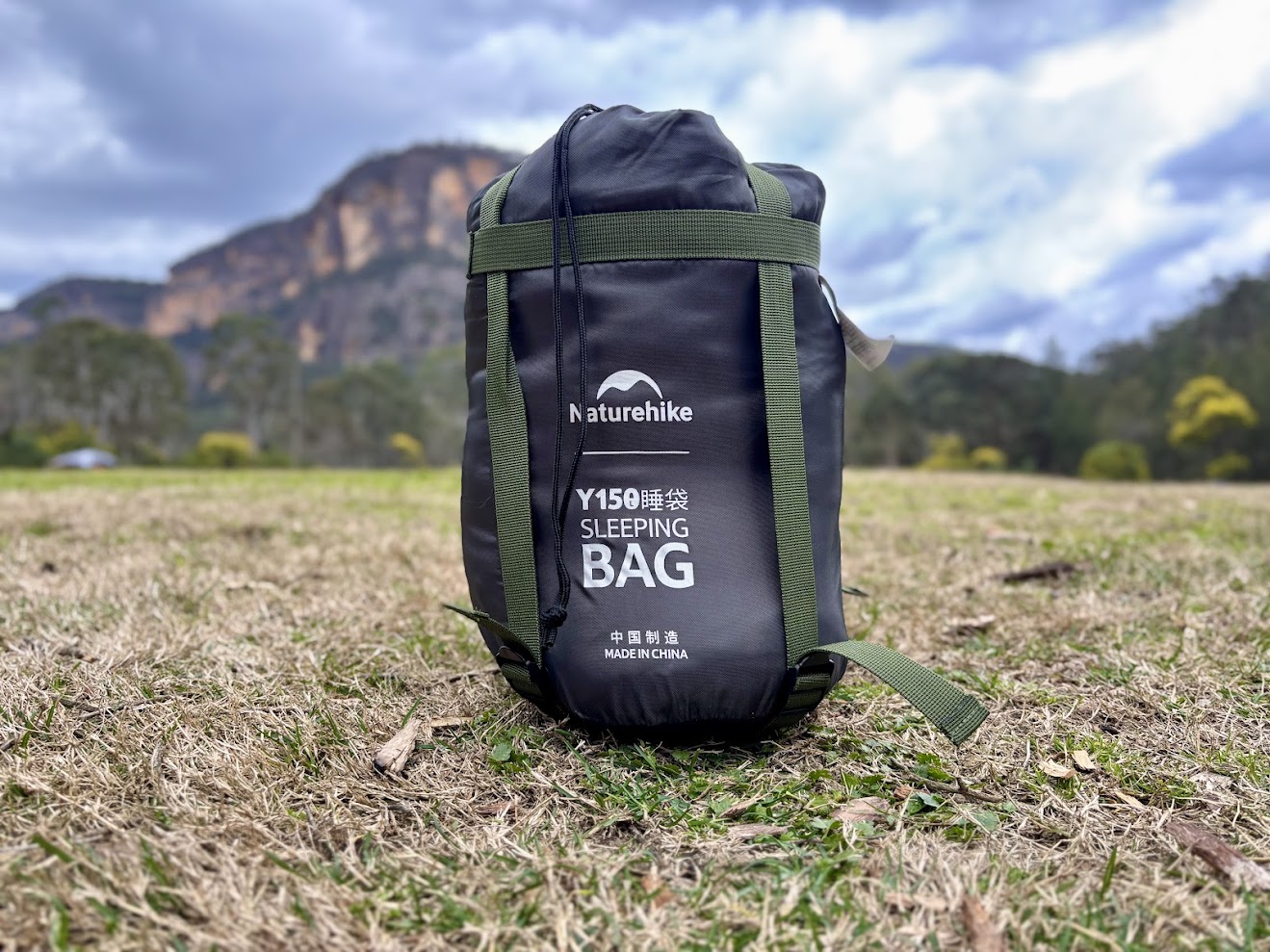
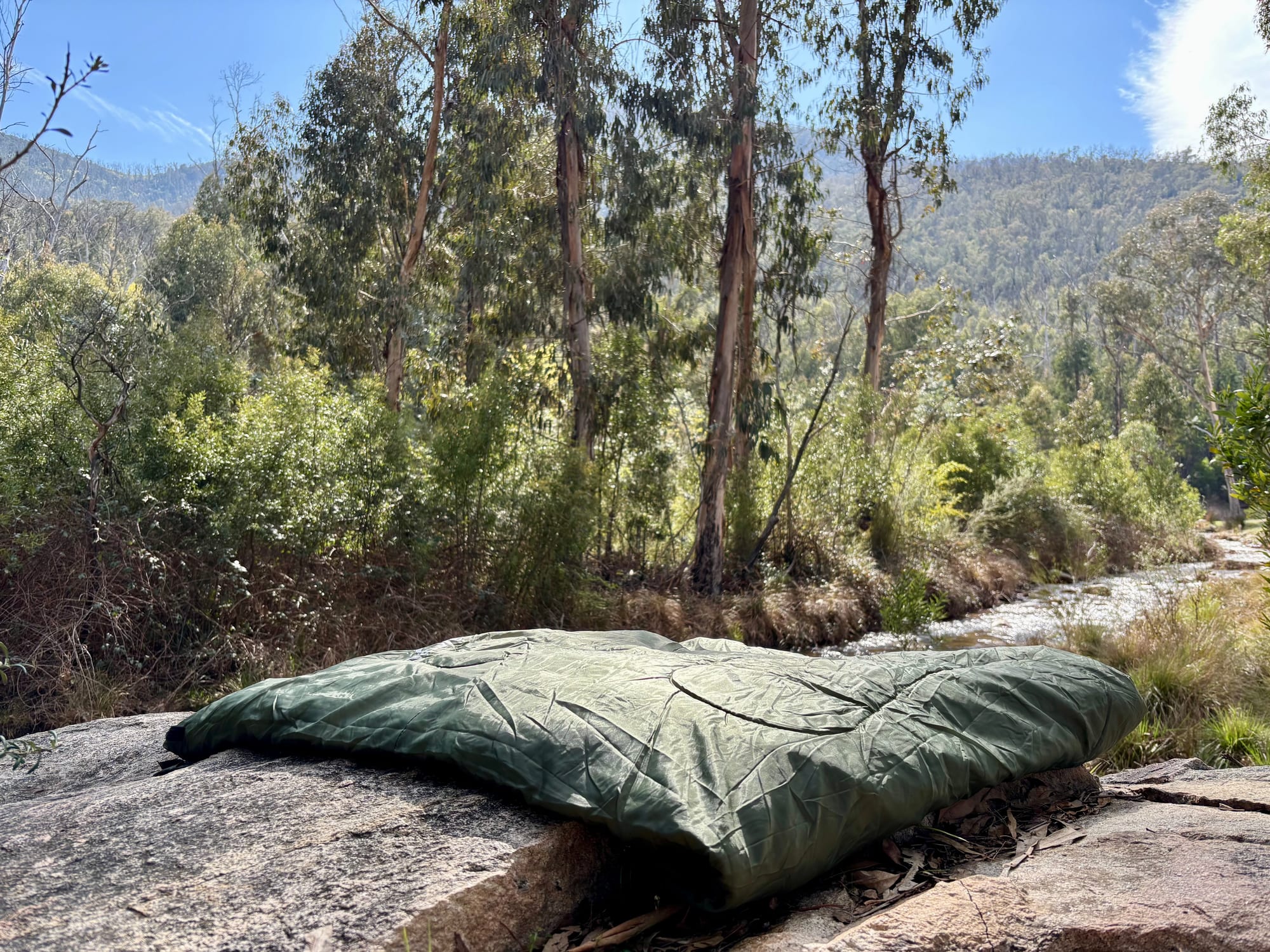
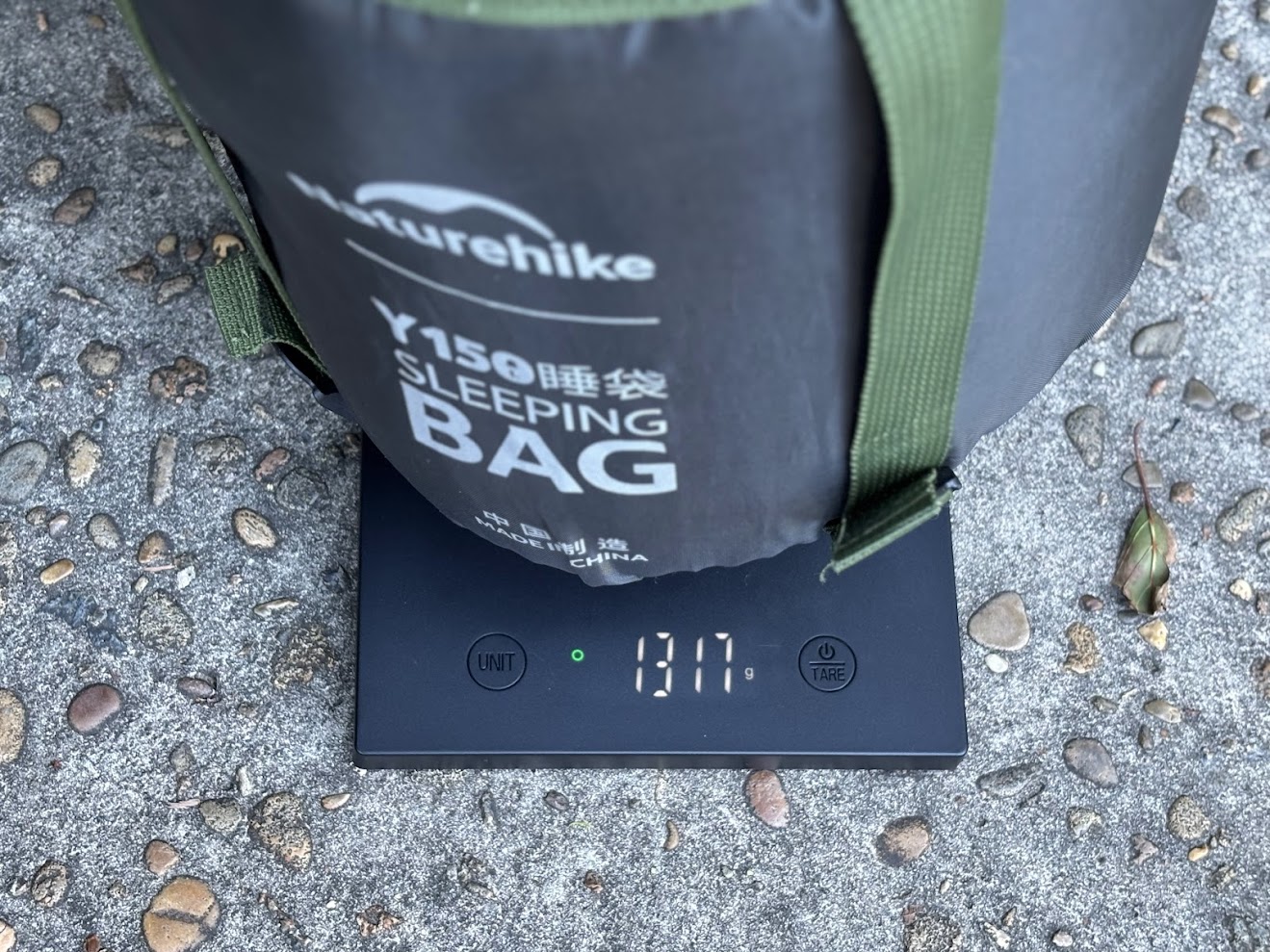
A good sleeping bag can make or break a night in the bush. The Naturehike Y150L is the bag we take for spring to autumn: a 1.3 kg, extra-wide envelope bag with a hood that has done several weekend trips, from Bouddi National Park to Coorongooba Campground. It cost us $40, and it does better than we expected for the money.
What’s in the box
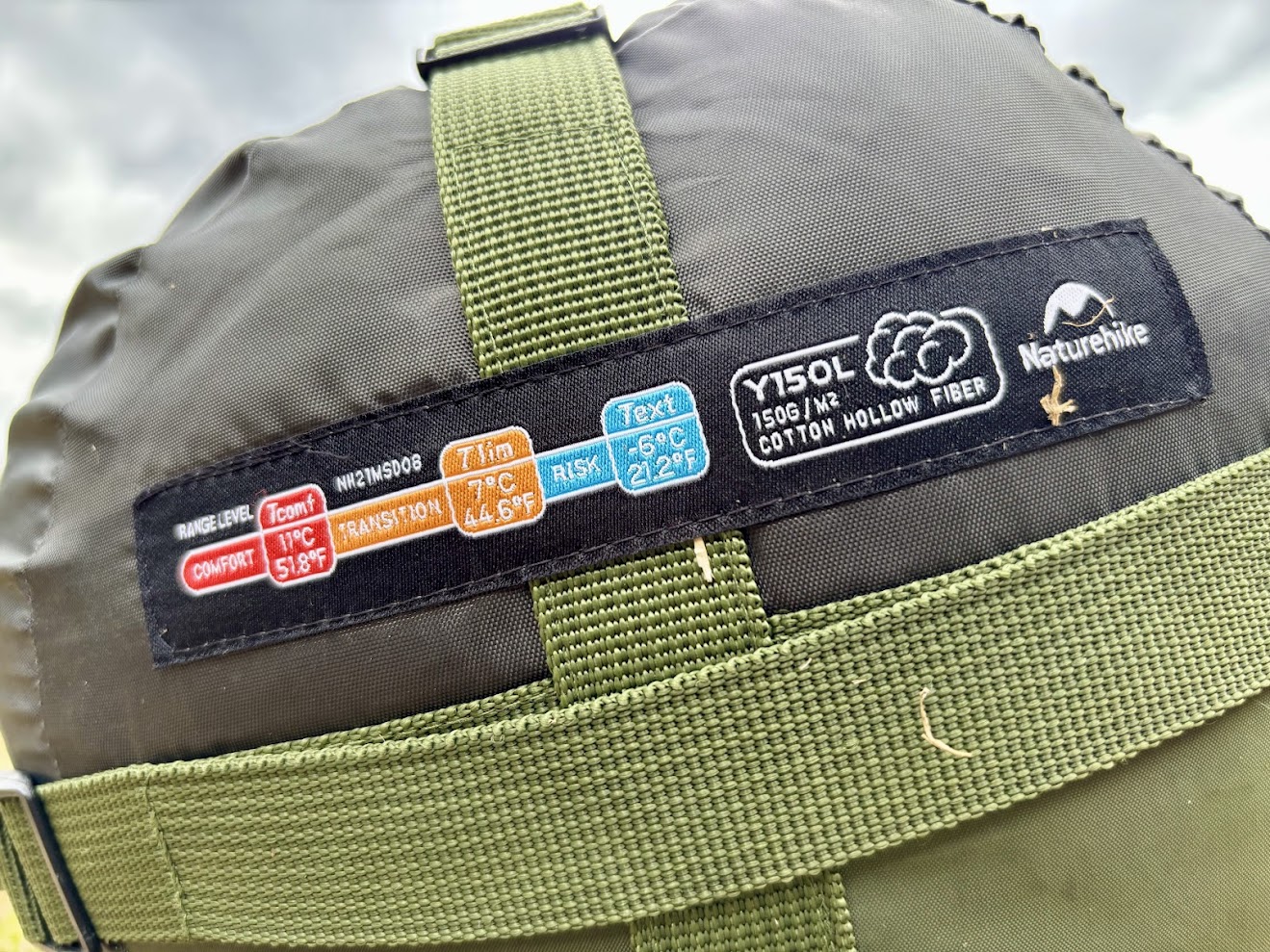
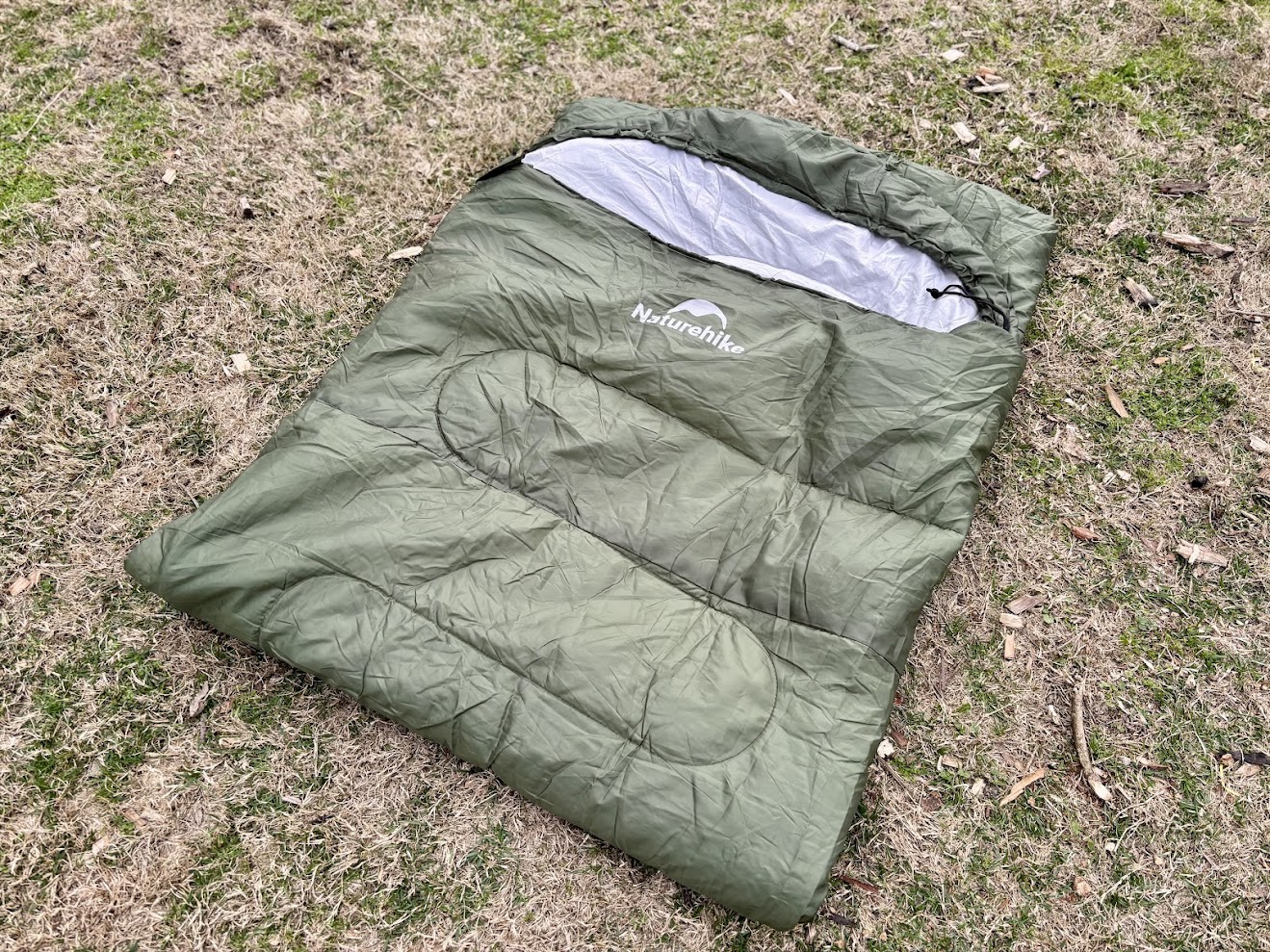
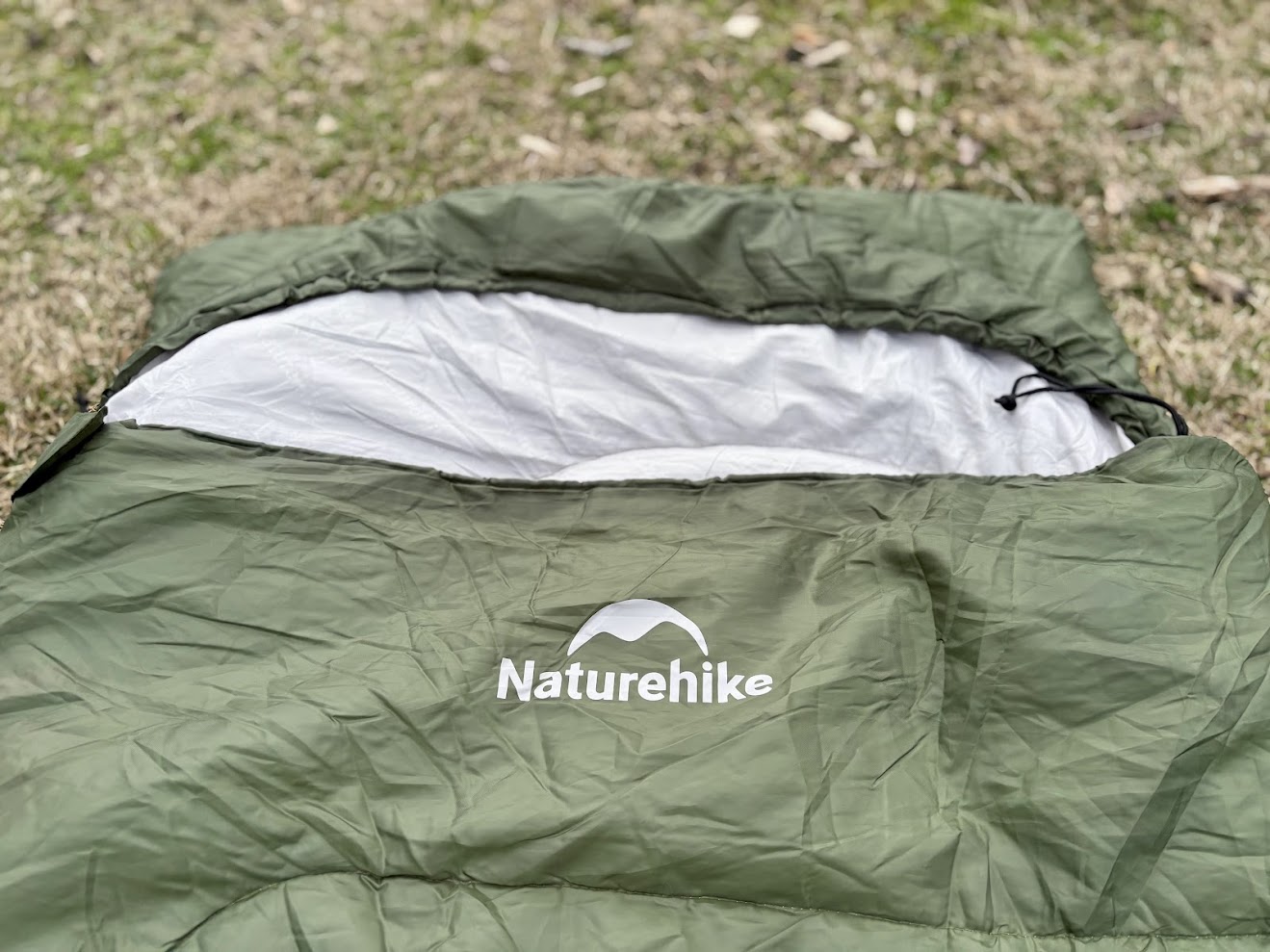
An envelope sleeping bag with a half-round hood and drawstring, in a compression stuff sack. The shell is 190T polyester, the lining a soft 190T pongee and the fill hollow cotton fibre. It’s 220 by 85 cm, about 10 cm wider than most standard bags, with a comfort range of 7 to 16°C.
What we like
- Soft, quiet fabric with a roomy fit
- Unzips flat for blanket-style use
- Joins to another bag for couples
- Good warmth-to-weight ratio
- Packs small for drawer storage
What we don’t
- Not suitable for sub-zero temps
- May be too warm in tropical humidity
- No inside pocket for valuables
Quick Specs
| Spec | Details |
|---|---|
| Brand | Naturehike |
| Model | Y150L |
| Material | 190T polyester shell190T pongee liningHollow fibre fill |
| Weight | 1.3 kg |
| Size | 220 × 85 cm |
| Packed size | 43 × 22 × 22 cm |
| Temperature rating | Comfort 7°C to 16°C |
| Included | Joins a second bag |
| Features | Hood with drawstringFoot ventFull unzip |
Width and comfort
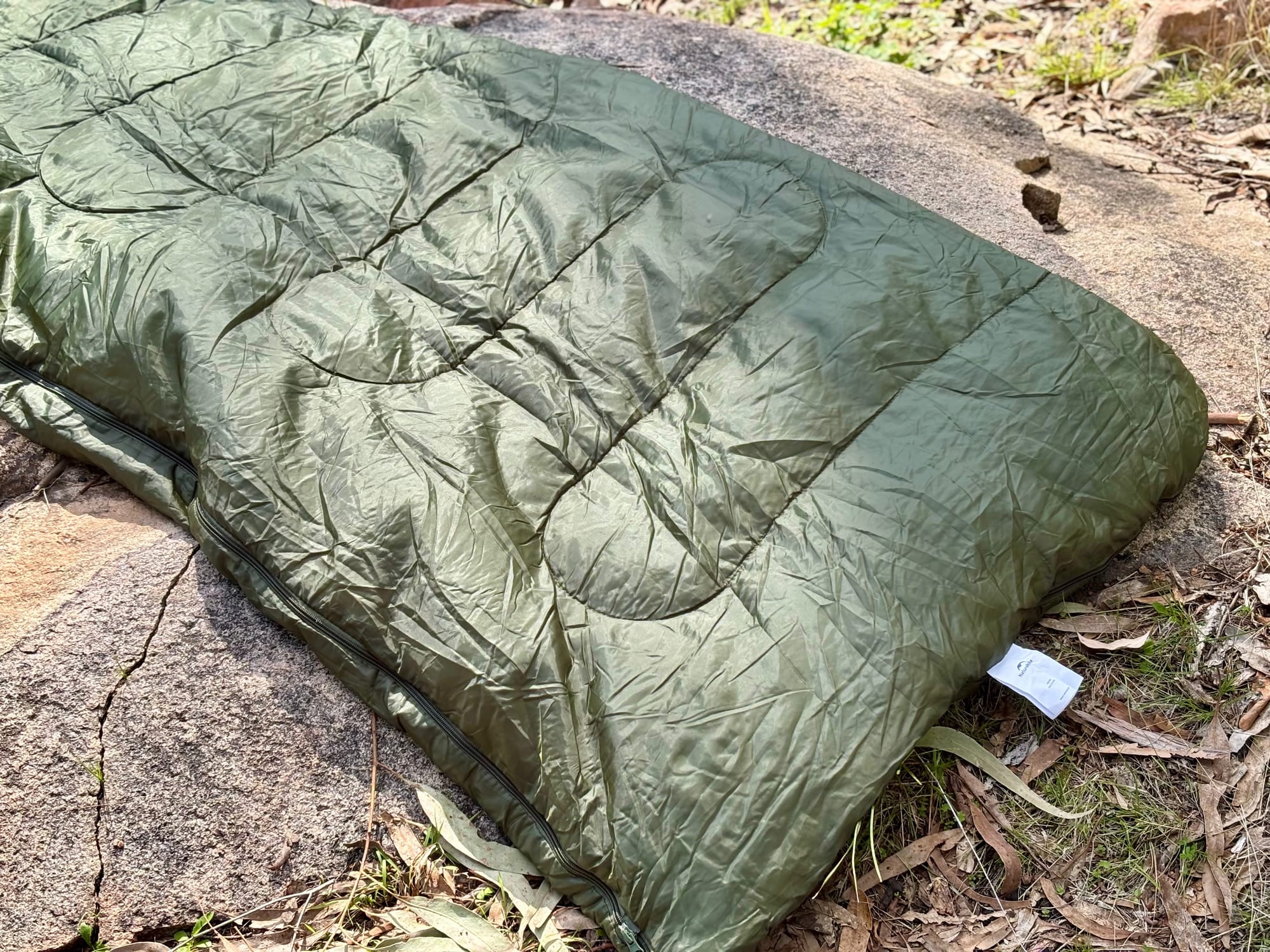
Out of the sack it feels more like bedding than a plasticky camp bag: the pongee lining is soft against the skin and quiet when you move. The extra width is what we like most. If you sleep on your side or move around at night, those 10 cm make a real difference, and even with layers on it never feels tight.
Warmth on cooler nights
We used it on two shoulder-season trips where the nights dropped to around 8 to 10°C, and with just a merino base layer we stayed warm all night. At Glen Davis we zipped it all the way up and pulled the hood tight; at Putty Beach it was warm enough to half-unzip and use like a doona. It isn’t a bag for below zero.
Features
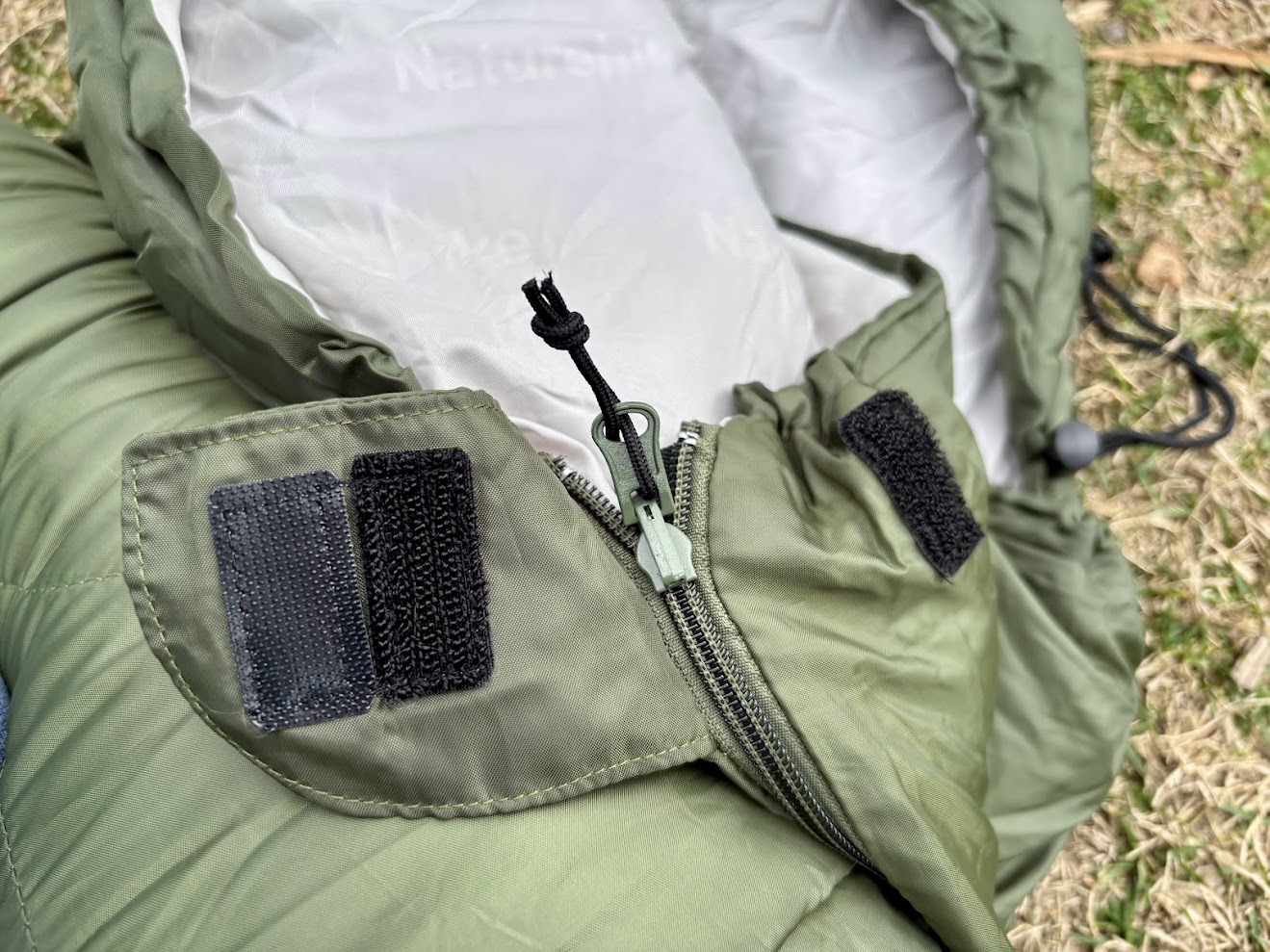
It unzips fully into a big quilt for warm nights or lounging around camp, and the two-way zip lets you open just the foot to cool down without opening the whole bag. Two compatible bags zip together into a double, and a velcro tab at the top keeps the zip closed. The zips run smoothly without snagging.
Weight and packing
At 1.3 kg it’s not ultralight, but it’s not bulky either: light enough for car camping and short hikes, roomy and warm enough to be comfortable. The compression sack pulls it down to 43 × 22 × 22 cm, small enough for a drawer system, a roof box or behind a seat.
Naturehike LW180 vs Y150L
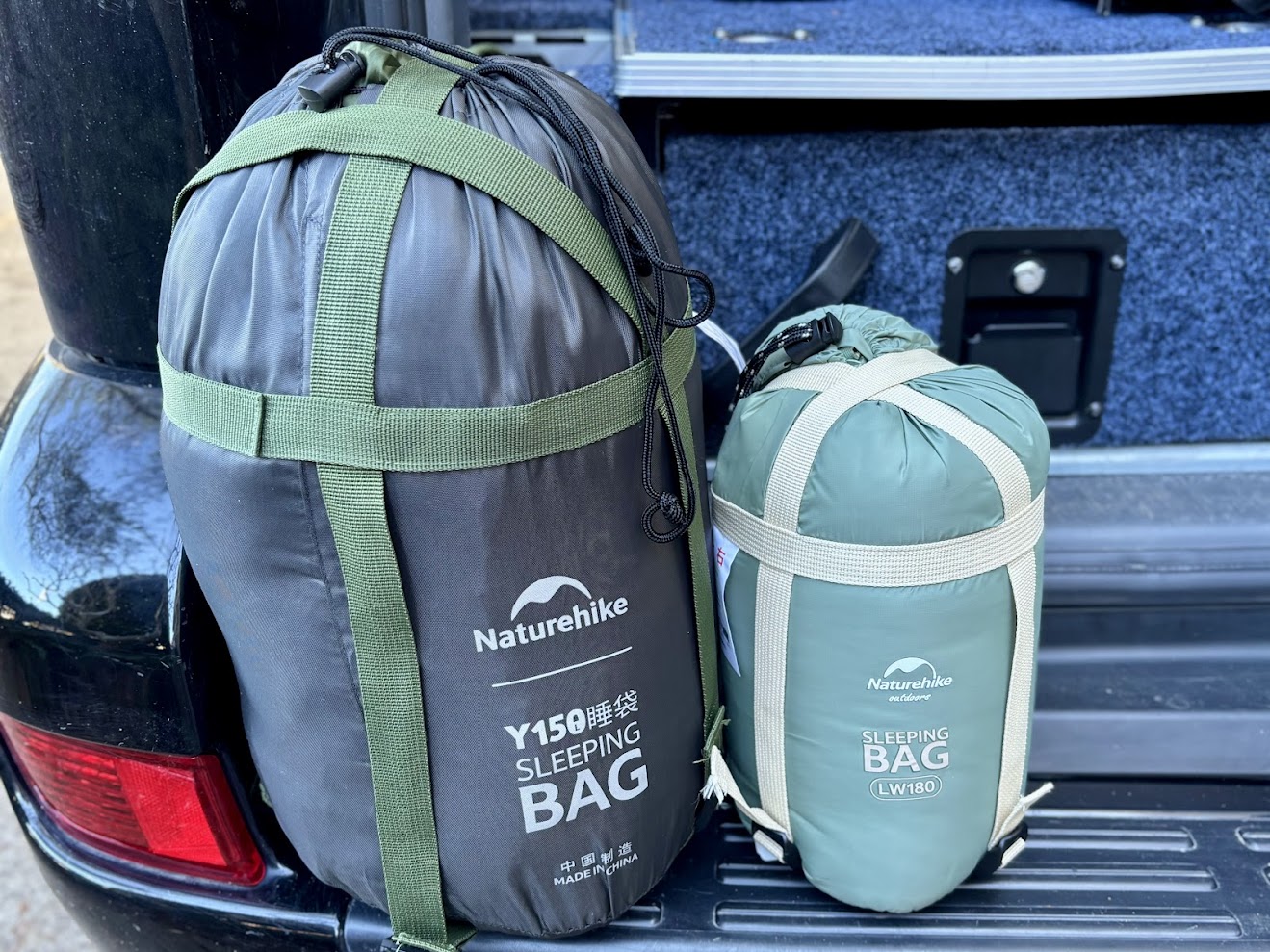
We’ve also reviewed the Naturehike LW180, the lighter bag of the two. It packs much smaller and weighs about half as much, but it’s narrower and only comfortable down to 15°C; the Y150L is the warmer, roomier one.
This one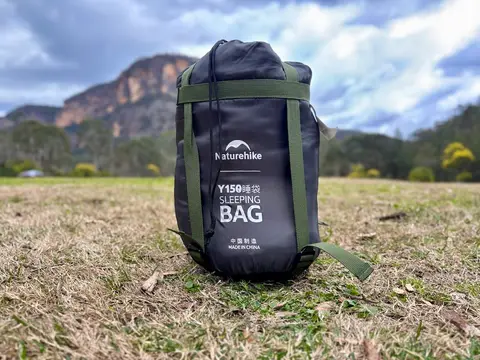 Naturehike Y150L |  Naturehike LW180 | |
|---|---|---|
| Size open | 220 × 85 cm | 190 × 75 cm |
| Packed size | 43 × 22 × 22 cm | 29 × 12 cm |
| Comfort | 7°C | 15°C |
| Weight | 1.3 kg | 680 g |
| Price paid | $40 | $46 |
| Our score | 8.3 | 8.6 |
Conclusion: Naturehike Sleeping Bag Y150LConclusion
The Naturehike Y150L is a warm, roomy bag for spring to autumn: 220 by 85 cm, comfortable from 7 to 16°C, with a drawstring hood, a foot vent, a full unzip for blanket use and the option to join a second bag. It kept us warm on 8 to 10°C nights and packs to 43 × 22 × 22 cm. It isn’t for sub-zero nights and it has no inside pocket, but at $40 it’s a lot of bag for car campers, 4WD tourers and couples.
A warm, roomy bag for spring to autumn, and a lot of bag for $40.
It kept us warm on 8 to 10 °C nights, unzips flat as a blanket and joins to a second bag. It isn't for sub-zero nights, and there's no inside pocket.
- Campers
- 4WD tourers
- Couples
Yes. A roomy, soft bag that unzips flat as a blanket and zips to a second bag is hard to beat for the price. It’s not for sub-zero nights.