A camping mat is always a trade-off. The thick ones sleep like a bed and take up half the back of the car. The thin ones pack away to nothing and leave you feeling every stone.
Featured inBest Camping Mattresses of 2026
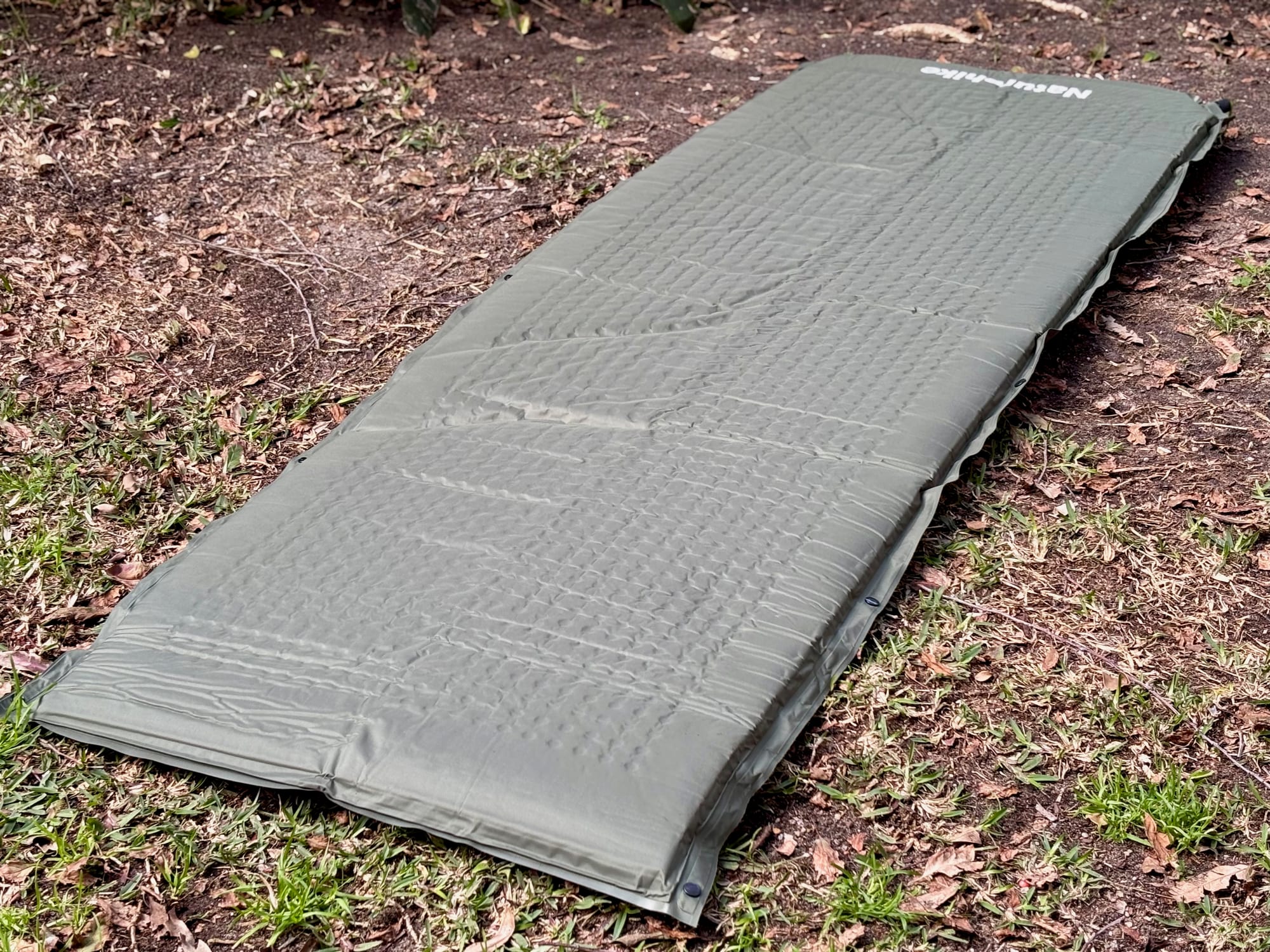
The Naturehike D-Series self-inflating sleeping pad sits in between. It’s 5 cm thick, and I find that a good balance: just enough comfort, and still easy to pack away for trips. I paid $60 for it.
What You’re Getting
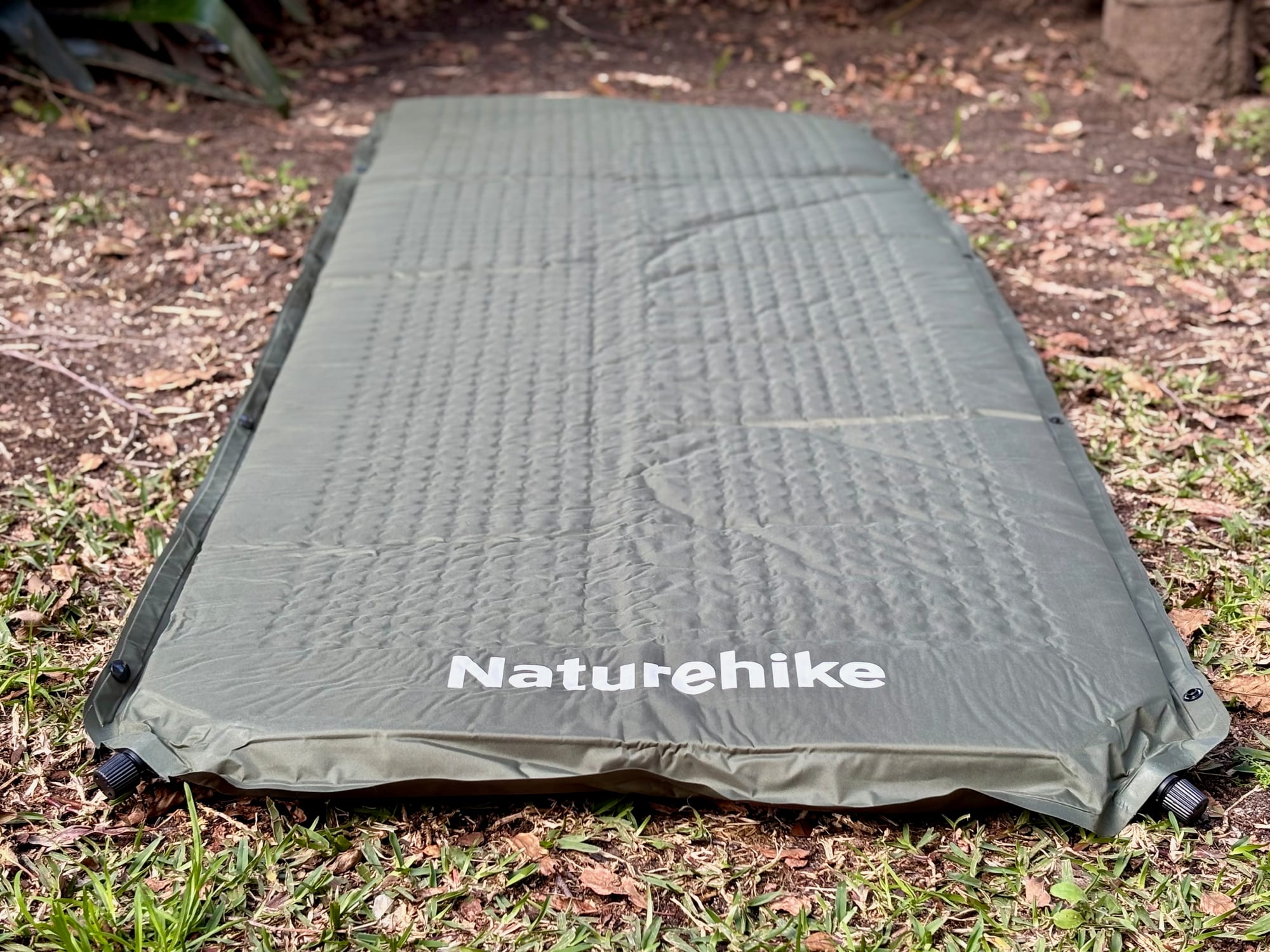
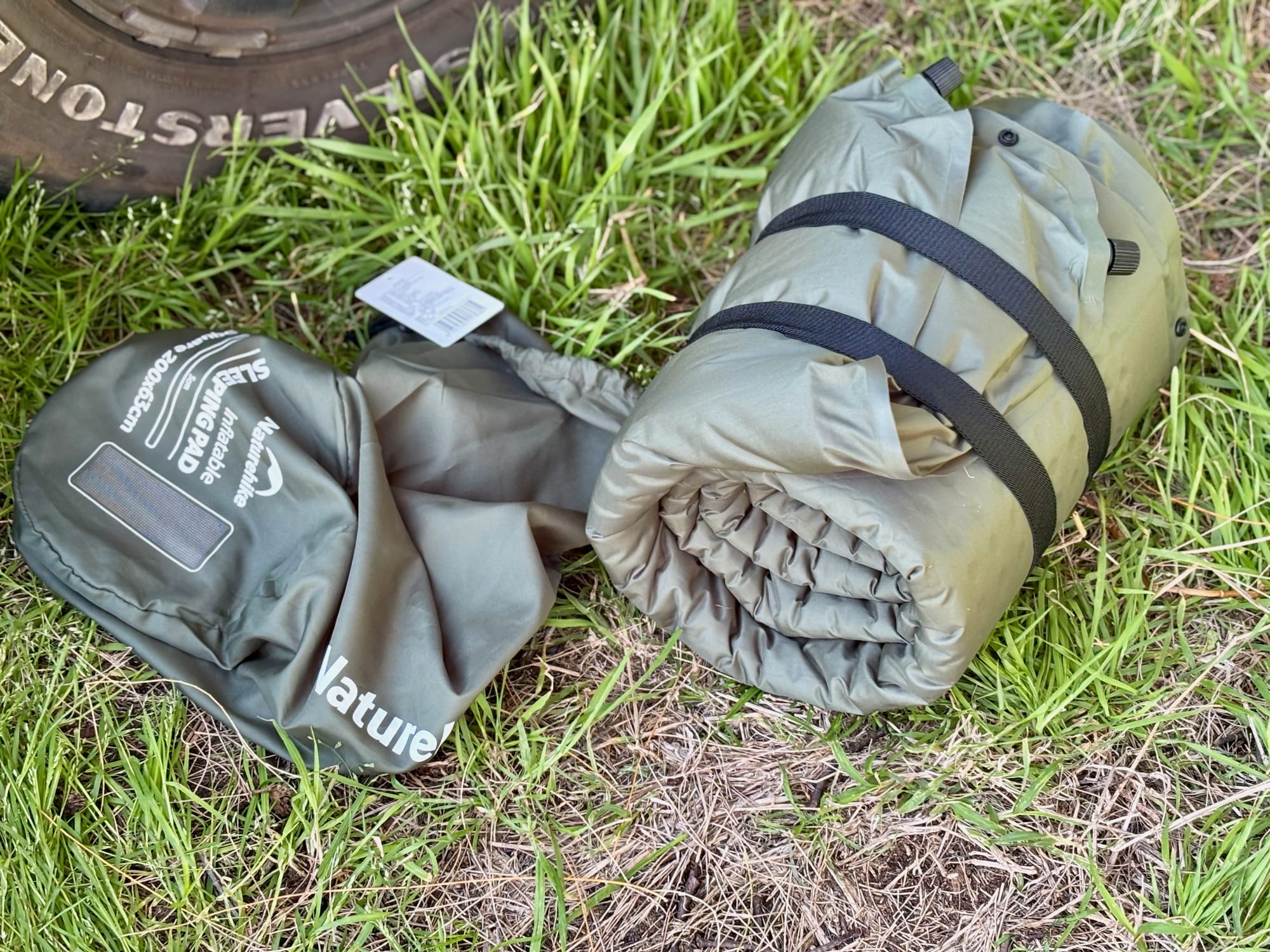
A self-inflating sleeping pad from Naturehike with a high-resilience foam core, 5 cm thick and 200 × 63 cm when inflated. It has one combined valve for inflating and deflating, snap buttons along the sides for joining pads together, and it packs down to about 20 × 32 cm. It comes in green and grey. I have the green one.
The good
- 5 cm thick: a good balance of comfort and packed size
- Packs down to 20 × 32 cm
- Long and wide at 200 × 63 cm
- R-value of 4.8 for cold ground
- Snap buttons join two pads into a double
- Good value at $60
The not-so-good
- Self-inflating took a really long time on the first go
- Only self-inflates to about 70%: you top it up yourself
- At 2.14 kg, it’s for the car, not the backpack
Quick Specs
| Spec | Details |
|---|---|
| Brand | Naturehike |
| Model | D-Series self-inflating sleeping pad |
| Weight | 2.14 kg |
| Thickness | 5 cm |
| Size (inflated) | 200 × 63 cm |
| Packed size | 20 × 32 cm |
| Colour options | GreenGrey |
| R-value | 4.8 |
| Filling | High-resilience polyurethane foam |
| Fabric | 100% polyester with PU coatingPVC air layer |
| Valve | Combined one-way/two-way valve |
| Extras | Snap buttons to join pads |
Comfort and thickness
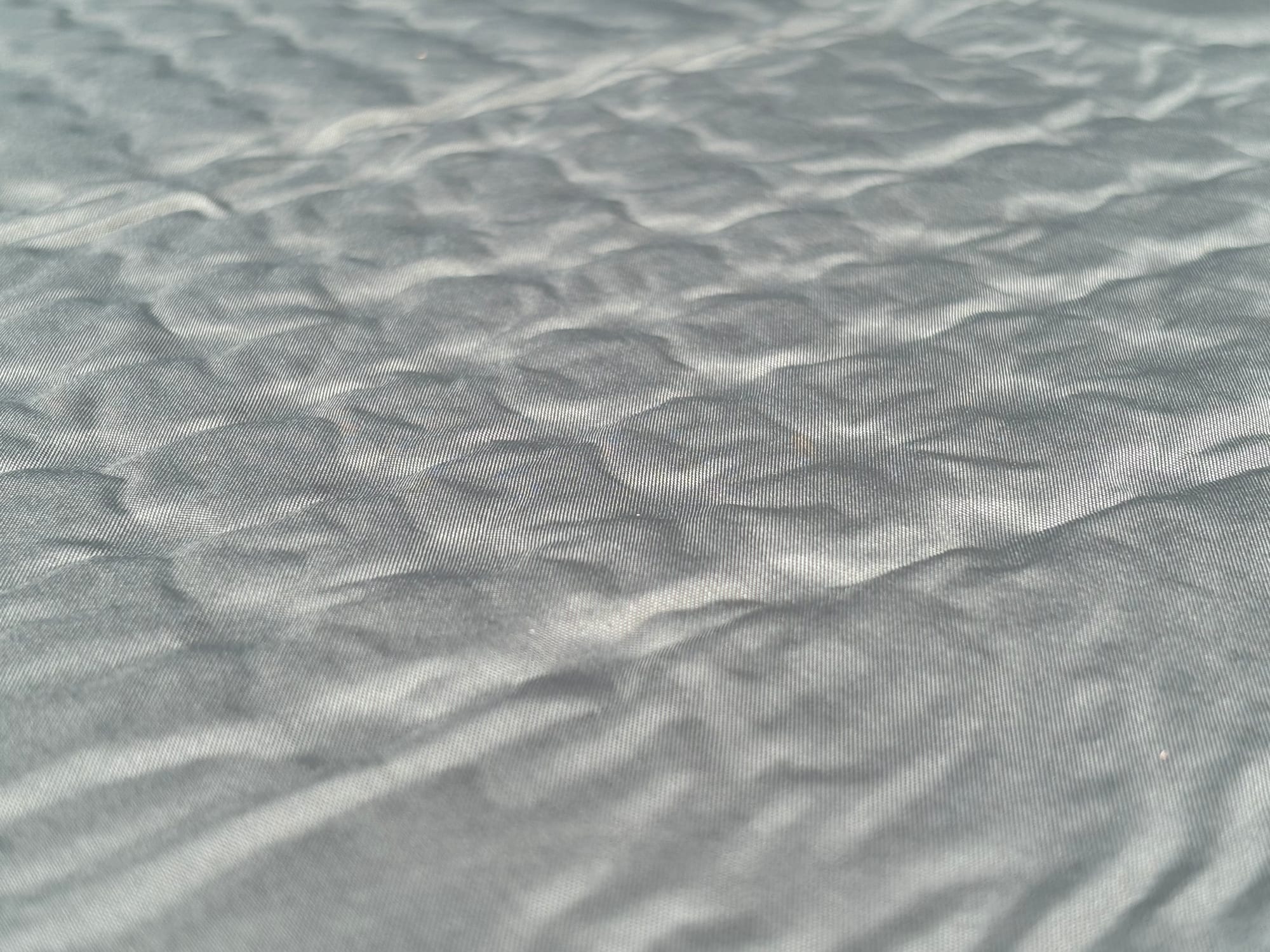
The 5 cm thickness is the reason I like this pad. It’s a good balance between just enough comfort and still being easy to pack away. The foam inside is a high-resilience polyurethane, so the pad doesn’t rely on air alone: even before you top it up, there’s something solid between you and the ground. That foam also insulates: the pad has an R-value of 4.8, so it keeps the cold of the ground away on winter nights. Our R-value guide explains what that number means.
At 200 × 63 cm it’s also long and wide. Many lighter pads are narrower than that, and the extra width makes a difference when you roll over at night. The surface has a dimpled pattern and a soft polyester finish, and it doesn’t crinkle the way some air pads do.
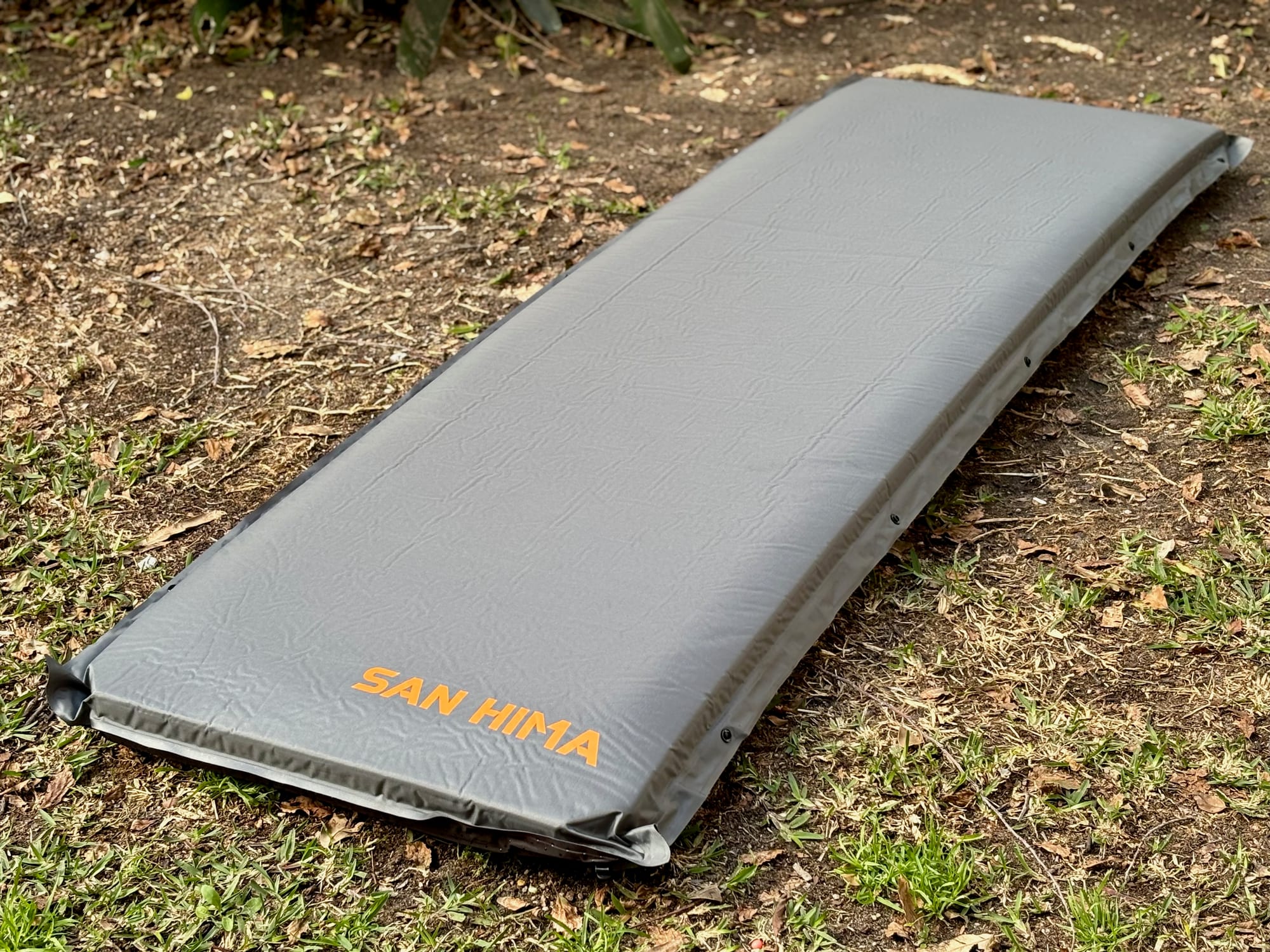
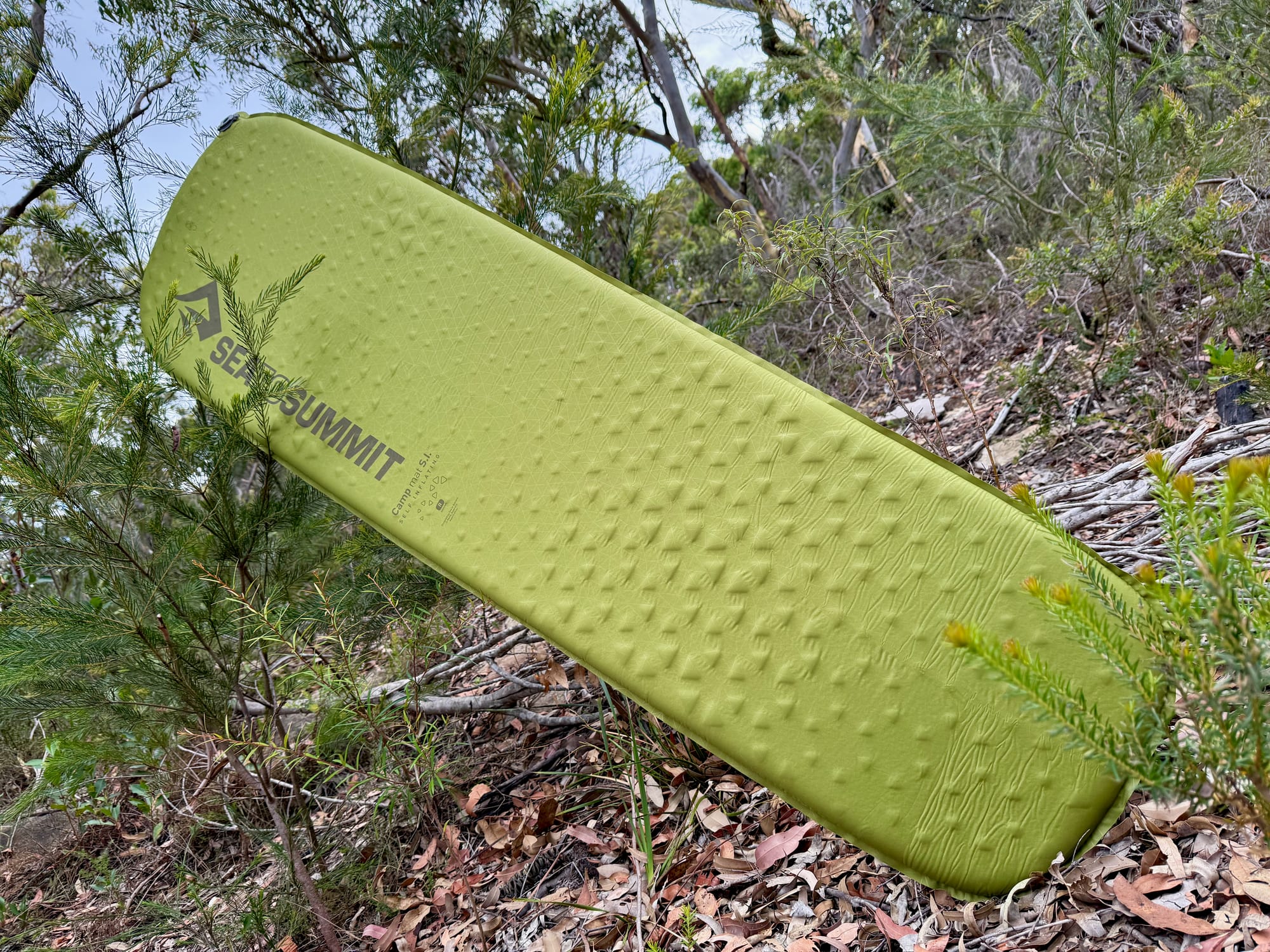
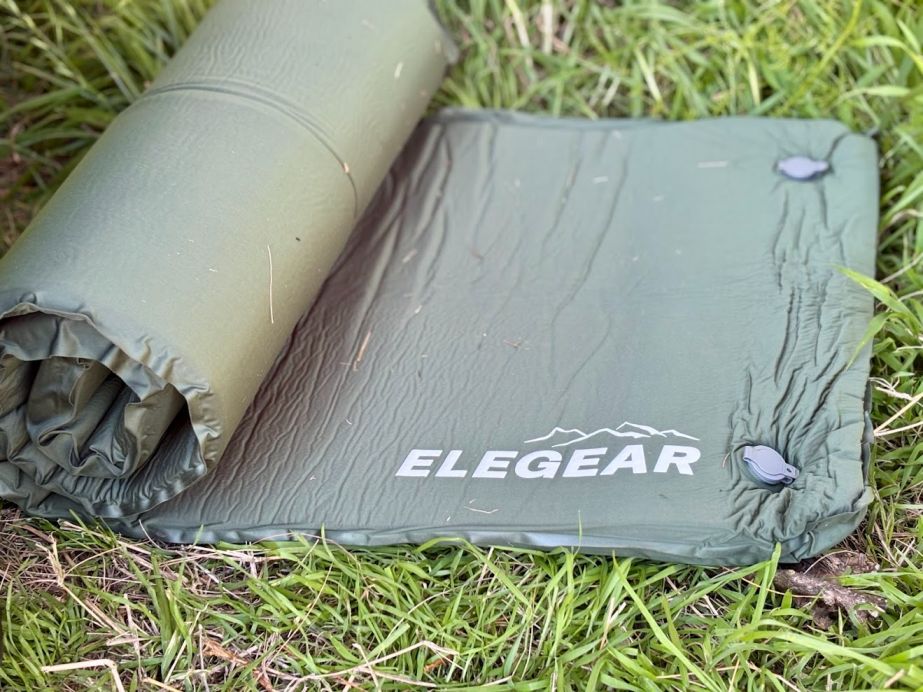
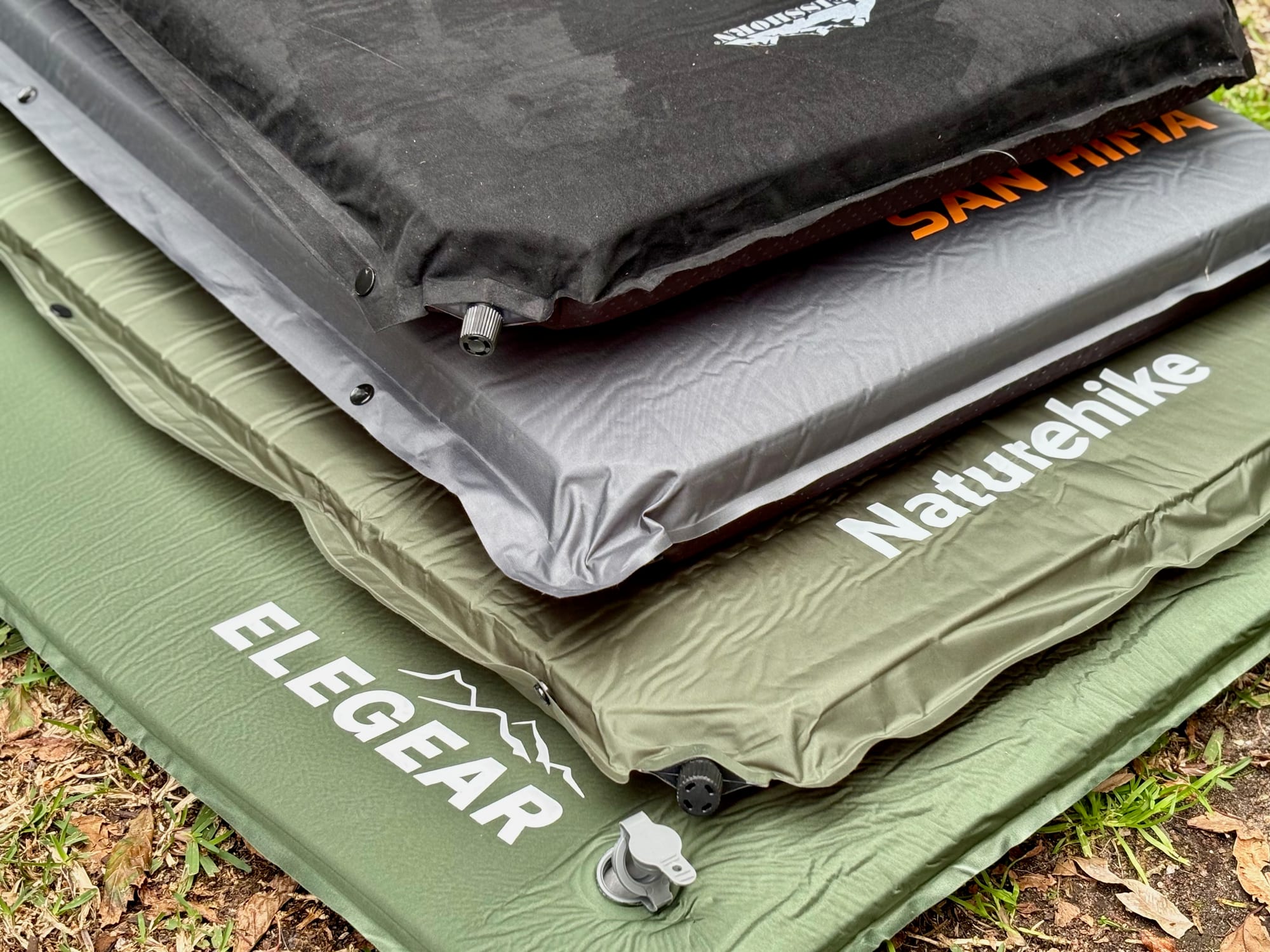
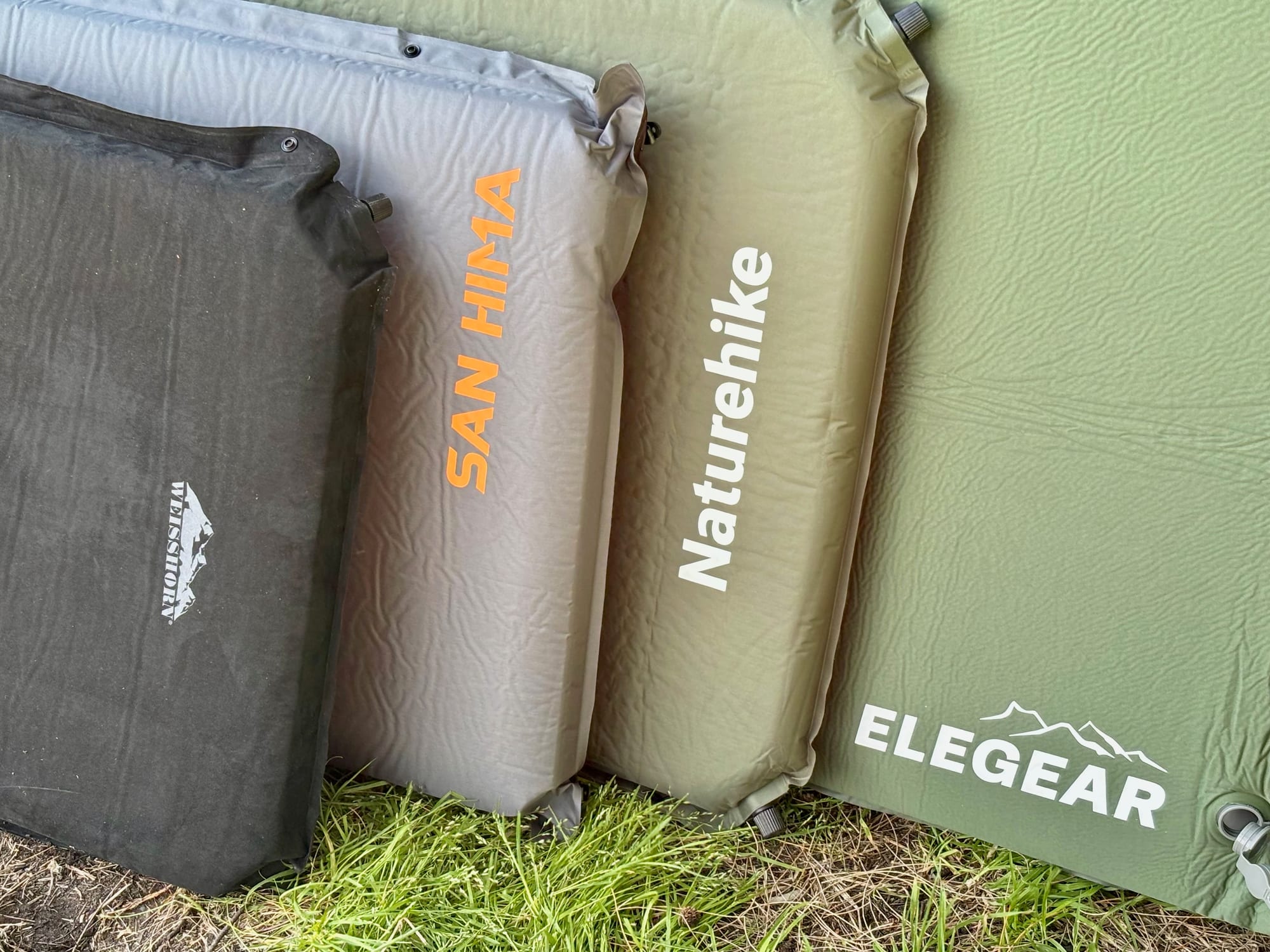
For comparison, I stacked it with three other self-inflating mats we have: the Elegear sleeping pad, the San Hima mattress and the Weisshorn mattress. The Naturehike is the thinnest of the four. The Elegear is 8 cm and a lot heavier, and that’s the trade-off in a nutshell: the thicker mats are more comfortable, the Naturehike is much easier to pack.
Inflating and packing up
There’s one valve, at a corner of the pad, and it works both ways. Open it and the foam expands and pulls air in. It self-inflates to about 70%. For a firmer feel, you top it up with a pump or a few breaths, then close the valve.
This is where I had some issues. On the first go, the self-inflating took a really long time, much longer than I expected, and I ended up helping it along. That’s why ease of use is this pad’s lowest score. It’s not hard, but it’s not the unroll-and-forget mat the name suggests, and you’ll want to top it up every time.
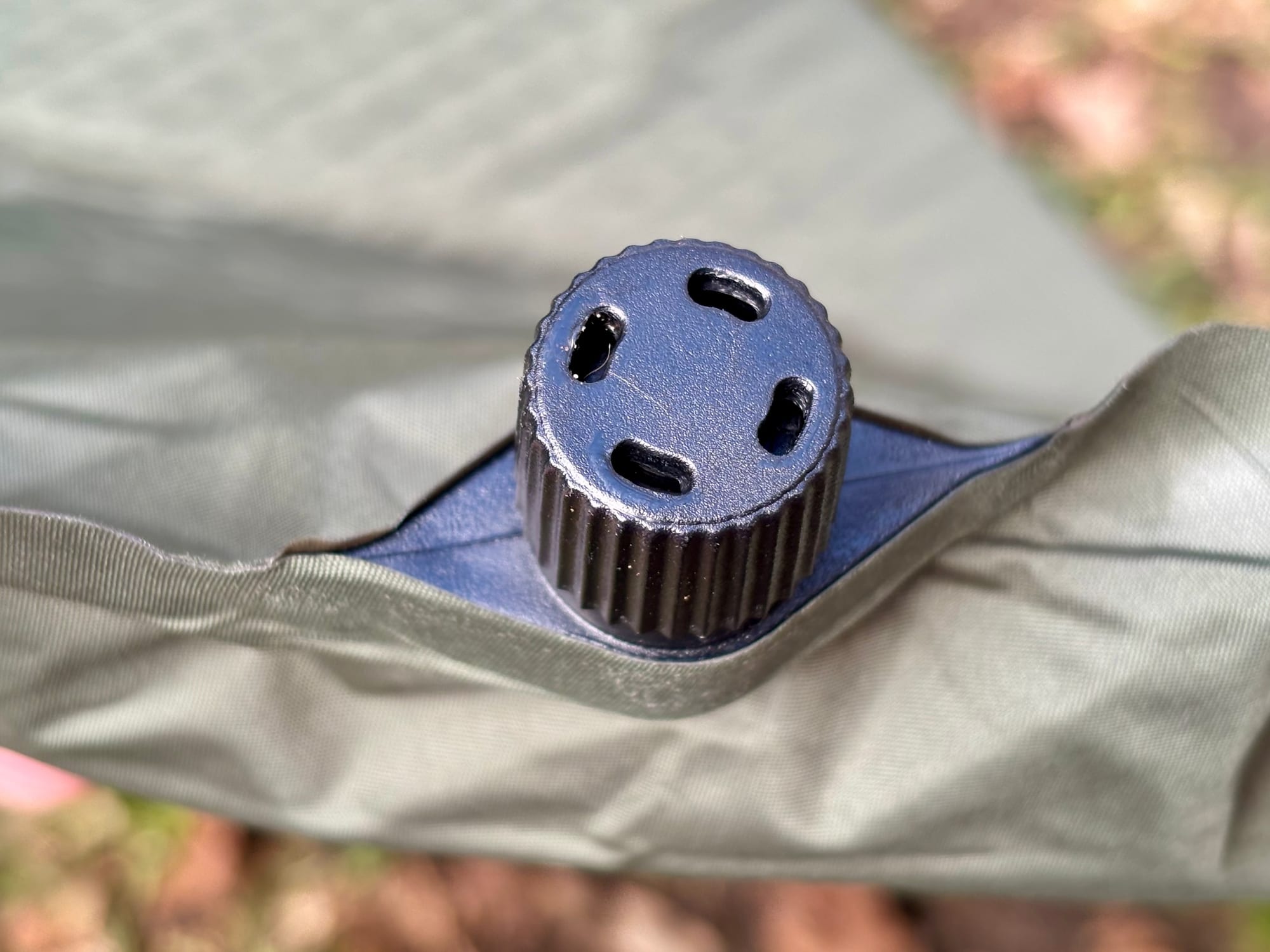
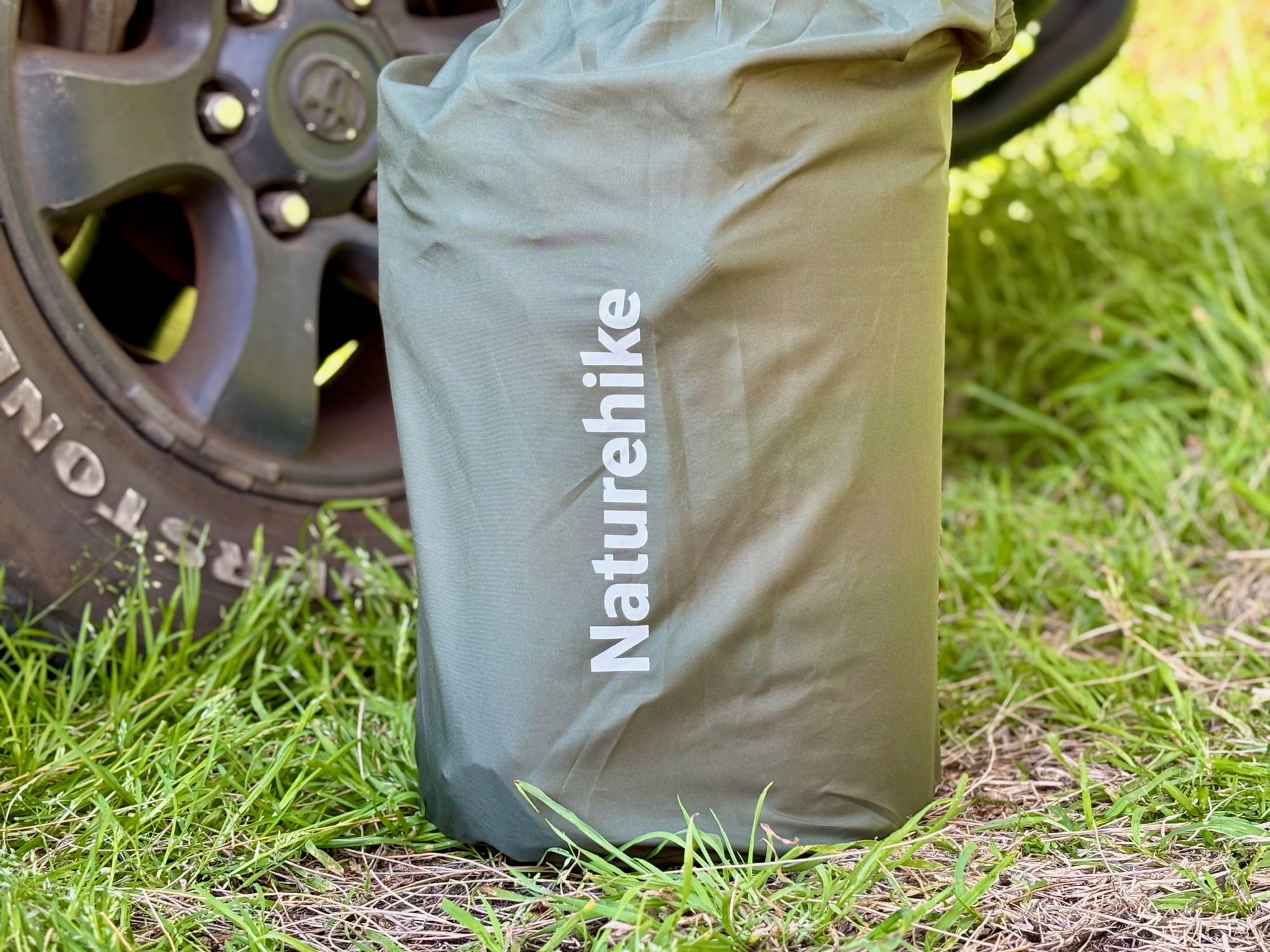
Packing up is the reverse. Open the valve, roll the pad from the far end and press as you go to push the air out, then close the valve so it doesn’t fill again. It packs down to about 20 × 32 cm, which is small for a mat of this size. Two straps hold the roll together, and it goes into a drawstring carry bag.
Joining two pads
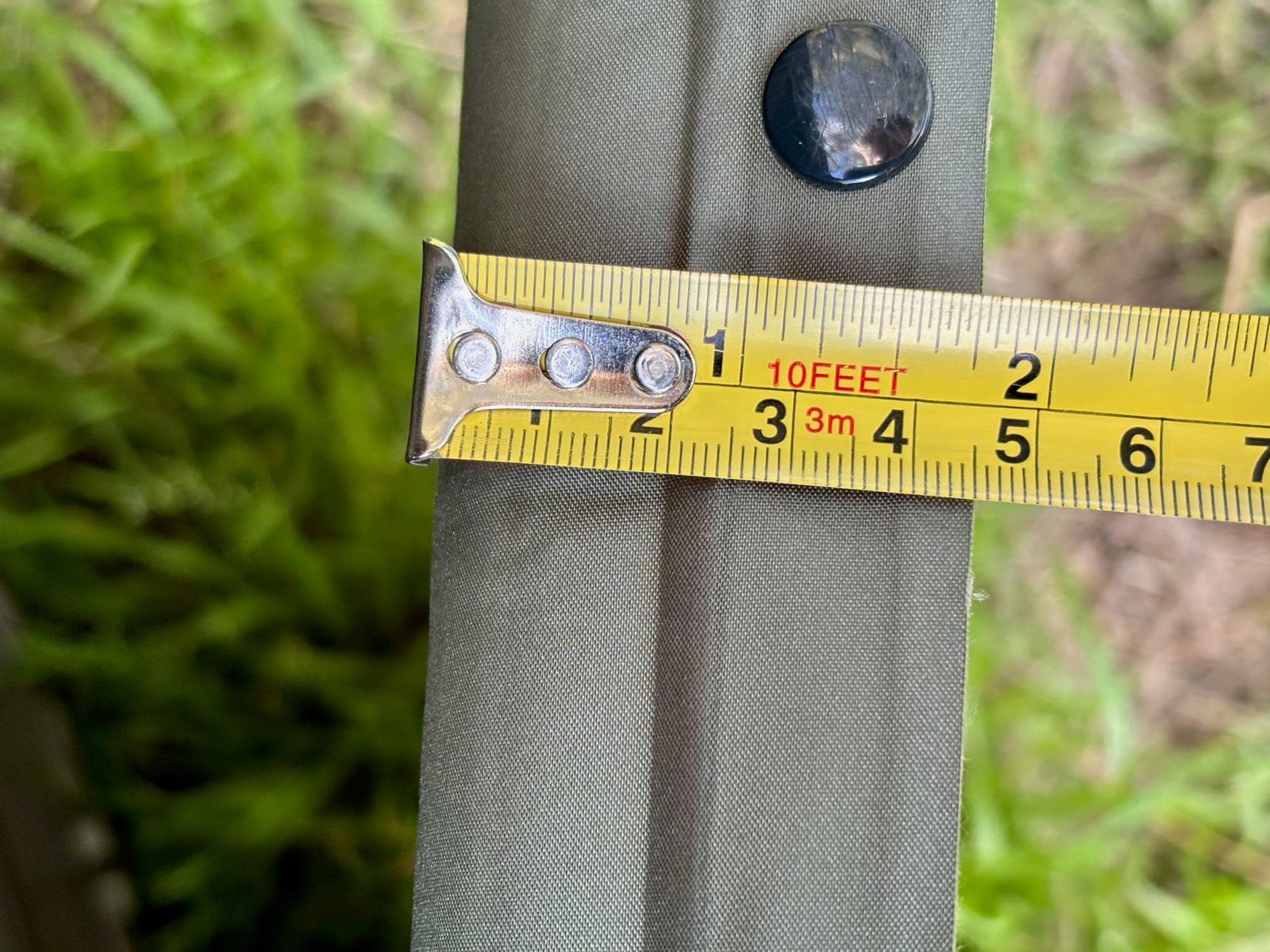
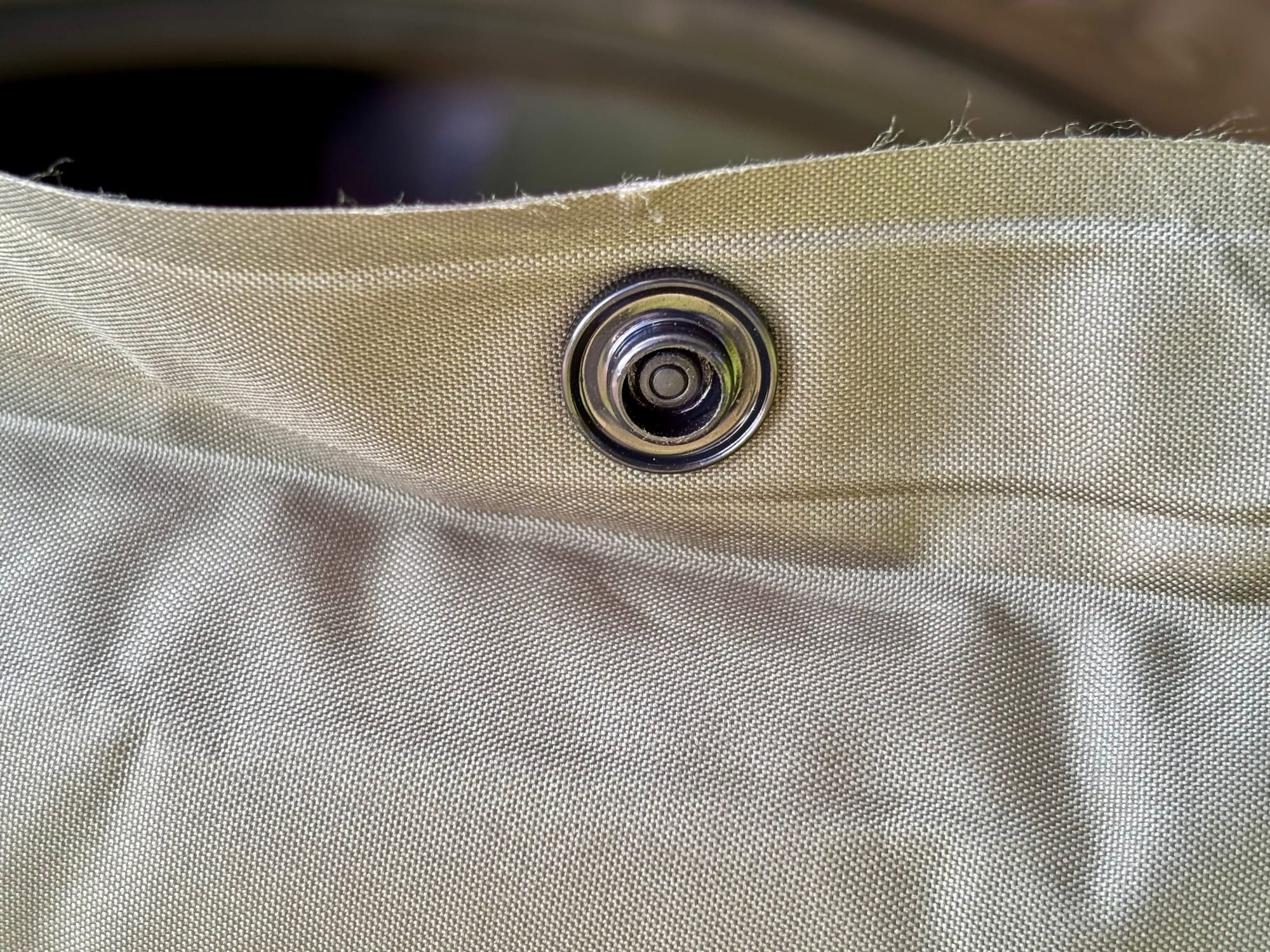
Along the sides are snap buttons. They let you connect two pads side by side, so a couple can turn two singles into a double that doesn’t drift apart during the night. It’s a simple feature, and a useful one if you buy a pair.
Size, weight and build
The pad weighs 2.14 kg. That’s light for a foam-filled mat of this size, but it’s too much to carry far, so I see it as a mat for the car, a swag or the tent next to the 4WD, not for hiking.
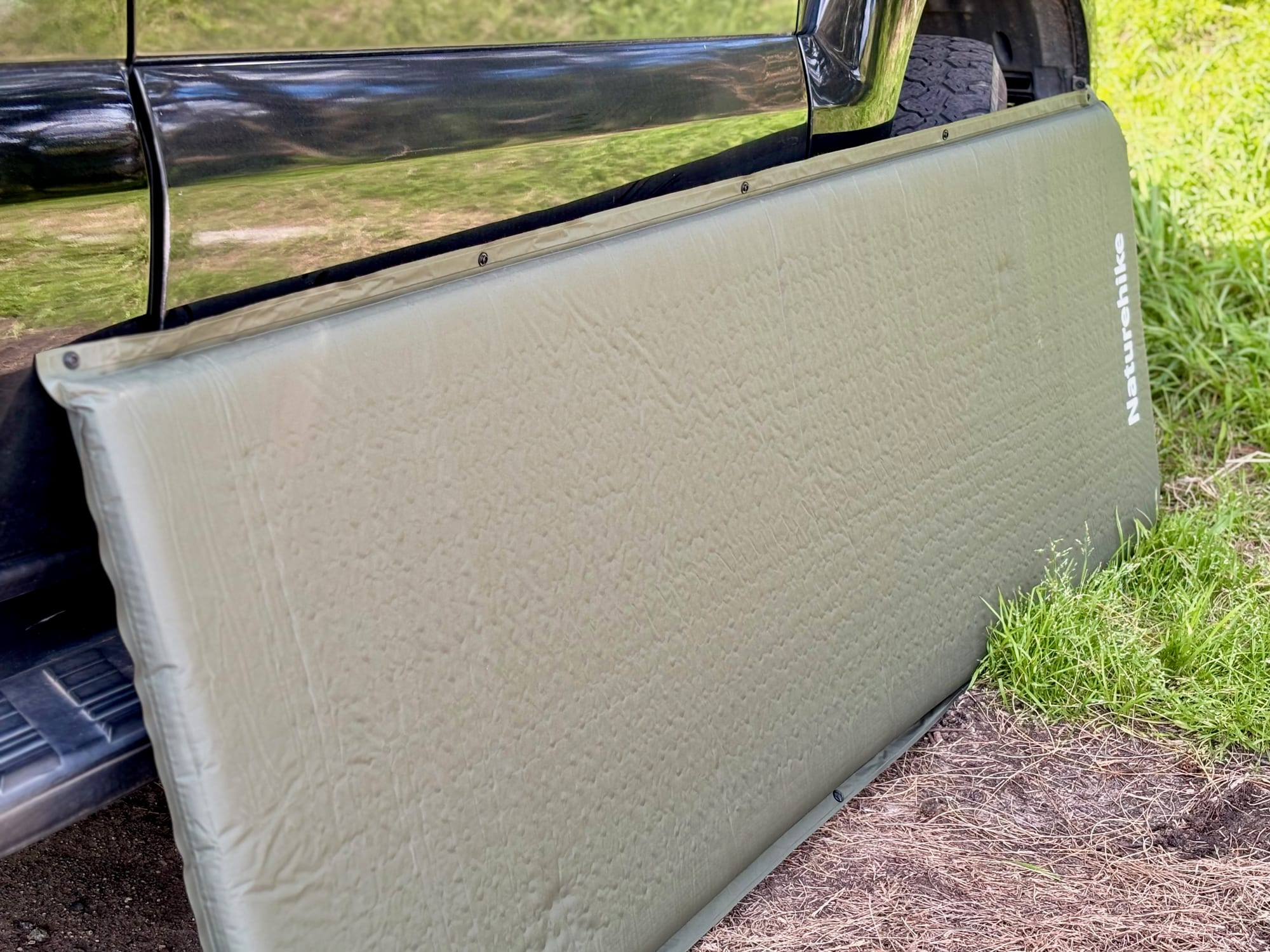
The outer fabric is polyester with a PU coating for water resistance, and the seams are heat-sealed. Stood up against the Prado, it holds its shape well, which gives a fair idea of how much support the foam gives.
Conclusion: Naturehike D-Series Self-Inflating Sleeping Pad
The Naturehike D-Series is a good middle-of-the-road camping mat. At 5 cm it gives just enough comfort and still packs away easily, it’s long and wide, and two of them snap together into a double. The self-inflating was slow on the first go and only gets to about 70%, so you top it up yourself, and at 2.14 kg it’s for car camping. For $60, it’s good value.
For the other mats we’ve tested, see our best camping mattresses guide.
A 5 cm self-inflating pad with an R-value of 4.8 and a good balance of comfort and packed size, at $60.
The self-inflating was very slow on the first go and only gets to about 70%, and at 2.14 kg it’s a mat for the car, not the backpack. A good pick for campers and 4WDers who want comfort without a bulky mattress.
- Campers
- 4WD tourers
Yes. I paid $60, and for that you get a long, wide 5 cm foam pad that packs away small. Thicker mats are more comfortable, but they cost more and take up a lot more room.