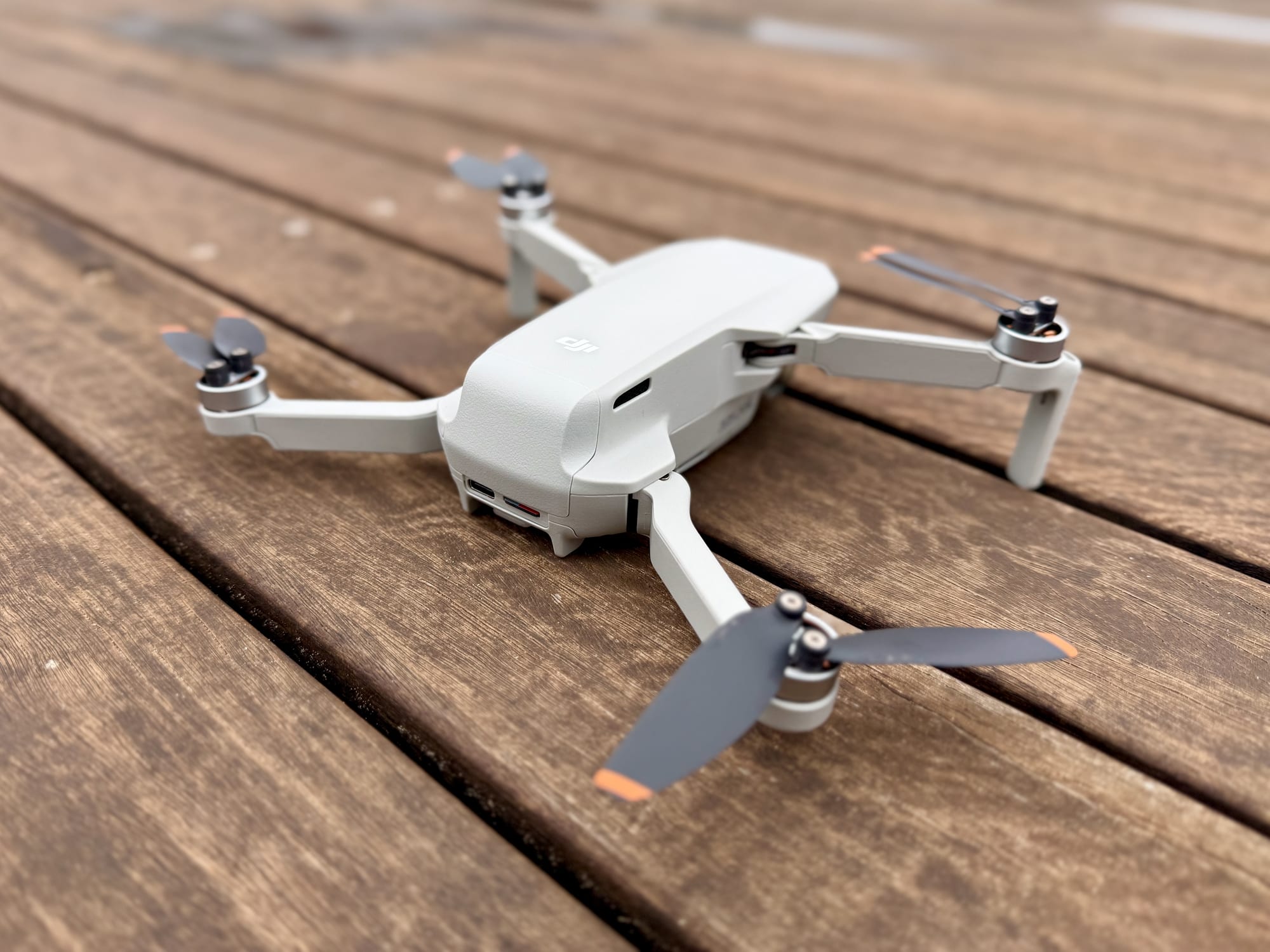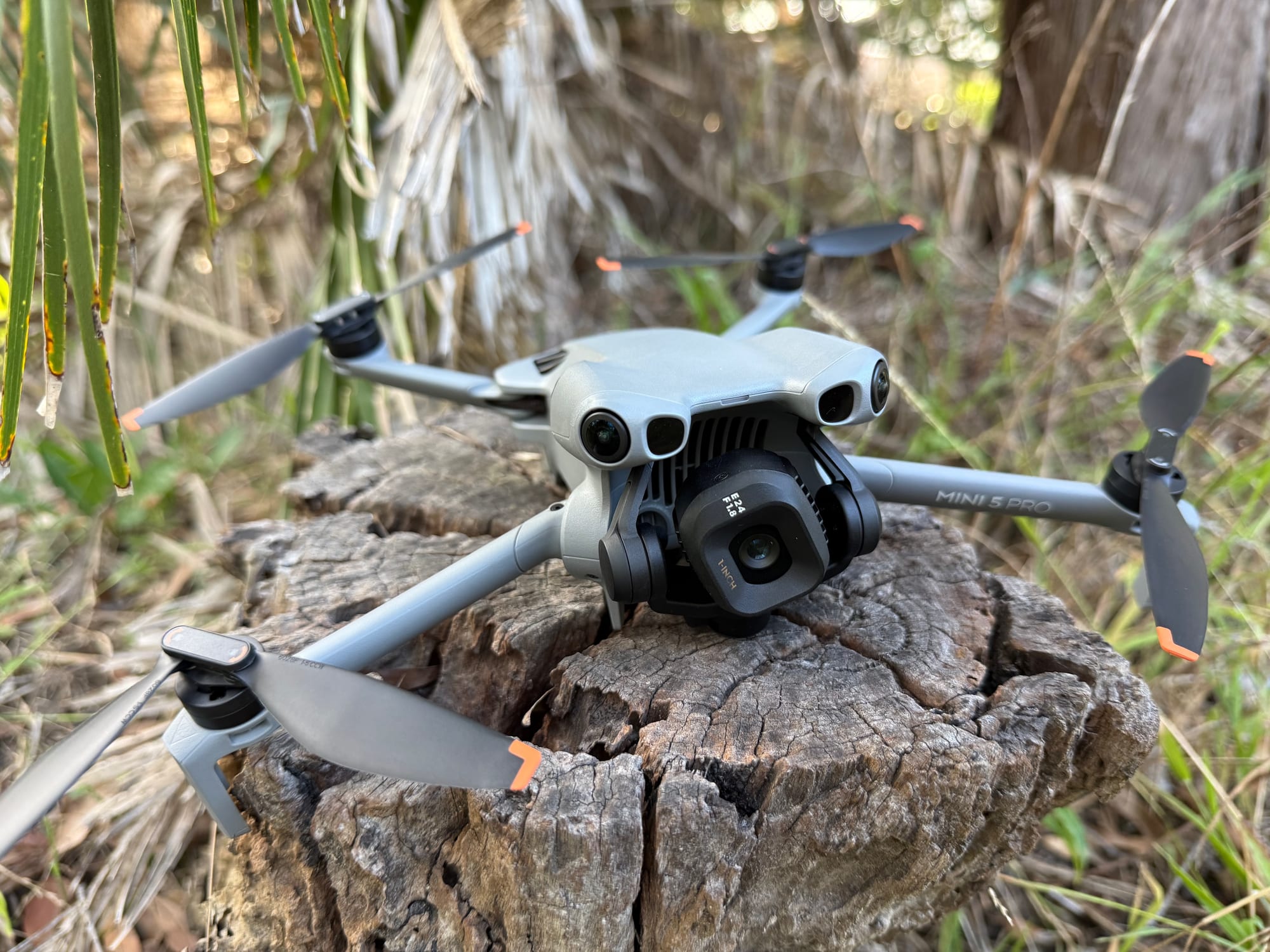
The DJI Mini 5 Pro is the drone we upgraded to from the DJI Mini 4K. We use it the same way on our trips: for scenic shots, to check the track ahead when driving in remote areas and to find good fishing spots along the coast. Both drones shoot great content, but the Mini 5 Pro is much better when the light drops: at sunrise, sunset and in the shade you really see much more detail. We paid $1,700 for the Fly More Combo with the DJI RC 2 remote.
What’s in the box
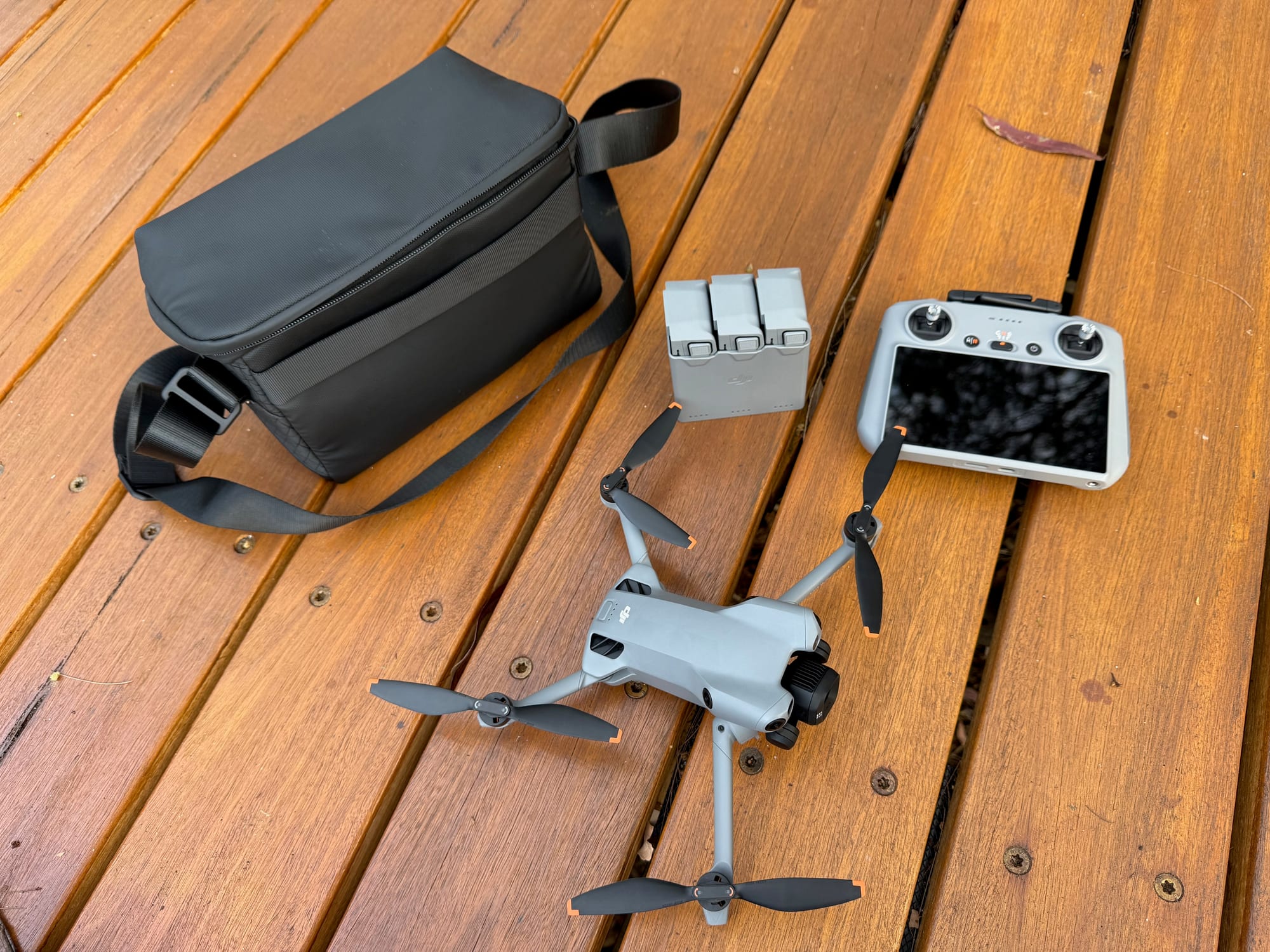
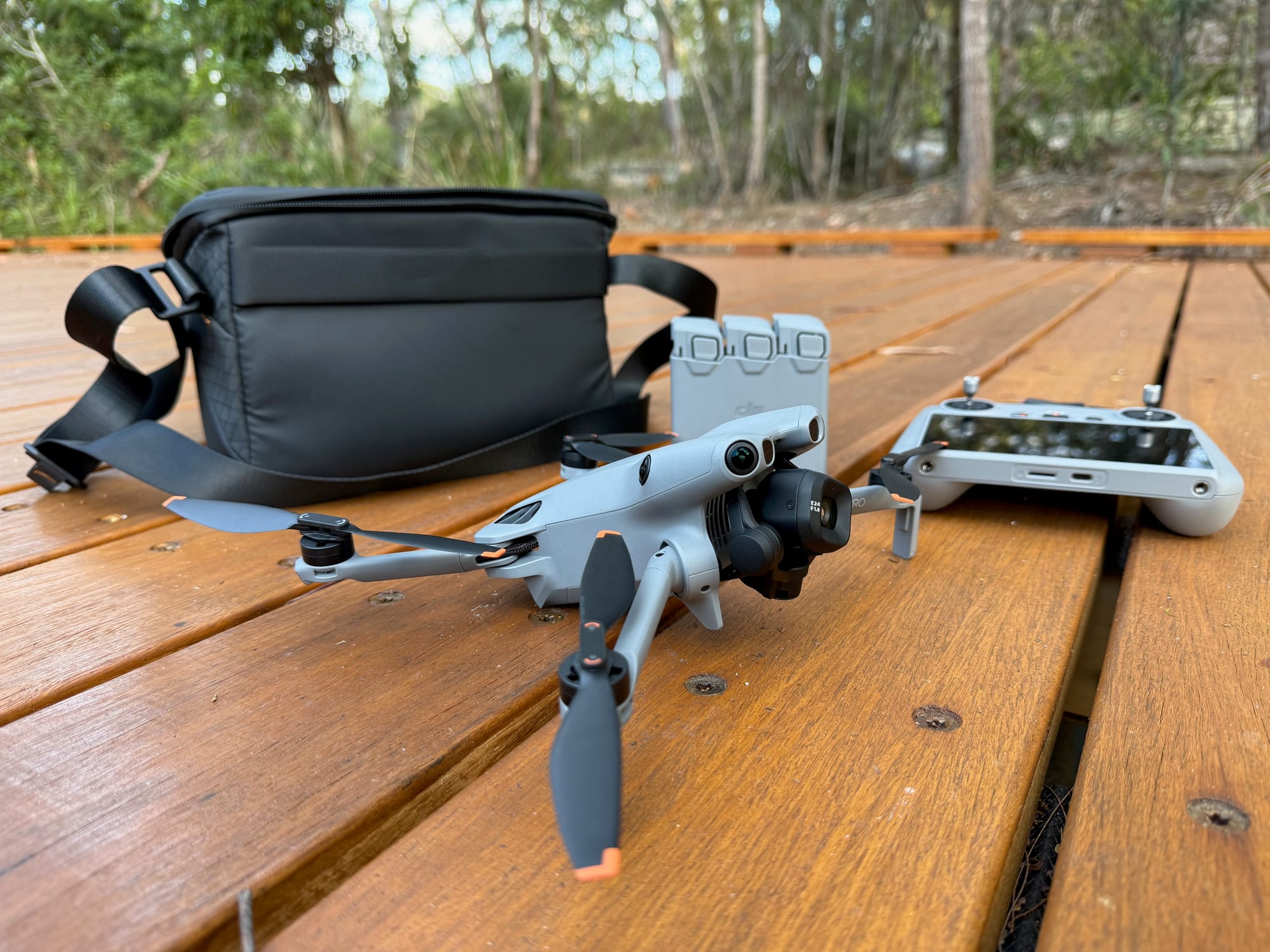
The Fly More Combo (DJI RC 2) we bought comes with the drone, the RC 2 remote with its built-in screen, three batteries in a charging hub, a set of three ND filters and a shoulder bag that holds the lot. The Mini 5 Pro also comes in three other packages; we compare them under Which package to buy, below.
What we like
- 1-inch sensor: great in low light
- Sensors all round, plus LiDAR
- True vertical shooting
- Rock-solid O4+ signal
- RC 2 remote has its own screen
- Still under 250 g
What we don’t
- Pricey, more so with the RC 2
- Steeper learning curve
- Footage on a card, not your phone
Quick Specs
| Spec | Details |
|---|---|
| Brand | DJI |
| Weight | 249.9 g |
| Camera | 1-inch CMOS50 MP |
| Video | 4K at up to 120 fps10-bit |
| Flight time | Up to 36 min |
| Range | Up to 20 kmDJI O4+ |
| Obstacle sensing | All aroundPlus forward LiDAR |
| Features | 42 GB insidePlus microSD card |
| Included | RC 2 remote3 batteriesCharging hubND filtersShoulder bag |
Camera and low light
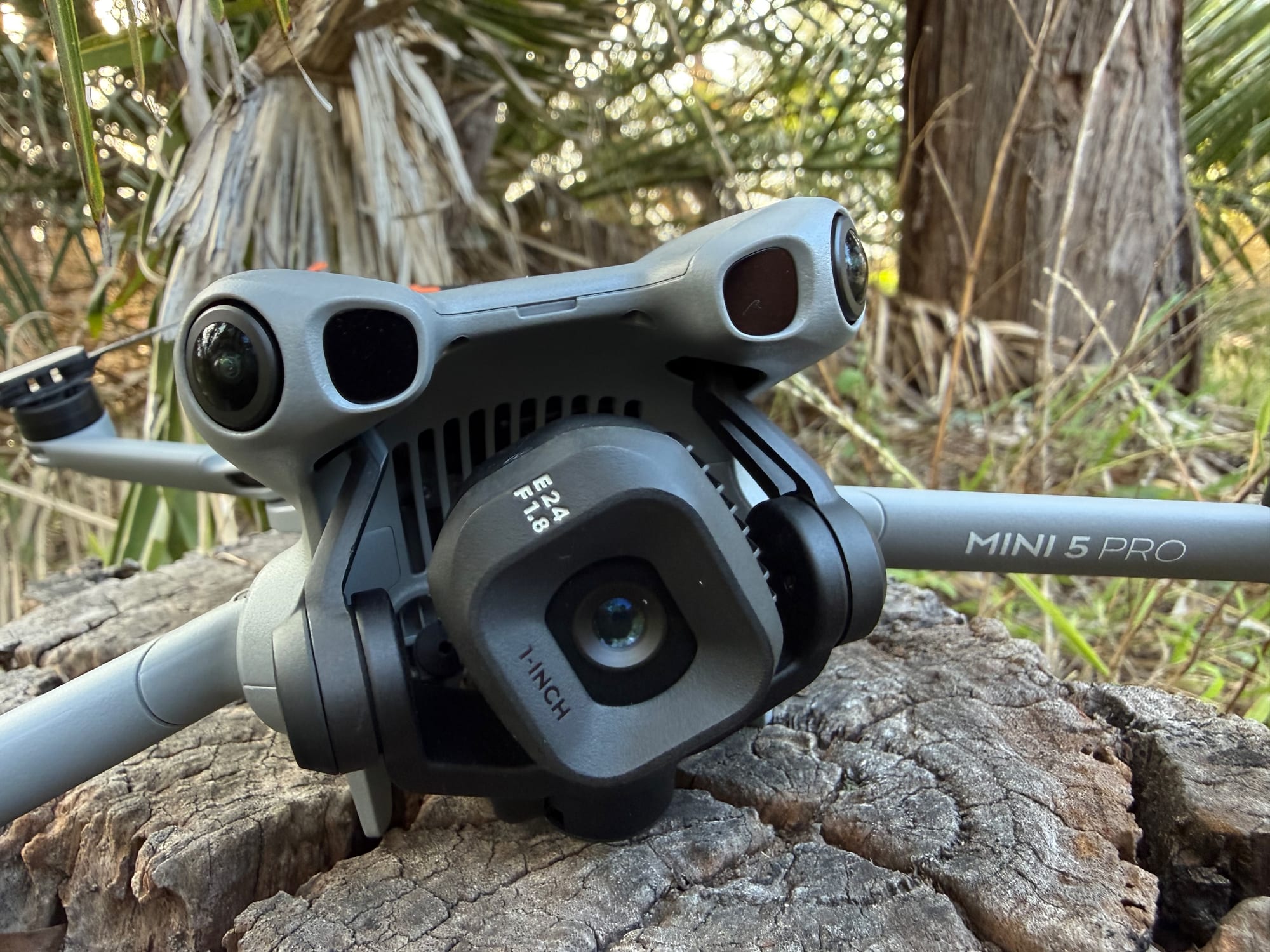
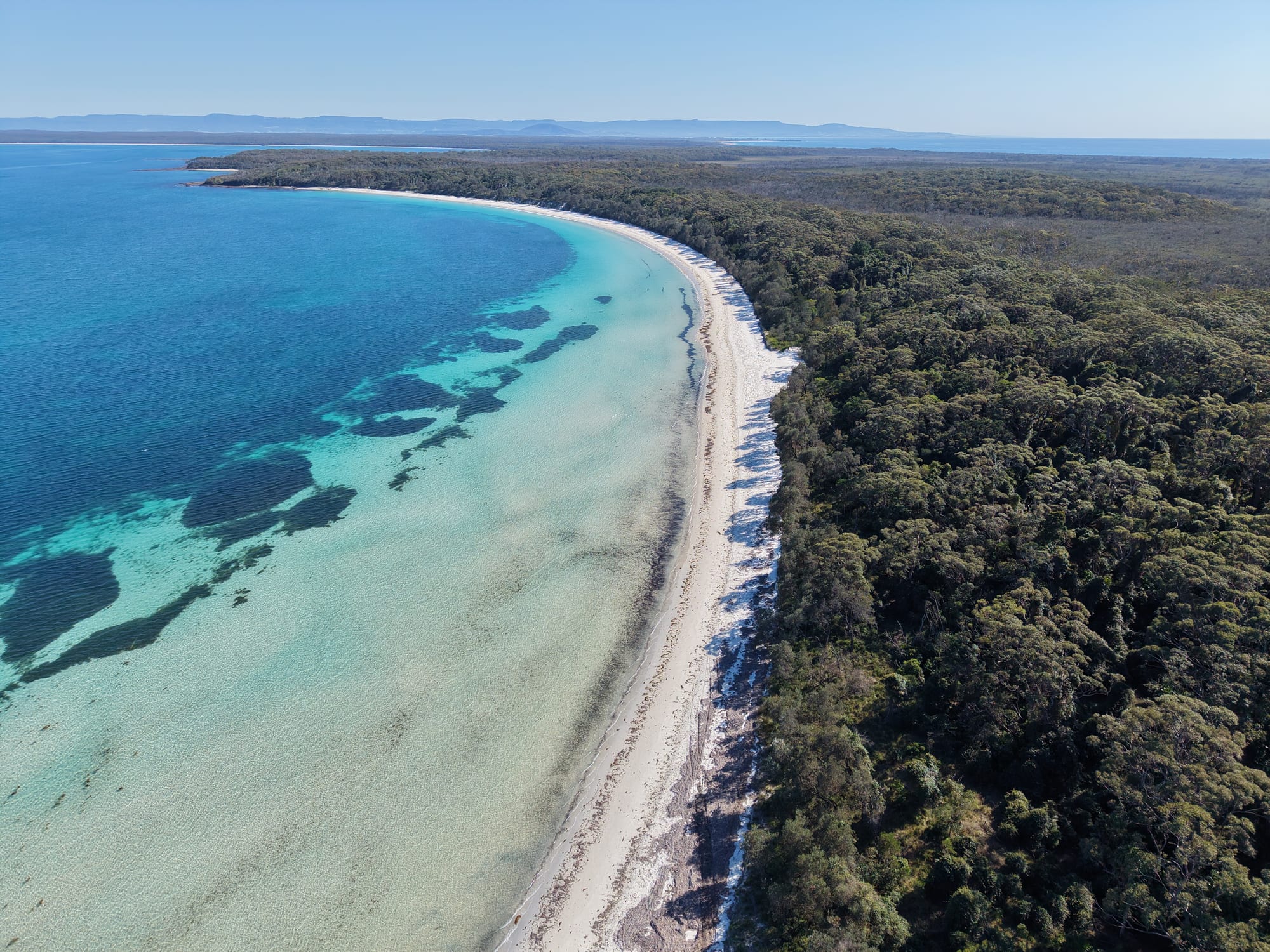
This is why we upgraded. The Mini 5 Pro has a 1-inch sensor, much bigger than the Mini 4K’s, and shoots 50 MP photos and 4K video at up to 120 frames a second for slow motion, in 10-bit colour. In good light both drones look great, but at sunrise, sunset and in the shade the Mini 5 Pro keeps much more detail in the shadows and the sky. If you’re out early or late, which is when the coast and the bush look their best, that’s where it earns its price.
The gimbal also rotates 90 degrees, so it can shoot true vertical photos and video for your phone and social media, without cropping. All that comes with more settings: the menus and colour profiles like D-Log have a steeper learning curve than the Mini 4K’s if you’ve never flown a drone, though you can leave them on auto to start with.
ND filters
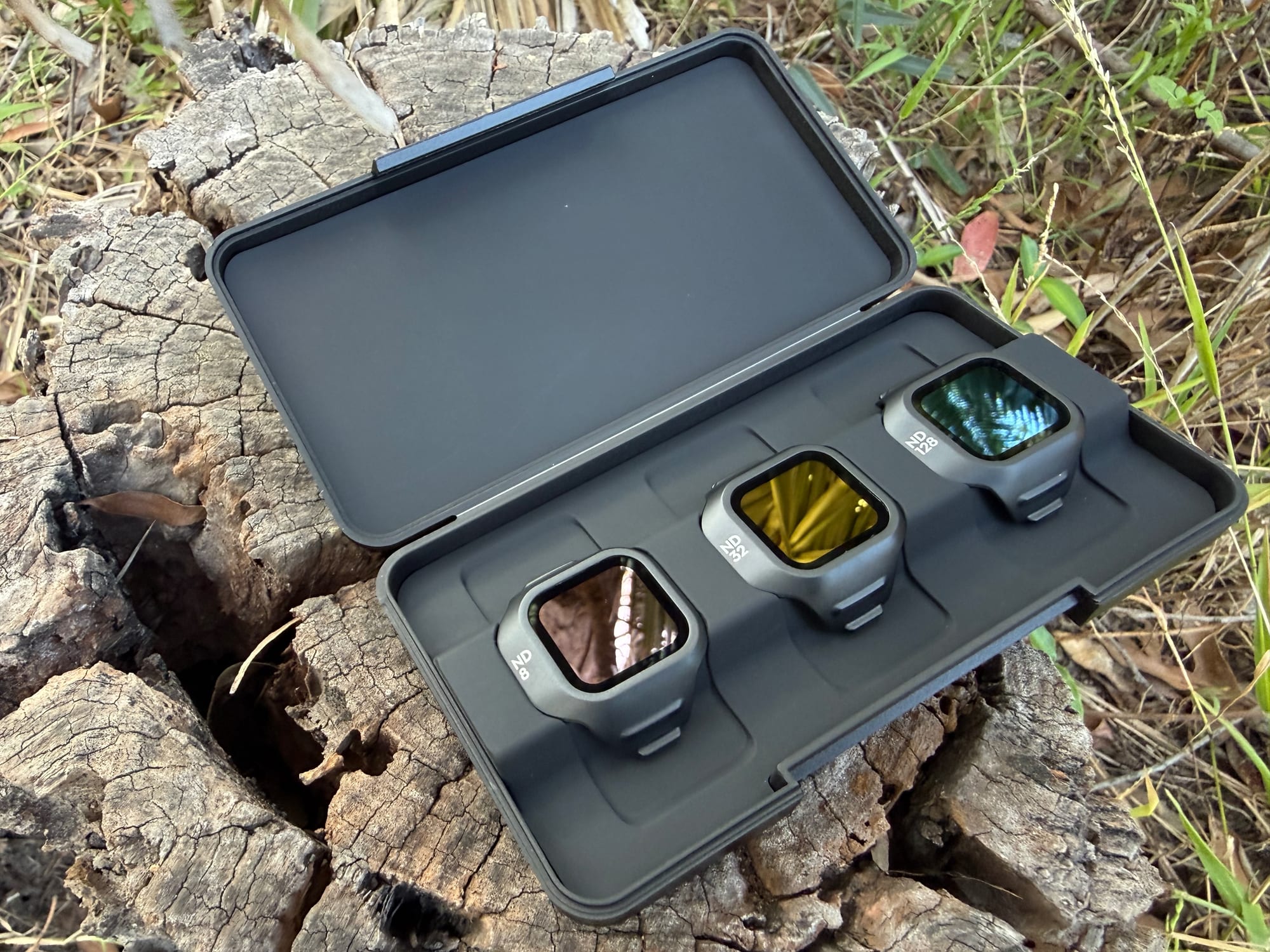
Our Fly More Combo also came with a case of three ND filters: ND8, ND32 and ND128. ND stands for neutral density, and they work like sunglasses for the camera. They cut the light without changing the colours: the ND8 lets through an eighth of the light, the ND32 a thirty-second and the ND128 a hundred-and-twenty-eighth. Each one clips over the camera on the gimbal.
Why bother? In bright Australian sun the camera has to use a very fast shutter speed, and video then looks choppy and jittery, especially when you fly over waves or a moving 4WD. With a filter on, the drone can use a slower shutter speed (a rule of thumb is double the frame rate, so 1/60 of a second at 30 fps), which gives the natural motion blur that makes footage look smooth. As a guide: the ND8 for cloudy days and early mornings, the ND32 for normal sun and the ND128 for bright midday light over sand, water or snow. For photos and in low light you leave them off.
The RC 2 remote
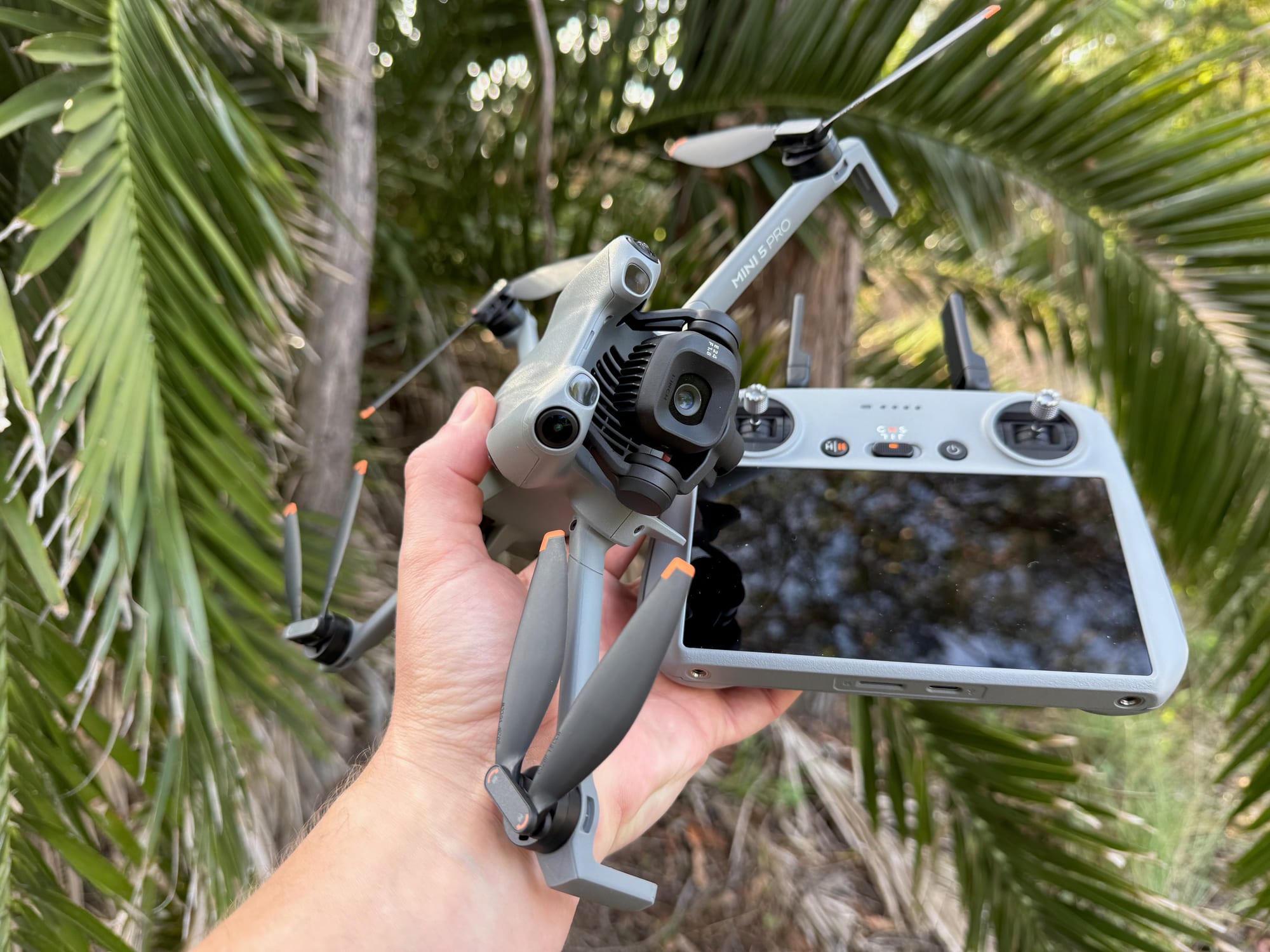
The RC 2 remote in our combo has a screen built in, so you don’t need your phone to get it going: switch on the drone and the remote and you’re flying. That’s very handy at a lookout or on the beach, and it leaves your phone free for photos and maps.
The trade-off is getting your footage off. The Mini 5 Pro has some storage inside, but we mainly rely on the microSD card, so after a day of flying you take the card out and put it in the laptop. With the Mini 4K and your phone on the remote, what you shot was already in your camera roll.
Flying it on a trip
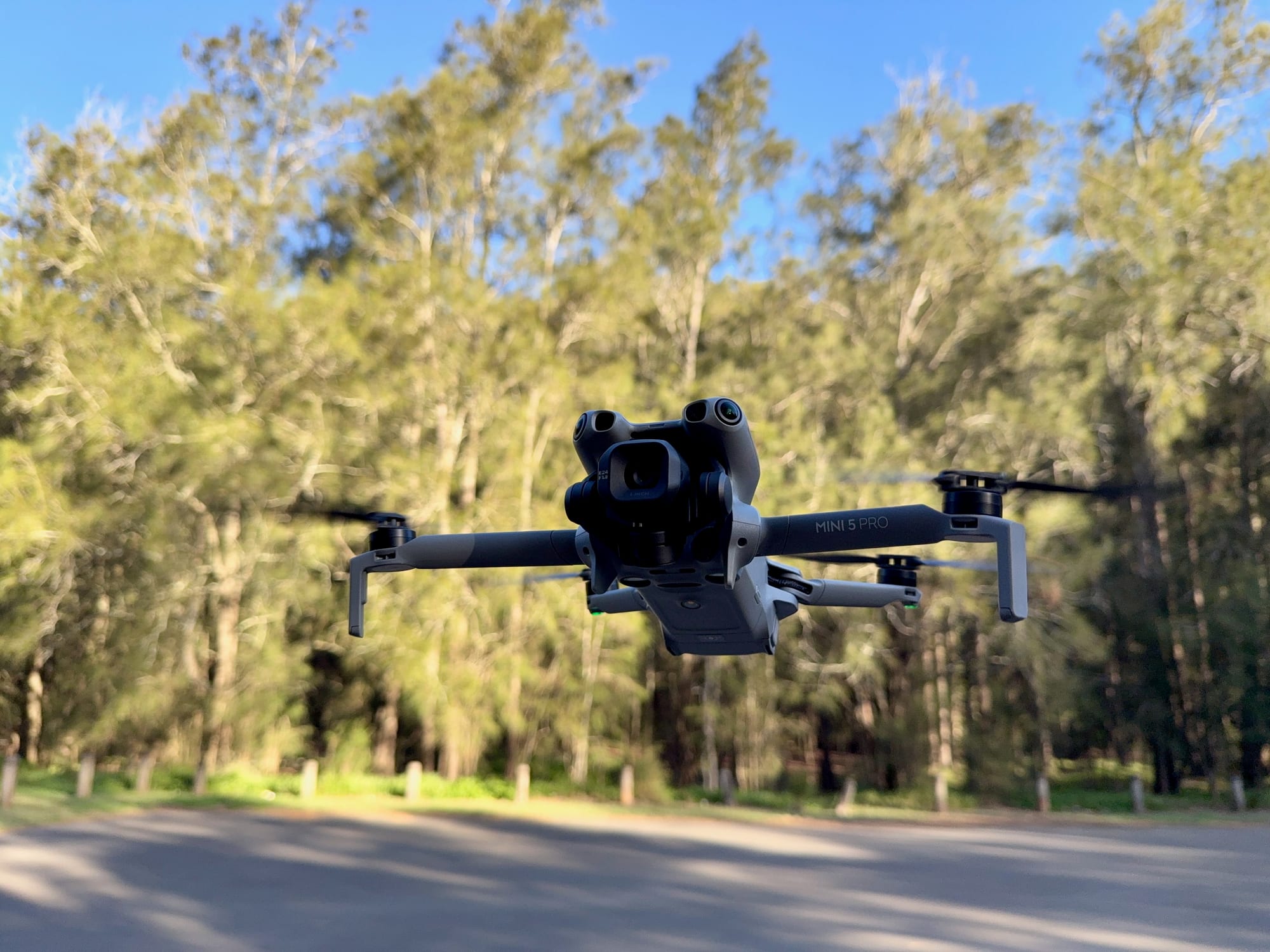
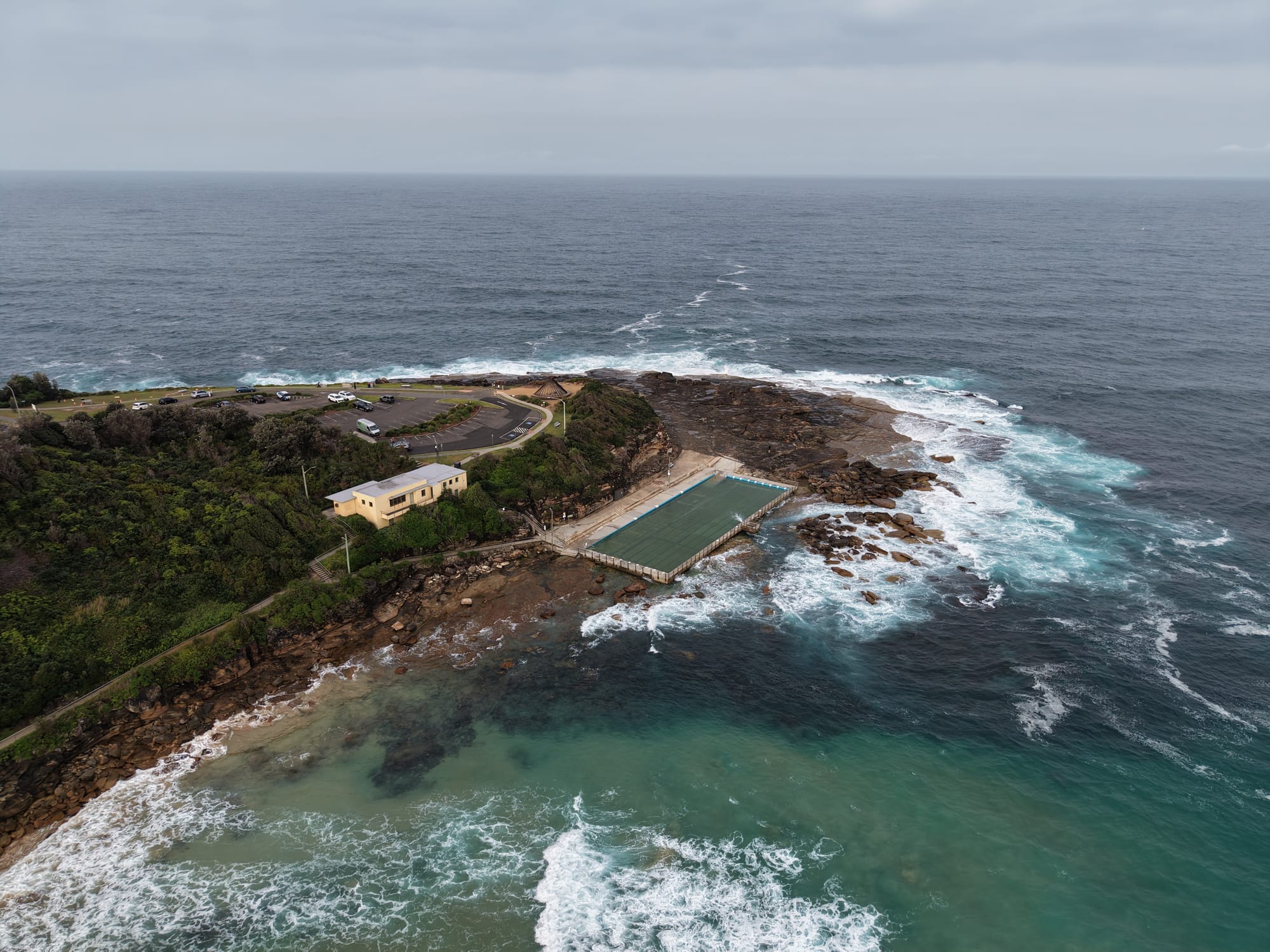
The Mini 5 Pro senses obstacles all around, with LiDAR facing forward, where the Mini 4K only had sensors underneath. That makes it less nerve-racking to fly low along a track, between trees or near a cliff, when you’re checking the way ahead or looking for gutters and rocks to fish off. You still need to keep it in sight and fly carefully, but it’s much less likely to hit something. Its O4+ video link also holds a steadier signal than the Mini 4K’s O2, even around buildings and trees.
Batteries and charging
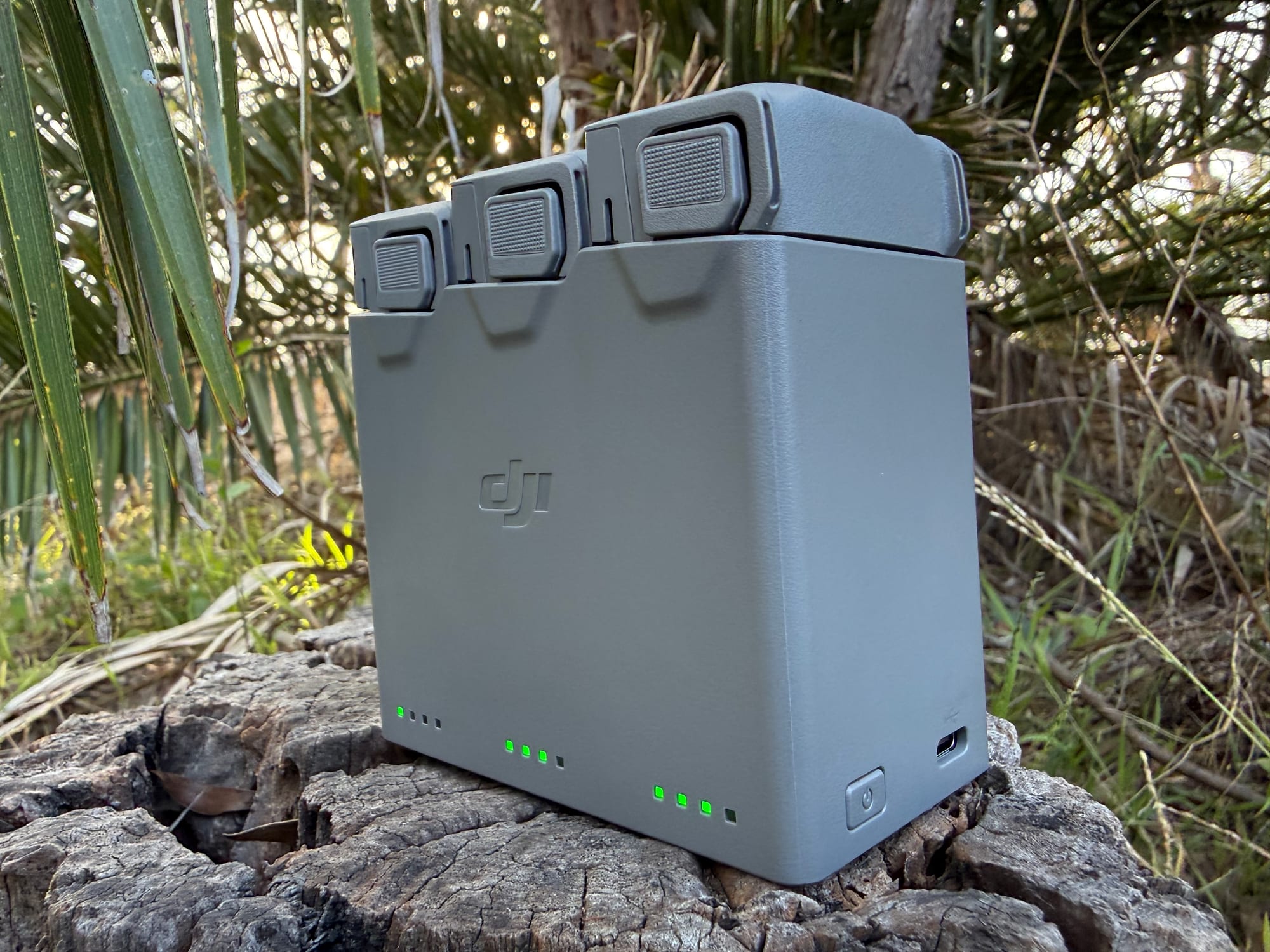
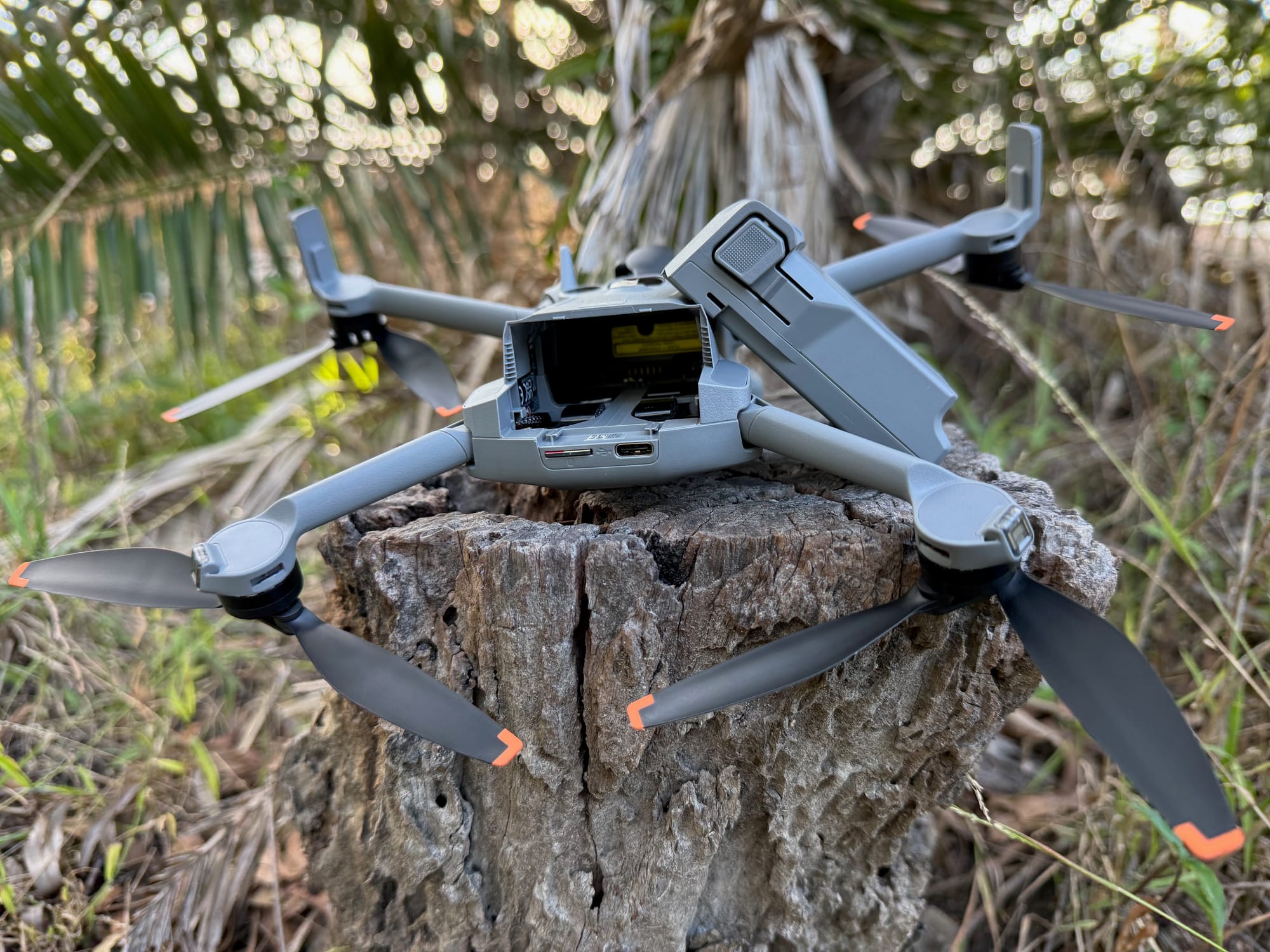
DJI quotes up to 36 minutes with the standard battery, and the Fly More Combo comes with three of them. After flying the Mini 4K on one battery, that’s the biggest change for day trips: you can fly at sunrise, check the track at lunch and still have a battery for the sunset. The charging hub holds all three, with lights on the front to show how full each one is.
Size and the shoulder bag
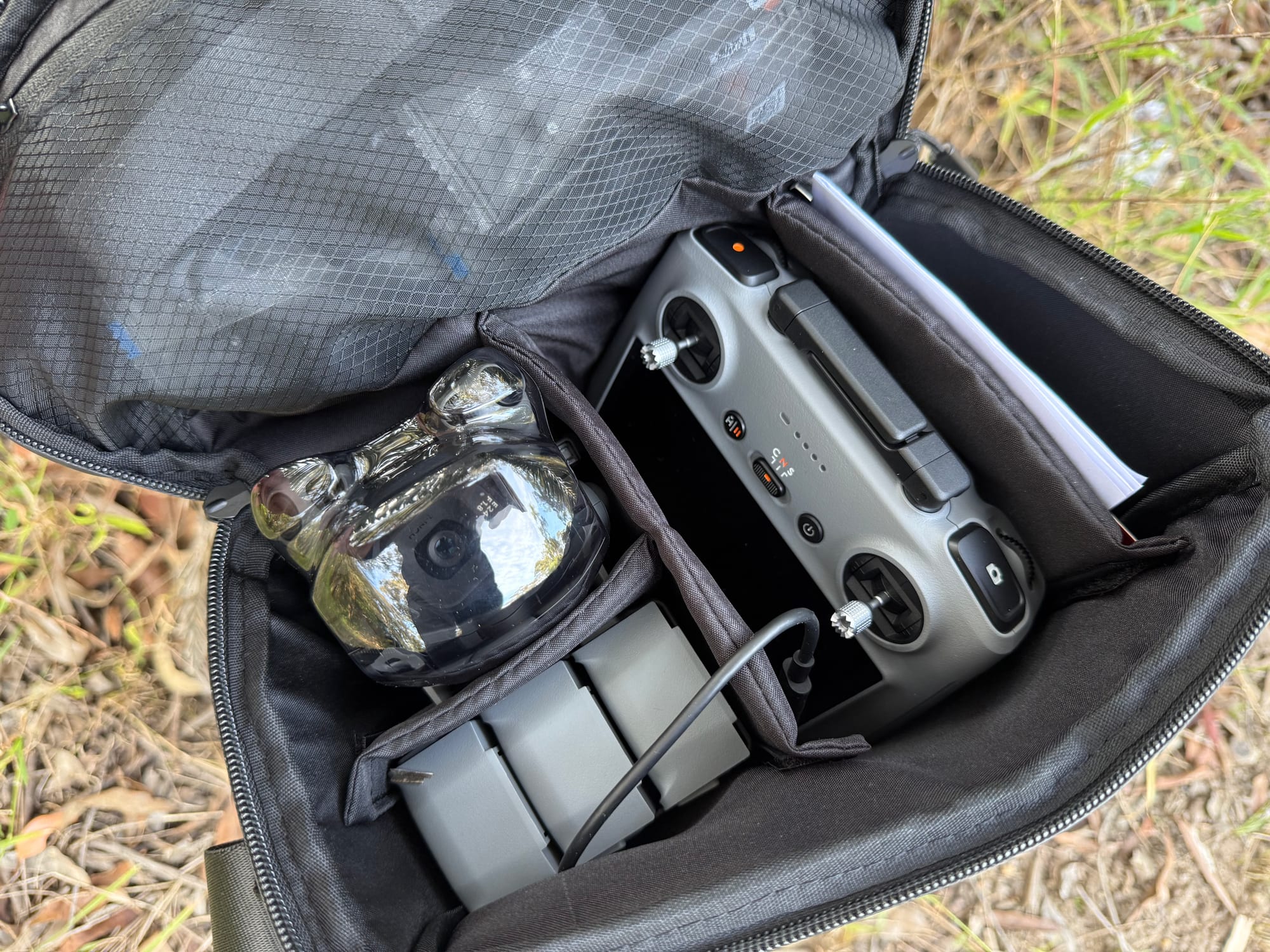
At 249.9 g with the standard batteries, the Mini 5 Pro is still under 250 g, so in Australia you can fly it for fun without a licence or registration. Folded up it’s small, and the combo’s shoulder bag holds the drone, the RC 2 and the batteries in their own sections, so everything comes out of the car together.
Which package to buy
The Mini 5 Pro comes in four packages on Amazon. They differ in the remote, the number of batteries and what else is in the box. The cheapest come with the DJI RC-N3, which uses your phone as the screen, like the Mini 4K’s remote. We bought the Fly More Combo (DJI RC 2), and we think it’s the sweet spot: the built-in screen saves your phone battery and the setting up, and three batteries cover a full day out.
| Cheapest Drone only (RC‑N3) | Best value Fly More (RC‑N3) | Tested Fly More (RC 2) | Most flying Fly More Plus (RC 2) | |
|---|---|---|---|---|
| Charging hub | No | Yes | Yes | Yes |
| Shoulder bag | No | Yes | Yes | Yes |
| Under 250 g | Yes | Yes | Yes | No |
| Remote | RC-N3, uses your phone | RC-N3, uses your phone | RC 2 with screen | RC 2 with screen |
| Batteries | 1 | 3 | 3 | 3 Plus |
| Total flight time | 36 min | 108 min | 108 min | 156 min |
| Spare propellers | 1 set | 3 sets | 3 sets | 3 sets |
| Per battery | 36 min | 36 min | 36 min | 52 min |
| Shop | Check price at Amazon | Check price at Amazon | Check price at Amazon | Check price at Amazon |
The Fly More Combo Plus gives you 2.6 hours of flying, but the bigger Plus batteries push the drone over 250 g. Then you lose the sub-250 g leeway: for example, a drone over 250 g has to stay at least 5.5 km from controlled airports.
Drone rules in Australia
Flying for fun, you don’t need a licence or to register a drone like the Mini 5 Pro in Australia, but you do have to follow CASA’s safety rules. These are the ones to know.
- Crowds and busy beaches
- Busy roads
- Bushfires, crashes and rescues
- Airports and helipads
Vs the Mini 4K
We flew the DJI Mini 4K before we upgraded. It’s a great first drone at a fraction of the price, and it puts your footage straight on your phone. The Mini 5 Pro is much better in low light, sees obstacles all around and has a remote with its own screen.
This one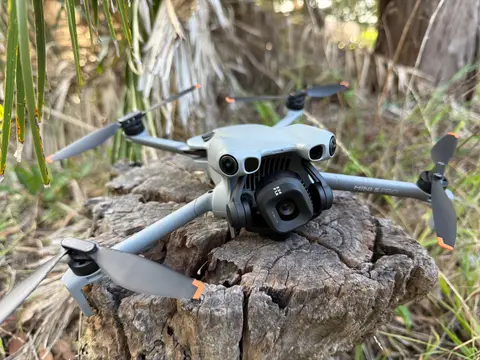 DJI Mini 5 Pro | 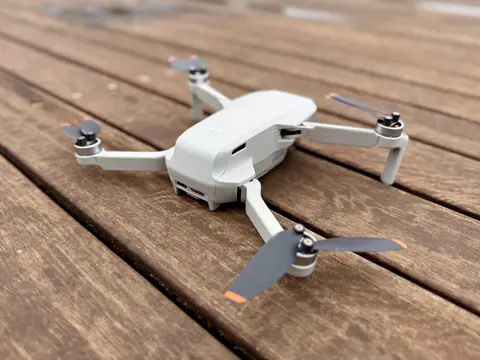 DJI Mini 4K | |
|---|---|---|
| Camera | 1-inch, 50 MP | 1/2.3-inch, 12 MP |
| Video | 4K at 120 fps | 4K at 30 fps |
| Low light | Much better | Good |
| Obstacle sensing | All around, plus LiDAR | Downward only |
| Flight time | 36 min | 31 min |
| Remote | RC 2 with screen | Phone clips on |
| Footage | microSD card | Straight to your phone |
| Weight | 249.9 g | Under 249 g |
| Price paid | $1700 | $450 |
| Our score | 9.5 | 8.9 |
Conclusion: DJI Mini 5 ProConclusion
The DJI Mini 5 Pro is the drone we’d take on a road trip now. Its 1-inch sensor shows much more detail in low light, it senses obstacles all around, and the Fly More Combo’s RC 2 remote, three batteries and shoulder bag make it easy to grab and fly at a lookout. It’s still under 250 g, so you can fly it for fun without a licence. Getting footage off means pulling out the microSD card, and at $1,700 it’s a big step up from the Mini 4K, but if you shoot at sunrise and sunset, it’s worth it.
The drone we upgraded to, and it shows when the light drops.
Its 1-inch sensor keeps much more detail at sunrise, sunset and in the shade, the RC 2 remote has its own screen and it senses obstacles all round. It's pricey, the footage goes to a microSD card rather than your phone, and there's more to learn.
- 4WD tourers
- Anglers
- Travellers
Yes, if you shoot a lot at sunrise and sunset or want the safety of all-round sensors. For daylight holiday shots, the Mini 4K does a great job for much less.