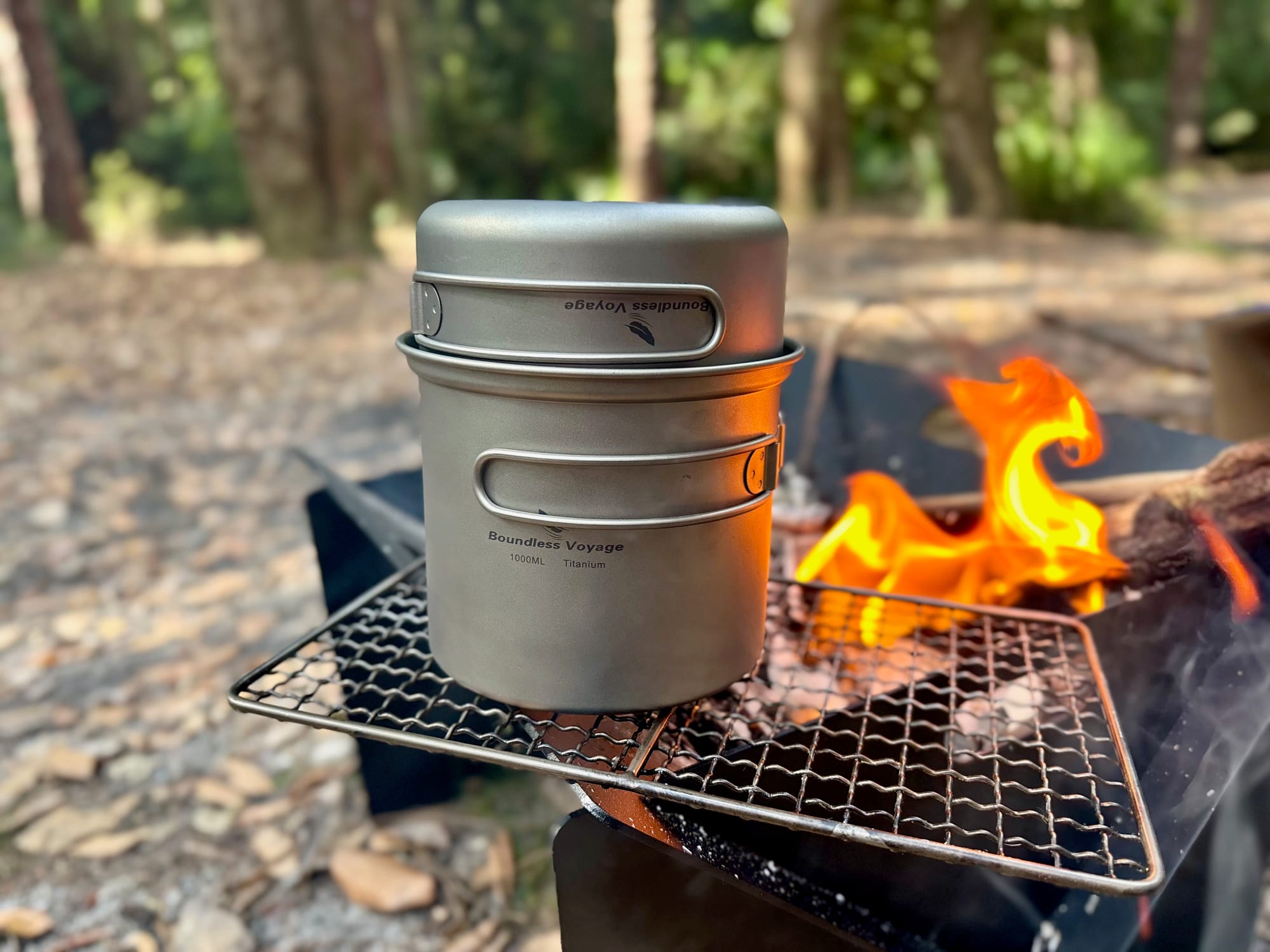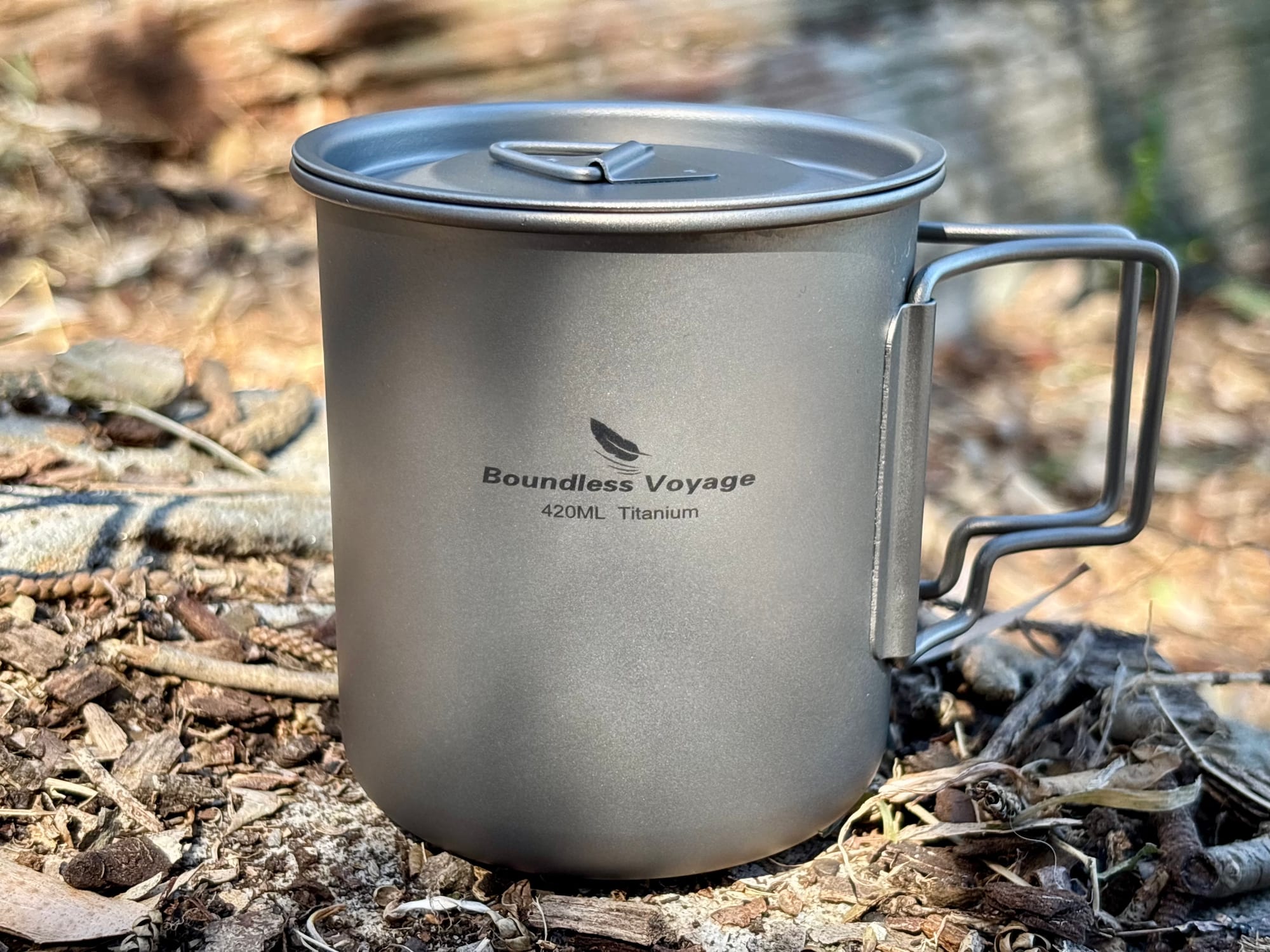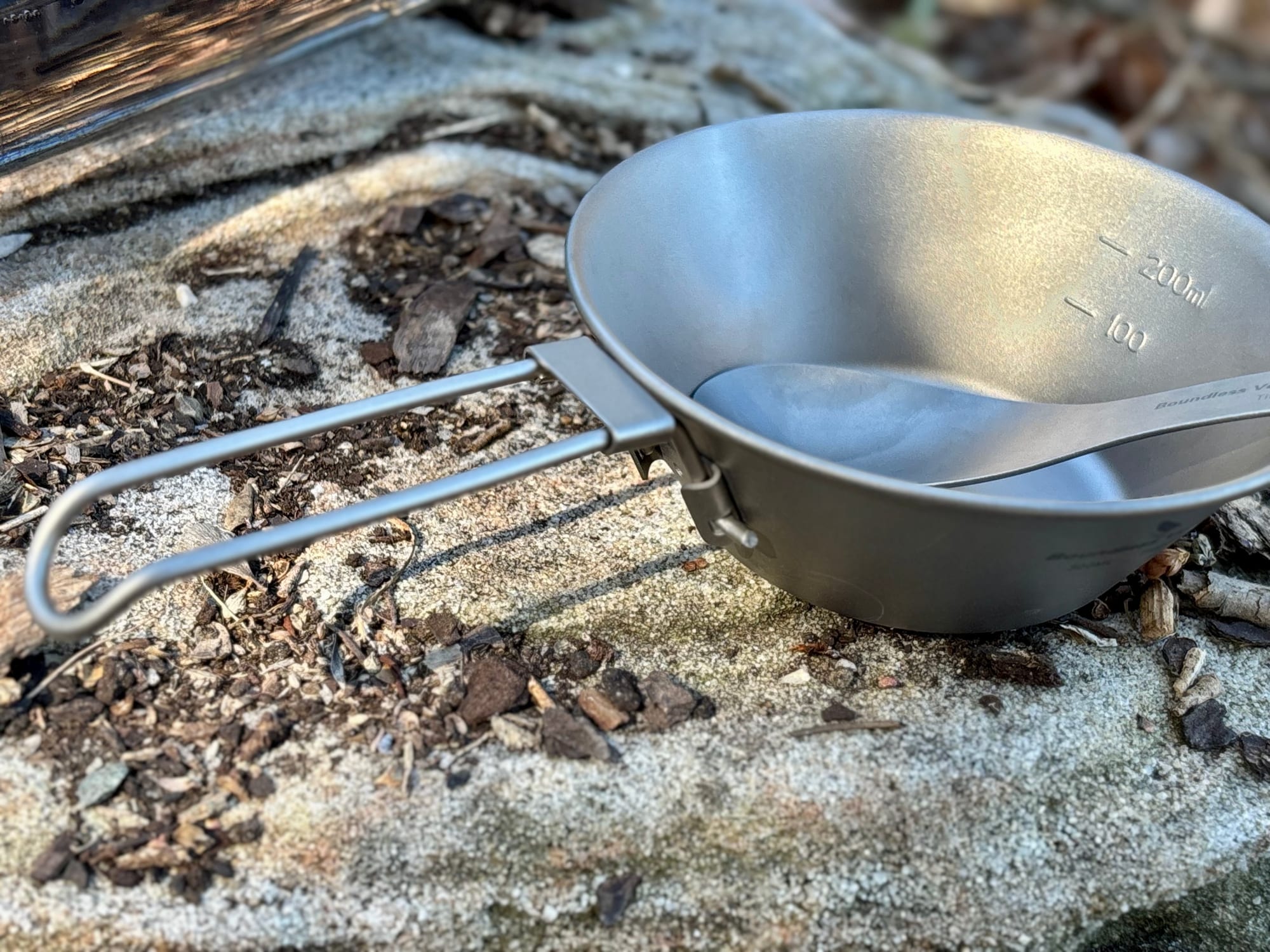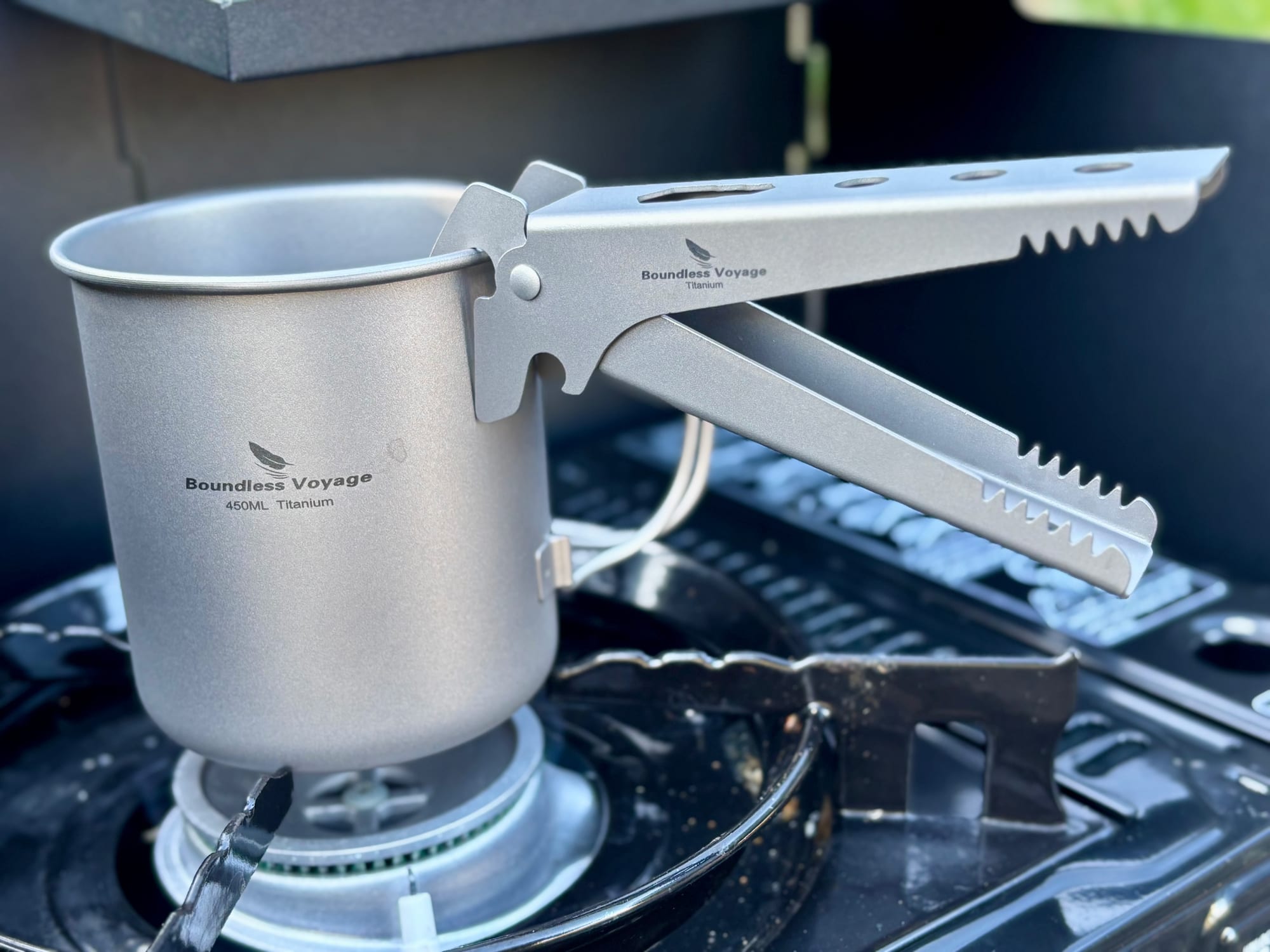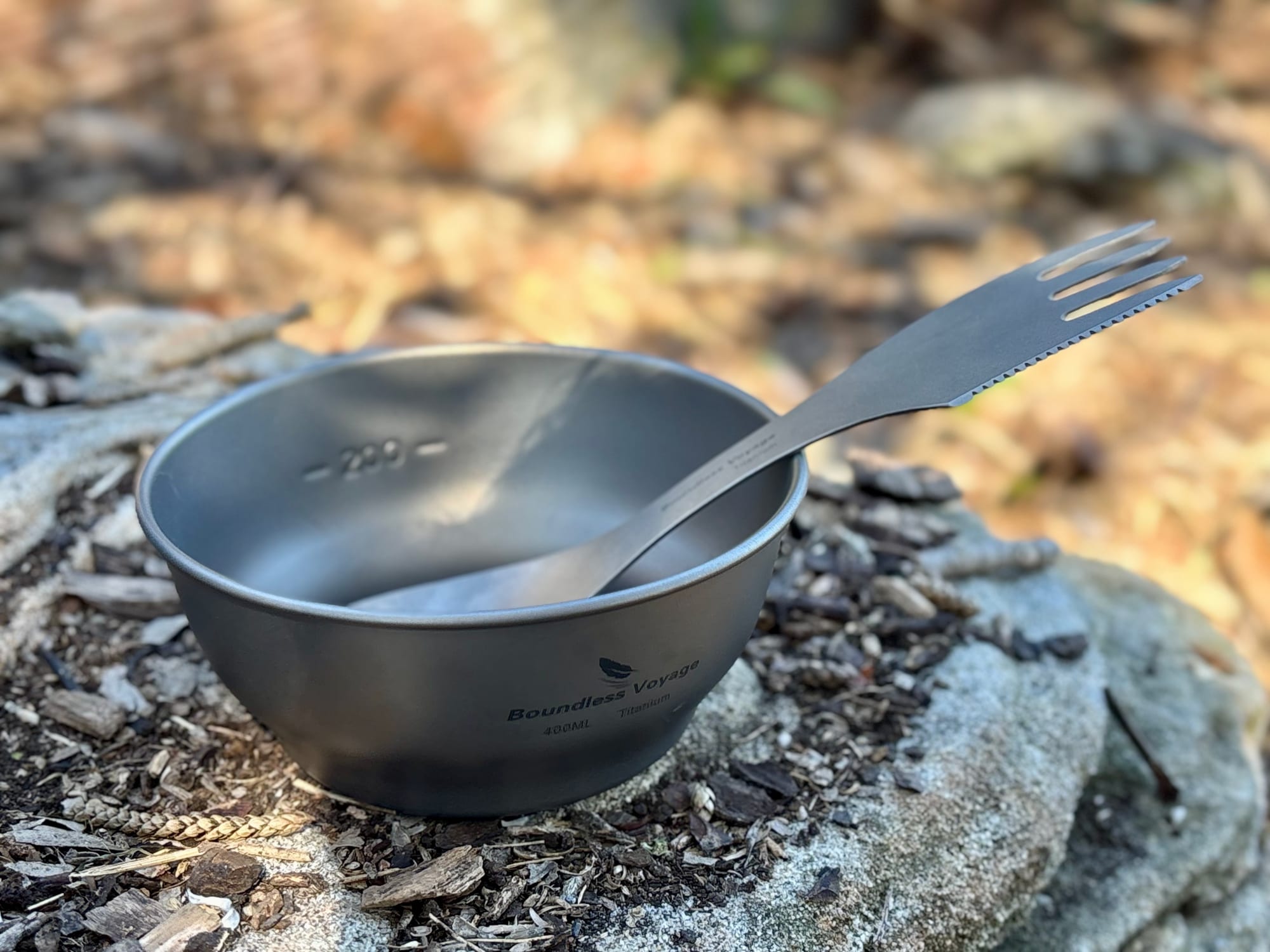
Titanium is the lightest metal you can cook and eat from at camp, and people often ask us if it’s safe. The short answer is yes: titanium camping cookware is pure, uncoated metal that doesn’t react with food. The trick is using it right, because titanium behaves differently from the pots at home: thin single-walled pieces heat fast and unevenly, and double-walled ones must never go on a flame.
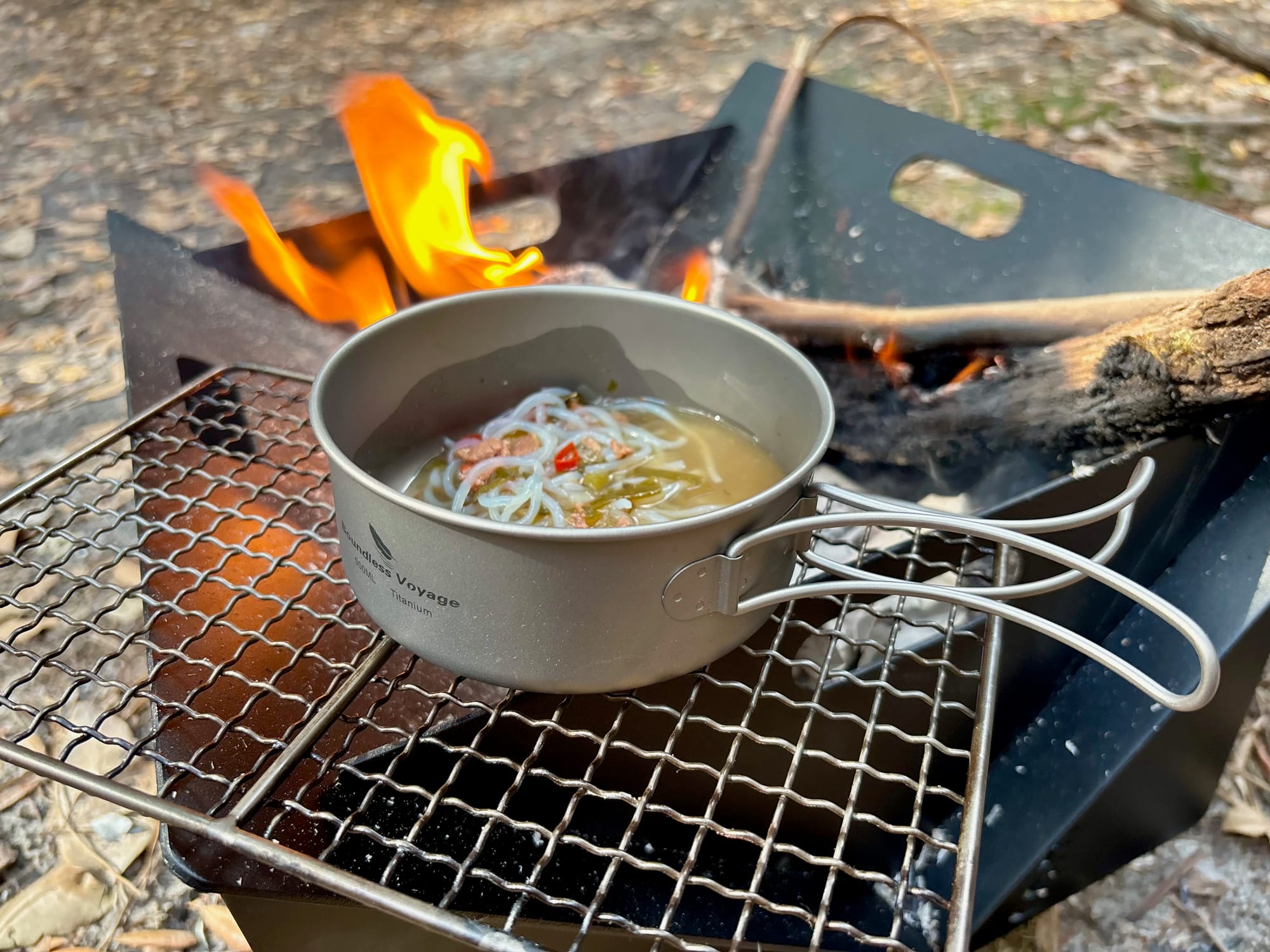
We’ve cooked noodle soup over a fire pit in a titanium pot and pan, brewed coffee into a titanium mug and eaten from titanium bowls on the road. Here’s what we’ve learned, and our titanium cookware guide compares the 17 pieces we’ve tested.
Is titanium safe to cook with?Is titanium safe to cook…
Yes. Pure titanium is one of the most inert metals there is: it doesn’t react with acidic or salty food, it doesn’t rust, and there’s no coating to chip or wear off. Nothing leaches into your food and it adds no metallic taste, which is why titanium is popular for coffee mugs and spirit flasks. It’s the same metal used for medical implants.
One thing to know: many “titanium” non-stick frying pans sold for the home kitchen aren’t titanium pans at all. They’re aluminium with a non-stick coating reinforced with titanium particles, and it’s the coating that wears. Camping pots, mugs and bowls like ours are plain titanium.
Single wall or double wall?
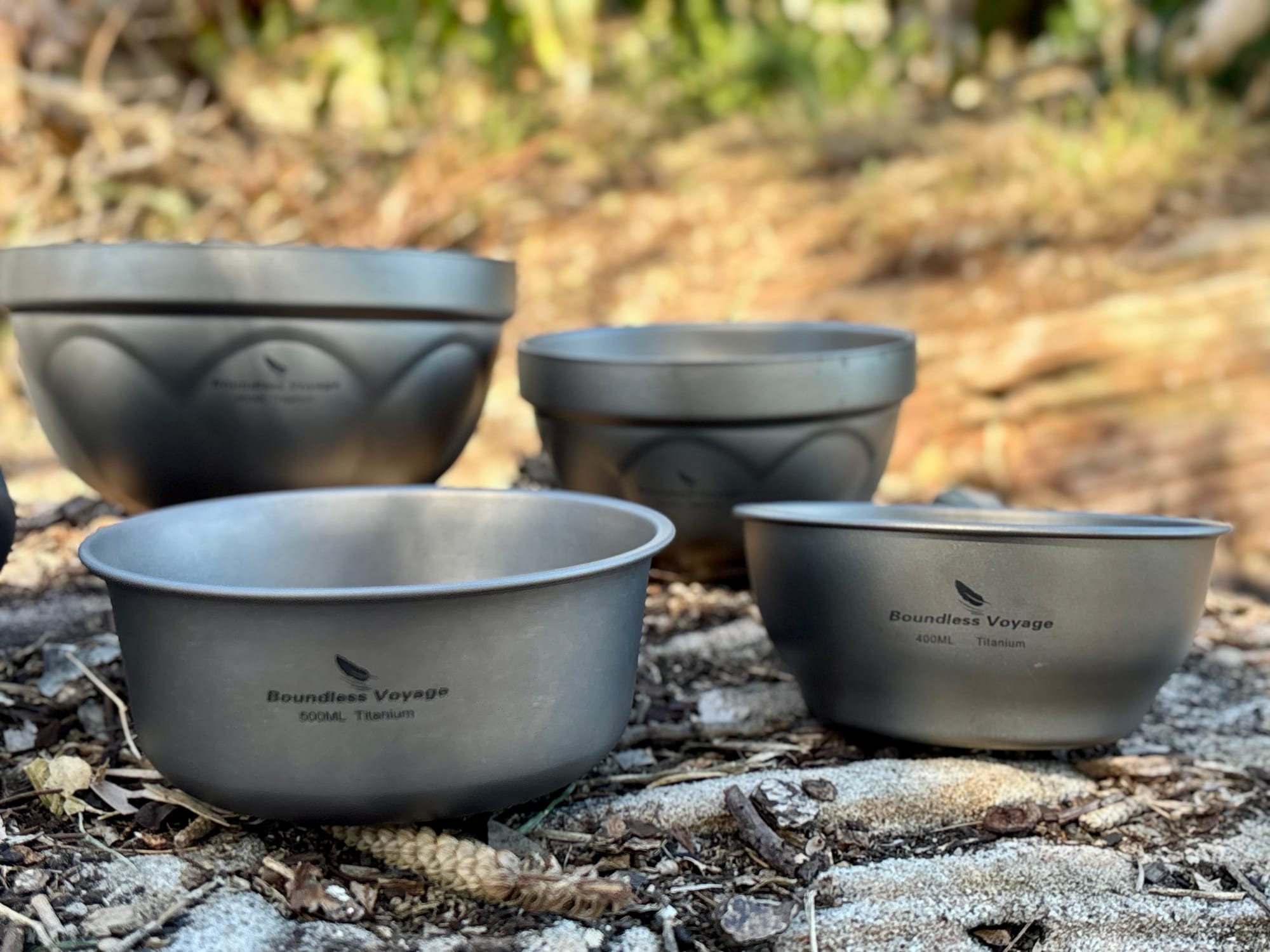
Titanium camping cookware comes in two kinds, and it matters for safety. Single-walled pieces are one thin layer of metal: they can go straight on a stove or a fire. Our titanium pot and pan set, the 420 ml mug, the 450 ml cup with lid and the 300 ml bowl are all single-walled.
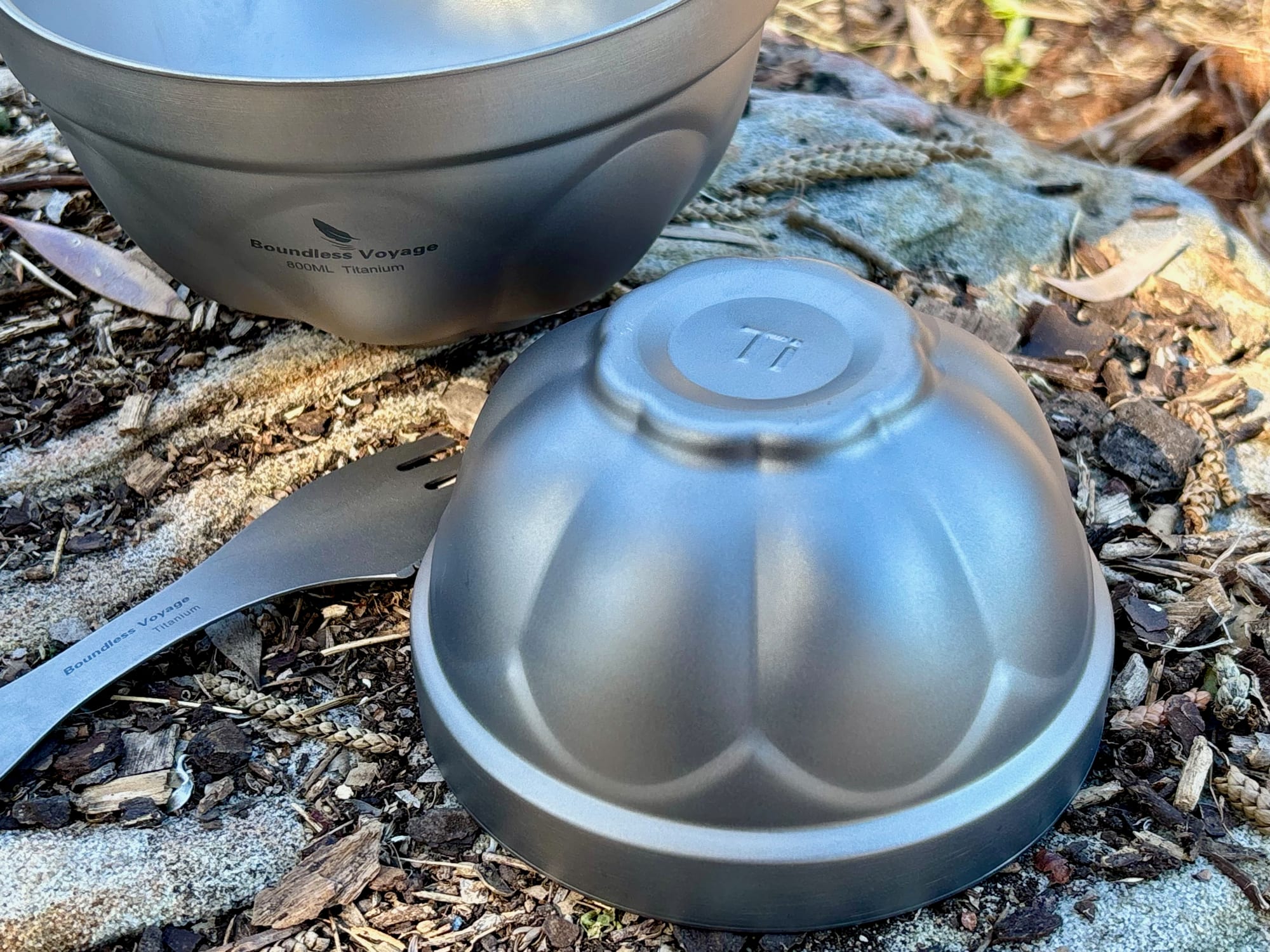
Double-walled pieces have a sealed air gap between two layers, which keeps hot food cool in your hands. They must never go on a flame or in the microwave: the air trapped inside expands as it heats. Our 500 ml double-walled titanium bowl is for eating from, not cooking in.
How to cook in titanium without burning foodHow to cook in titanium…
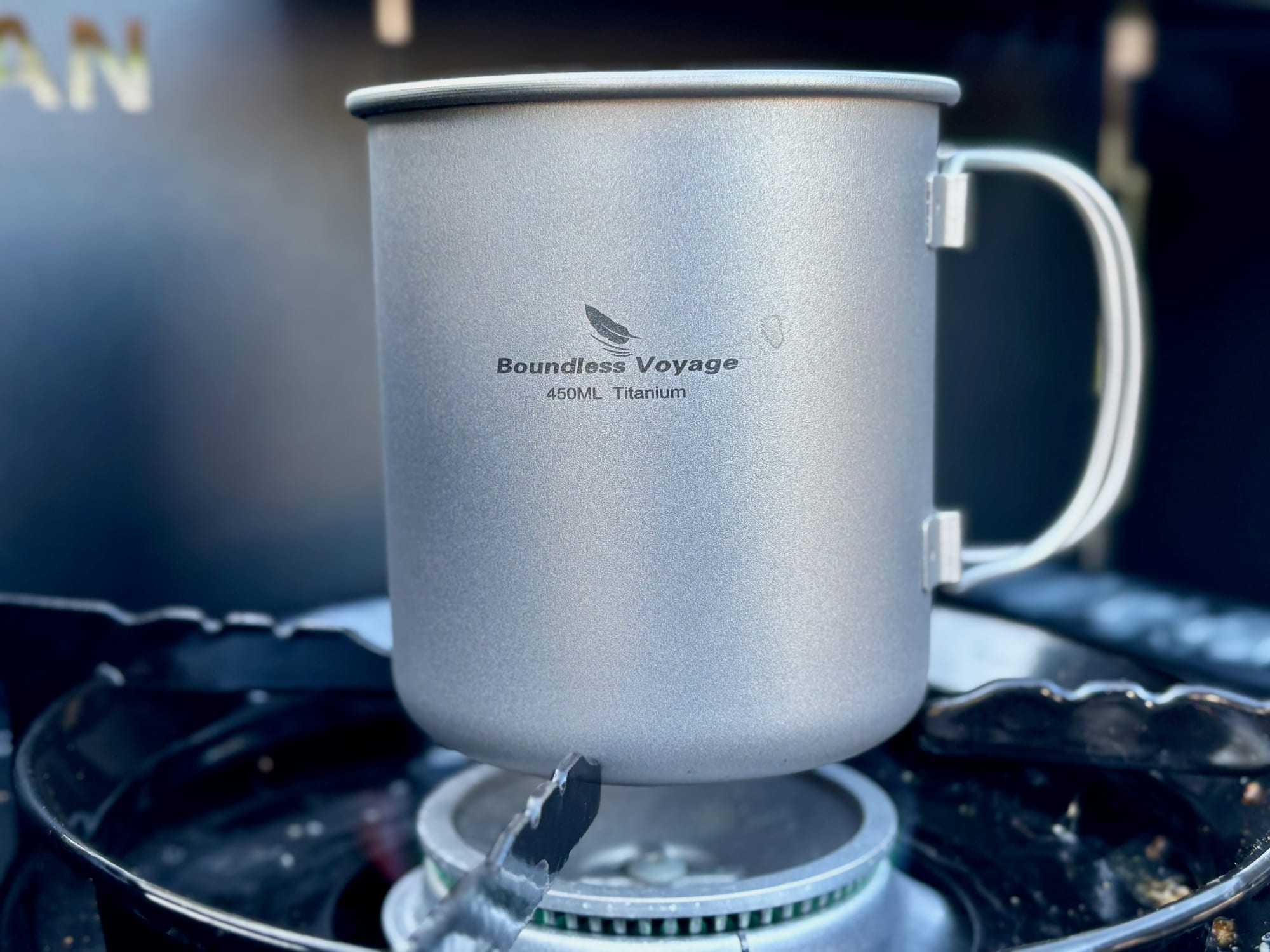
Titanium spreads heat poorly. The thin metal right over the flame gets very hot while the rest stays cooler, so food catches on the bottom much faster than in a heavy pot at home. Keep the flame low and centred, stir often, and get water or oil in before the food. Our pot and pan set isn’t non-stick, and noodles or sauces need a stir.
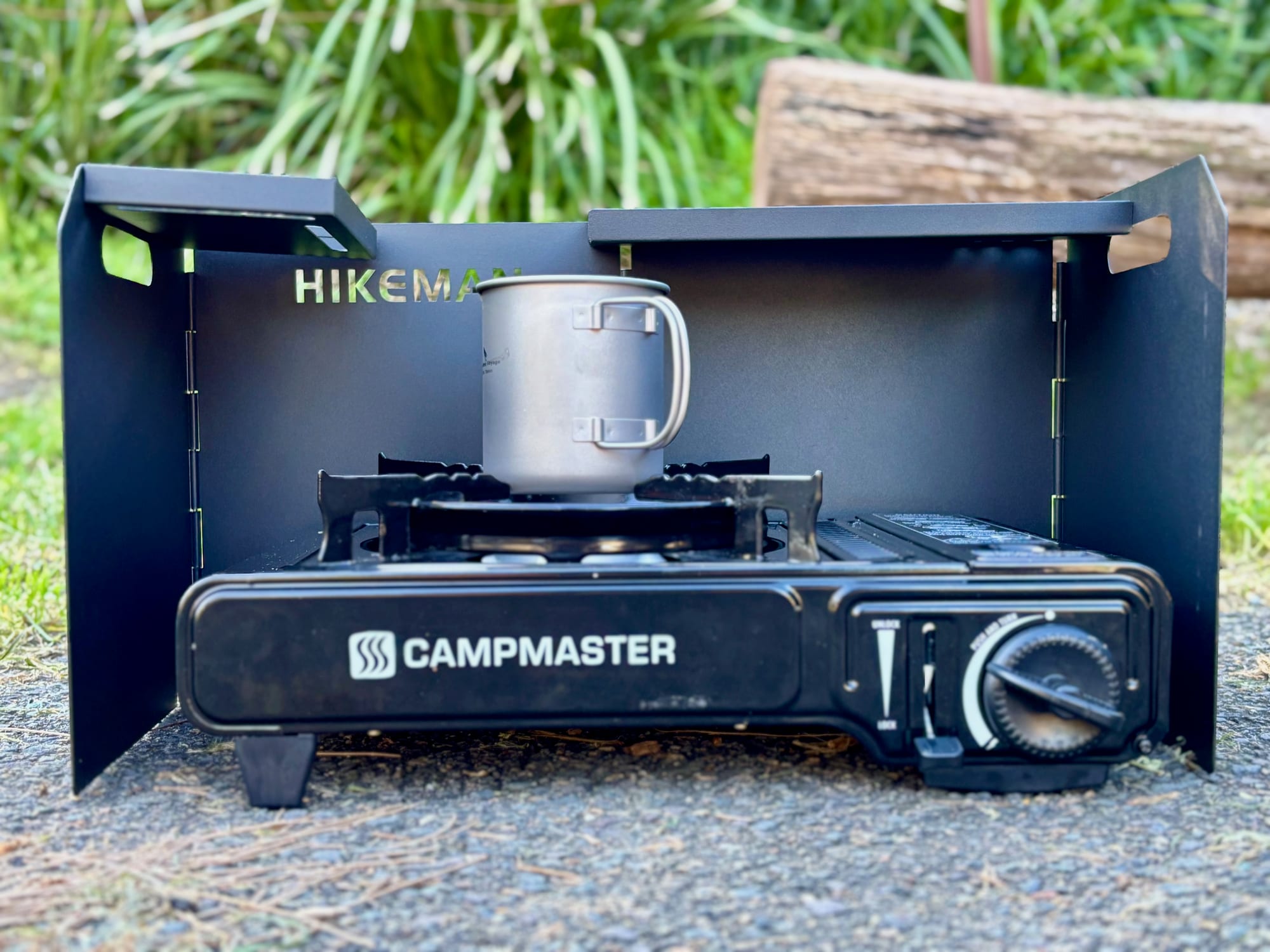
For boiling water, titanium is excellent: the thin metal heats fast, and with the lid on it boils quickly. Never heat an empty titanium pot, though: with nothing in it, thin titanium gets very hot very fast and can discolour or warp. Out of the wind, the flame stays steady under the pot, so a windscreen around the stove helps it heat more evenly.
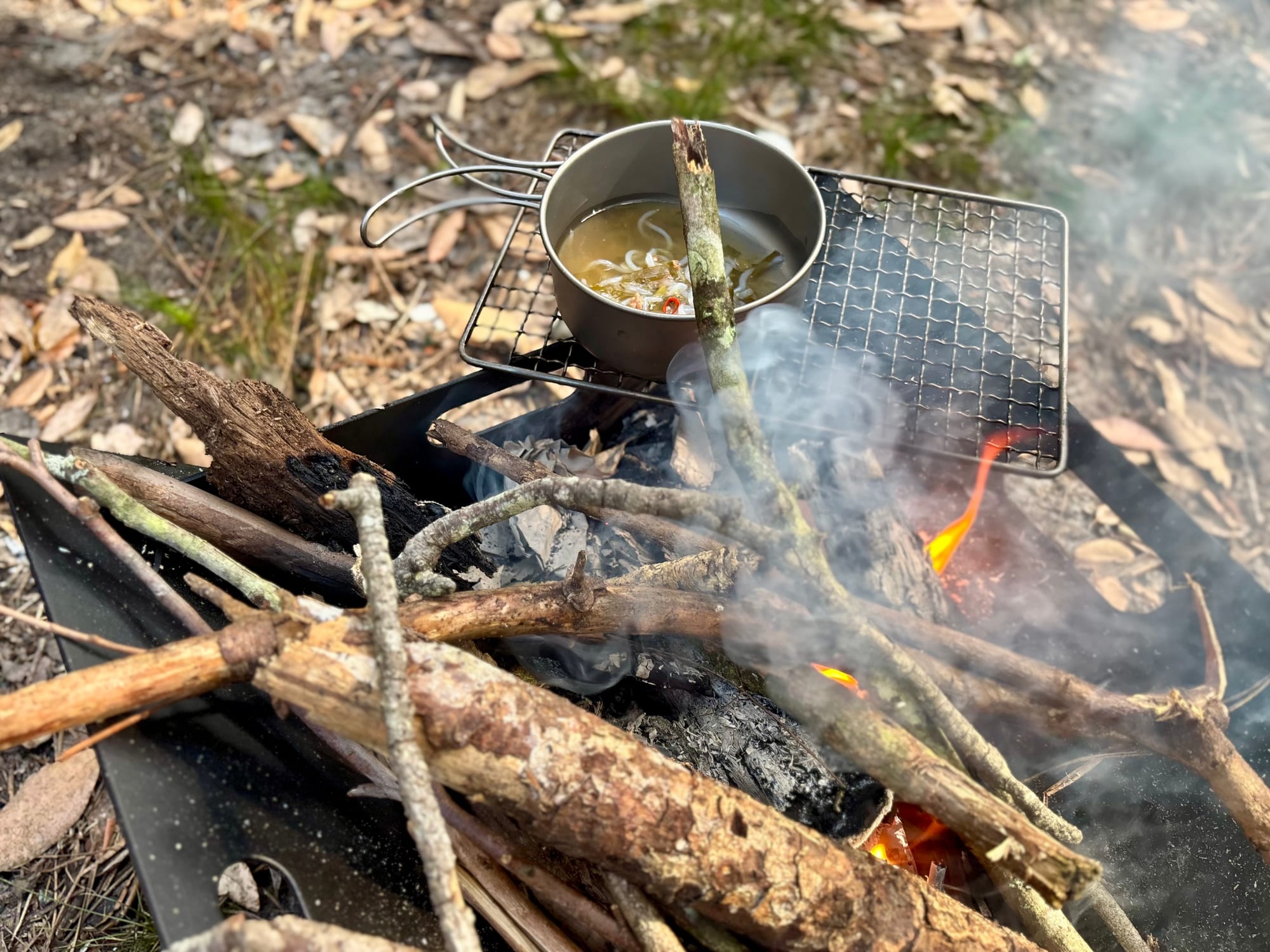
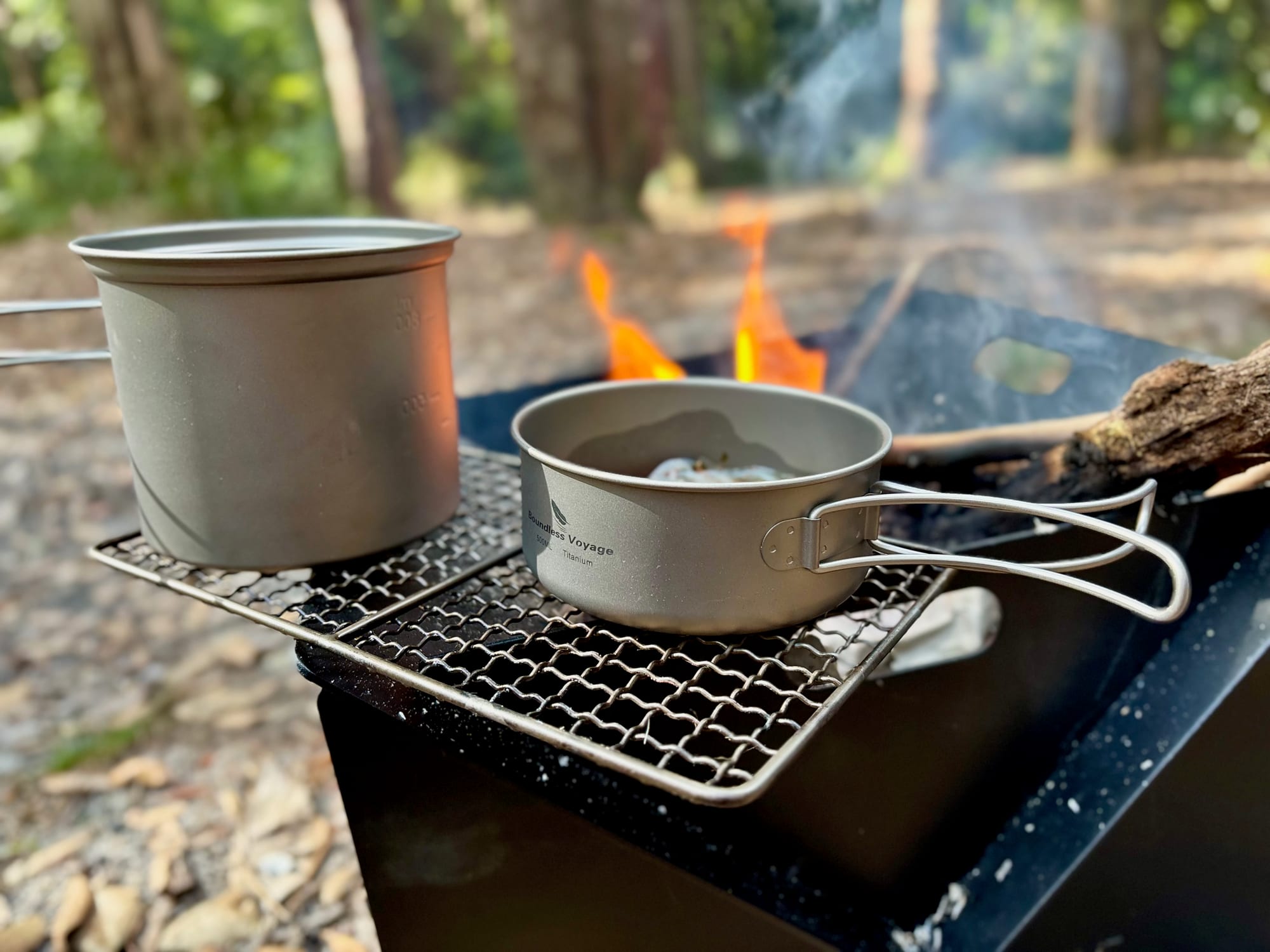
On a campfire, cook over a steady bed of flame or coals on a grill rather than in tall flames, which lick up the sides and heat the handles.
Handling hot titanium
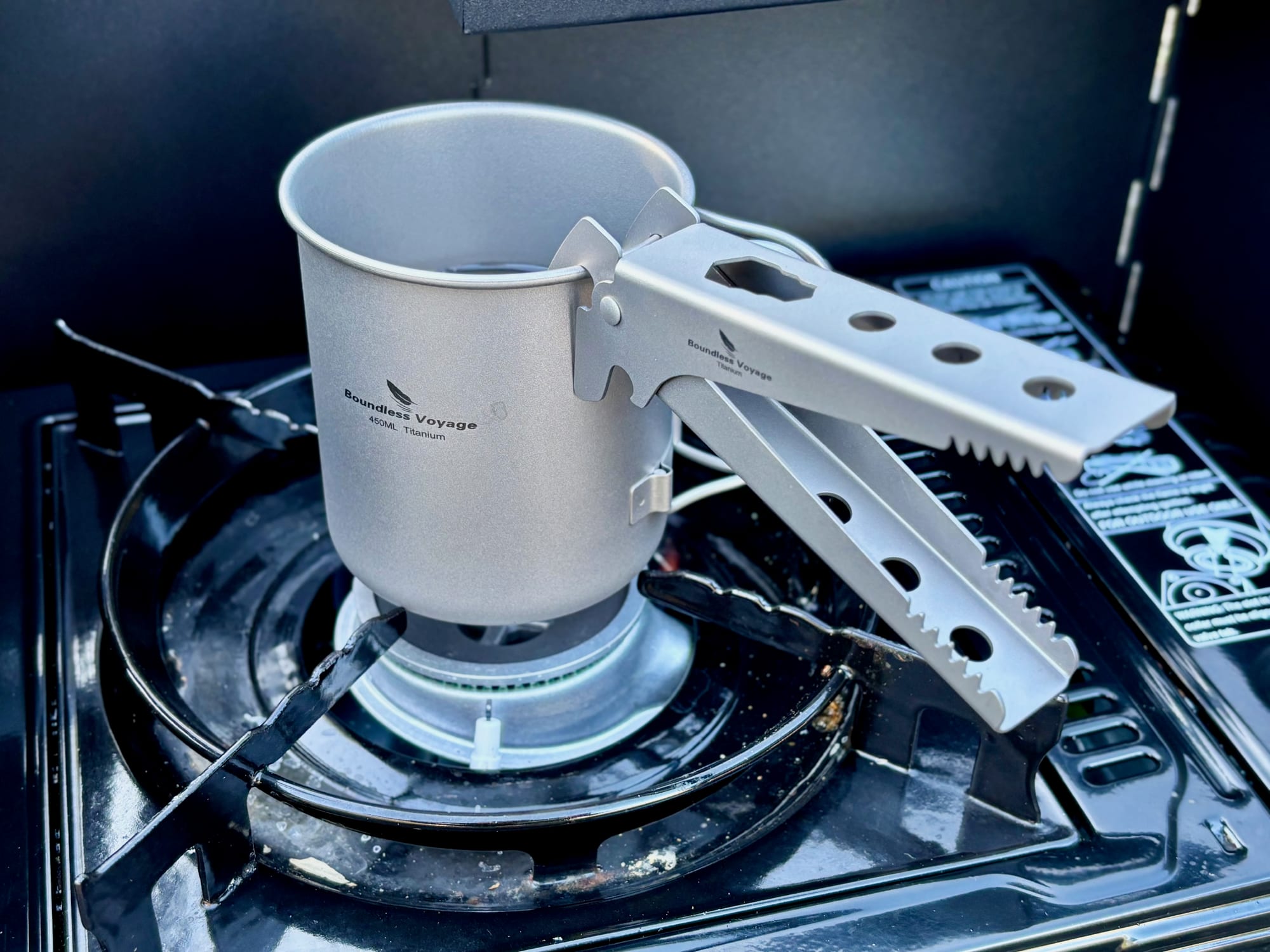
Single-walled titanium gets hot to touch the moment hot water goes in, all over. Lift pots and pans by their folding handles, and keep a titanium pot gripper or a cloth handy for anything without them, like the 400 ml bowl. Handles get hot too if flames reach them, so fold them out away from the fire.
The rim of a titanium mug heats up just as fast. After boiling water for a coffee in the 420 ml mug, wait a few minutes before you sip, or you’ll burn your lips.
Titanium vs steel vs aluminiumTitanium vs steel vs…
Titanium is the lightest of the three for the strength and it never rusts, which is why it’s the pick for hiking and for keeping a kit light on a road trip. It’s also the most expensive, and the worst at spreading heat.
Stainless steel is heavier and cheaper, tough, and a little better for frying. Aluminium spreads heat best and is light and cheap, but it dents more easily and is usually coated. For boiling water and simple one-pot meals, titanium is hard to beat; for cooking big meals for a group, a heavier steel or aluminium pot does a better job. Our camping cookware guide compares both kinds.
Cleaning and packing
Food doesn’t stick much to smooth titanium bowls and mugs, so a little water rinses them clean at camp. If something has caught on the bottom of a pot, soak it, then scrub with a soft sponge. Titanium won’t rust if you pack it damp, but a mesh bag lets it dry.
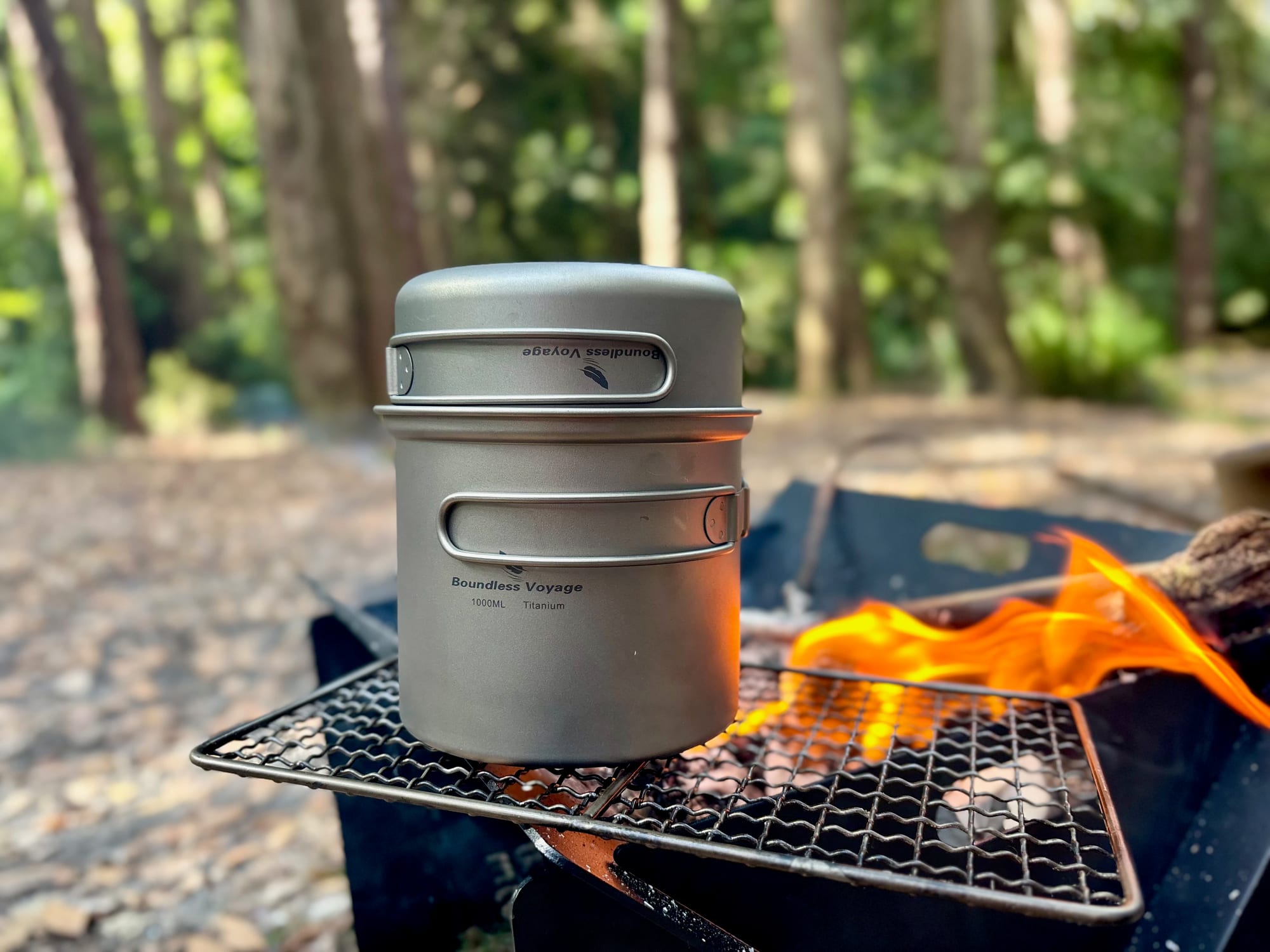
Titanium packs small. Our pot and pan set nests into one, and a 110 g gas canister fits inside the 420 ml mug, so the mug, the fuel and a small stove take up the space of one.
Summary
Titanium cookware is safe to cook with: it’s pure, uncoated and inert, so nothing leaches into your food. Single-walled pieces go on a stove or a fire; double-walled ones never do. Keep the flame low and centred, stir often, never heat it empty, and lift it off with the handles or a pot gripper. To pick the right pieces, see our titanium cookware guide, which compares the 17 we’ve tested.
Do's
- Do boil water with the lid on
- Do stir noodles and sauces often
- Do use a pot gripper for hot pots
- Do let a drink cool before you sip
Don'ts
- Don't heat double-walled titanium
- Don't heat an empty titanium pot
- Don't fry on a high flame
Recommended gear
Gear from our own reviews that goes with this guide.