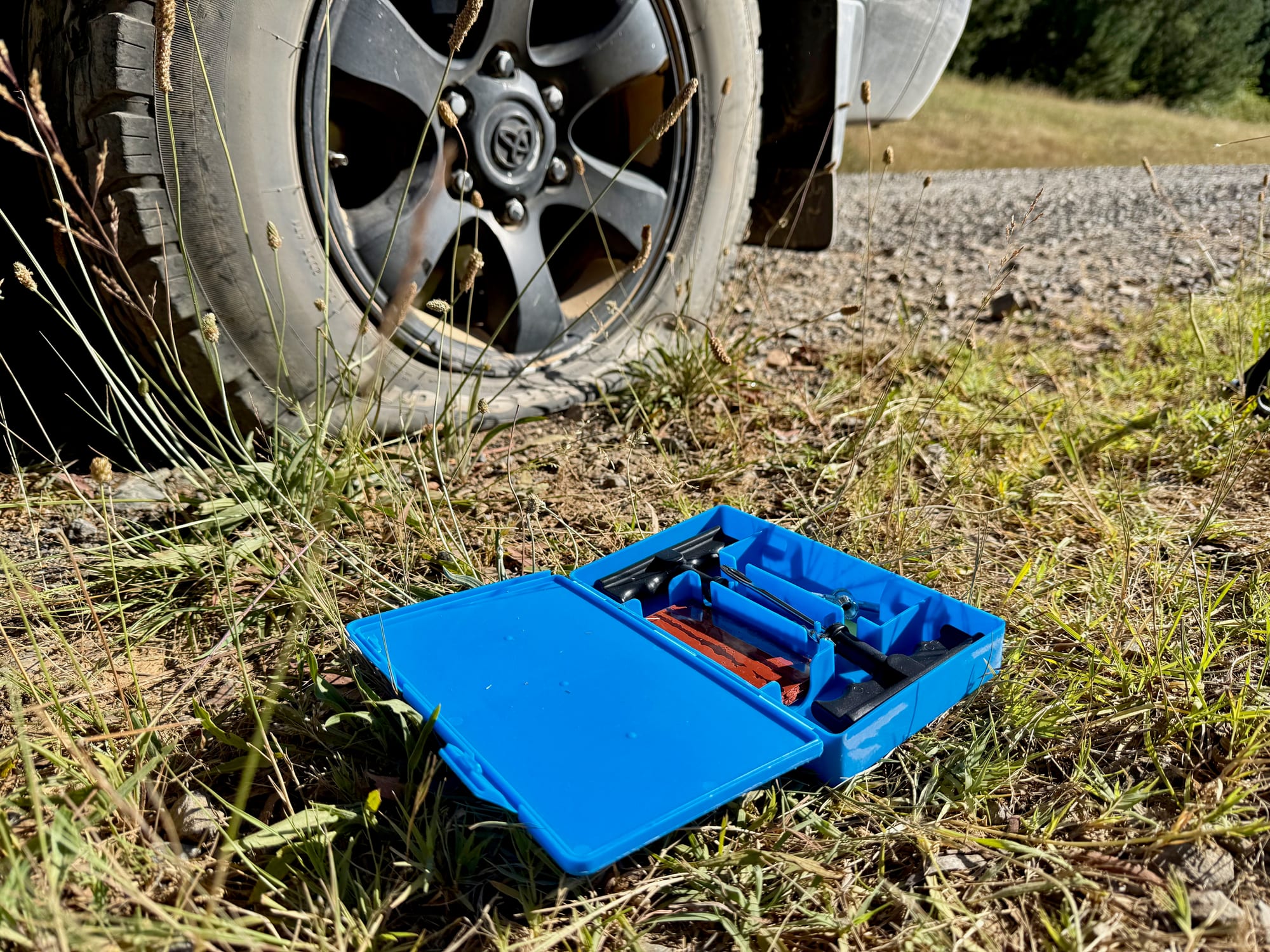
Up in the mountains in the High Country, a rocky backroad gave us a flat tyre, and we plugged it on the spot. A puncture in the tread doesn’t have to mean changing the wheel. With a tyre plug kit and a compressor, you can plug the hole on the spot, pump the tyre back up and drive on, often in less time than it takes to fit the spare. Here’s how we did it on the side of a gravel road.
The gear we used
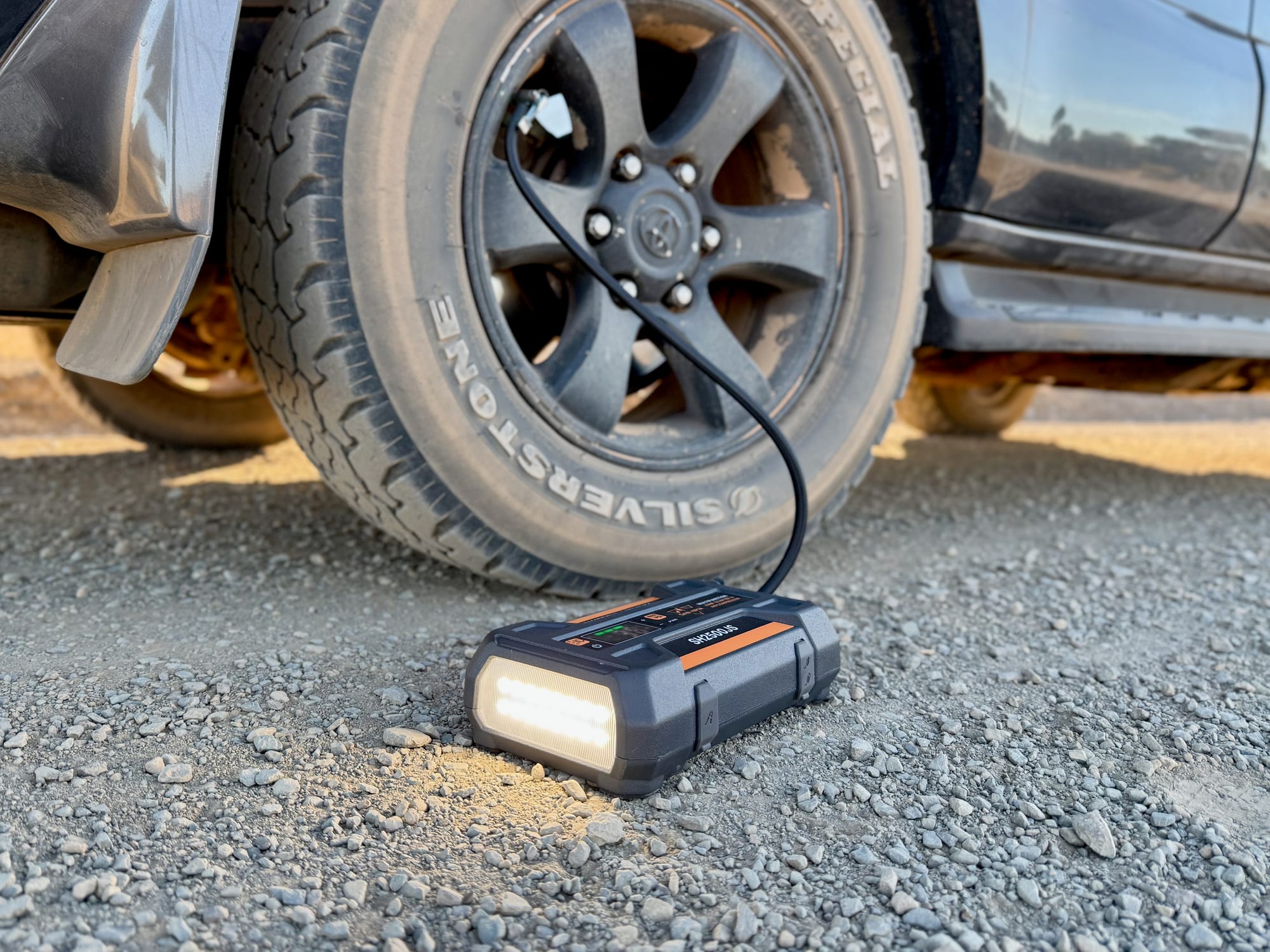
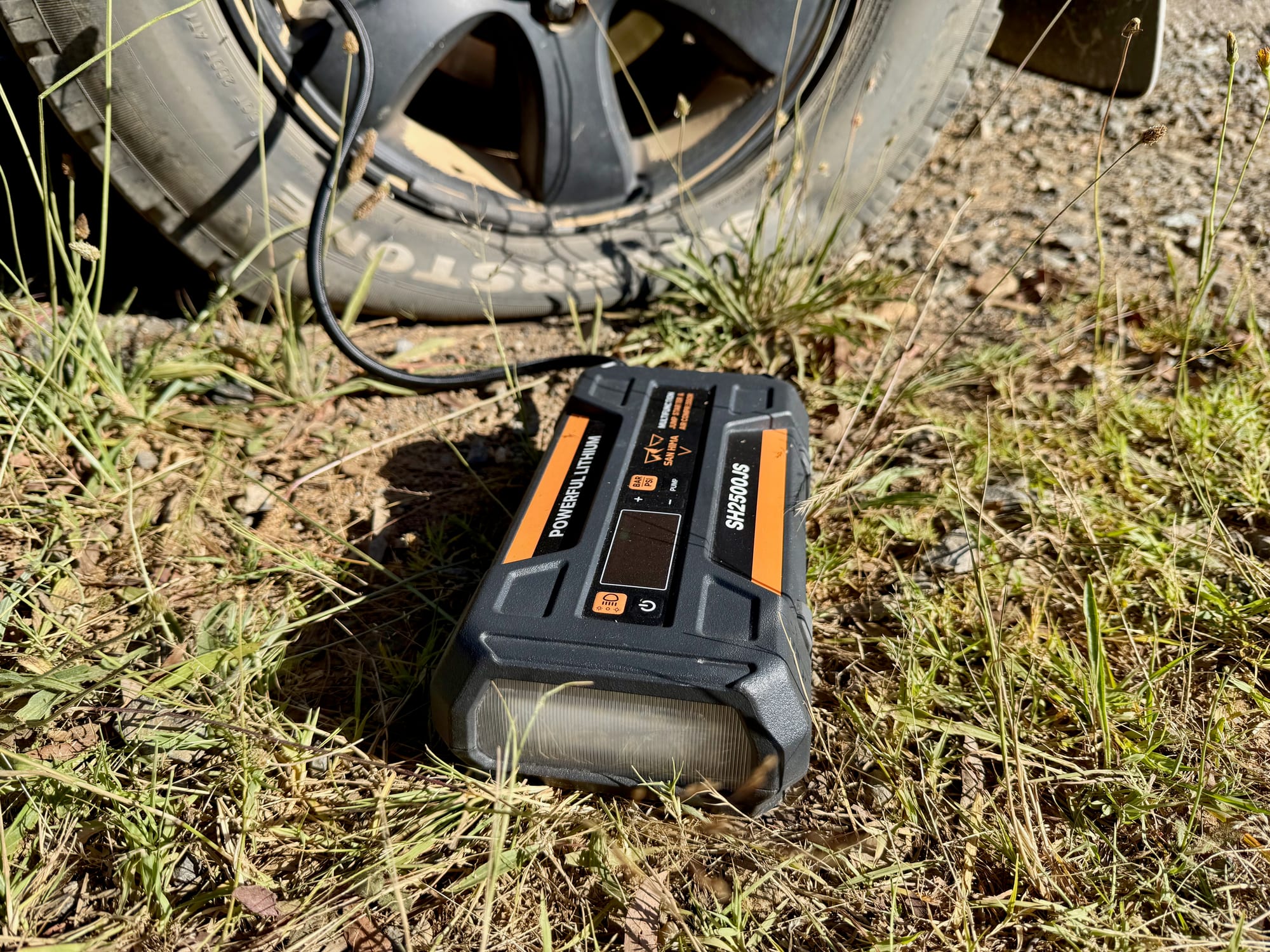
A tyre plug kit and a way to pump the tyre back up are all you need. We used our own plug kit, and pumped the tyre back up with the San Hima 12V jump starter with air compressor, a jump starter and air compressor in one.
Can you plug it?
A plug only works in the right spot. Check where the hole is and how big it is before you start: if it’s in the wrong place, fit the spare instead.
Plug it
Nail, screw or stone in the tread, hole up to about 6 mm
Fit the spare
Hole in the shoulder or sidewall, where the tyre flexes
New tyre
Big cut, or you drove on it while flat. Fit the spare first
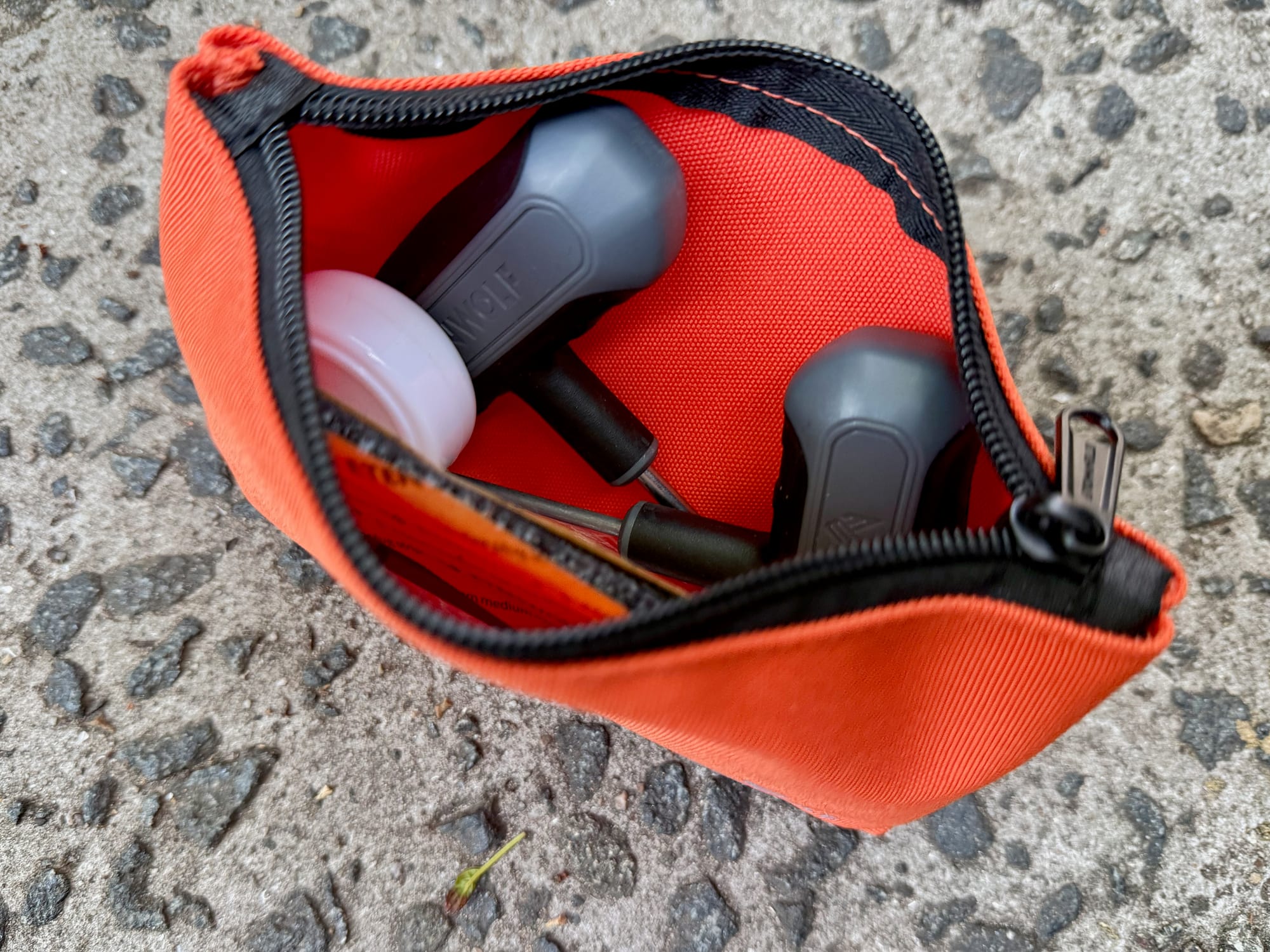
What’s in a plug kit
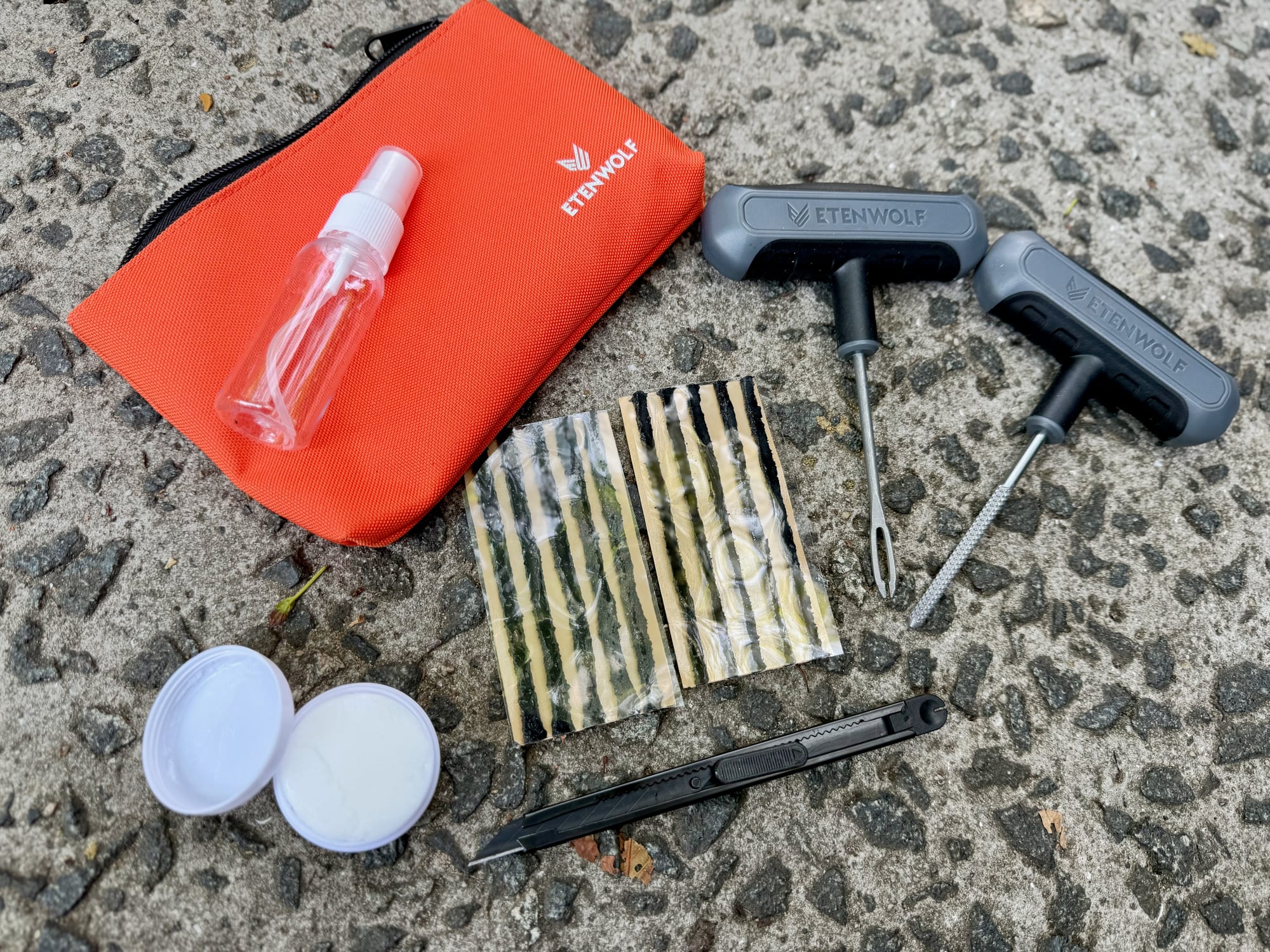
Most kits come with the same few tools, and it helps to know what each one is for before you need them. The one laid out below is the Etenwolf tyre repair kit we reviewed.
- Reamer (spiral probe)
Cleans and roughens the hole so the plug grips
- Insertion needle
Pushes the plug into the hole
- Plugs
Sticky rubber strips that seal the hole
- Rubber cement
Coats the plug so it slides in and bonds
- Knife
Trims the plug ends flush with the tread
- Spray bottle
Water over the tyre shows the hole as bubbles
Step 1: Find the puncture1. Find the puncture
The easiest way to find the hole: pump the tyre up a little, then spray water over the wheel (a drop of dish soap helps) and watch for bubbles; roll the car a little if the hole is against the ground. Often there’s a nail or screw to pull out with pliers, but not always: ours was just the rocky road, a sharp stone that had pushed through the tread.
Step 2: Ream the hole2. Ream the hole
Push the reamer into the hole and work it in and out a few times. It cleans out grit and roughens the inside so the plug can grip. It takes some force on a 4WD tyre: brace yourself and push straight in, along the line of the hole.
Step 3: Insert the plug3. Insert the plug
Thread a plug halfway through the eye of the insertion needle, so it sits evenly on both sides, and coat it in rubber cement. Push the needle into the hole until about two-thirds of the plug is inside the tyre, then pull the needle straight out in one go. The plug stays behind and seals the hole.
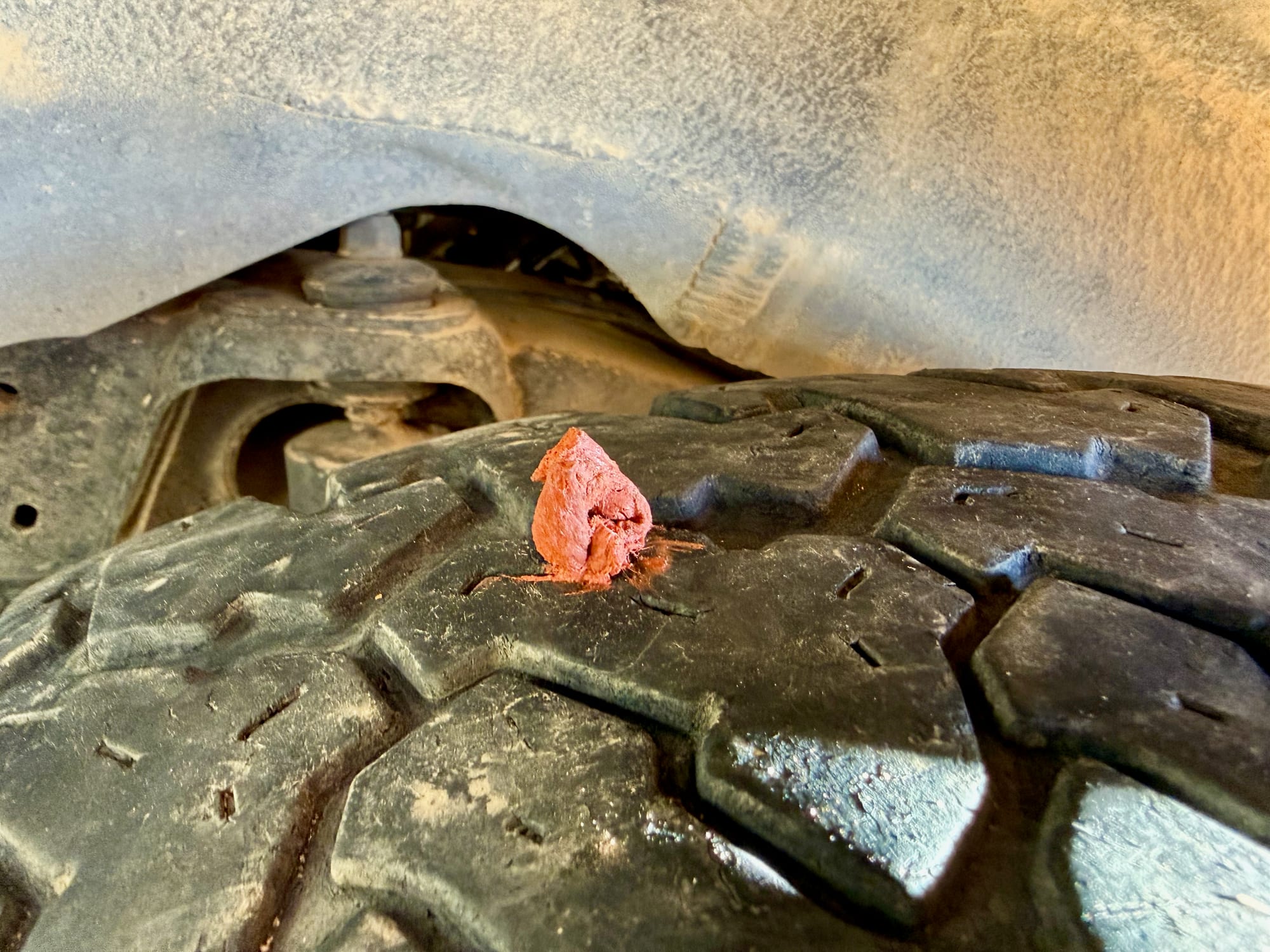
Step 4: Let it settle, pump it up and trim it4. Let it settle, pump it…
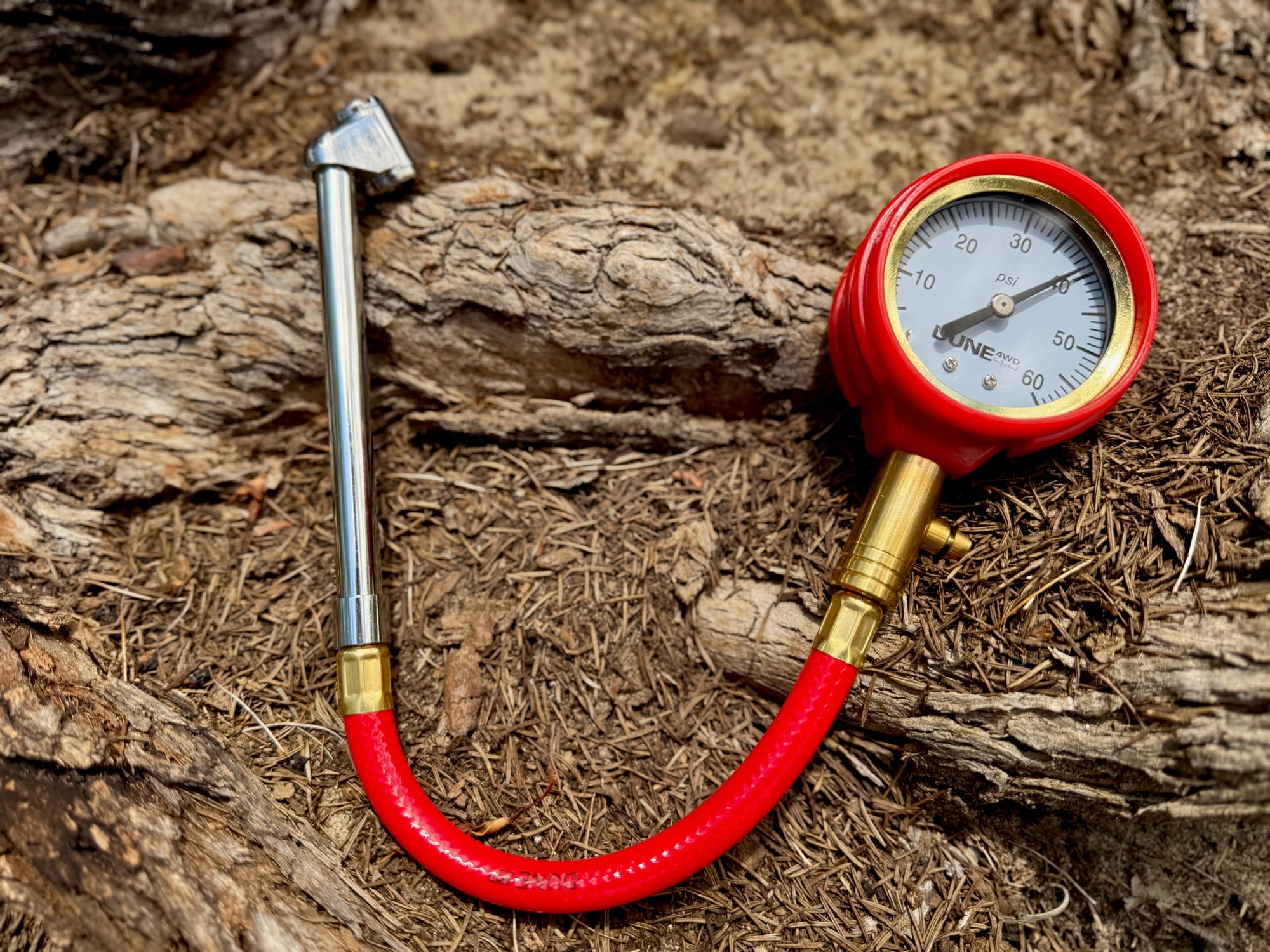
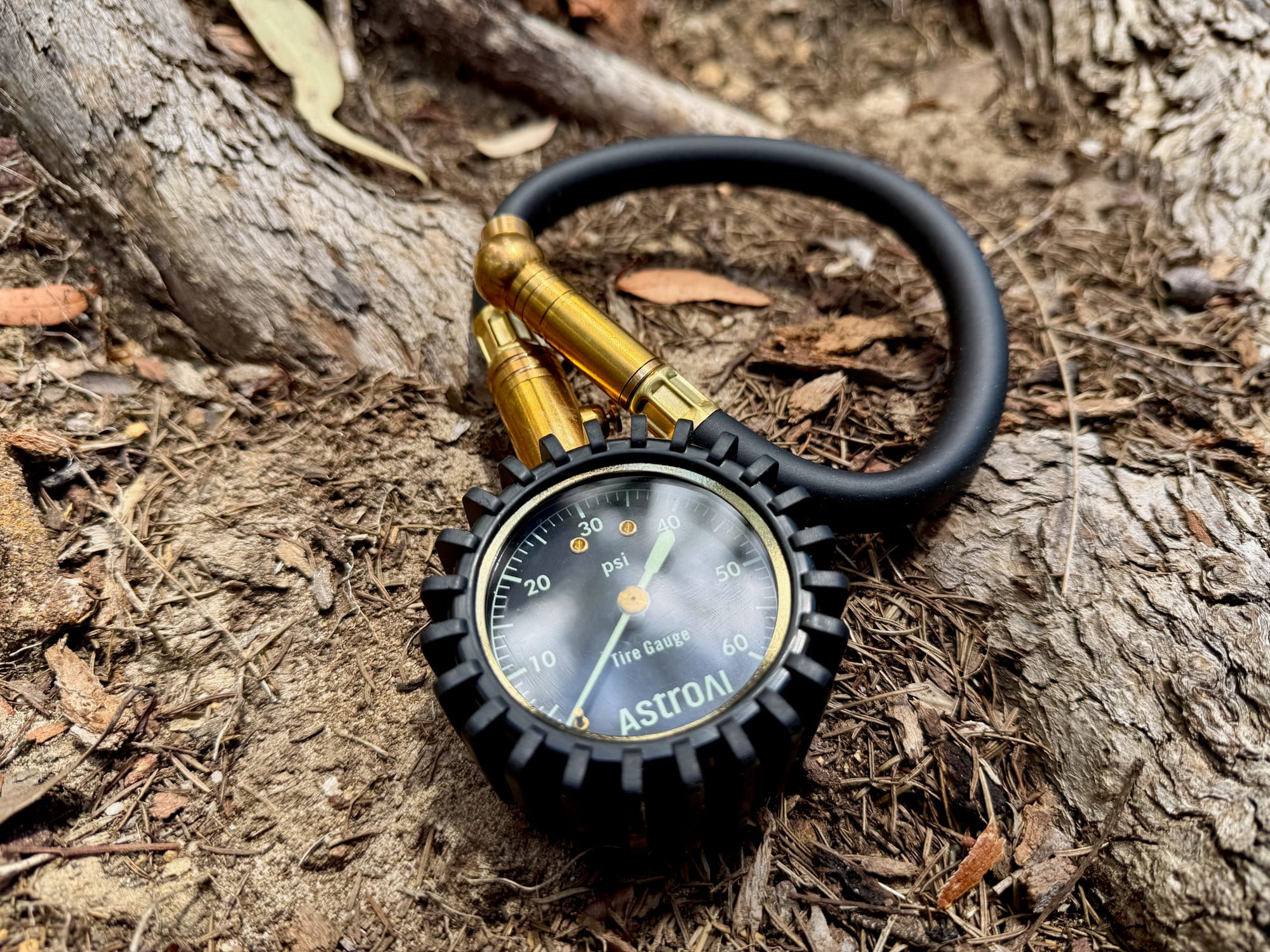
Leave the plug in for a bit before you do anything else, so the cement can grab. Then pump the tyre back up to your road pressure and check it with a gauge; our tyre pressure guide has the numbers. Spray the plug with water again: no bubbles means it’s sealed.
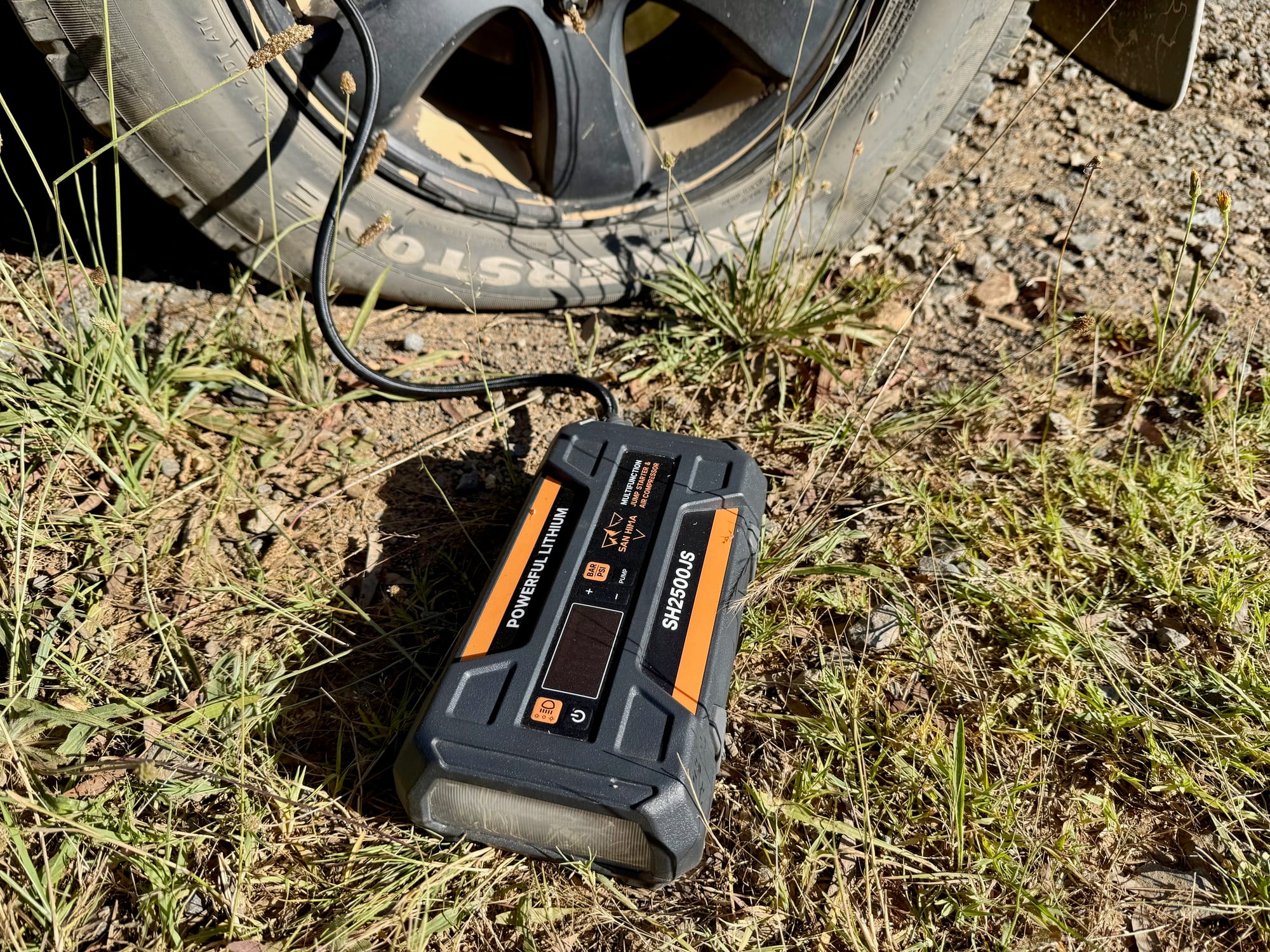
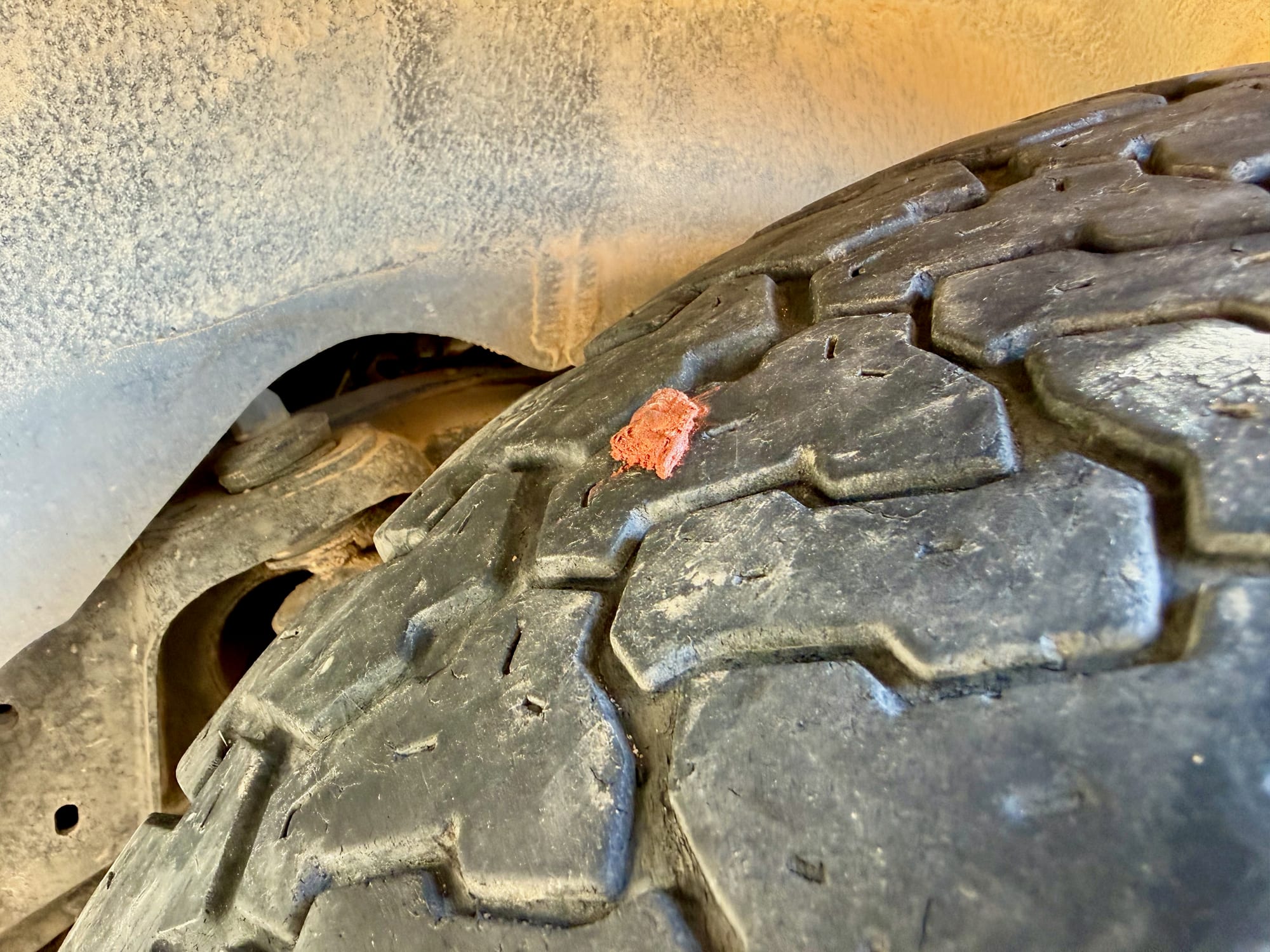
Last, cut off the excess plug just above the tread with the knife. Leaving it until the tyre is pumped up means the plug is pulled tight before you trim it.
Back on the road
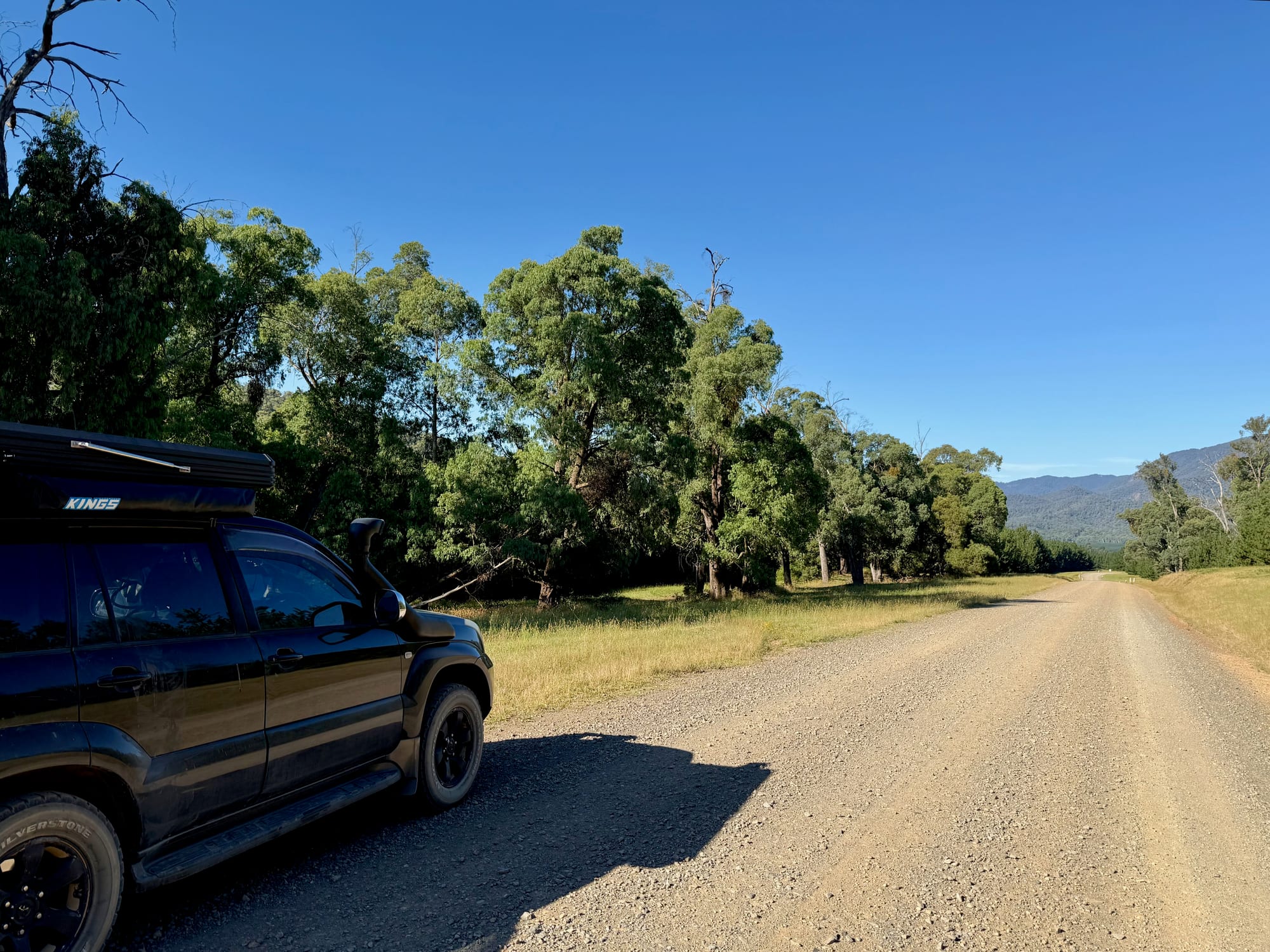
The plug held: we drove another full day on it through the High Country, then went into a tyre shop in Omeo to get it properly fixed. That’s the way to treat a plug: it gets you home or to the next town, and when you can, a tyre shop checks and repairs it from the inside. Keep an eye on the pressure for the first few stops.
Summary
Plugging a flat tyre takes a plug kit, a compressor and about half an hour; that’s how long ours took on the side of the road. Find the hole with water, check it’s in the tread and not too big, ream it, push in a plug coated in cement, let it settle, pump the tyre back up and trim the plug. It’s a roadside repair, so have it checked when you can, and fit the spare for anything in the shoulder or sidewall.
Do's
- Do pull the object out first
- Do use plenty of rubber cement
- Do check for leaks with soapy water
- Do have a tyre shop check it
Don'ts
- Don’t plug the shoulder or sidewall
- Don’t plug a tyre you’ve driven flat
Recommended gear
Gear from our own reviews that goes with this guide.