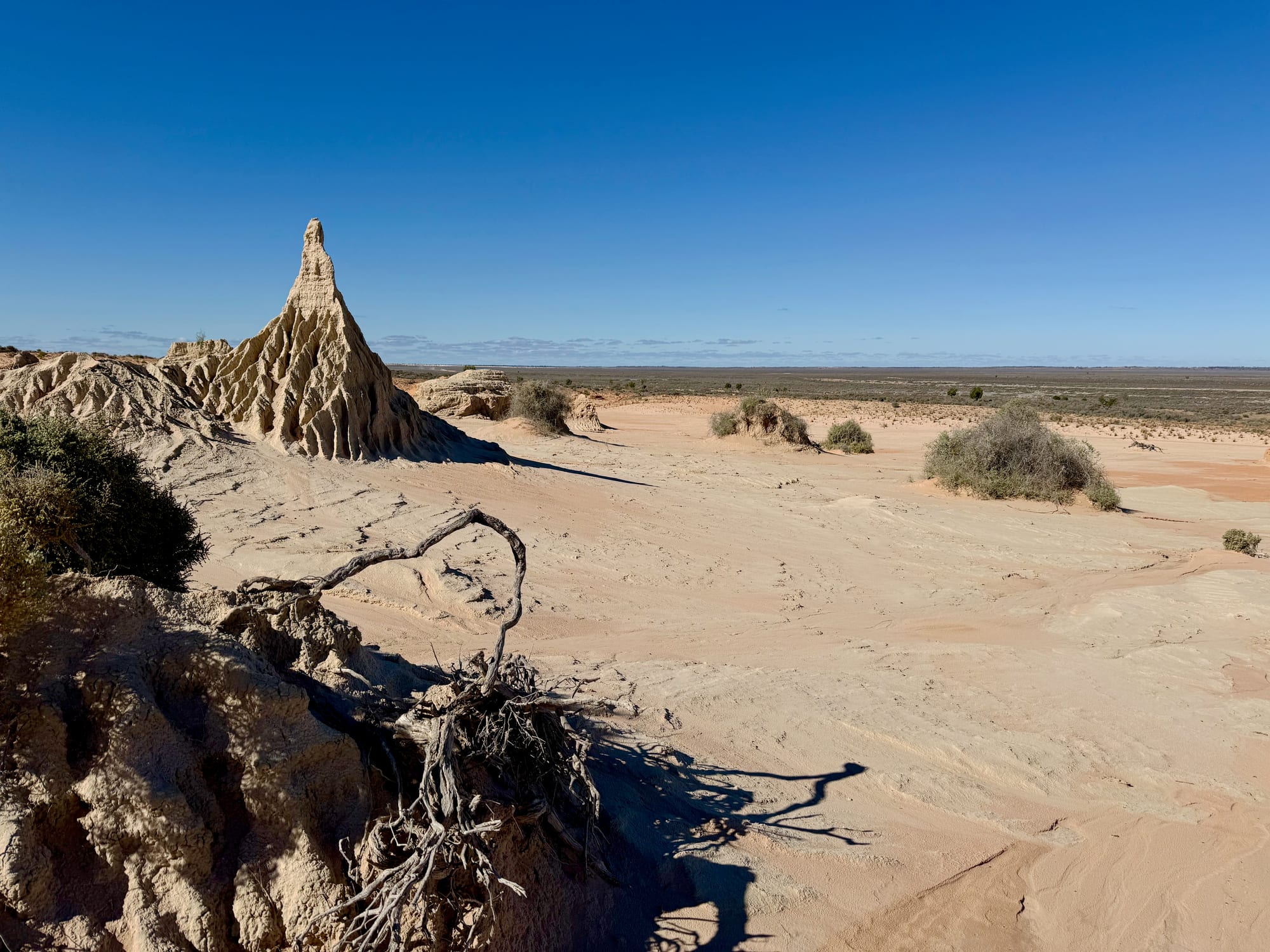
The Walls of China were the reason we came to Mungo, and they’re stranger than the photos suggest. We spent our one full day at Mungo around them: a guided walk on the lunette in the morning, a break back at camp and Red Top Lookout later in the day. The sand and clay rise out of the flat country in spikes, ridges and folds, and with a deep blue sky behind them they don’t look like anywhere else in Australia.
About the Walls of ChinaAbout
The Walls of China are part of the Mungo lunette, a long crescent of dune on the eastern side of the dry Lake Mungo. Wind and rain have cut it into the shapes you see today, and it’s still changing. This is the country of the Ngiyampaa, Mutthi Mutthi and Paakantyi people, and it’s where Mungo Lady and Mungo Man were found, more than 42,000 years old.
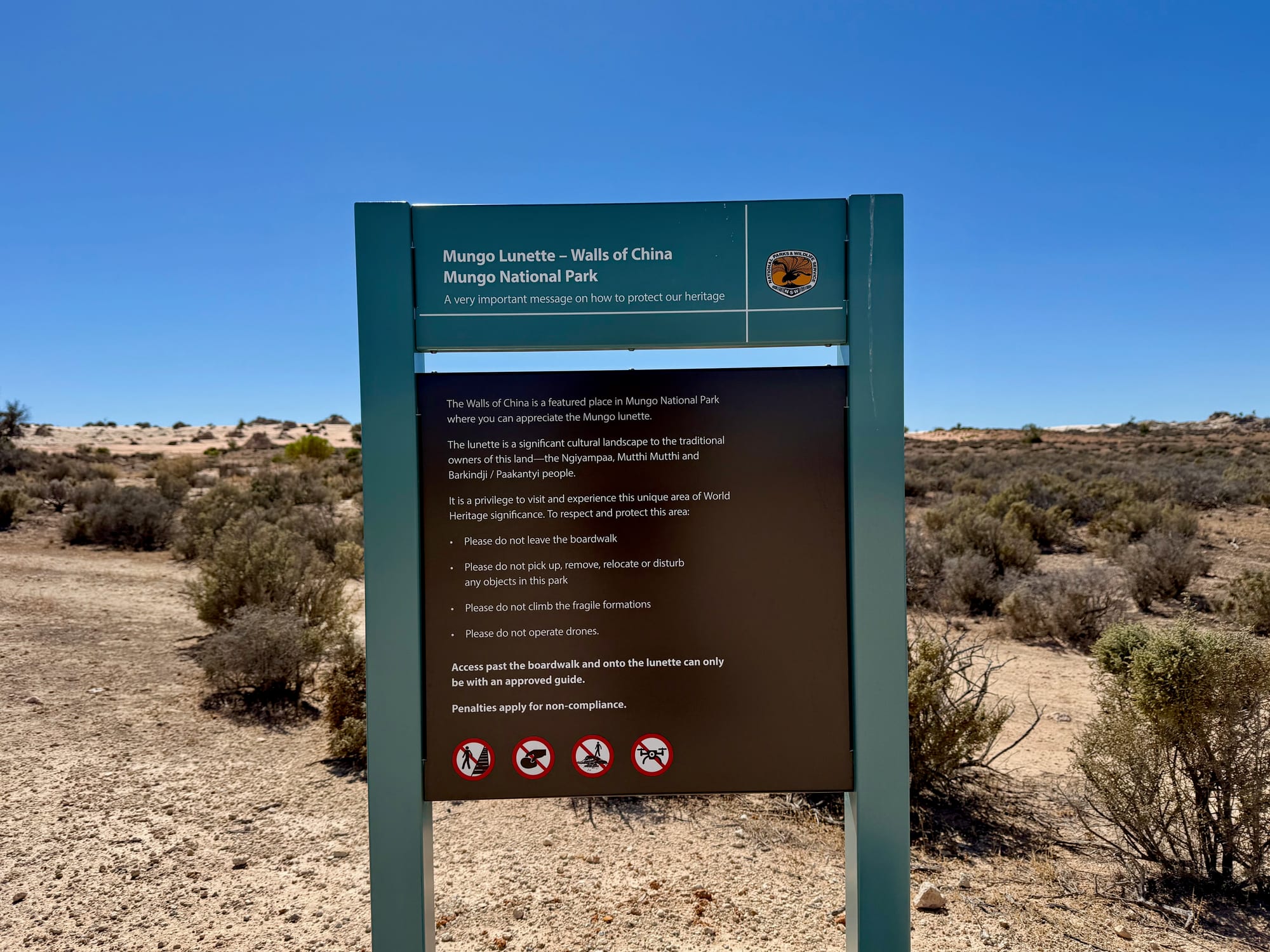
That’s why the rules here are strict. The sign at the boardwalk asks you to stay on it, not to pick up anything and not to climb the formations, and drones aren’t allowed.
Quick facts
- AddressWalls of China, Mungo National Park, NSW, AustraliaSee on the trip map →
- FacilitiesParkingToiletsPicnic TablesViewing PlatformLookoutsWalking TrailsGuided ToursPicnic ShelterNo Drinking Water
- Good to knowLunette with a guide onlyNo dronesBook tours early
- Fees$8 per vehicle per dayTour $50 per adult
- 8.5/10Overall rated
- Book via NSW National Parks
Getting There
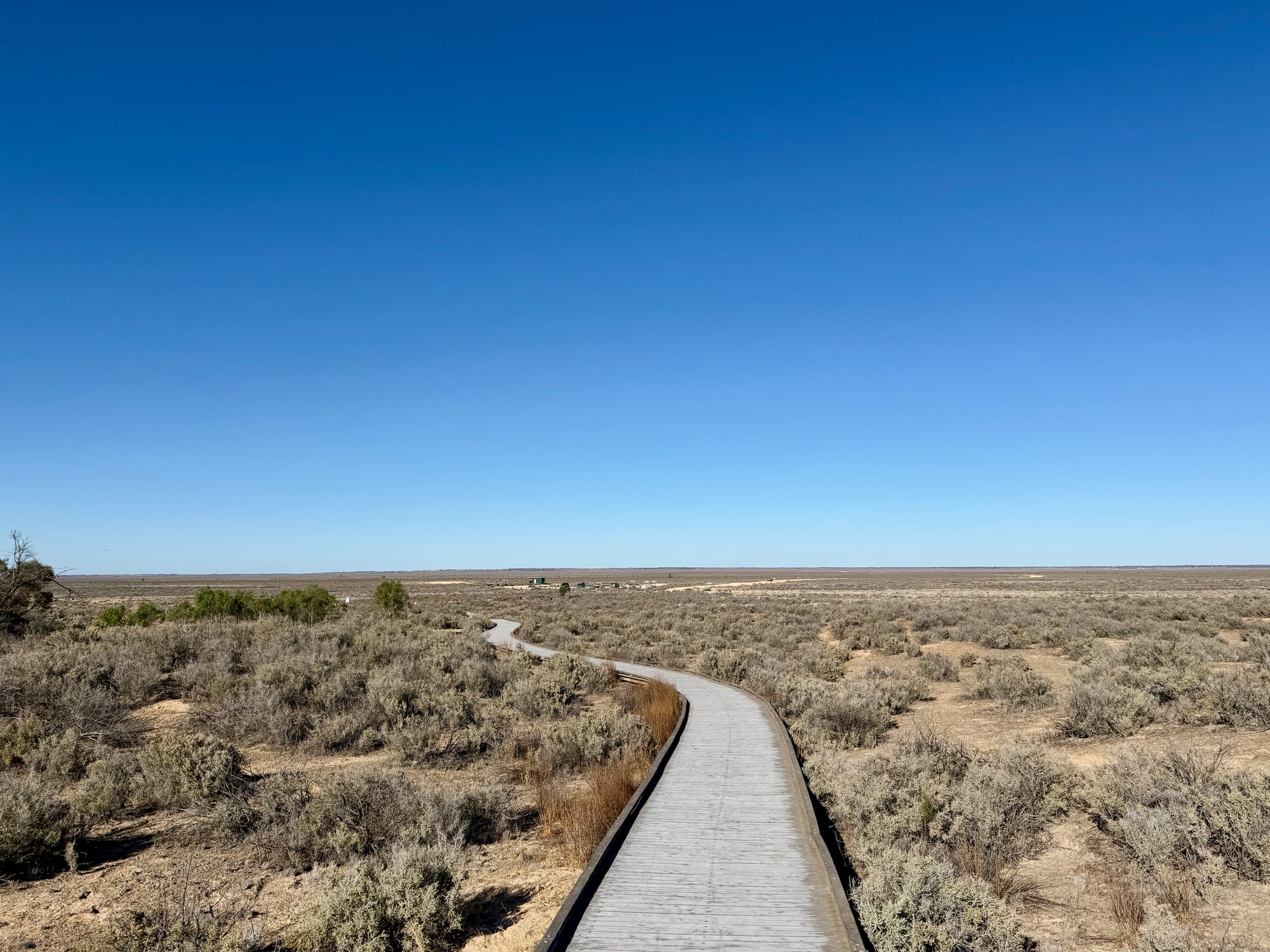
The Walls of China are a drive from Main Campground, not a walk. From the Visitor Centre you drive across the plains on Walls Road for about 10 minutes, with emus running around, to the main car park at the Walls. There are toilets and picnic tables here. The road can close after rain, so check the park alerts before you go.
From the car park, a boardwalk runs out through low scrub towards the lunette.
The Guided Tour
We did the Aboriginal-led walking tour, which runs most days and takes 2 hours. Ours left at 8 am from the Mungo Visitor Centre, where you meet your Aboriginal guide and then drive behind her into the park. It’s about 10 minutes across the plains to the big parking area close to the dunes. From there she took our small group past the end of the boardwalk and onto the lunette, and it’s a slow walk across sand and clay, with stops along the way.
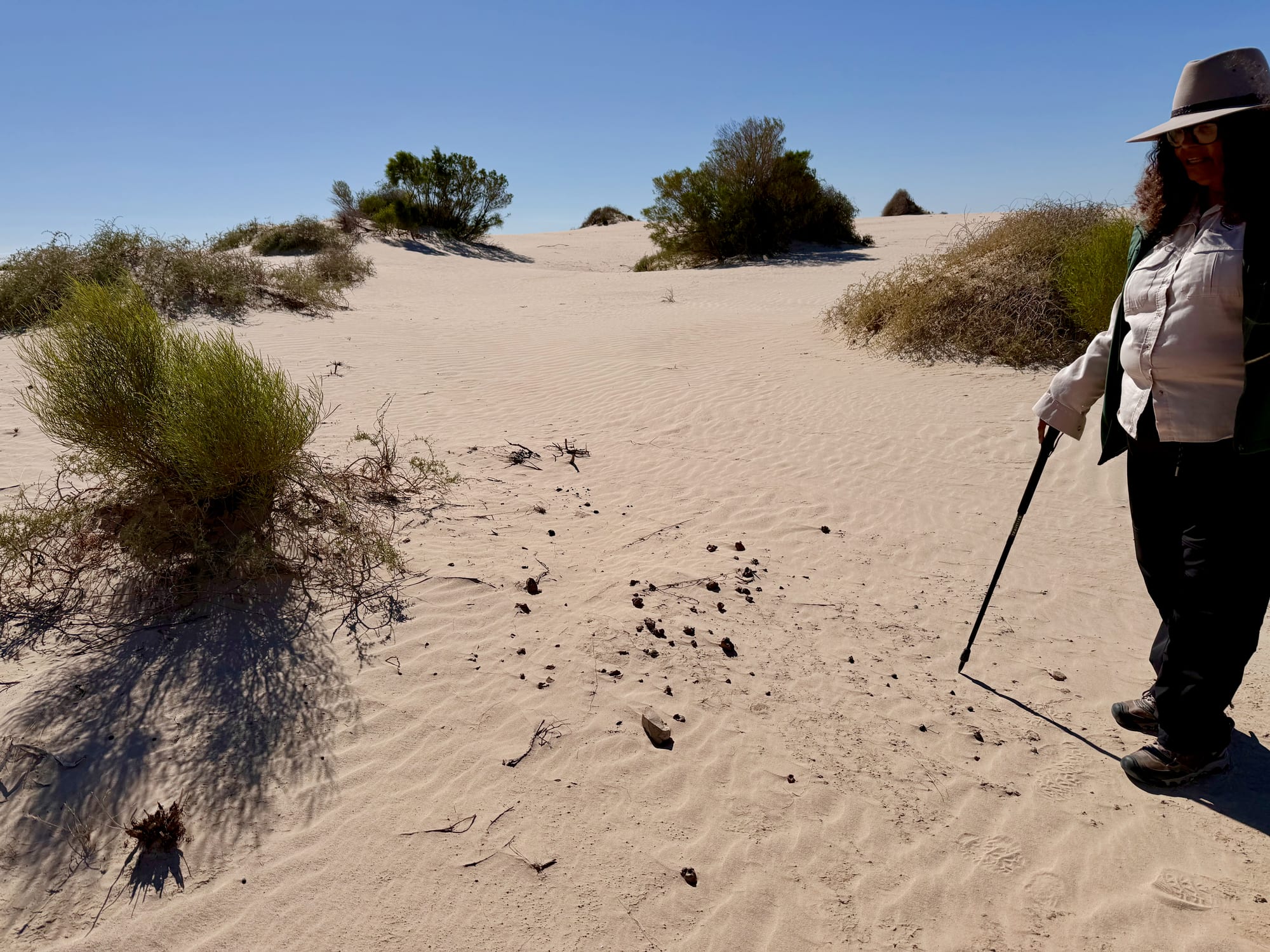
Our guide had a wealth of knowledge. She showed us many of the remains that can still be found out there from the earliest Aboriginal people in the area, and she knew so much about the land and her own previous generations. We highly recommend it.
We paid $50 per person, and park entry is extra. The tour is graded medium and suits all ages, but there’s no wheelchair access. Meet behind the Visitor Centre 15 minutes before it starts, and book online through NSW National Parks, and no cash is accepted on park.
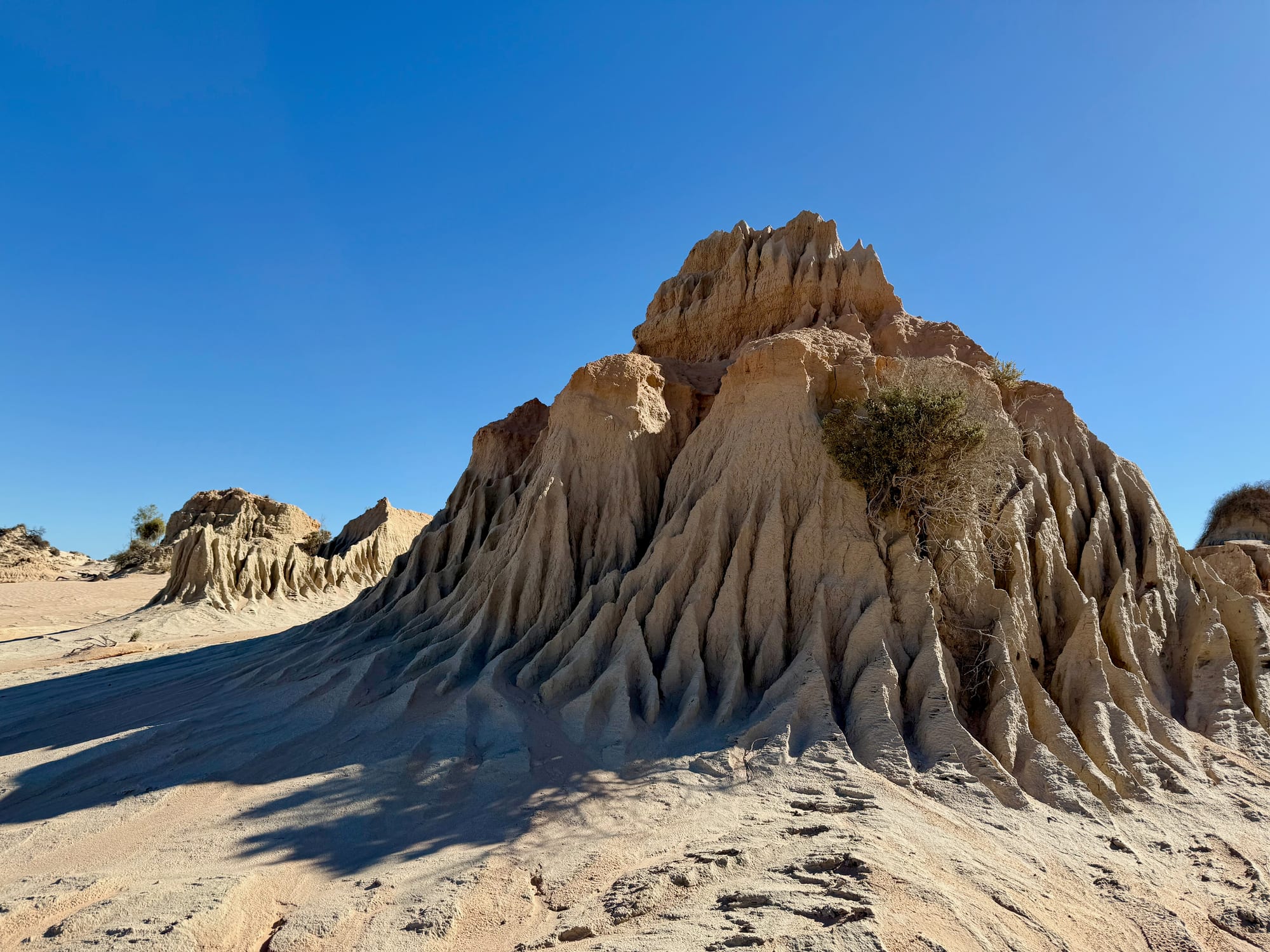
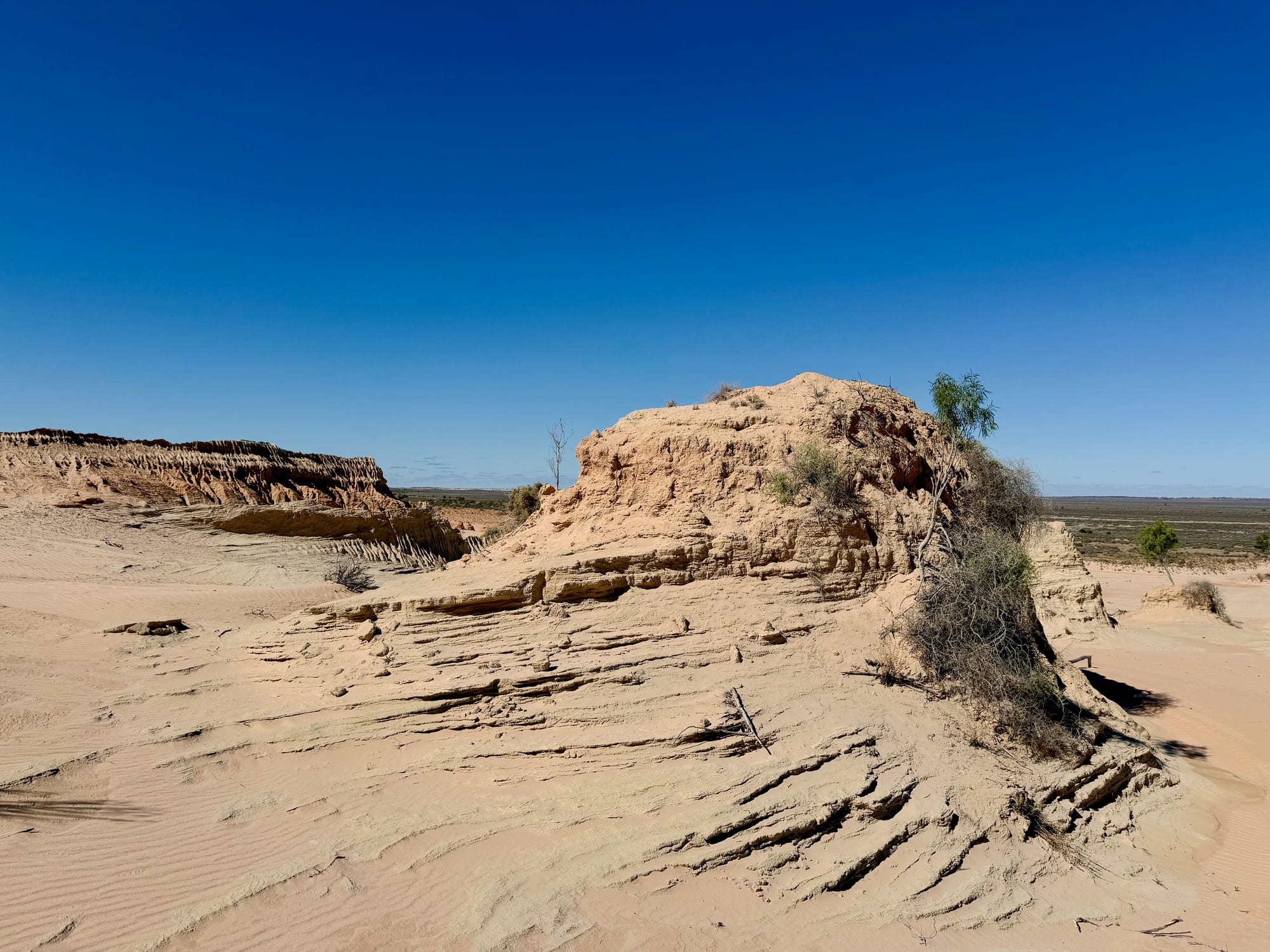
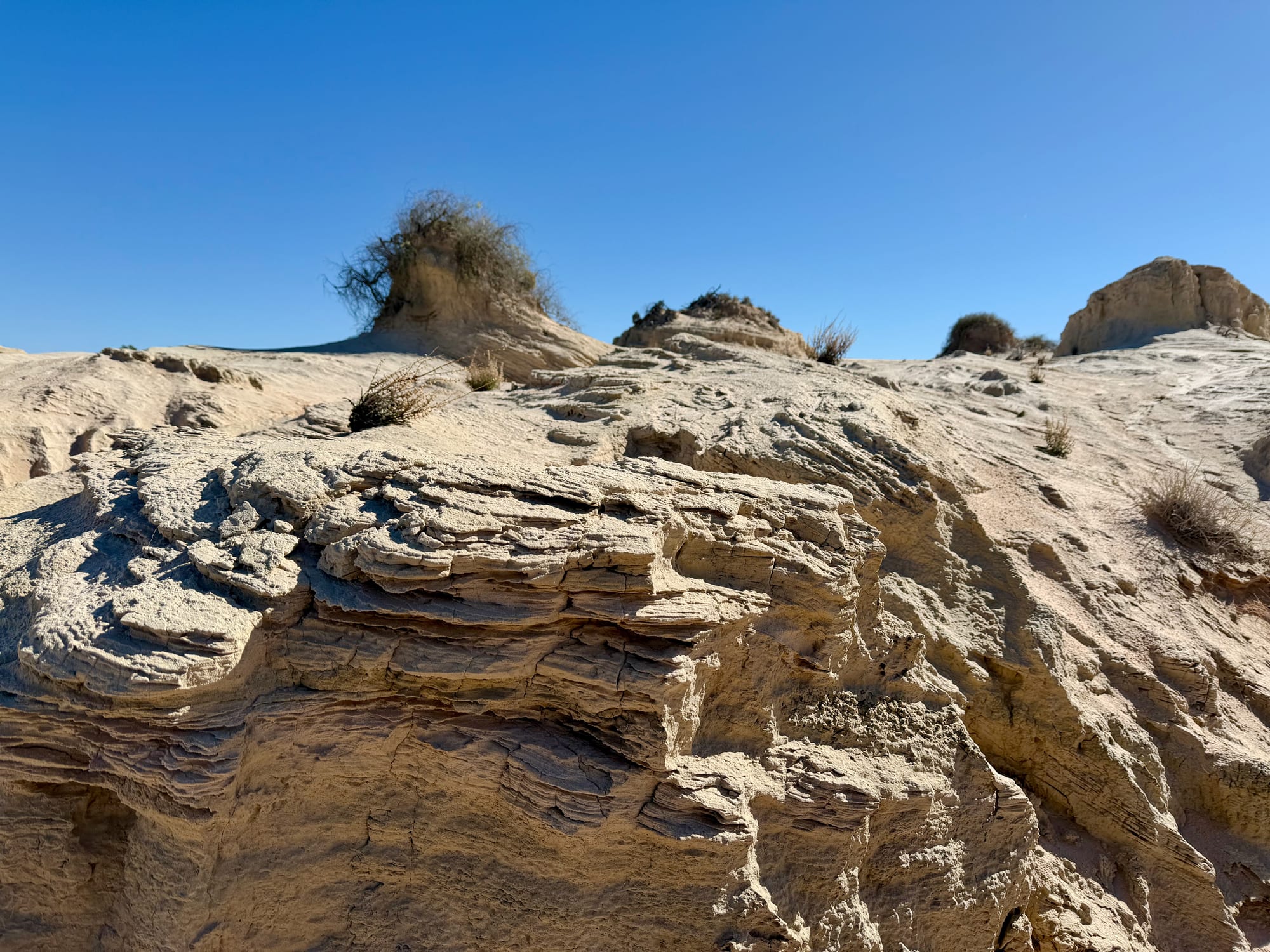
Up close you can see how fragile it is. The formations are built in thin layers, and the surface crumbles at the edges, so you understand quickly why nobody is allowed to climb them.
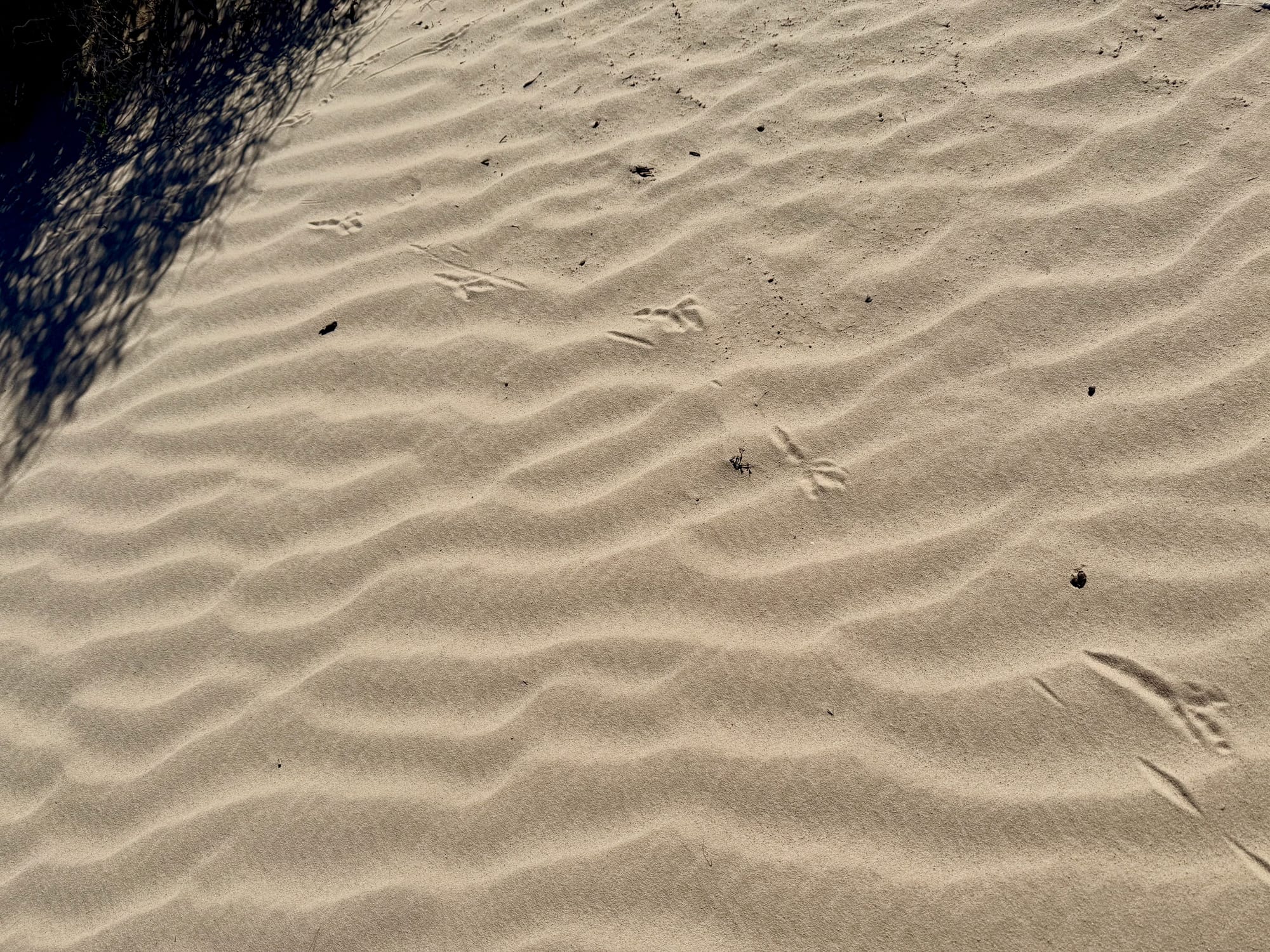
Further along, the formations give way to big pale dunes, with wind ripples across the sand and animal tracks running over them.
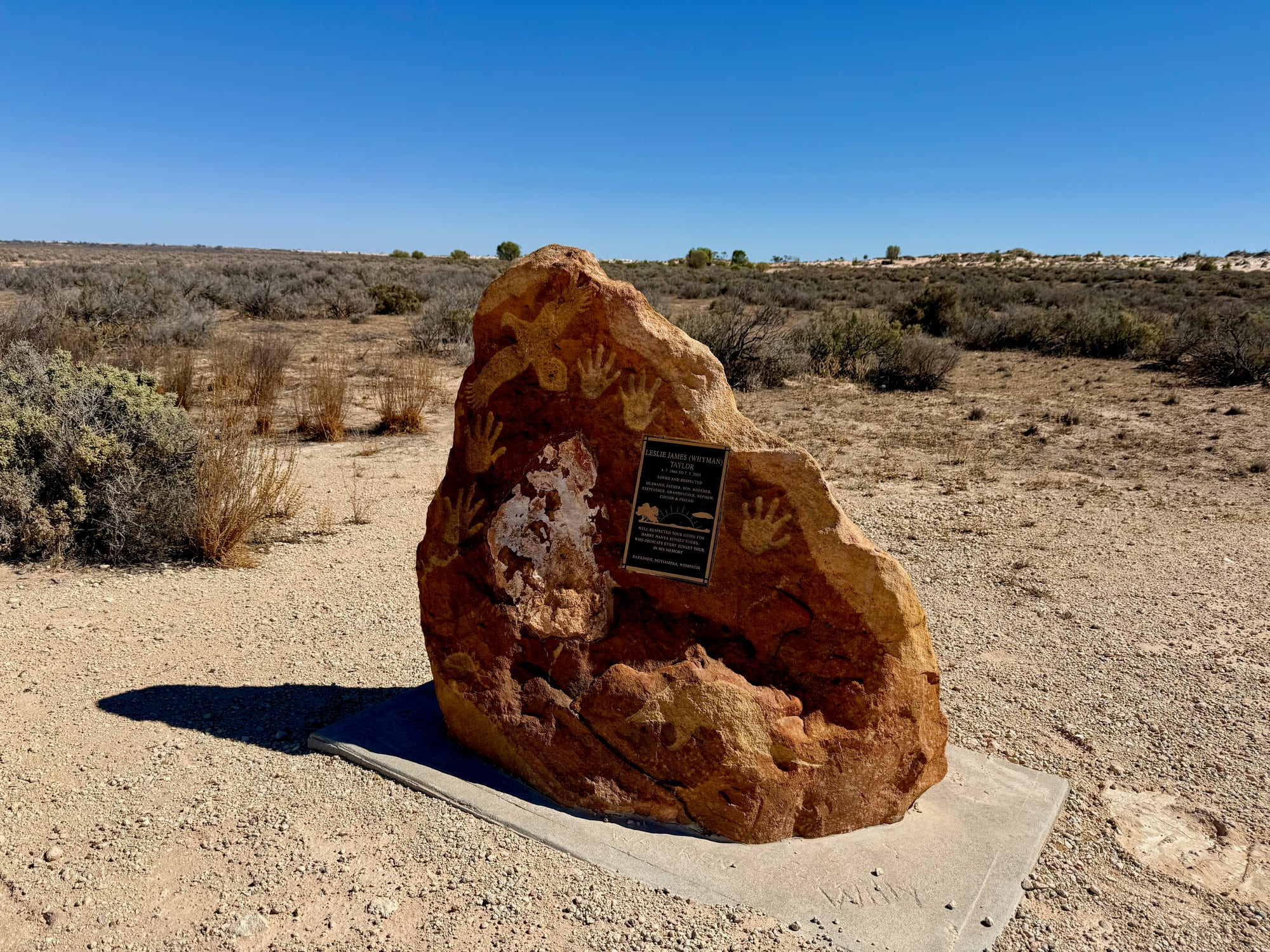
Go early in summer. We were out on the lunette before 9 am, and it was warm but bearable. On the way back, we stopped at a sandstone memorial with painted handprints, for a well-respected local Aboriginal tour guide. It’s a reminder of how personal this place is to the people who show you around.
Seeing It Without a GuidePlatform & Red Top
If you don’t book a guided tour, you can still watch the dunes and walls from the Walls of China Viewing Platform. You don’t need a guide for it, it’s wheelchair-accessible and it’s the first stop on the self-guided drive. NSW National Parks says sunrise and sunset are especially striking, and that only Telstra customers have limited coverage there.
After the tour we went back to the campground for a bit, and later in the day we drove out to Red Top Lookout and its boardwalk. The only other road from the Walls car park goes right: Red Top Road, which brings you to the lookout in about another 10 minutes, or about 20 minutes from the Visitor Centre. We got there just before 7 pm, and it’s another great view, with the low sun bringing out every ridge.
NSW National Parks lists Red Top as a short walk of 10 to 15 minutes, on a 50 m timber boardwalk that suits wheelchairs and prams, with a short stretch of loose gravel from the car park. There are railings at the lookout, benches along the way and signs explaining what you’re seeing. Stick to the boardwalk here too.
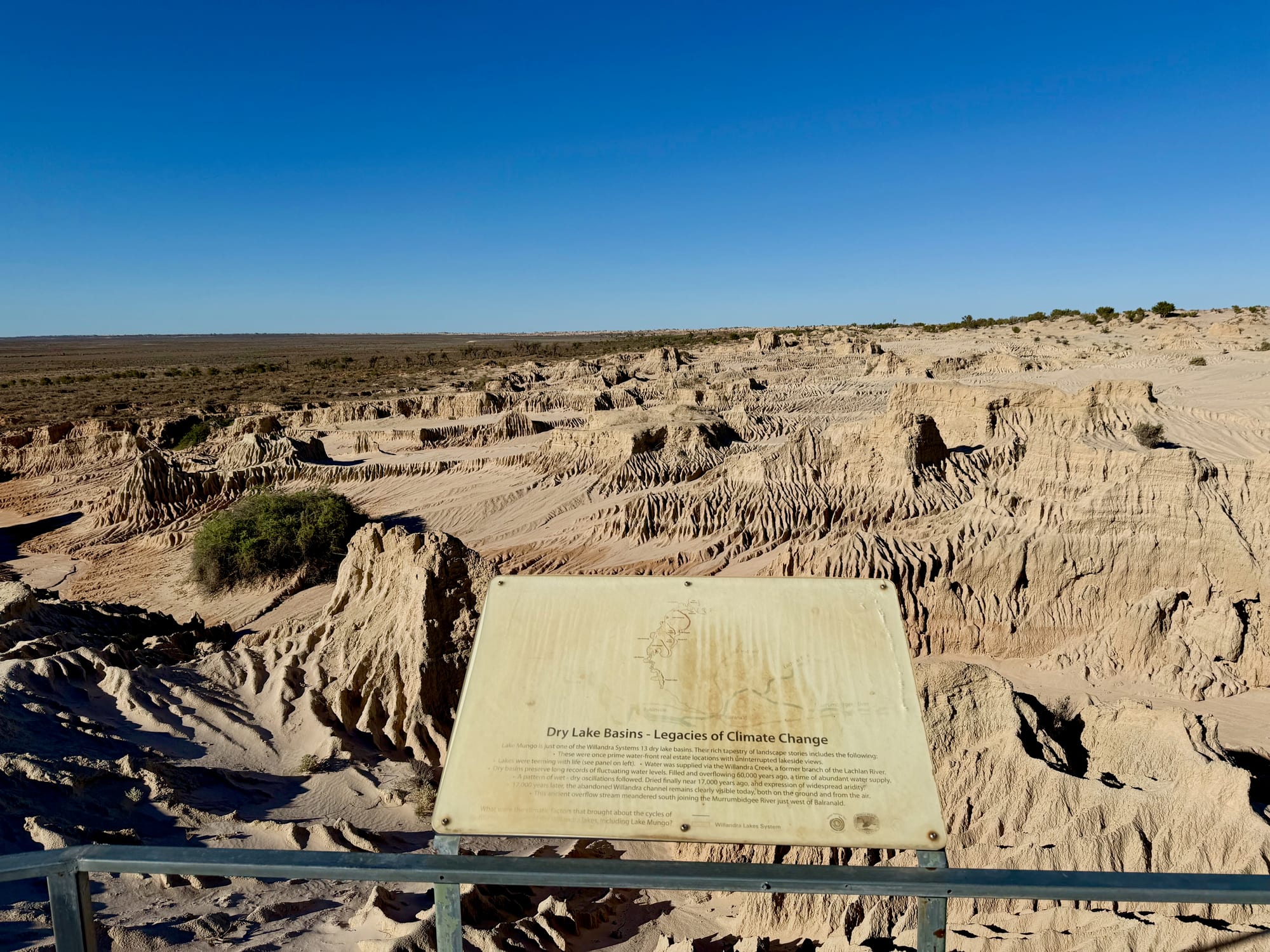
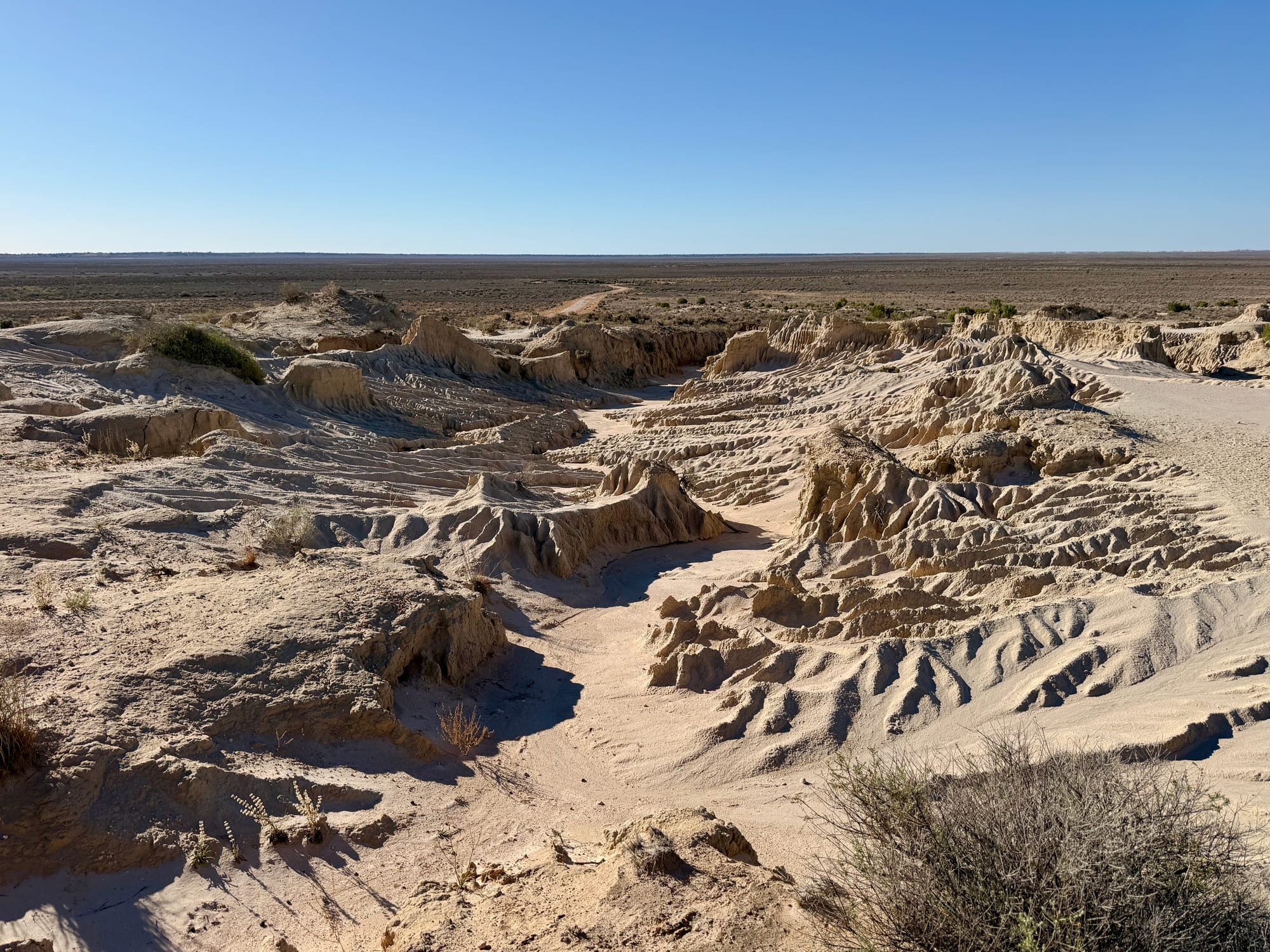
The view looks out over a wide stretch of eroded gullies and ridges, and the evening light gives them far more shape than the bright morning sun did.
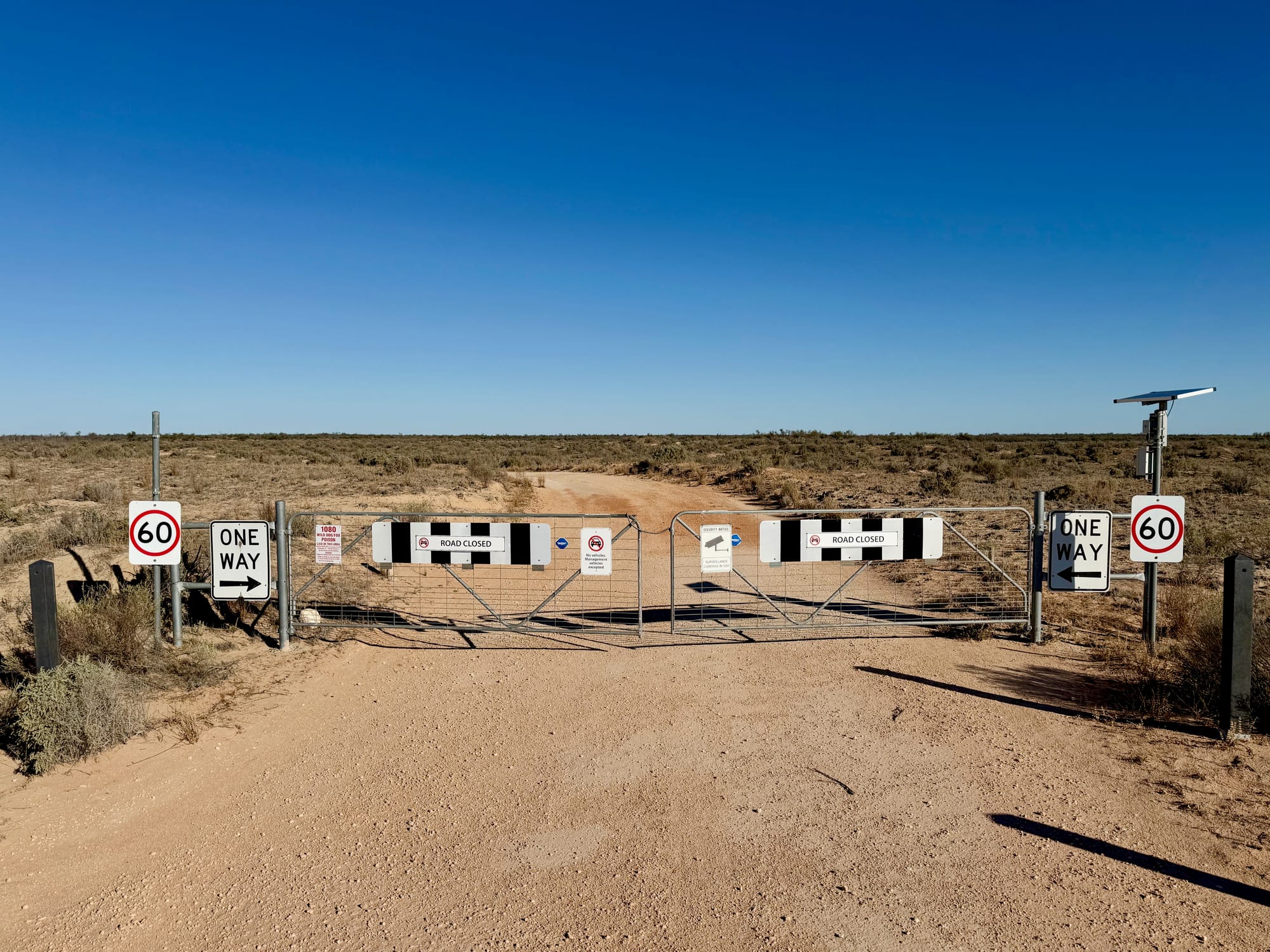
The self-guided drive tour continues from here as a one-way loop, but the road was closed when we arrived, with a gate across it, so we didn’t get to do it. Check the park alerts before you plan around it.
Summary
The Walls of China are the reason to drive all the way to Mungo, and the guided tour is the way to see them. Book before you leave reception, and head out to Red Top Lookout later in the day if you have time.
Do the guided tour.
The boardwalk gives you a good look, but only a guide can take you out among the formations. It was the best thing we did at Mungo, and worth planning your visit around.
- Travellers
- Campers
- Hikers
Yes. The boardwalk is covered by the $8 park entry, and the guided tour was the highlight of our time at Mungo. Book well ahead.
Recommended Gear for the Walls of China
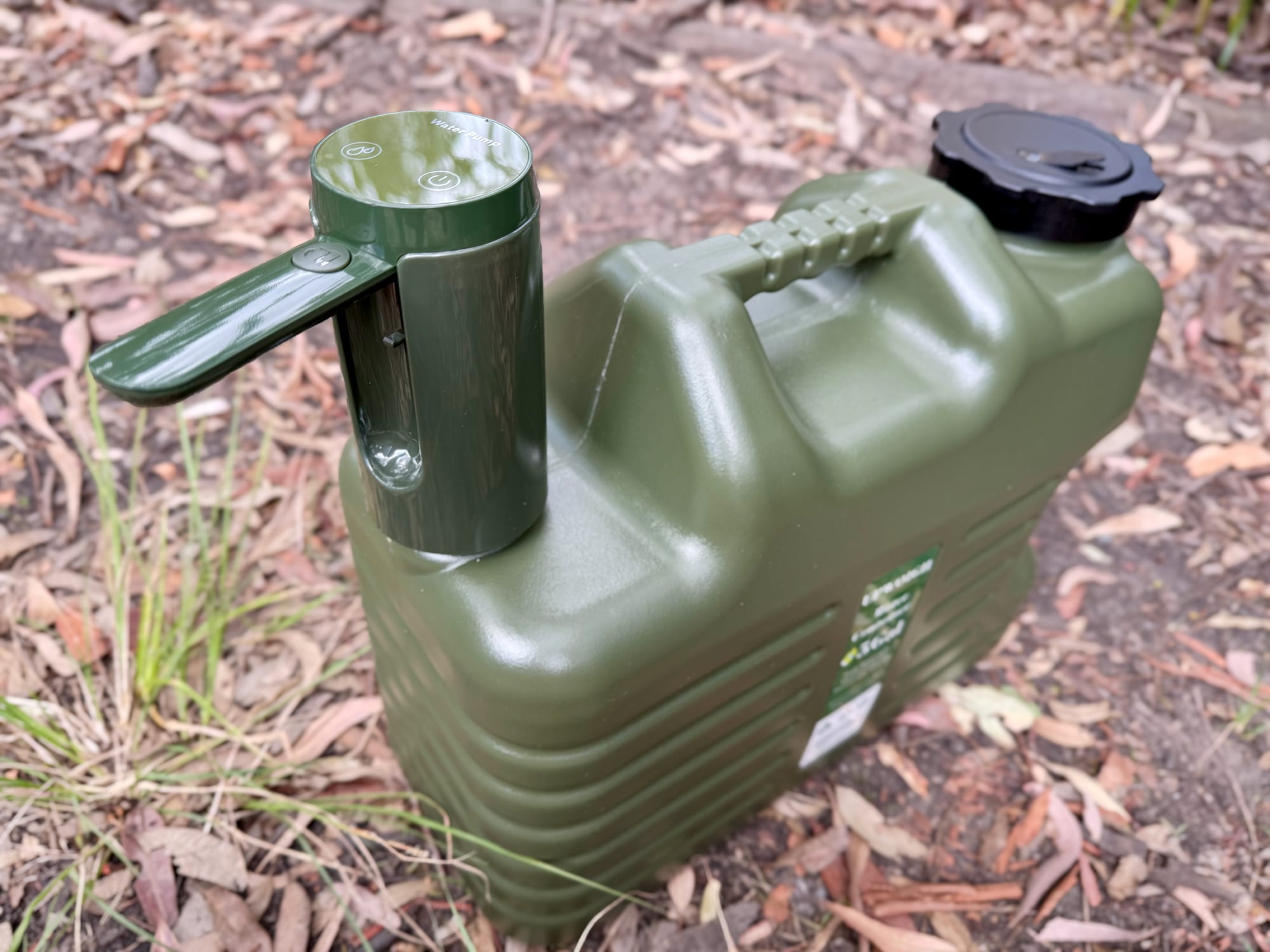
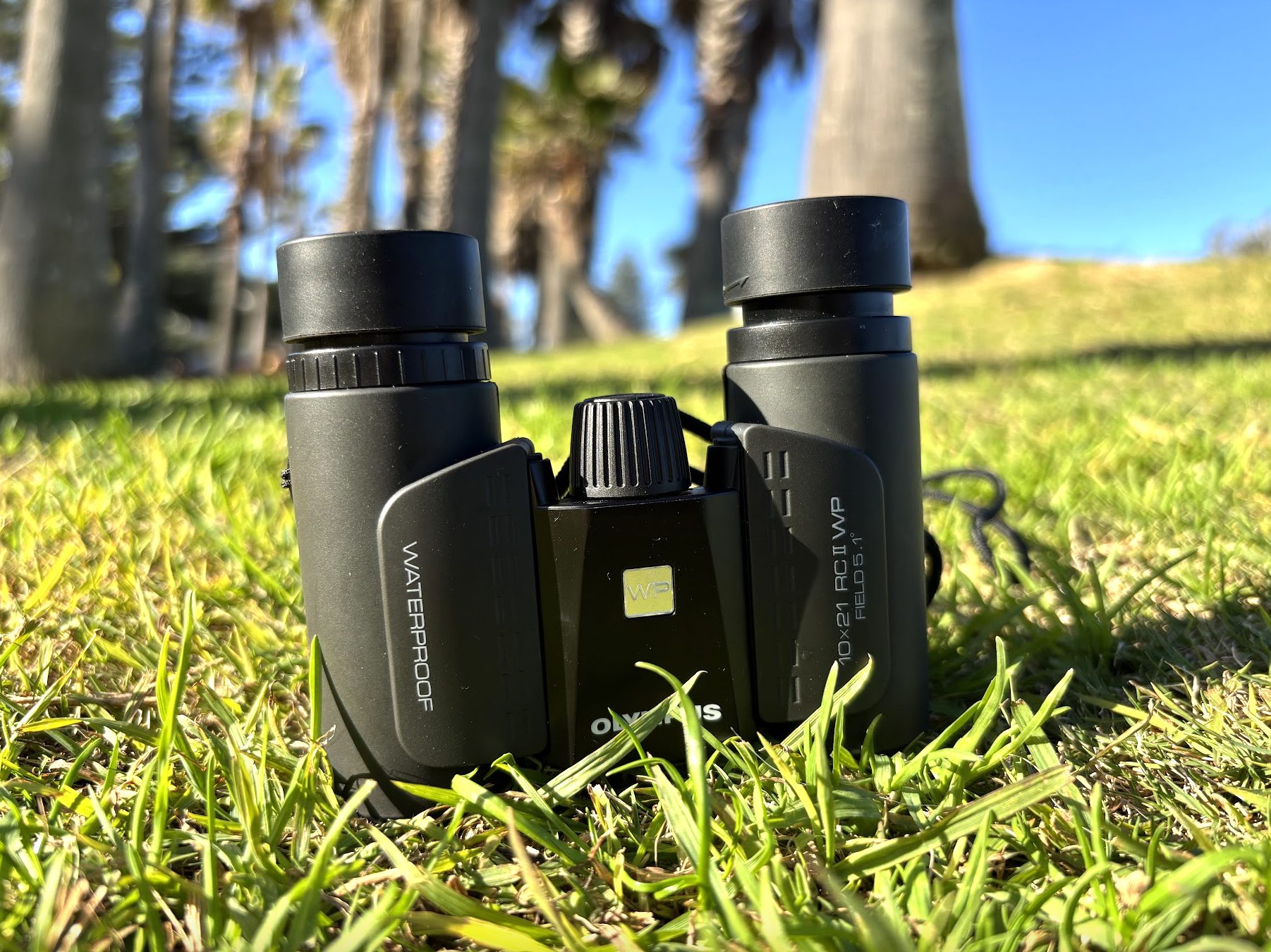
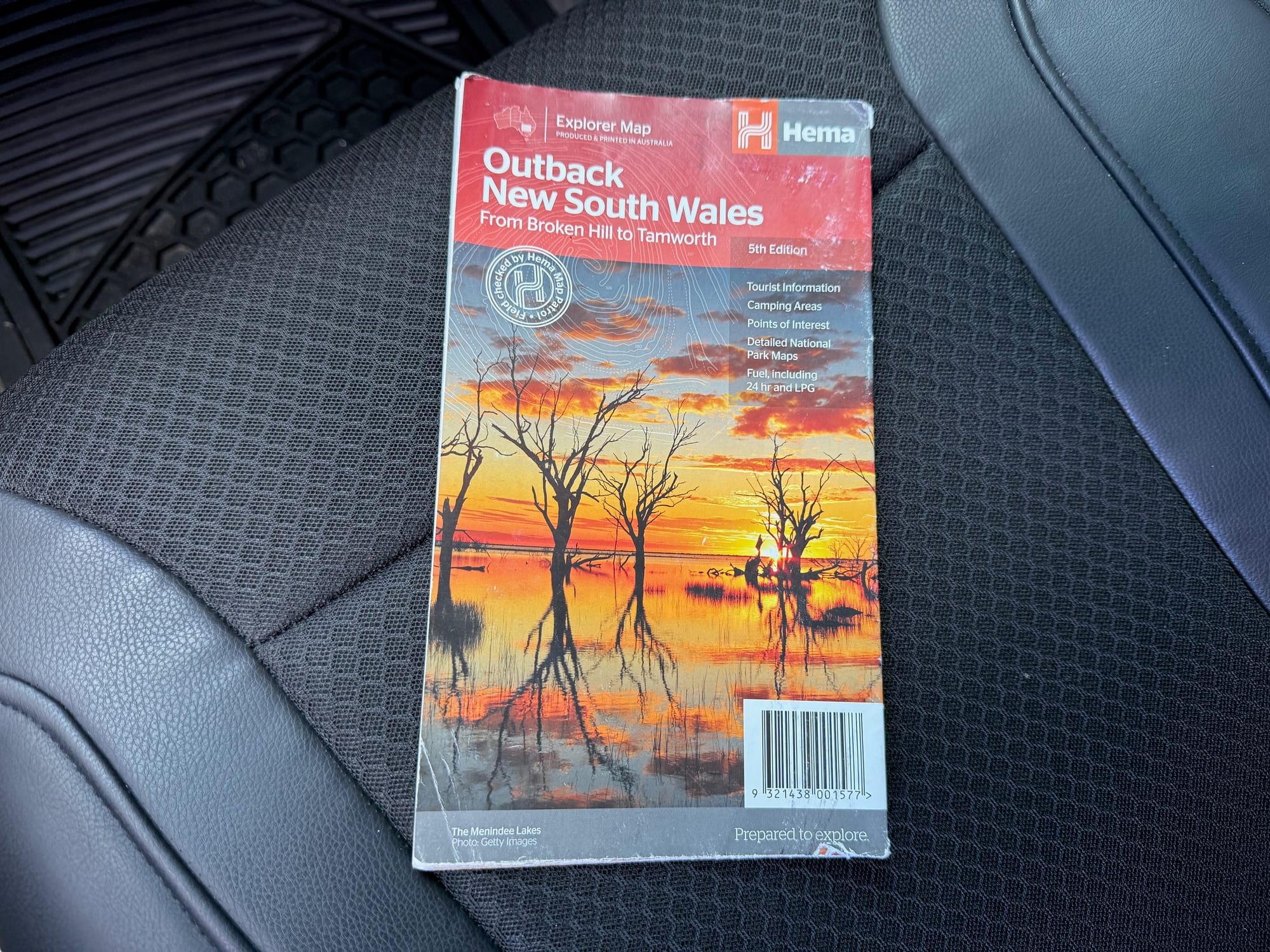
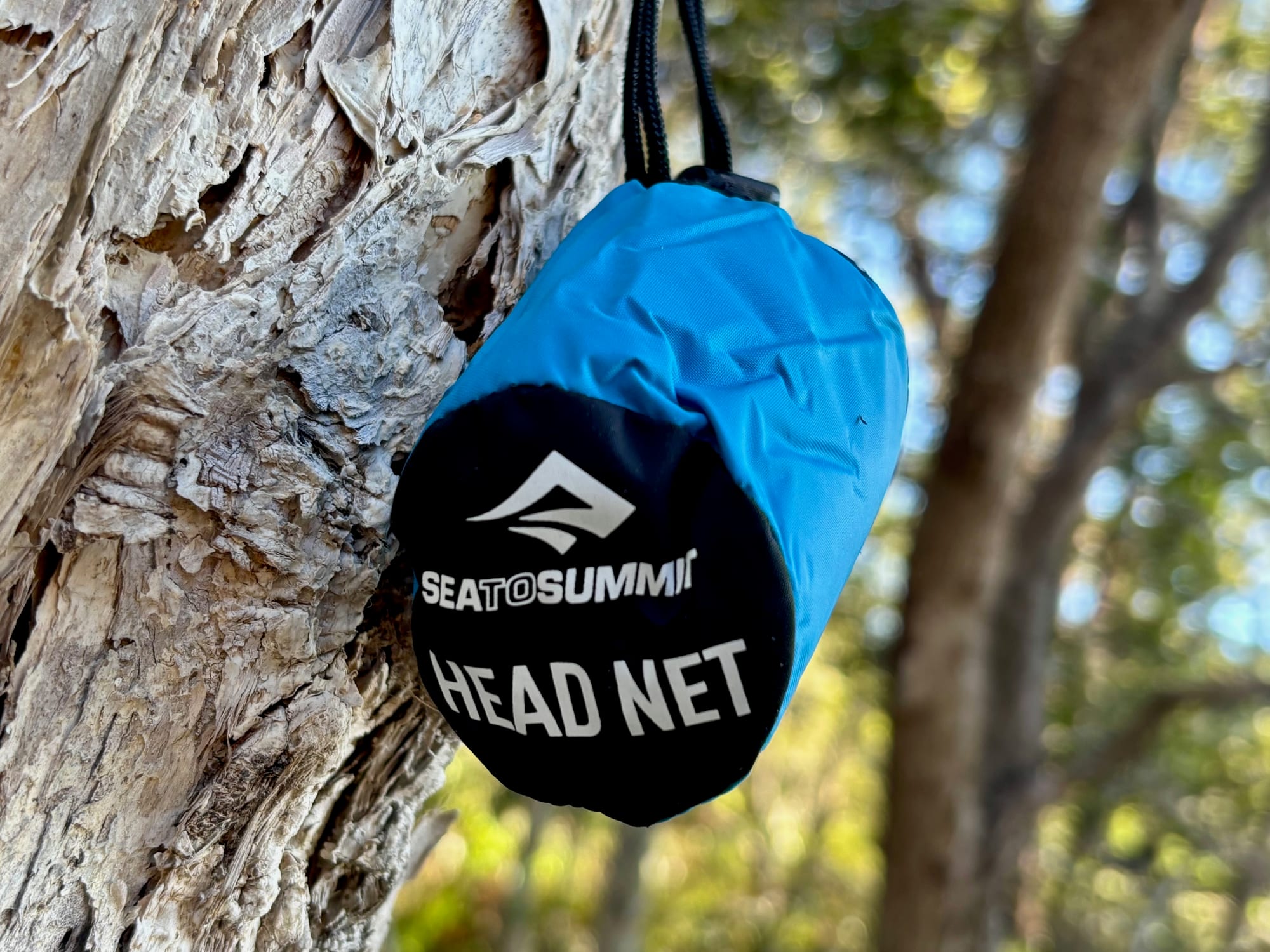
There’s no water at the car park, so take your own from camp in one of our favourite water containers. A pair of binoculars helps at Red Top Lookout, where you can’t get any closer. Our Hema Outback New South Wales map covers Mungo and the roads in, and a mosquito head net keeps the flies off your face in the warmer months.