Out bush, the creek, a rainwater tank or a campground tap is often the only water there is. A small filter or a box of tablets makes it safe to drink, and weighs next to nothing. We keep a filter in the back of the car and carry tablets on remote trips, and we’ve used them from Bouddi and Alligator Gorge to Pooncarie in the outback.
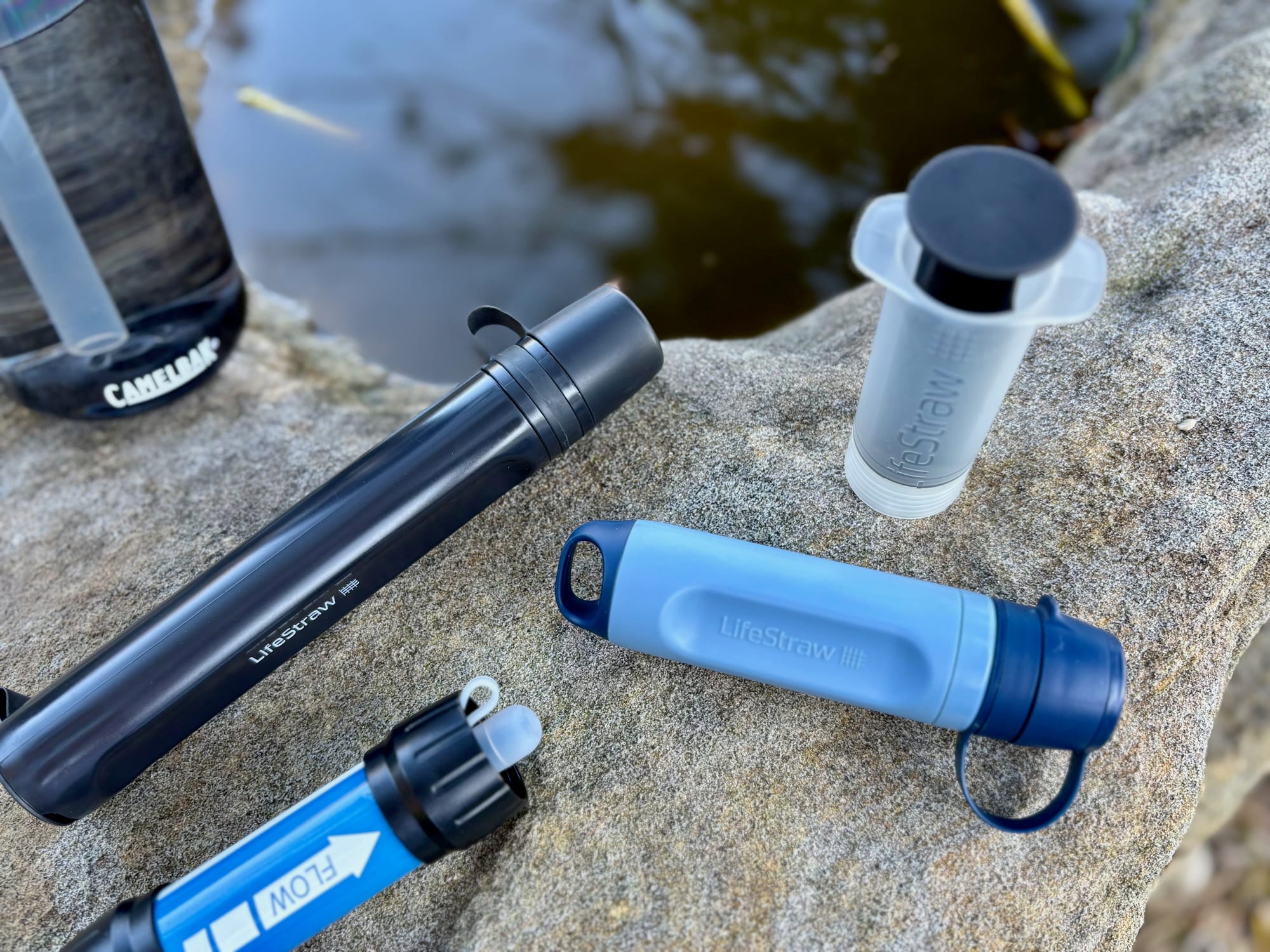
We’ve now tested six ways to treat water at camp: two screw-on filters, a straw, two filter bottles and purification tablets. Here’s how they compare and which one suits your trip.
Quick picks: the best camping water filters comparedQuick picks
| Product | Score | Price | Type | Filter life | Weight | Check price |
|---|---|---|---|---|---|---|
Best overallLifeStraw Peak Solo | 9.3 | Mid-range | Screw-on filter | 2,000 L | 48 g | Check price at Amazon |
Best for tanksEf-Chlor Purification Tablets | 9.2 | Budget | Tablets | 2,000 L (100 tablets) | 30 g | Check price at Amazon |
Best straw filterLifeStraw Peak Series Straw | 9.1 | Mid-range | Straw | 4,000 L | 70 g | Check price at Amazon |
Best valueSawyer Mini | 9.0 | Mid-range | Screw-on filter | 378,000 L | 65 g | Check price at Amazon |
Best filter bottleLifeStraw Go Series 2.0 (1 L) | 8.8 | Premium | Filter bottle | 4,000 L | 273 g | Check price at Amazon |
Best collapsibleLifeStraw Peak Squeeze (650 ml) | 8.7 | Premium | Squeeze bottle | 2,000 L | 102 g | Check price at Amazon |
Price: Budget under $30, Mid-range $30–79, Premium $80 and up, based on what we paid.
Best overall: LifeStraw Peak SoloBest overall: Peak Solo
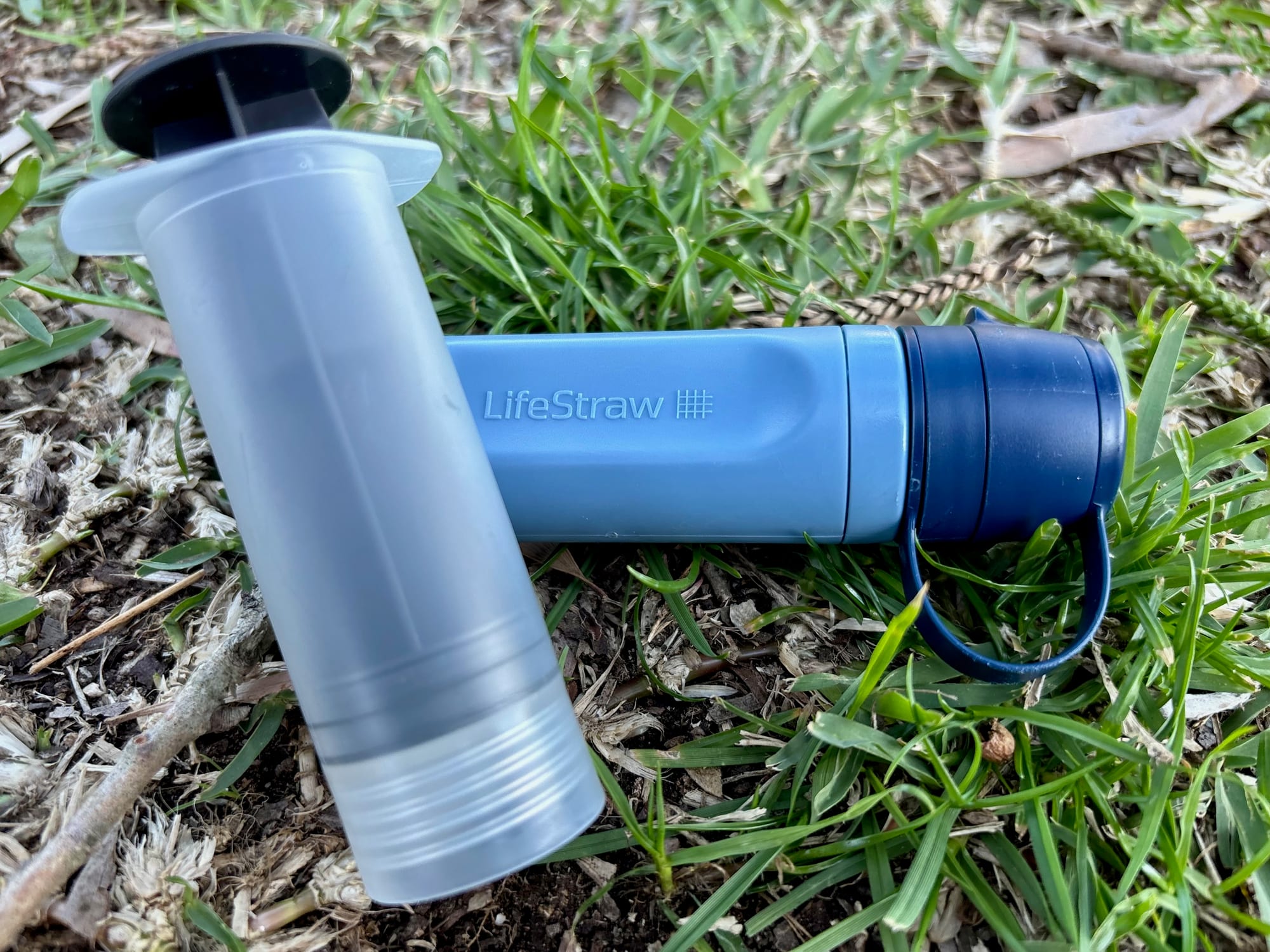
The Peak Solo scored highest because it’s tiny and it flows fast. It weighed 48 g on our scale, screws onto a standard 28 mm water bottle, and squeezes a litre through in about 20 seconds. Leakproof caps on both ends keep dirty water out of your bag, and it comes with a syringe to backwash it. Ours lives in the back of the car, where it takes up no space.
Rigid bottles collapse as you squeeze, it’s short to use as a straw, and the filter lasts 2,000 litres, half the Peak Series straw. For $50, it’s the filter to always have with you.
LifeStraw Peak Solo
Scored 9.3 out of 10Our take: 2 micron water filter that screws onto a standard 28 mm bottle, flows up to 3 L a minute and comes with a backwash syringe. It's rated to 2,000 litres.
We may earn a commission if you buy through these links.What we like
- 48 g, fits in a pocket
- Squeeze, sip or use as a straw
- Flows up to 3 L a minute
- Leakproof caps on both ends
- Blocks water when it's used up
- Backwash syringe included
What we don’t
- No virus or chemical protection
- Squeezed bottles collapse
- Half the life of the Peak straw
Best for tanks: Ef-Chlor Purification TabletsFor tanks: Ef-Chlor tablets
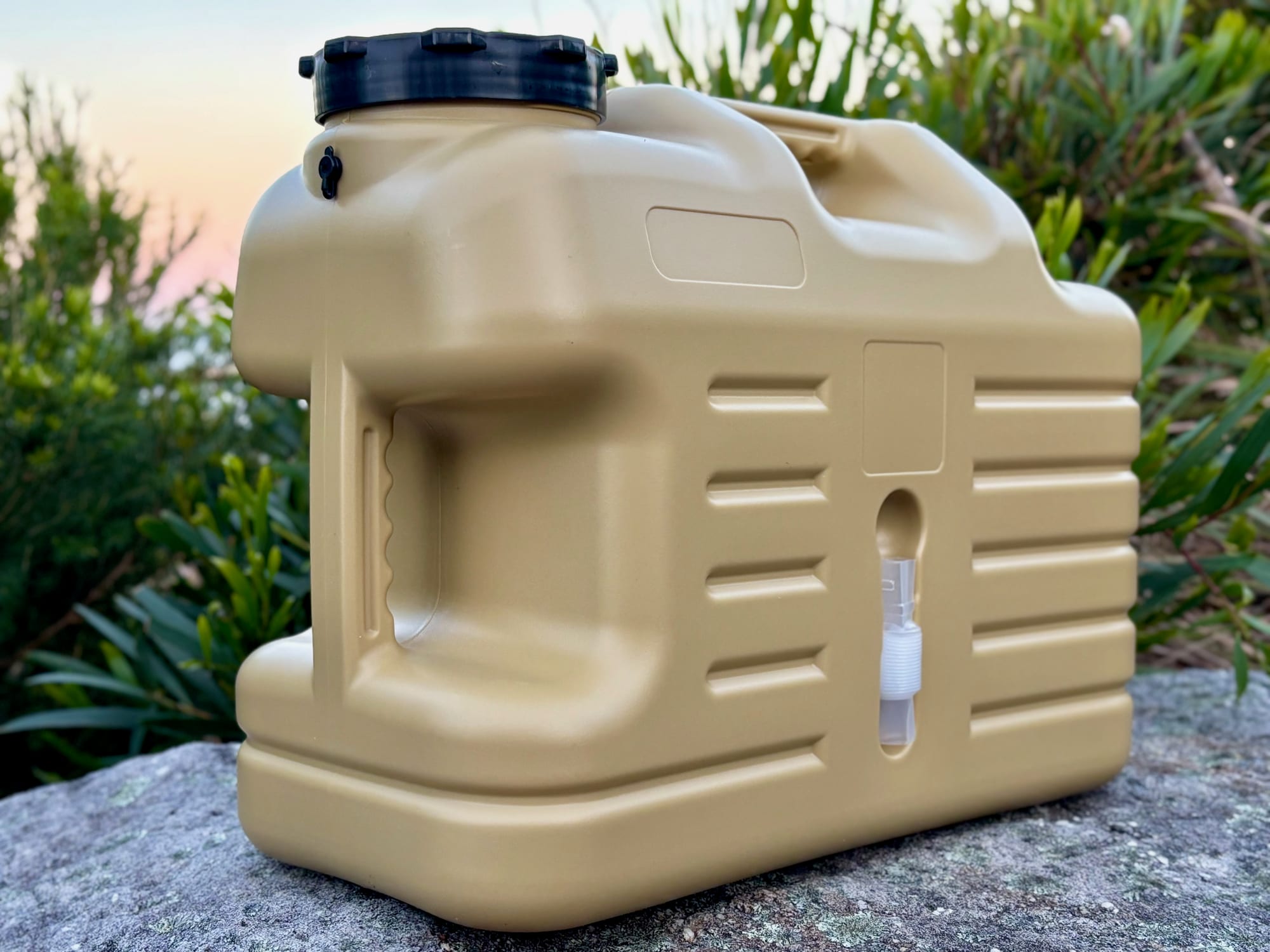
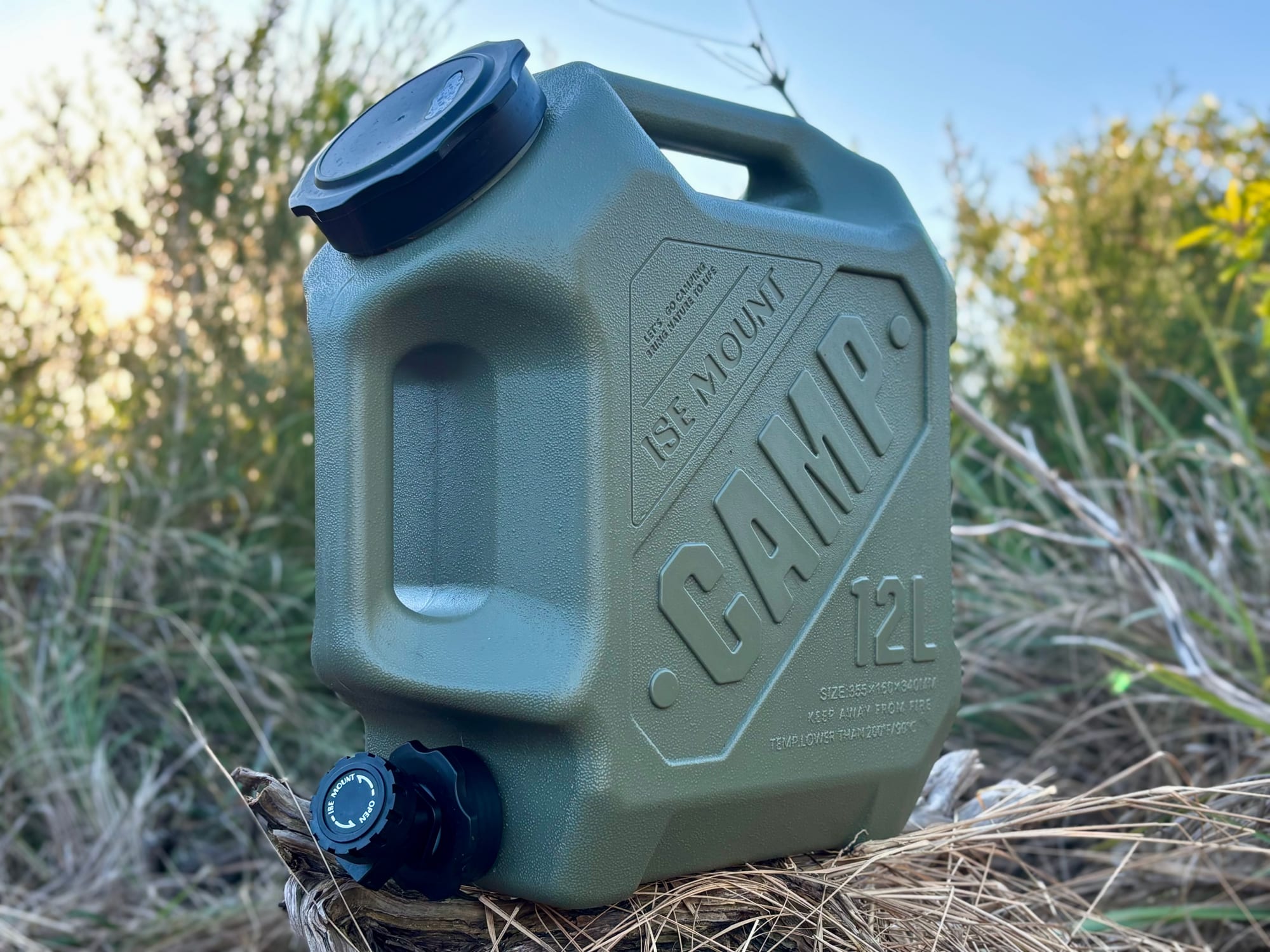
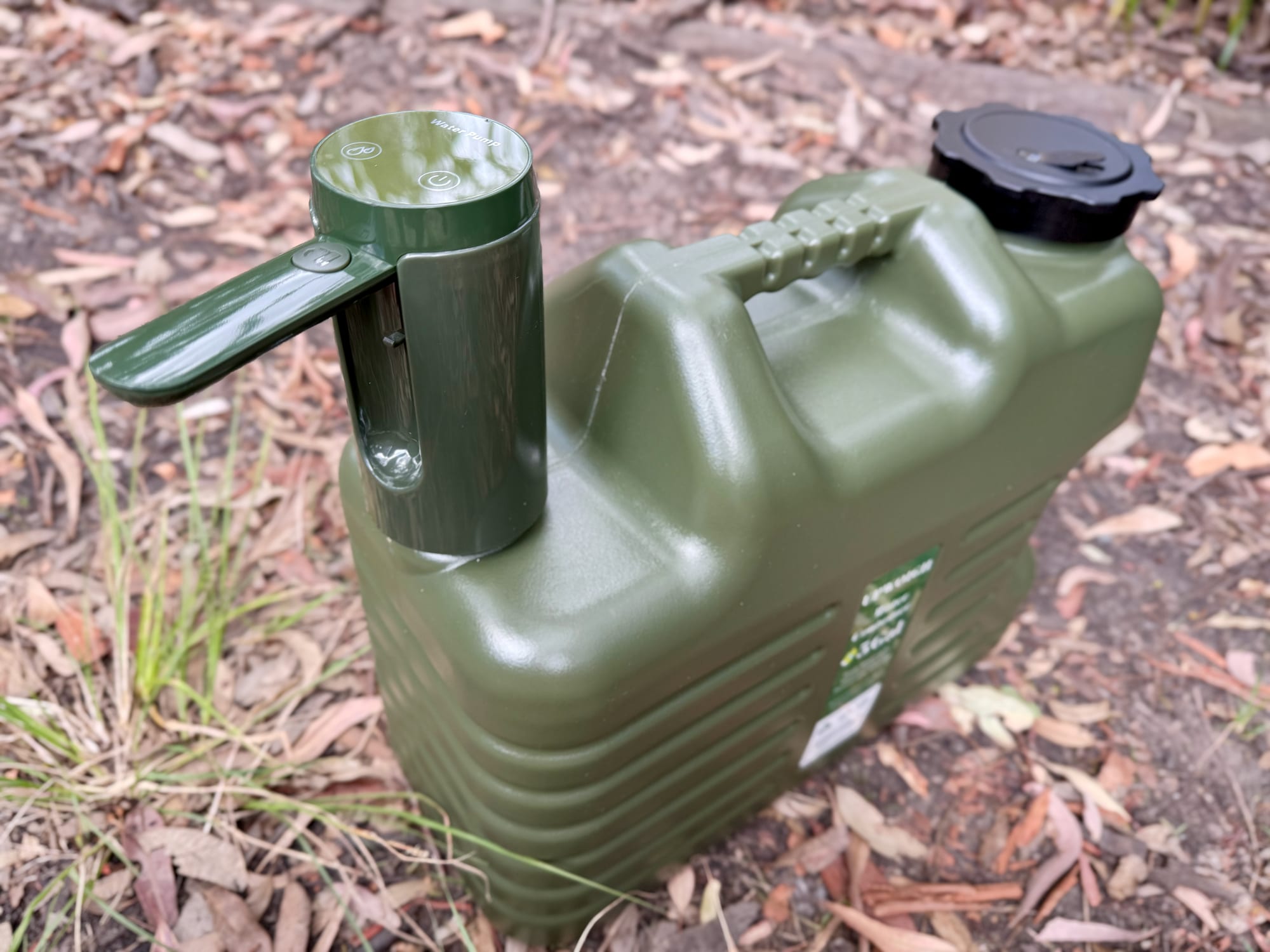
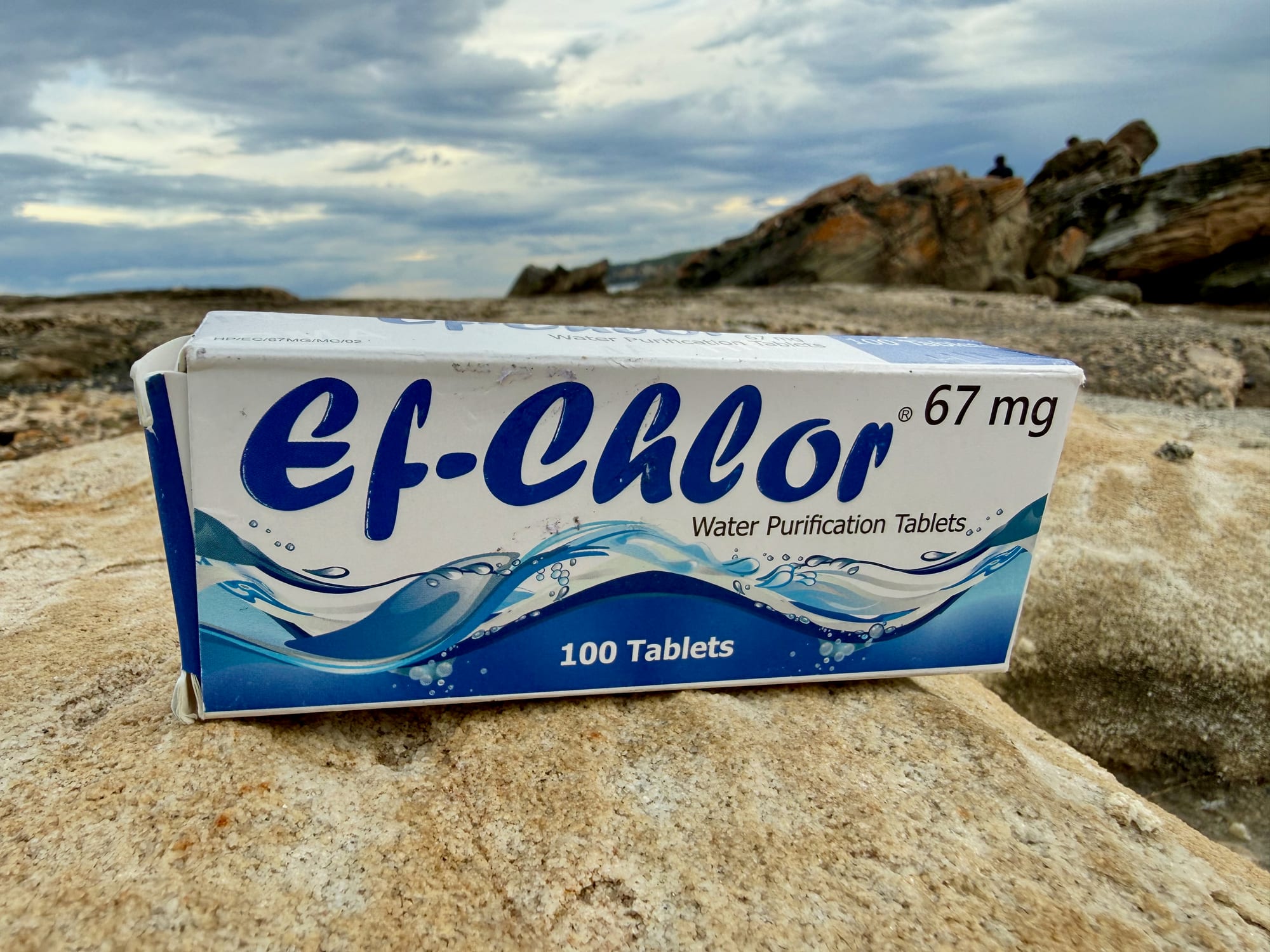
Ef-Chlor tablets do a different job: one tablet treats 20 litres of clear water, or 10 litres of cloudy water, and it’s ready in 30 minutes. That makes them the pick for a water tank or a jerry can rather than a drink bottle. We used them in our tank after filling up from a tap in Pooncarie, and the water had no strong chlorine taste or smell.
They’re dosed for big containers, not a single bottle, and they don’t clear dirty water: that has to be filtered or settled first. A box of 100 cost $17 and weighs 30 g, so it’s an easy backup for remote trips.
Ef-Chlor Purification Tablets
Scored 9.2 out of 10Our take: Chlorine tablets that treat 10 to 20 litres each in 30 minutes. A box of 100 weighs 30 g and cost $17.
We may earn a commission if you buy through these links.What we like
- One tablet treats up to 20 litres
- 100 tablets: up to 2,000 litres
- The whole box weighs 30 g
- Simple: drop in, wait 30 minutes
- No strong chlorine taste or smell
- A backup for remote, outback trips
What we don’t
- 30 minute wait before drinking
- Doesn’t clear dirty water
- Dosed for 10 to 20 L, not a bottle
Best straw filter: LifeStraw Peak Series StrawStraw filter: Peak Series
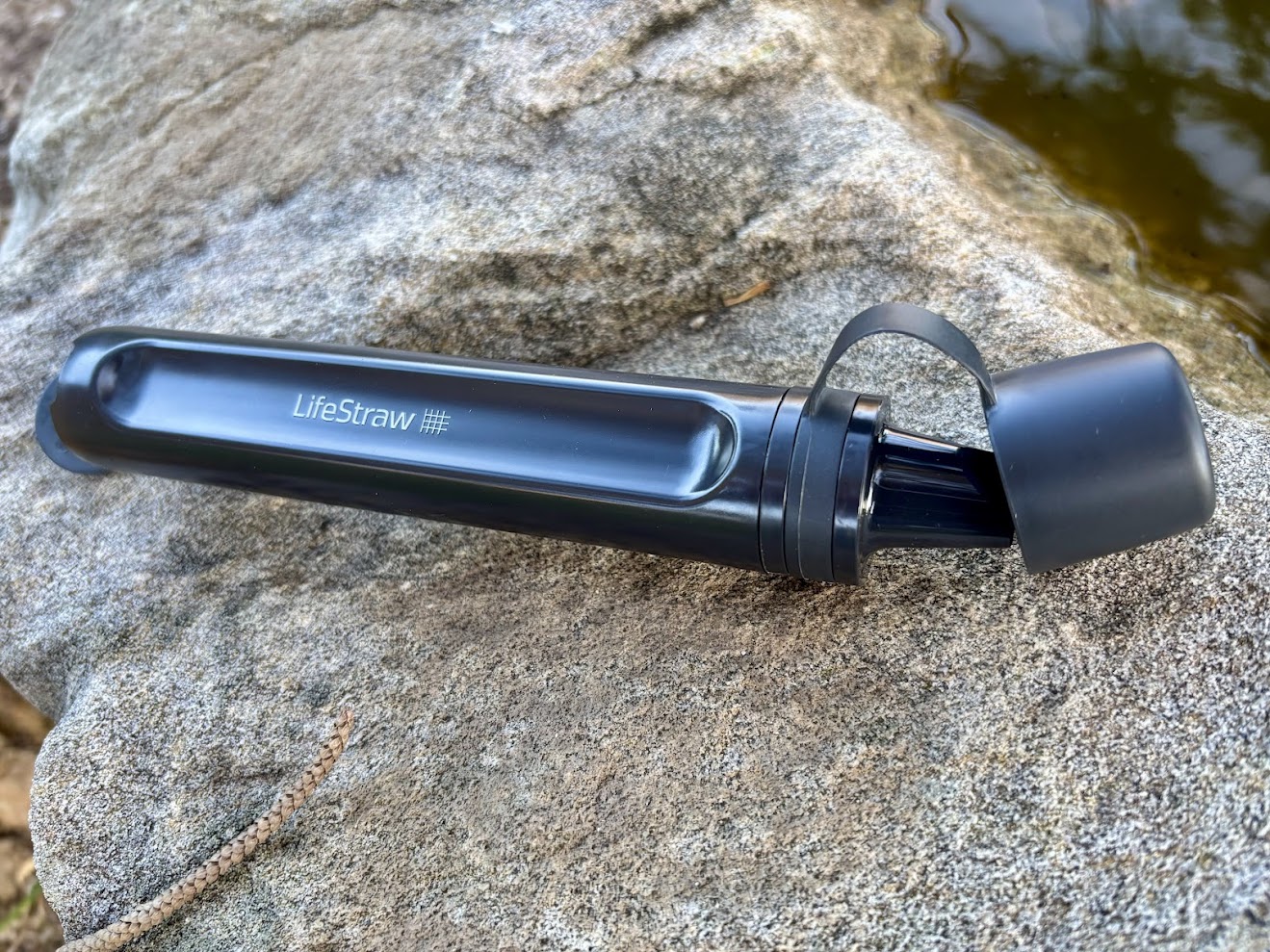
The Peak Series straw is the classic: drink straight from a creek, or screw it onto a standard bottle. It’s longer than the Peak Solo, which makes it the easier one to use as a straw, and the filter lasts 4,000 litres, twice as long. It weighs 70 g.
It needs priming before the first use, and drinking from a low creek is still awkward. For $50 it’s a filter you can trust on a long trek.
LifeStraw Peak Series Straw
Scored 9.1 out of 10Our take: A 70 g water filter that makes 4,000 litres of water safe and either works as a straw or screws onto a standard bottle. It doesn’t remove viruses and needs some priming before first use.
We may earn a commission if you buy through these links.What we like
- Ultra-lightweight for pack (70 g)
- Filters 4,000 litre of safe water
- Threads onto 28 mm bottles
- Enhanced flow rate for easy sip
- Highly durable, thick plastic
What we don’t
- Does not remove viruses
- Requires some initial priming
- Drinking directly can be awkward
Best value: Sawyer Mini
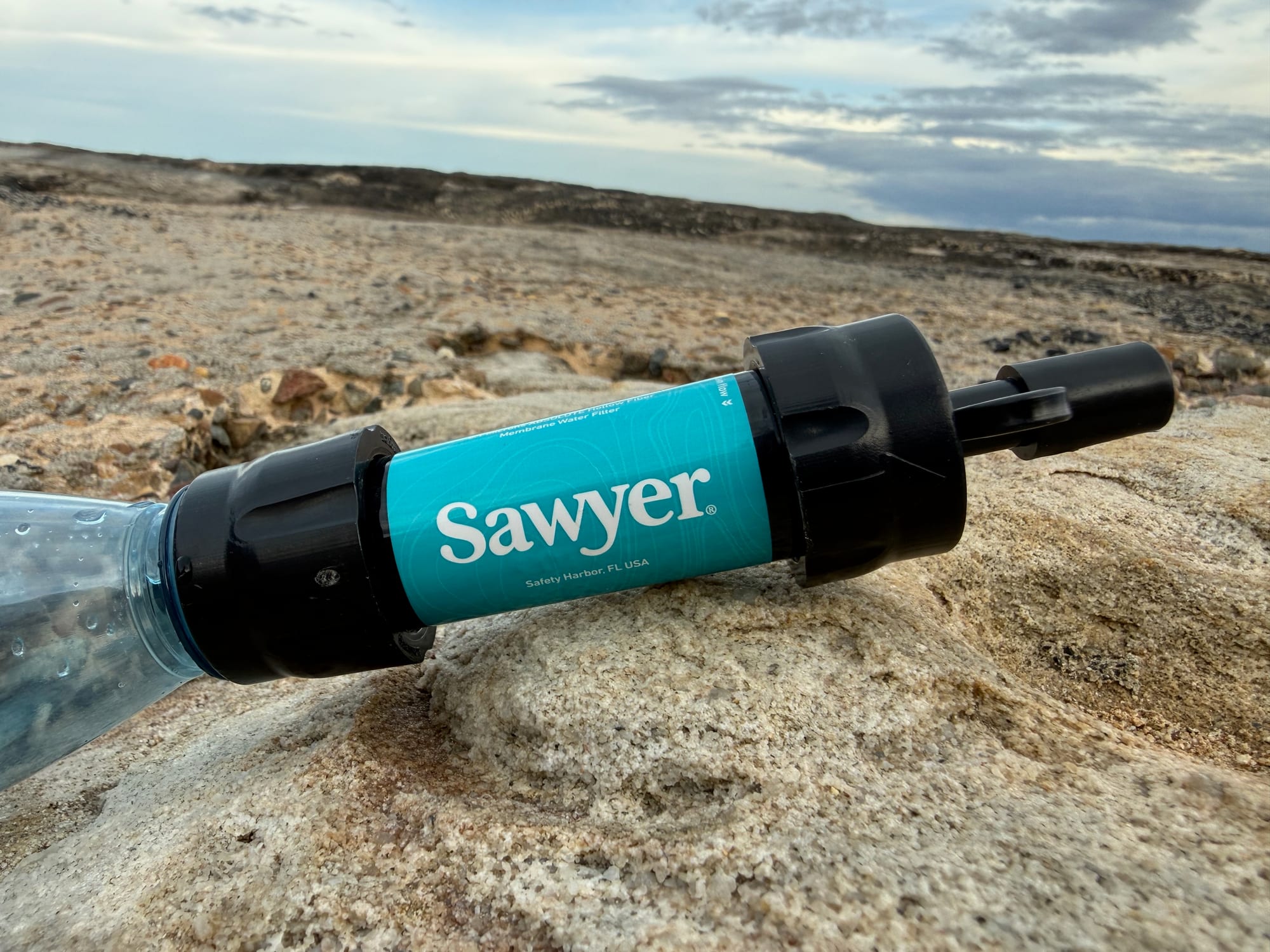
The Sawyer Mini is the cheapest filter here and the one that lasts longest by far: Sawyer rates it to 100,000 gallons. Its 0.1 micron hollow-fibre filter is the finest of the six, it screws onto a standard bottle or drinks straight from the source, and it fits in your palm. It worked well when our bottles ran out on hikes in Alligator Gorge and Bouddi.
It’s slower than the Peak Solo and takes some sucking power, and it needs regular backflushing with its plunger. For $36, it’s a handy backup for the bottom of a hiking pack.
Sawyer Mini
Scored 9.0 out of 10Our take: 1 micron filter that removes bacteria and protozoa, screws onto a standard bottle and comes with a backflush plunger.
We may earn a commission if you buy through these links.What we like
- Tiny: fits in the palm of your hand
- 65 g with the cleaning plunger
- Screws onto a standard bottle
- Removes bacteria and protozoa
- Saved us when our bottles ran out
- Rated to 100,000 gallons
What we don’t
- Doesn’t remove viruses or chemicals
- Slow flow, clogs with silty water
Best filter bottle: LifeStraw Go Series 2.0 (1 L)Filter bottle: Go Series 2.0
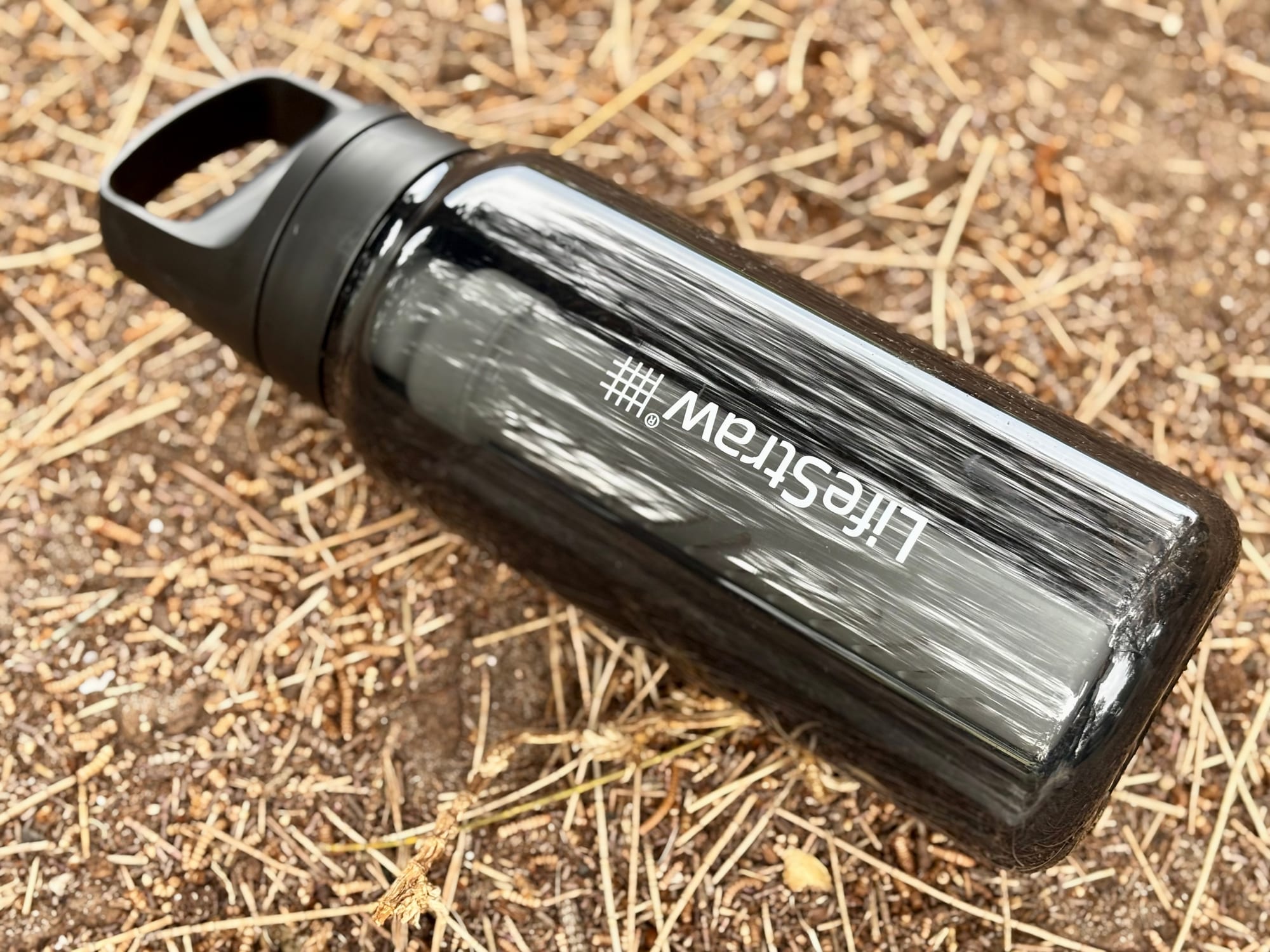
The Go Series 2.0 is a 1 litre bottle with the filter in the lid: fill it from the creek and drink. It’s the only one here with a second, carbon stage that reduces chlorine and improves the taste, which helps with tank and town water. The membrane lasts 4,000 litres.
It takes more suction than a normal bottle, the carbon filter needs replacing after 100 litres, and at 273 g and $110 it’s the heaviest and dearest here. For filling up from taps and tanks you don’t trust, it’s the easiest to live with.
LifeStraw Go Series 2.0 (1 L)
Scored 8.8 out of 10Our take: A 1 litre bottle with a two-stage filter that removes bacteria, parasites and microplastics and improves the taste, at 273 g.
We may earn a commission if you buy through these links.What we like
- Filters bacteria and parasites
- Carbon filter improves taste
- Fill from a creek and drink
- Membrane lasts up to 4,000 litres
- Bottle is dishwasher-safe
- 50% recycled, BPA-free plastic
What we don’t
- Doesn’t filter viruses
- Takes more suction than a bottle
- Pricey, carbon filter lasts 100 L
Best collapsible: LifeStraw Peak Squeeze (650 ml)Collapsible: Peak Squeeze
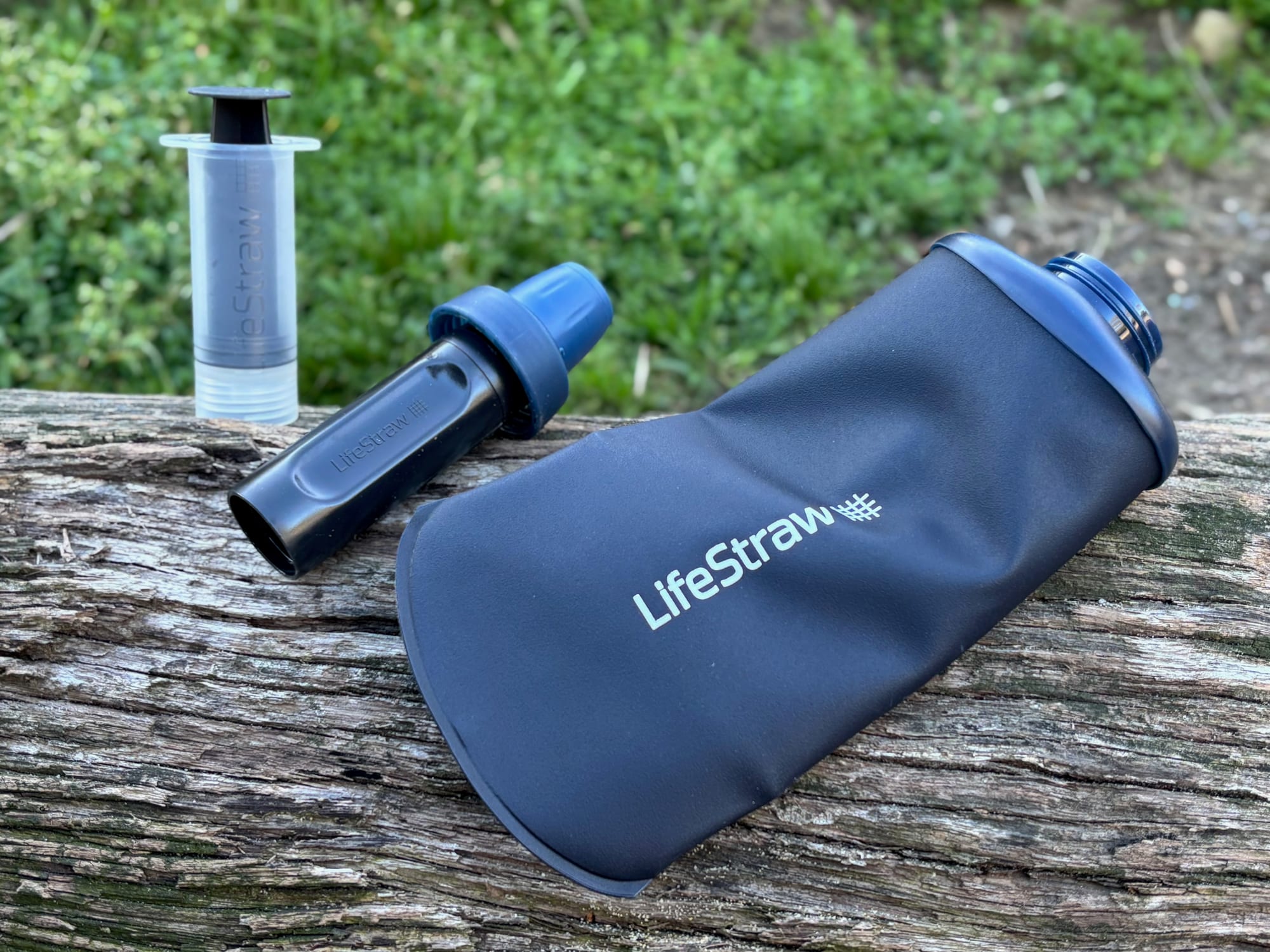
The Peak Squeeze is a soft 650 ml bottle with a filter in the neck. Drink from it or squeeze clean water into a pot, and when it’s empty it rolls up. At 102 g it’s the lightest filter bottle we’ve tested.
650 ml isn’t much, there’s no carbon filter for taste, and $80 is a lot for a small bottle. For hikers who count grams, it saves carrying a separate bottle.
LifeStraw Peak Squeeze (650 ml)
Scored 8.7 out of 10Our take: A soft 650 ml bottle with a filter that removes bacteria, parasites and microplastics, at 102 g. You can drink from it or squeeze clean water into a pot.
We may earn a commission if you buy through these links.What we like
- Filters bacteria and parasites
- 102 g and rolls up small when empty
- Squeeze clean water into a pot
- Filter also works as a straw
- Fast flow: up to 3 litres per minute
- Filter lasts up to 2,000 litres
What we don’t
- No virus or carbon filtering
- 650 ml isn’t much for a full day
- Hand wash only
How to choose a camping water filterHow to choose
The right choice depends on how much water you need to treat and where it comes from. For a drink on a hike, a small filter on a bottle is quickest. For a tank, a jerry can or a whole camp, tablets or a bigger setup make more sense, because filtering litre by litre gets tedious.
The other question is what’s in the water. Every filter here removes bacteria, parasites like Giardia and Cryptosporidium, and microplastics, but none removes viruses, chemicals or salt. Chlorine tablets deal with viruses, but they don’t clear dirt. For water you’re unsure about, filter it first and treat it after. Camping water treatment comes in four types:
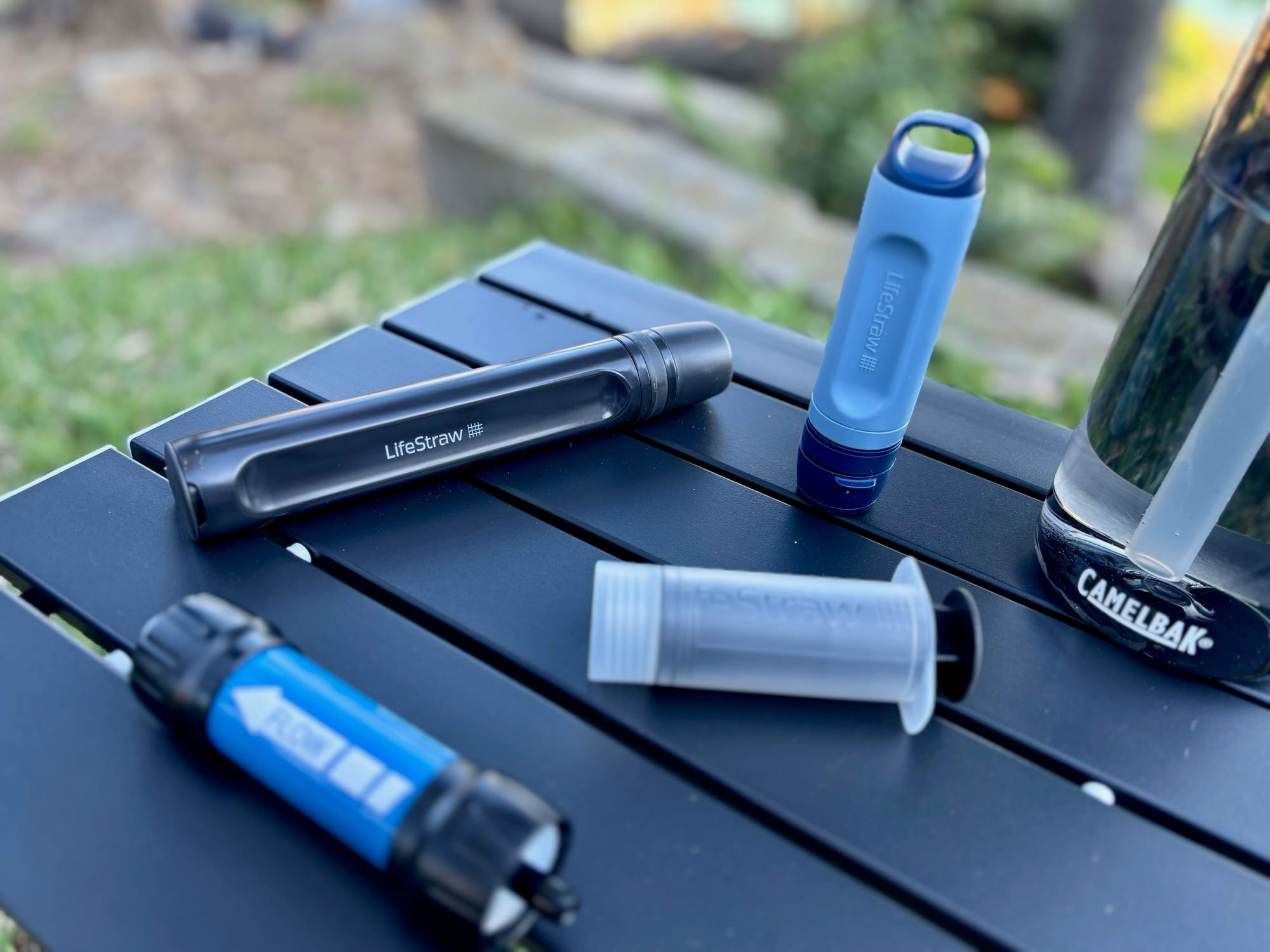
- Screw-on filter
Under 70 g
Screws onto a standard bottle: drink through it or squeeze water into a pot.
Best forHikes, the gloveboxLike - Straw
Around 70 g
Drink straight from the creek, or screw it onto a bottle.
Best forLong treks - Filter bottle
100–300 g
A bottle with the filter built in: fill it from the creek and drink.
Best forDay trips, travel - Tablets
30 g a box
One tablet treats 10 to 20 litres in 30 minutes; they also deal with viruses.
Best forTanks, remote tripsLike
Also check
- Filter lifeFrom 2,000 litres to far more; backwashing keeps a filter going.
- Bottle threadScrew-on filters fit standard 28 mm bottles, not wide-mouth ones.
- FlowSqueeze filters are faster than sucking through a straw or bottle.
- VirusesFilters don't stop them; tablets do. Use both for doubtful water.
How we test
We buy the gear ourselves and take it on camping trips around Australia to put it to the test in real outdoor conditions, in the 4WD and at camp, and to see how it holds up over a few trips. We weigh everything on our own scale and photograph it ourselves. If we haven’t used something, we say so, and if anything fails later on, we update the review.
Scored out of 10 on
- Ease of use
- Performance
- Portability
- Durability
- Value