Out bush, the water you find is rarely the problem: there’s a creek, a rock pool, a rainwater tank at the campground or a tap in the next town. The problem is trusting it. A small filter, a box of tablets or your stove can make it safe to drink, and each one suits a different job. We carry all three on longer trips. Here’s how to choose between them and how to use each one.
Filter, tablets or boiling?Filter, tablets or boiling
The three methods deal with different things, which is why they work best together. A filter strains out germs and dirt, tablets kill germs in a large volume at once, and boiling kills everything but takes gas and time:
- Filter
Strains out germs and dirt
- Bacteria
- Giardia
- Cryptosporidium
- Dirt and cloudiness
- Viruses
- Salt and chemicals
Best forA drink from the creek
- Tablets
Kill germs in a big volume
- Bacteria
- Giardia
- Viruses
- Cryptosporidium
- Dirt and cloudiness
- Salt and chemicals
Best forTanks and jerry cans
- Boiling
Kills every germ
- Bacteria
- Giardia
- Cryptosporidium
- Viruses
- Dirt and cloudiness
- Salt and chemicals
Best forCooking water and a cuppa
So for a drink from a clear creek, a filter is all you need. For a tank or a jerry can, tablets do the job without filtering 40 litres a bottle at a time. And for water you really don’t trust, filter it first and treat it after.
Choosing a filter for your tripChoosing a filter
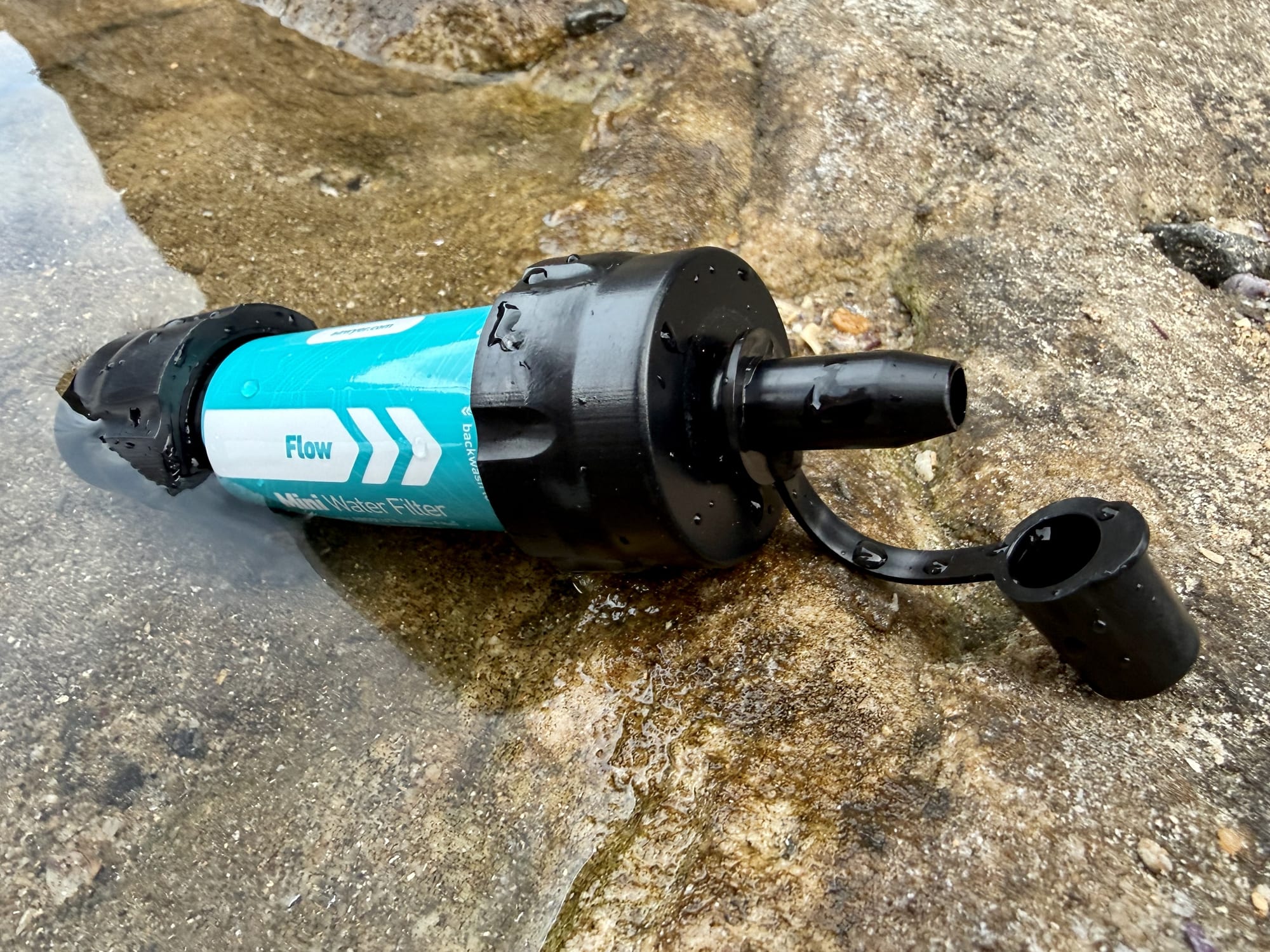
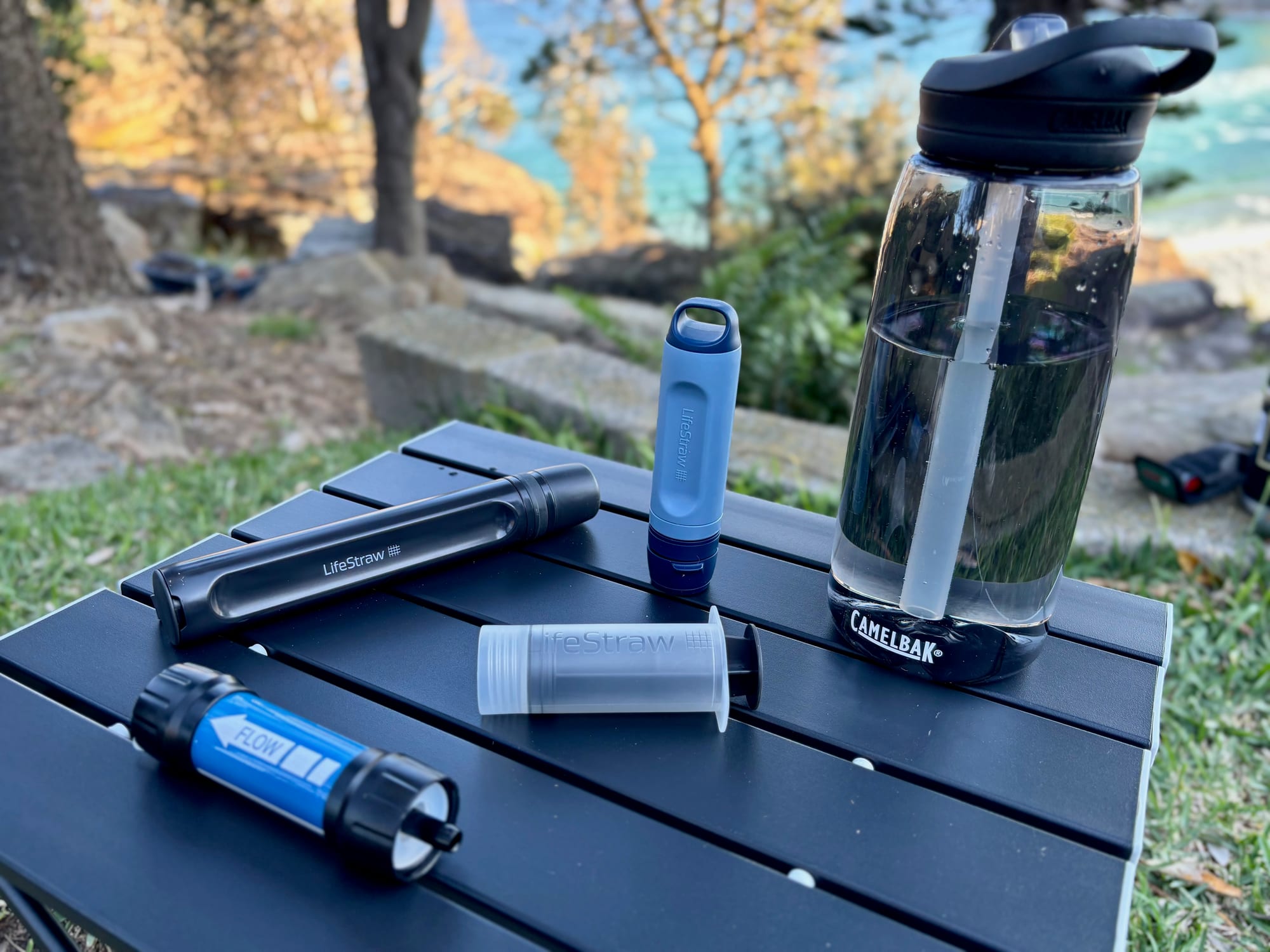
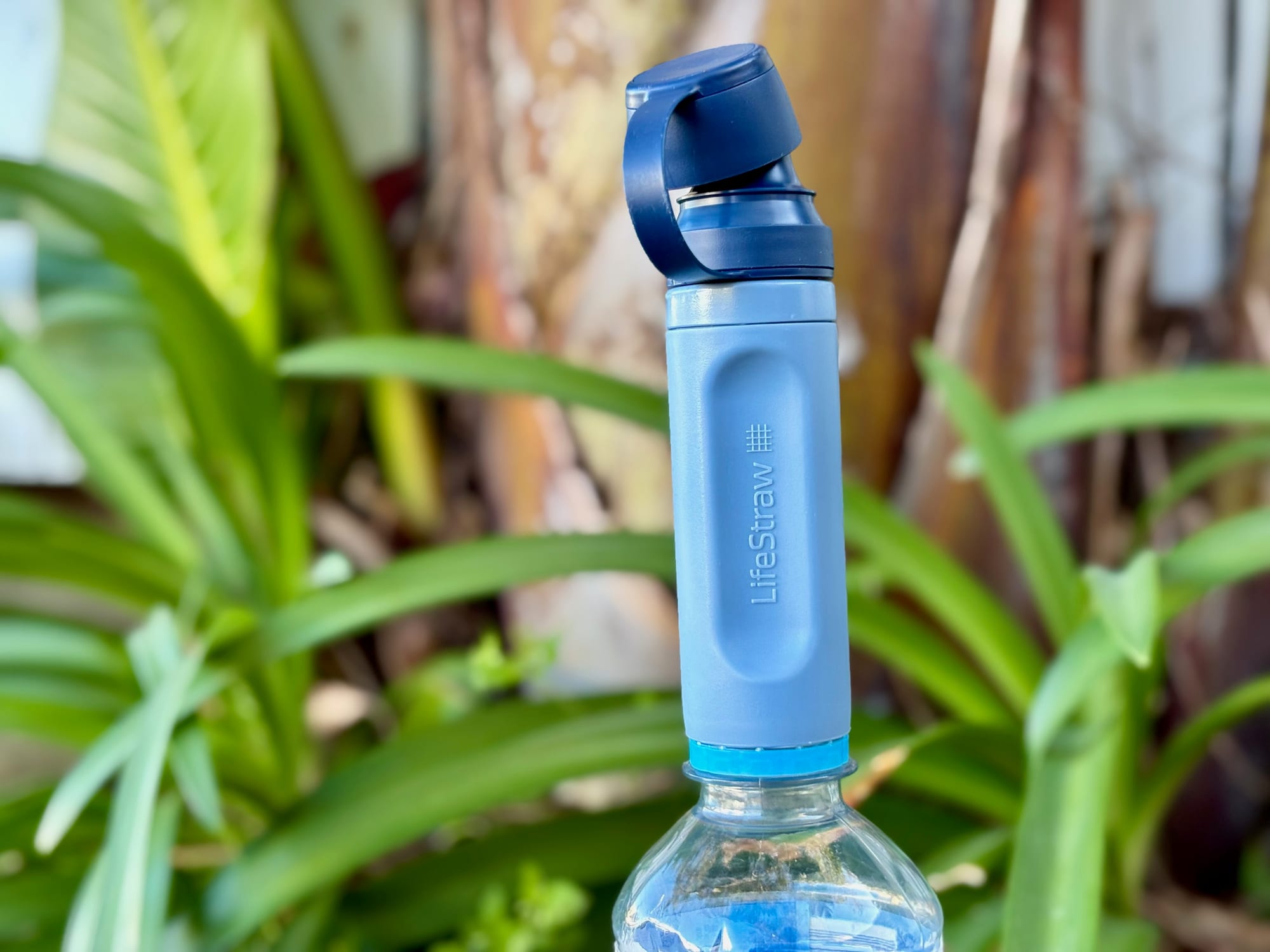
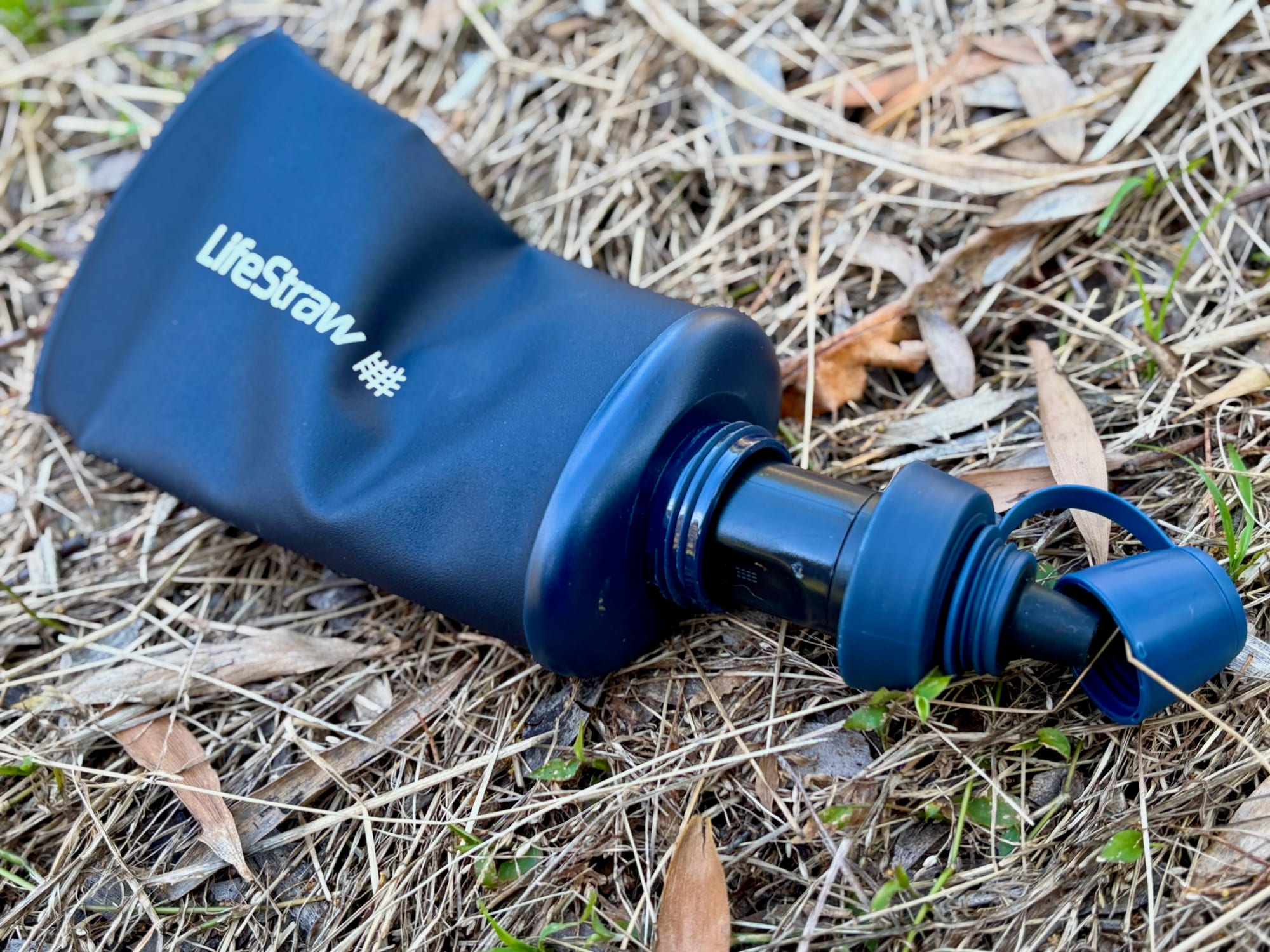
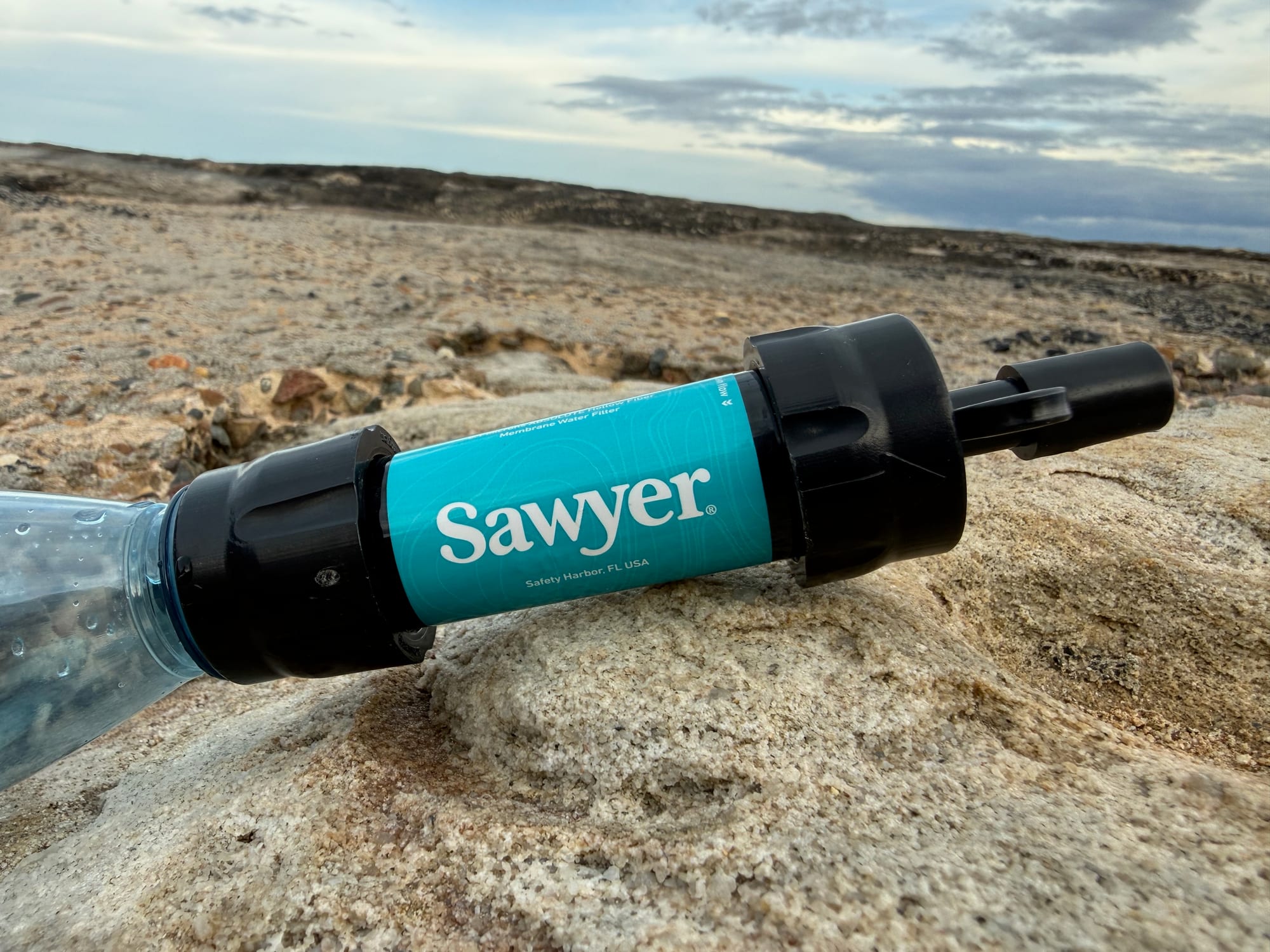
All the filters we’ve tested remove bacteria, parasites and microplastics. What differs is how you use them. For hikes, a filter that screws onto a standard bottle is the lightest: our LifeStraw Peak Solo weighs 48 g and squeezes a litre through in about 20 seconds, and the Sawyer Mini is cheaper, filters finer and lasts far longer, but flows more slowly.
If you’d rather drink straight from the creek, the LifeStraw Peak Series straw is long enough to use comfortably as a straw. A filter bottle saves carrying two things: the Peak Squeeze rolls up when empty and squeezes clean water into a pot, and the LifeStraw Go Series 2.0 adds a carbon stage that takes the taste out of tank and town water. Our camping water filters guide compares all six.
Filtering water from a creekFrom a creek
Start with the clearest water you can reach: running water rather than a still pool, and away from where animals drink. If it’s cloudy, let it sit in a bottle for a while or pour it through a bandana first, because silt clogs a filter quickly. Then fill your bottle, screw the filter on and either drink through it or squeeze the water into a clean bottle or a pot. Keep the dirty bottle for dirty water only, and don’t let creek water drip onto the drinking end.
On hikes in Alligator Gorge and Bouddi our bottles ran out, so we refilled them with rainwater, screwed the Sawyer on and drank through it. It needs some sucking power, but it works well. With a rigid bottle and the Peak Solo, unscrew the filter a little now and then, because the bottle collapses as you squeeze.
No bottle at all? Take the cap off the drinking end, put the other end in the water and use the filter as a straw. The longer Peak Series straw is easiest; with the short Peak Solo you have to lie down to reach the water.
Treating a tank or jerry canTanks and jerry cans
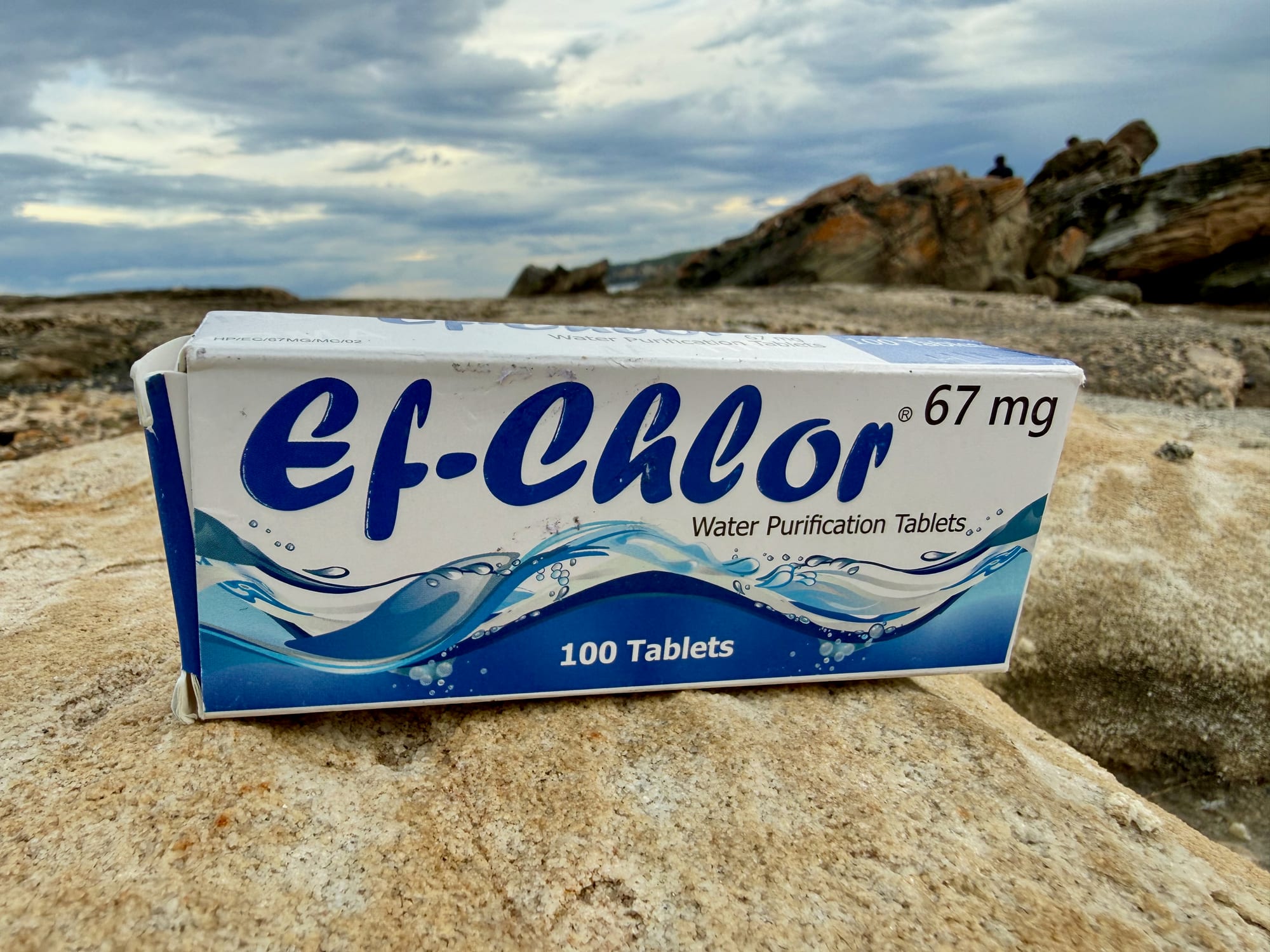
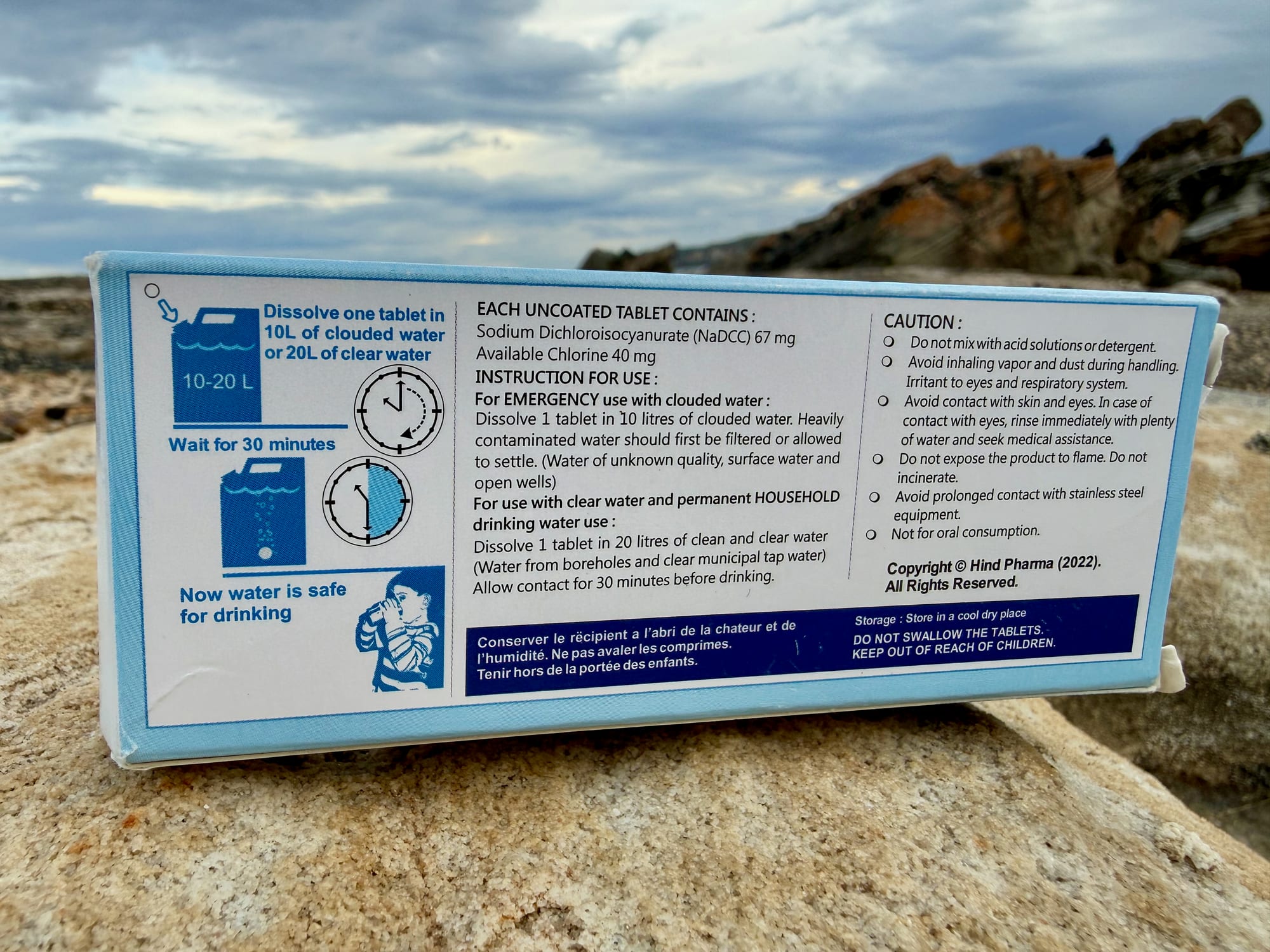
Filtering a whole tank a bottle at a time gets tedious, so for a tank or a jerry can we use Ef-Chlor tablets. One tablet treats 20 litres of clear water, or 10 litres of cloudy water, and you wait 30 minutes before you drink. Treat it in a plastic tank or jerry can rather than stainless steel, and remember the tablets don’t clear dirt: muddy water has to be filtered or settled first.
On our outback loop we filled our tank from a tap in Pooncarie and treated it with the tablets before drinking it. Once the 30 minutes are up, we leave the lid off for a few minutes so any leftover chlorine can escape, and the water doesn’t taste strongly of it. For a container that makes this easy, see our water containers guide, and for how much to carry, how much water you need for camping.
Boiling
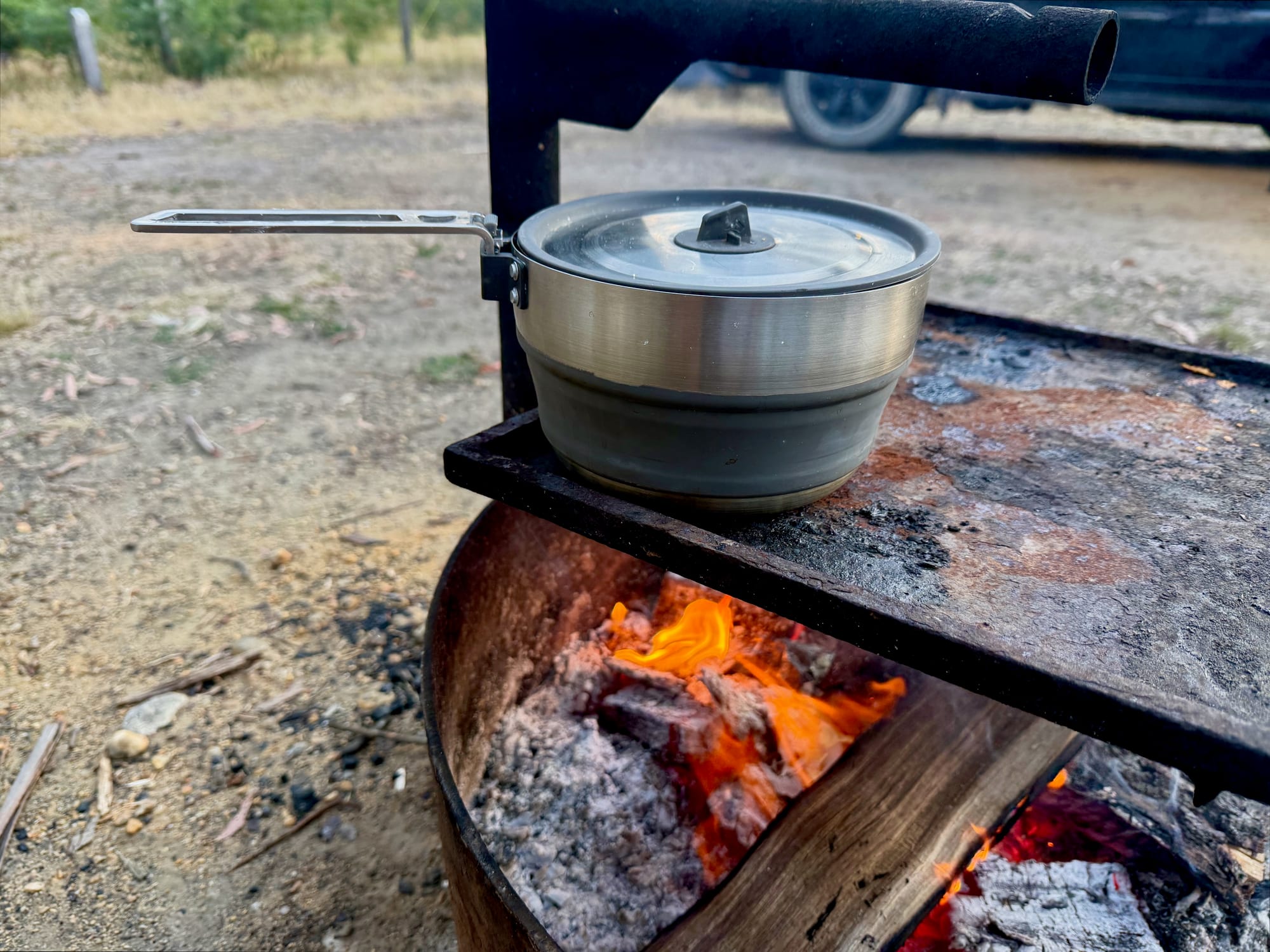
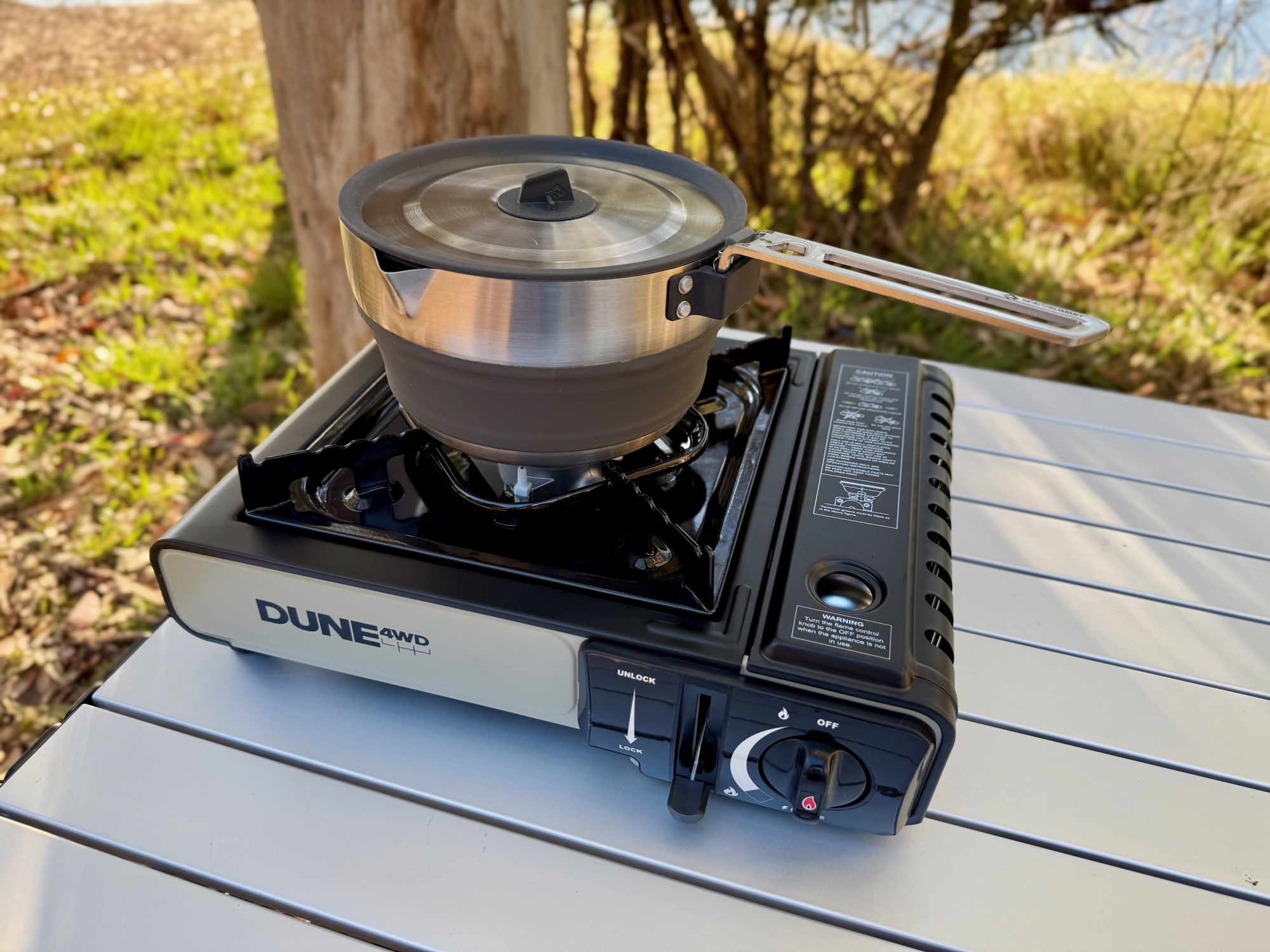
Boiling is the one method that kills everything, viruses included, and you already carry a stove. Bring the water to a rolling boil and keep it there for a minute, then let it cool with the lid on. At Emu Lake there’s a rainwater tank at the camp kitchen, and that’s how we used it. The downsides are the gas it uses and the wait while it cools, and it doesn’t clear dirt, so it suits cooking water and a morning cuppa more than filling everyone’s bottles. We boil our coffee water every morning in a Sea to Summit Detour Pot on the Dune single burner.
Keeping your filter workingFilter care
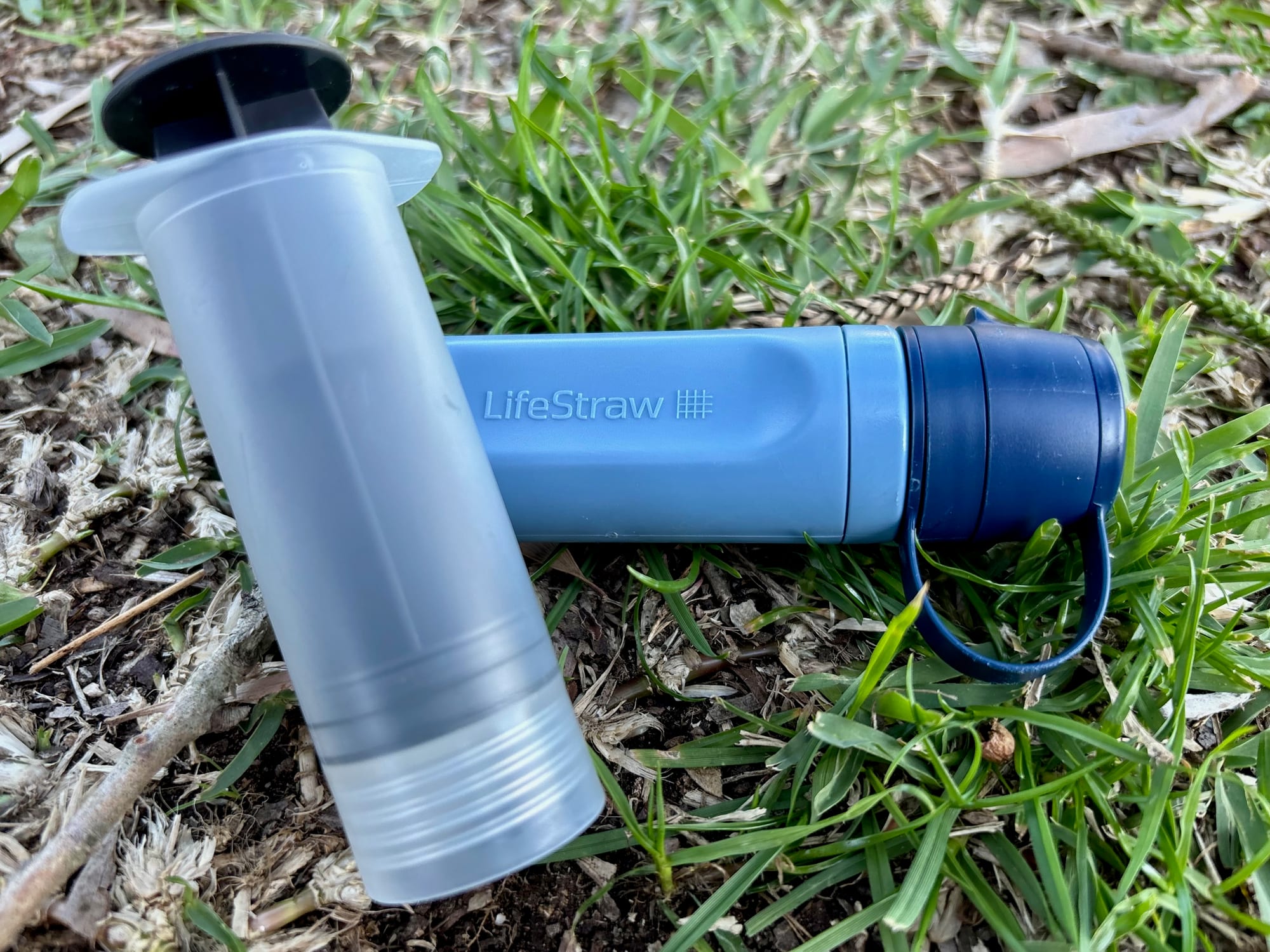
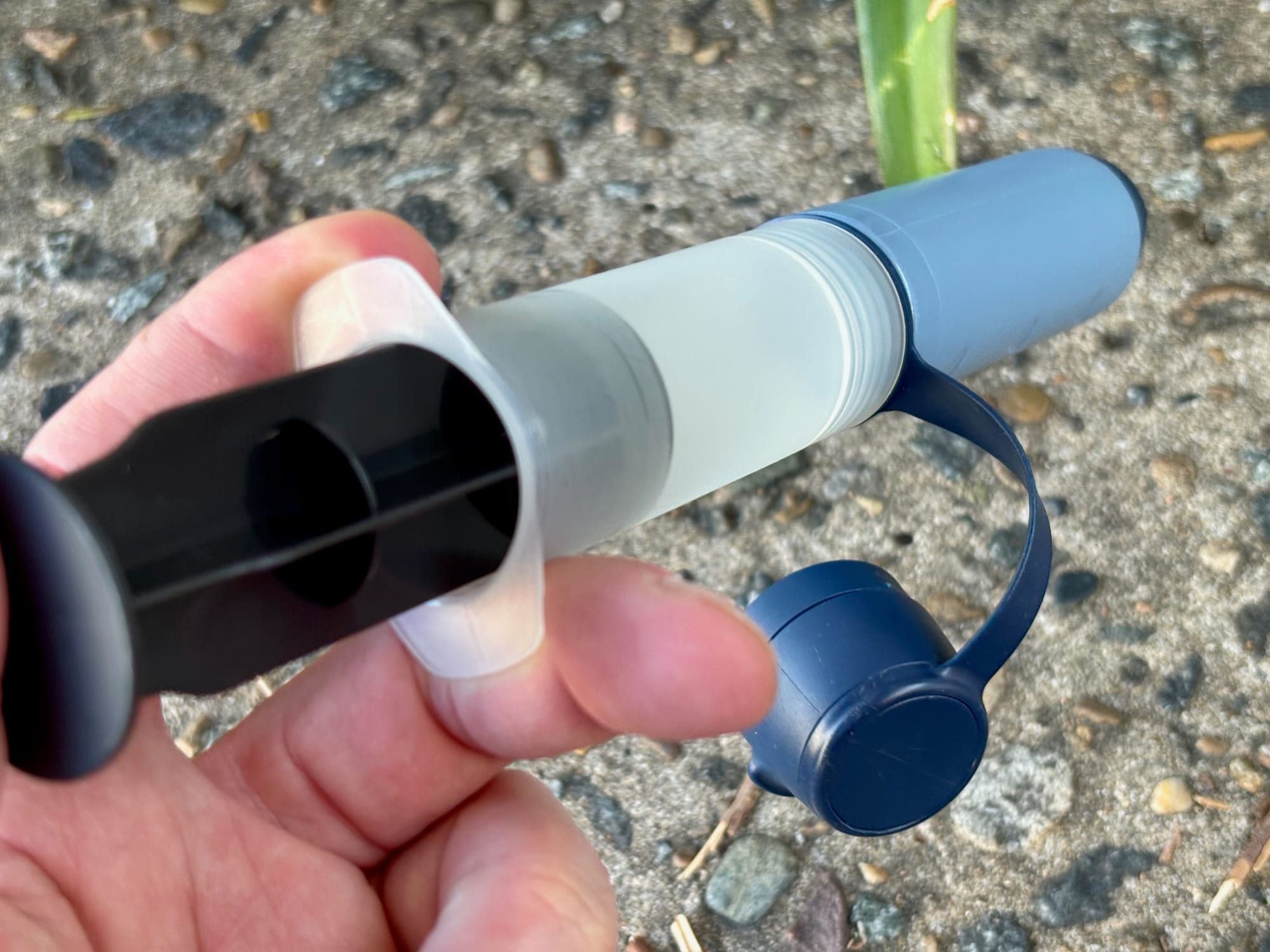
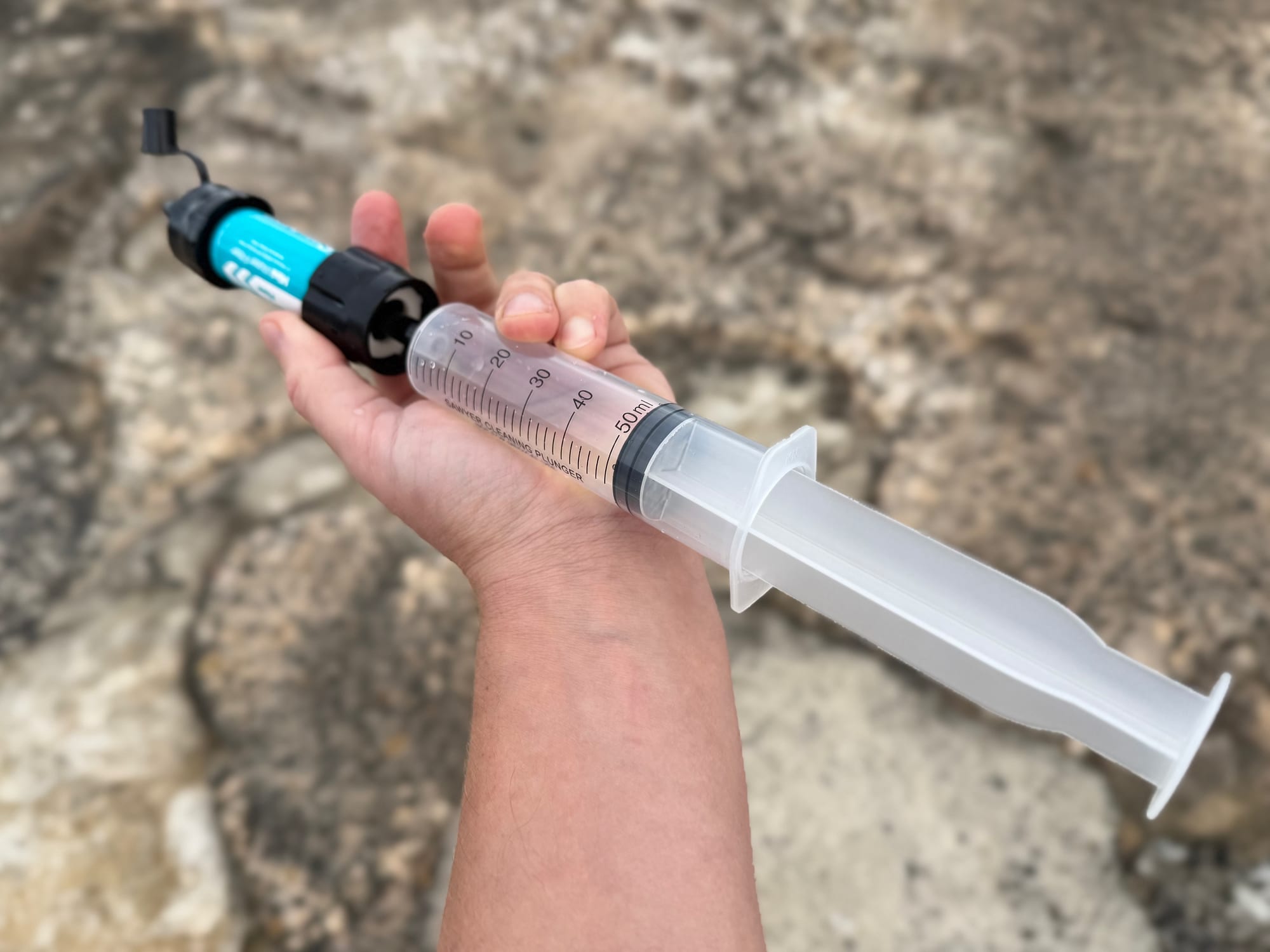
A filter slowly clogs with what it catches, and the flow drops. Backwashing fixes that: fill the syringe or plunger with clean water, push it onto the drinking end and press the water back through, and the dirt flushes out of the other end. The Peak Solo comes with a syringe and the Sawyer with a plunger. We flush ours with fresh water every time we get back to the car, put the caps back on and store it in the drawer, so it’s clean and ready for the next creek.
Filters don’t last forever. The LifeStraws block the water completely at the end of their life, after 2,000 litres for the Peak Solo and Peak Squeeze and 4,000 for the straw, so you can’t drink dirty water by accident. The Sawyer is rated far longer, as long as you keep backflushing it. On the Go 2.0, the carbon stage needs replacing after 100 litres if you want it to keep improving the taste.
What a filter can’t fixWhat it can’t fix
A filter makes clear water safe from bacteria and parasites, but some water no filter can fix. None of these remove salt, so seawater and brackish creeks near the coast are out. They don’t remove chemicals either, so skip water downstream of farms, mines or towns. And don’t drink from water with a blue-green algae bloom, even filtered or boiled: the toxins stay in the water. Where that’s all there is, fill up in town and carry enough to get you through.
Practical Tips
Most of this comes down to a few habits. These are the ones that keep our water safe and our filters working from one trip to the next:
- Pack a filter and tablets. A filter for drinks on the way, tablets for the tank. Both weigh next to nothing.
- Check your bottle thread. Screw-on filters fit standard 28 mm bottles, not wide-mouth ones.
- Mark a dirty bottle. Use one bottle for creek water only, so clean water never touches it.
- Settle cloudy water first. Silt clogs a filter fast; let it sit or strain it through a cloth.
- Backwash before you store it. A quick flush with clean water at the car keeps the flow up.
- Know what it can’t fix. No seawater, no runoff and no algae blooms, filtered or not.
Summary
Filter clear creek and rainwater for a drink, treat a tank or jerry can with tablets, and boil water when you’re unsure of the source. For doubtful water, filter first and then treat it. Keep a dirty bottle for creek water, let cloudy water settle, and backwash your filter every time you get back to the car. For more filters, see our camping water filters guide.
Do's
- Do keep dirty and clean bottles apart
- Do let cloudy water settle first
- Do backwash after every trip
- Do filter first, then add tablets
Don'ts
- Don’t filter seawater or farm runoff
- Don’t drink from an algae bloom